Engineered for immediate integration within hyper-scale data centers, supporting high-density optical distribution frames and low-latency transceivers.
As one of Europe's primary "FLAP-D" (Frankfurt, London, Amsterdam, Paris, Dublin) hub markets, the Paris metropolitan area represents an essential node in the global high-capacity communications network. With significant clusters of carrier-neutral data centers distributed across Saint-Denis, Aubervilliers, Marcoussis, and the wider Île-de-France region, the demand for bandwidth is scaling at an unprecedented rate. This exponential growth is driven primarily by multi-tenant cloud architectures, ultra-low-latency financial services, and AI training clusters requiring massive parallelism.
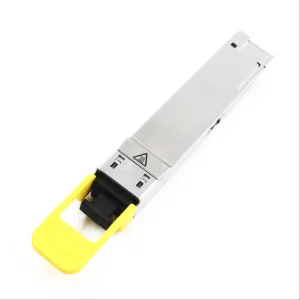
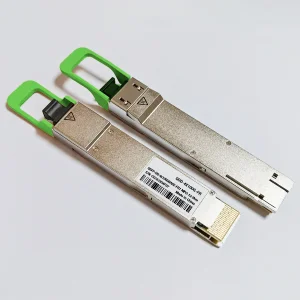
To cope with this influx of traffic, global enterprises and localized telecommunications operators in Paris are shifting their hardware blueprints from legacy 100G/400G systems directly toward 800G optical transceivers. 800G QSFP-DD (Double Density) and OSFP (Octal Small Form-factor Pluggable) architectures represent the pinnacle of this migration, enabling optical links that scale bandwidth density while minimizing space and thermal footprints in high-density rack configurations.
Implementing 800G in Paris requires careful consideration of the physical layer technology. Current transceivers rely on PAM4 (Pulse Amplitude Modulation 4-level) operating at 100Gbps per lane over 8 channels. Depending on transmission distance requirements within the data center, two primary laser architectures prevail:
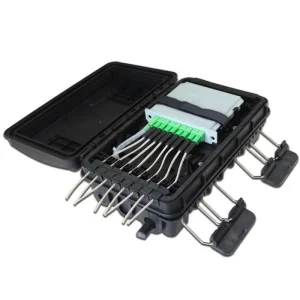
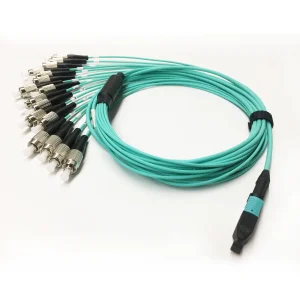
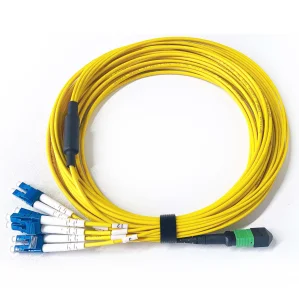
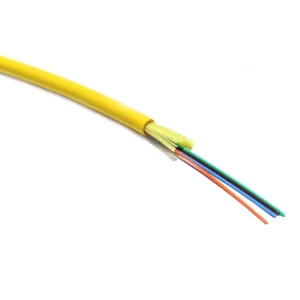
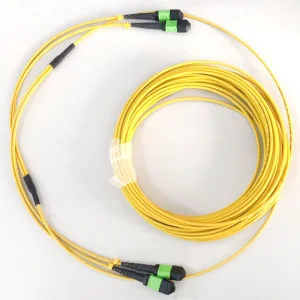
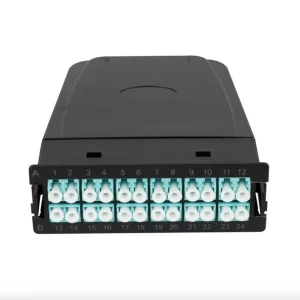
Complementing the 800G active transceivers, robust high-density fiber patching and distribution components are essential to construct structural, future-proof backbone networks.
Kocent Optec Limited established in 2012 in Hongkong as a hi-tech communication enterprise, is one of China's leading fiber optic termination product manufacturer and solution provider. We are dedicated to developing and manufacturing fiber optic communication products ranging from passive to active categories for telecommunication networks, enterprise networks and data centers.

By leveraging our extensive experience and excellent production capacity we gained over the years, we magnify the outcome for our valuable customers, which ultimately expands their core competencies and helps them outperform competitors. We place emphasis on customer collaboration, and we define ourselves as your valuable partner in fiber optic connection solutions. We believe our differentiators are your perceived advantages.

With more than 13 years of experience in manufacturing telecommunication fiber optic products, we follow strictly fiber optic industry standards by using mature scientific methods to deliver your products on time and ensure that 100% products are tested and inspected before shipment.
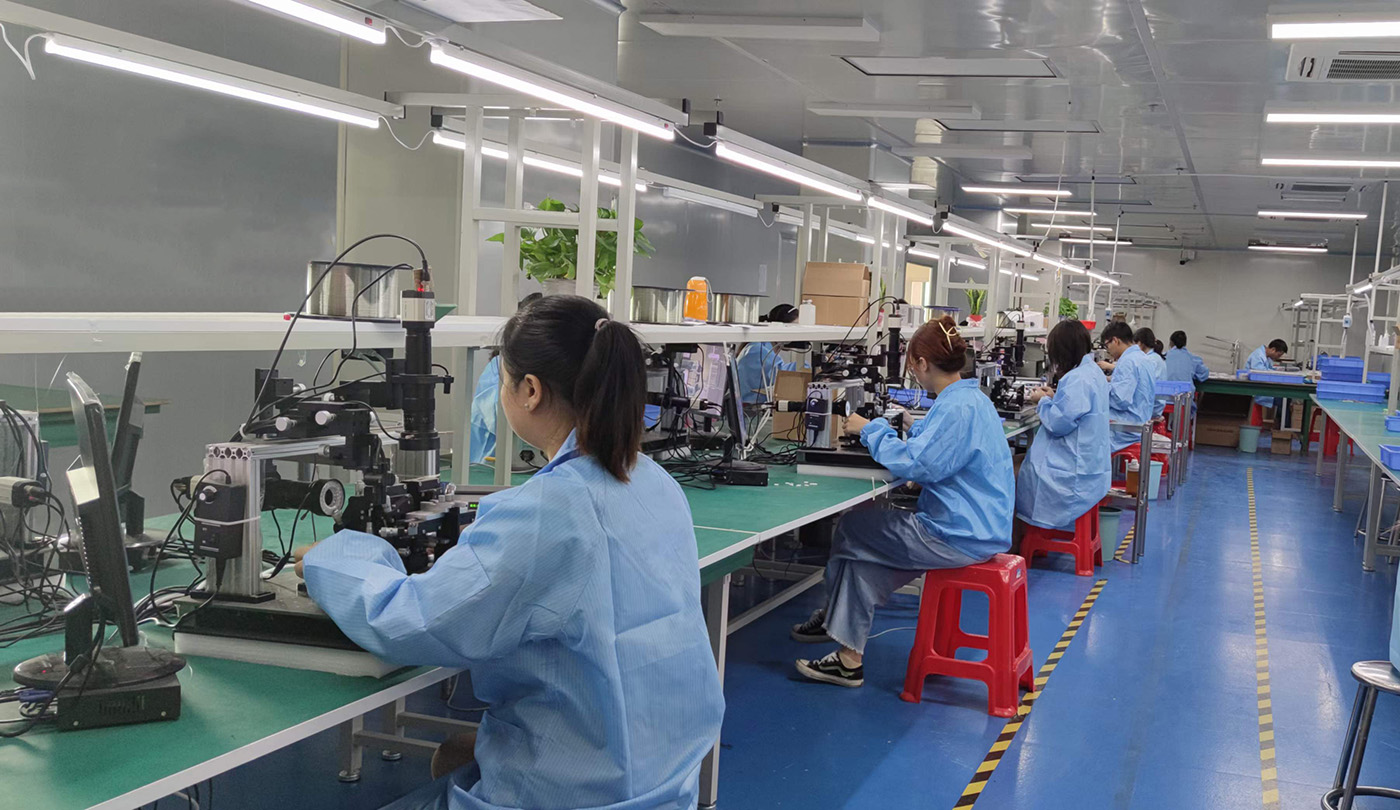
Years of sales and service experience have enabled us to win customers from different regions. Today, we have customers from East Asia, Southeast Asia, Middle East, Eastern Europe, Western Europe, Northern Europe, South America, North America, North Africa, and South Africa.
Win-win cooperation is our constant goal. Many of our OEM and ODM products won the Telecom Operator tenders and satisfy strict end-user requests. Our main terminal telecom operators include major players that shape global connectivity, including: SingTel, Vodafone, America Movil, Telefonica, Bharti Airtel, Orange, Telenor, VimpelCom, TeliaSonera, Saudi Telecom, MTN, Viettel, Bitel, VNPT, Laos Telecom, MYTEL, Telkom, Telekom, Entel, FiberTel, StarFiber, Ooredoo, Beeline, Azercell.
For data centers operating within Paris and the broader European market, sourcing components that are fully compatible and meet EU regulatory frameworks (such as CE, RoHS, and REACH) is critical. Kocent Optec ensures compliance while guaranteeing rapid shipping pipelines to the Île-de-France region, mitigating latency in logistics and custom clearance protocols.
Every active transceiver is verified via state-of-the-art testing equipment including eye diagrams, bit error rate tests (BERT), and real-host switch testing to guarantee flawless zero-packet drop performance.
Approved in multiple tier-1 carrier environments. All design elements conform strictly to Telcordia GR-326-CORE and IEEE standards to align with enterprise expectations.
Full customization capabilities of labeling, firmware optimization, and connector layouts to accommodate proprietary hyper-scale architectures.
A primary bottleneck in modern high-density networks is thermal dissipation. A typical 800G transceiver operates at high wattage loads, generating significant localized heat. High heat drives up optical dispersion, threatens signal integrity, and stresses system fans, driving up PUE (Power Usage Effectiveness) in the data center.
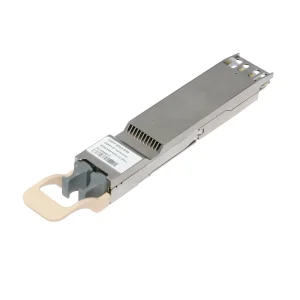
To counteract this, the Finned Top OSFP form factor has been widely embraced by engineers building the next generation of Paris AI infrastructures. The fins integrated directly on the transceiver module act as built-in heatsinks, optimizing convective airflow from the switch. This structural detail permits the optical engine inside the module to remain at optimal junction temperatures, ensuring stable operation under full capacity PAM4 data rates. Alternatively, for systems with built-in custom heatsinks, flat-top or bottom-cooled versions are sourced, requiring tight coordination between manufacturer and datacenter site designers.
Global optical sourcing strategies demand deep compliance alignment. When shipping to France, companies face strict enforcement of environmental guidelines. Kocent Optec ensures that our optical modules are certified to comply with RoHS (Restriction of Hazardous Substances), REACH, and the CE mark, mitigating compliance risks for corporate procurement managers. By offering local compatibility testing files for host switches like Cisco, Arista, Juniper, and Huawei, we significantly streamline deployment timelines, helping network teams deliver projects on time and under budget.
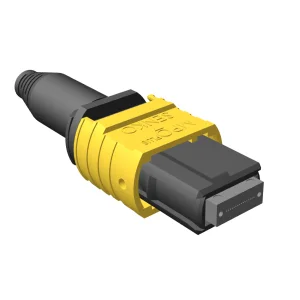
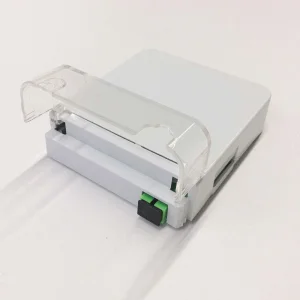
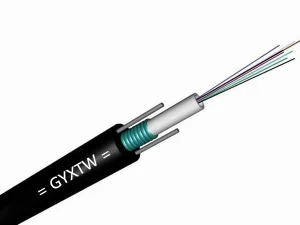
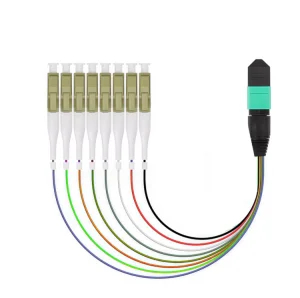
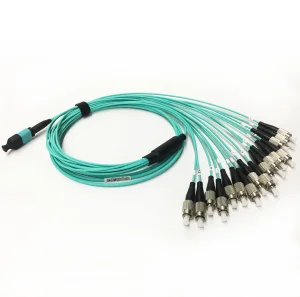
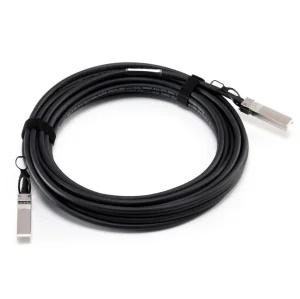
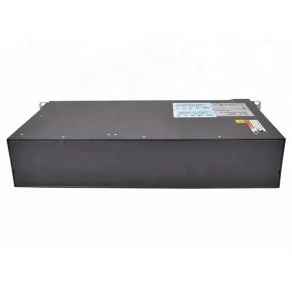
A broad array of passive breakout assemblies, high-speed copper interconnects, GPON OLT hardware, and trunk patch cables optimized for Paris metro core applications.
Addressing the core technical, compatibility, and logistical questions raised by data center infrastructure engineers.
Finned top OSFP transceivers include built-in heat sink ridges. In highly packed racks within modern Paris data centers, these fins interface directly with the cooling airflow inside the switch chassis. This lowers transceiver operational temperatures by up to 5-10°C compared to flat-top modules, directly contributing to longer component lifespans, lower PUE metrics, and stable performance at 800Gbps PAM4 line speeds.
Yes. Kocent Optec has a state-of-the-art testing facility that compiles specific firmware parameters. We test 100% of our active transceivers to match the EEPROM memory mapping protocols of leading networking brands including Cisco, Arista, Juniper, Mellanox, and Dell. Before shipping to Paris, we load the required configuration files to ensure true plug-and-play installation.
The 800G 2xSR4/SR8 850nm Multi-mode Fiber (MMF) module is designed for short-reach connections up to 50m over OM4, making it highly cost-effective for connecting adjacent racks or switches within the same room (intra-datacenter). The 800G 2xDR4/DR8 1310nm Single-mode Fiber (SMF) module, with a reach of up to 500m or 2km, is suitable for larger, distributed campus networks, inter-room connections, and low-dispersion metropolitan applications.
All fiber optic modules, patch cords, and enclosures shipped to France carry the CE mark and conform to RoHS 3 (Directive 2015/863/EU) guidelines prohibiting heavy metals. We also ensure full compliance with REACH guidelines, offering the necessary MSDS and compliance documentation to pass through EU custom clearance smoothly.
With our optimized manufacturing line and logistics channels from Hong Kong, standard orders are processed quickly. Stock items can be shipped within 3-5 working days, while custom ODM/OEM solutions or large batches typically require 2-3 weeks for full manufacturing, rigorous testing, and express air delivery straight to your specified Paris data center facility.
 KOCENT OPTEC