Explore our premium grade active optical modules and high-density passive fiber termination products designed for enterprise backbone networks, multi-tenant data centers, and high-performance computing clusters.
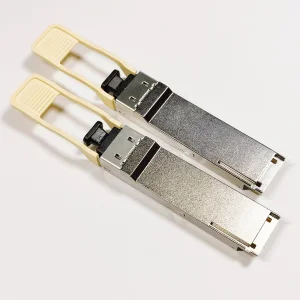
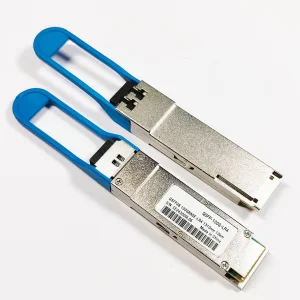
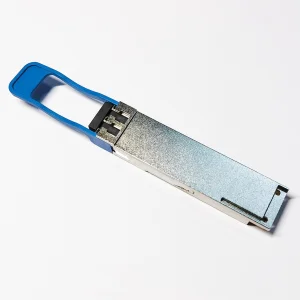
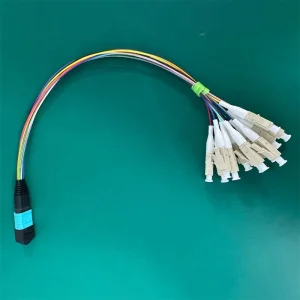
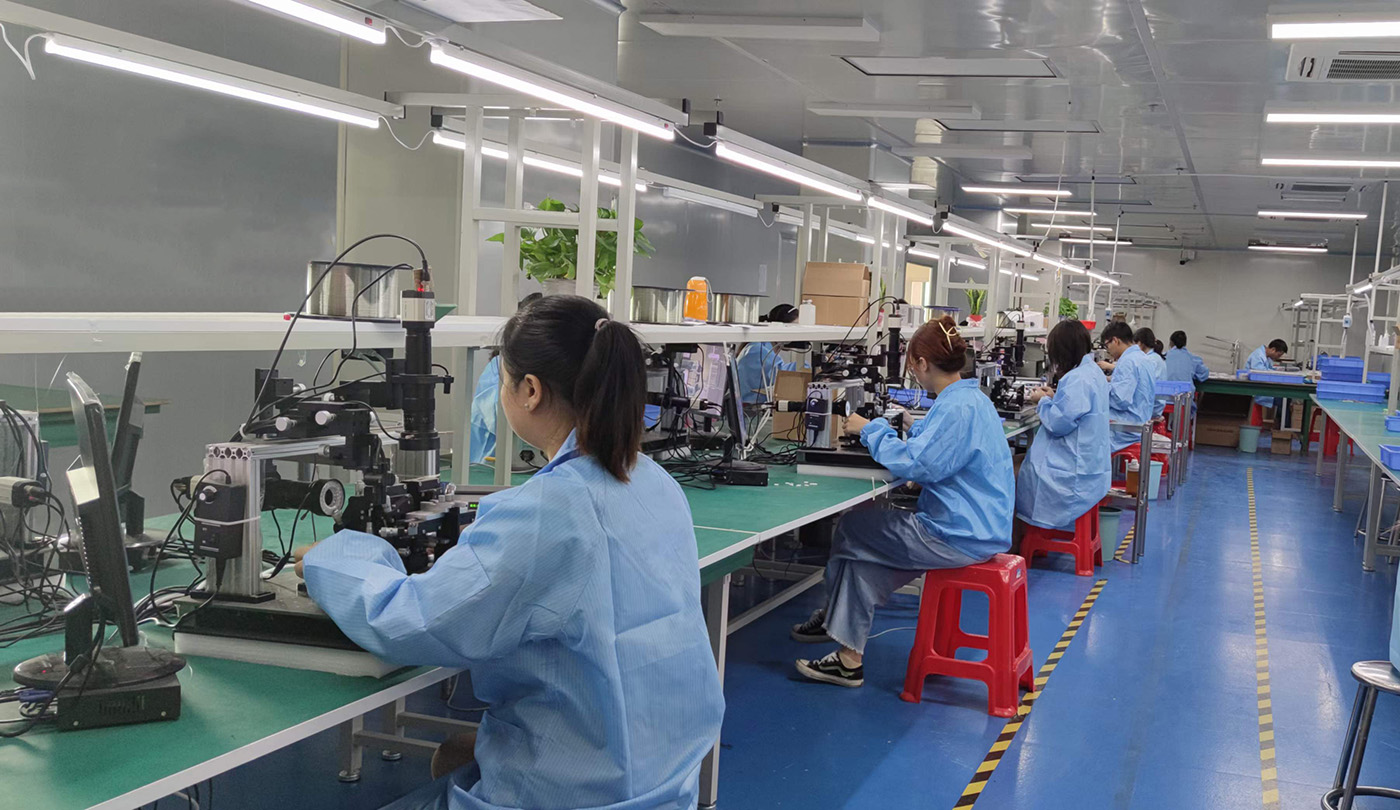
Established in 2012 in Hong Kong as a high-tech communication enterprise, Kocent Optec Limited has emerged as one of China's premier fiber optic termination product manufacturers and active transceiver solution providers. Over the past decade, we have dedicated our R&D and production capacities to high-speed communication systems ranging from robust passive assemblies to cutting-edge active optoelectronic systems.
By leveraging our extensive engineering experience and mature manufacturing capabilities, we supply high-performance 200G QSFP56 (SR4, FR4, LR4) transceivers, high-density MTP/MPO patch cords, and fiber distribution systems. We focus on enhancing customer value by ensuring that our fiber optic interfaces meet and exceed industry performance expectations, securing your competitiveness in an era of explosive data growth.

We utilize rigorous scientific testing methodologies. Every single transceiver and optical patch cord undergoes strict insertion loss, return loss, eye-diagram, and compatibility testing on end-target switches before shipment.
With over 13 years of expertise in manufacturing telecommunication fiber optic products, Kocent Optec ensures mature product cycles, highly reliable supply chains, and adherence to international quality standards.
Our sales networks reach telecom operators and enterprise networks across East/Southeast Asia, Middle East, Europe, South America, North America, and Africa, matching strict tender requirements.
The global demand for bandwidth is experiencing an unprecedented surge, driven by artificial intelligence (AI) workloads, machine learning (ML) training clusters, cloud computing, and the integration of 5G infrastructure. At the core of this transformation lies the optical transceiver. While 100G has been the workhorse of the modern data center, the transition to 200G QSFP56 and 400G/800G form factors represents a vital evolutionary step in achieving high-throughput, low-latency communication.

The 200G QSFP56 design relies heavily on PAM4 (Pulse Amplitude Modulation 4-Level) technology, contrasting with the legacy NRZ (Non-Return-to-Zero) schemes used in standard 100G QSFP28 modules. By transmitting two bits per clock cycle, PAM4 effectively doubles the data rate without requiring double the optical bandwidth. This technological leap allows data center operators to optimize cable layouts, reduce power consumption per gigabit, and maximize density without performing complete rip-and-replace updates on existing physical fiber plants.
For network architects and procurement officers, sourcing 200G transceivers involves navigating complex engineering compatibility matrices, strict lead times, and regulatory compliances. An enterprise-level procurement cycle must balance raw module cost against long-term reliability and interoperability. Below are the key requirements that define high-grade global procurement:
Optical switches from Cisco, Arista, Juniper, and Huawei often employ vendor lock-in mechanisms. Procuring OEM-compatible transceivers that are EEPROM-coded and verified on identical target switches is paramount to preventing network downtime.
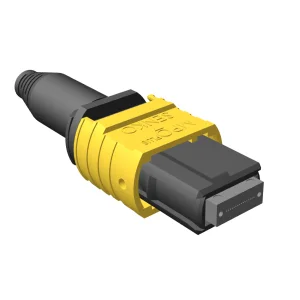
With high-speed PAM4 signals, the margin for signal attenuation is incredibly thin. High-quality connectors, such as those utilizing US Conec MTP components, ensure insertion losses below 0.35dB, preserving signal integrity across multi-hop patches.
Procuring directly from a verified Chinese manufacturer like Kocent Optec eliminates intermediary markups. By optimizing the Bill of Materials (BOM) using mature semiconductor lasers (VCSEL for SR4, EML for FR4/LR4), we lower capital expenditure by up to 40%.
Different network topographies demand targeted physical layer configurations. As a leading manufacturer, Kocent Optec provides end-to-end passive and active fiber link solutions designed for three distinct macro architectures:
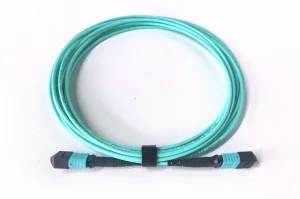
For spine-and-leaf switches, we offer QSFP56 200G SR4 transceivers combined with low-smoke zero-halogen (LSZH) MTP/MPO trunk cables. These multi-mode fiber structures enable 100-meter link lengths over OM3/OM4 cabling, ensuring rapid deployment and optimal thermal management inside high-density rows.
For data center interconnects (DCI) spanning up to 10km, we supply the QSFP56 200G LR4 module. Operating over single-mode duplex LC fiber at 1310nm, this module utilizes high-performance cooled EML lasers and PIN receivers to guarantee link stability even through complex patch panel routes.
Low latency is critical for modern neural network training workloads. Our QSFP56 200G FR4 transceivers support 2km links over single-mode fibers with duplex LC connectors. They utilize a cost-efficient CWDM4 grid, delivering low-latency transport for GPU-to-GPU clustering fabrics.
As enterprise networks transition from 100G architectures, understanding the physical layer technical roadmap is essential for securing investments. Optical module packaging standards are continually evolving to balance power consumption, manufacturing yield, and silicon density.
Relied on 4 lanes of 25G NRZ modulation. While stable and cost-efficient, physical limits prevented easy scaling without ballooning fiber count and package sizes.
Utilizes 4 lanes of 50G PAM4 modulation. Allows retrofitting of 100G infrastructure with double the capacity, optimizing thermal footprints and keeping connector form factors identical.
Adopts 8 lanes of 50G or 100G PAM4. Introduces double-density connector interfaces. Requires advanced DSP (Digital Signal Processors) and thermal management technologies.
Operating as a global telecom and enterprise partner requires strict adherence to international standards and regional regulatory requirements. Kocent Optec ensures complete compliance at every level of manufacturing:
Our entire active and passive product catalog is fully compliant with RoHS, CE, FCC, and REACH standards. We adhere to Telcordia GR-326-CORE specifications for passive terminations and MSA (Multi-Source Agreement) standards for active transceivers.
We provide tailormade optical solutions including custom EEPROM compatibility coding, customized labeling, serial number tracking, and high-quality bespoke packaging for global systems integrators.
Leveraging our logistics hub in Hong Kong and manufacturing facilities in Shenzhen, we ensure fast customs clearing and expedited delivery across North America, Europe, Asia, and Africa.
Our OEM & ODM fiber solutions have successfully passed the testing criteria of world-class operators and have won numerous public telecom tenders:
Get quick answers to common technical and commercial questions regarding 200G QSFP56 transceiver deployment and compatibility.
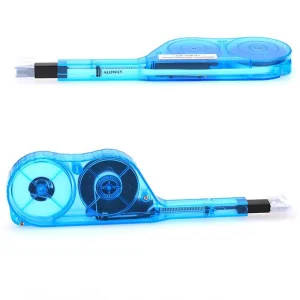
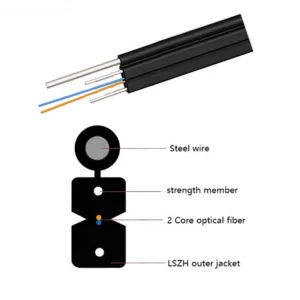
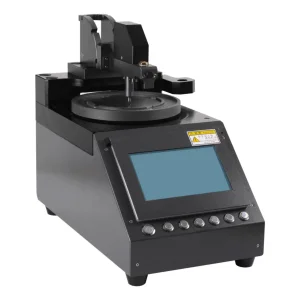
Browse our catalog of advanced passive cable systems, outdoor fiber drops, high-precision adapter systems, and specialized polishing equipment required for high-capacity local loop and data center terminations.
 KOCENT OPTEC