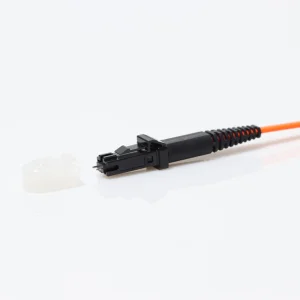
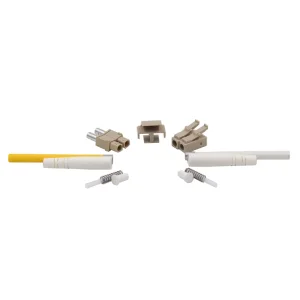
High-performance components designed for low insertion loss, high reliability, and seamless architectural scalability.
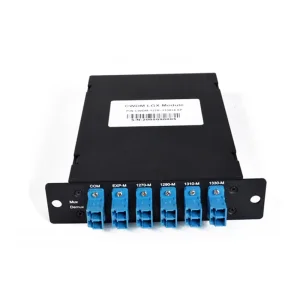
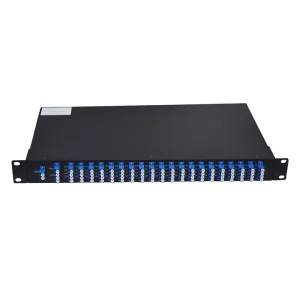
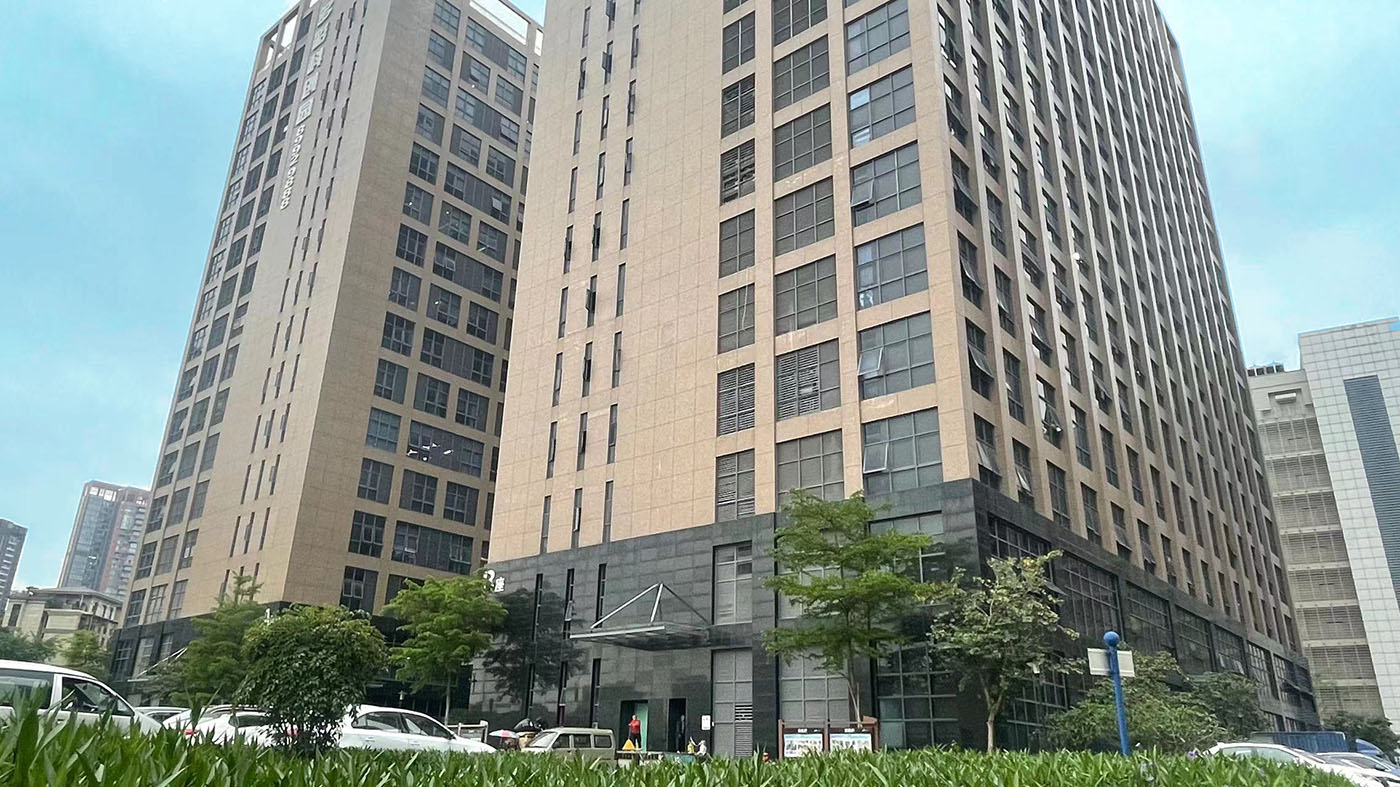
Kocent Optec Limited, established in 2012 in Hong Kong as a hi-tech communication enterprise, stands as one of China's leading fiber optic termination product manufacturers and solution providers. We are persistently dedicated to developing and manufacturing premier fiber optic communication products ranging from passive to active categories for modern telecommunication networks, enterprise networks, and data centers.
By leveraging our extensive experience and excellent production capacity acquired over the years, we magnify the outcome for our valuable customers, which ultimately expands their core competencies and helps them outperform competitors. We place deep emphasis on customer collaboration and define ourselves as your valuable partner in fiber optic connection solutions. We believe our differentiators are your perceived advantages.
With more than 13 years of experience in manufacturing telecommunication fiber optic products, we strictly follow global fiber optic industry standards (including Telcordia GR-326-CORE and RoHS compliance). Using mature scientific methods, we ensure that 100% of products are tested and inspected before shipment, guaranteeing timely deliveries and absolute quality reliability.

Deciphering the critical role of passive components in modern broadband and datacenter scaling.
The global fiber optic components market is experiencing an unprecedented surge, driven by the expansion of FTTH (Fiber-to-the-Home), 5G standalone networks, and AI-driven hyperscale data centers. Fiber optic components, such as PLC (Planar Lightwave Circuit) splitters, CWDM/DWDM multiplexers, and high-density patch cables, form the foundational physical layer of the global digital economy.
As networks transition to higher frequencies and wider bandwidths, signal integrity becomes paramount. Even minor attenuation or polarization loss can degrade entire transmission paths. Industry operators now demand components that achieve ultra-low insertion loss (IL) and high return loss (RL) to support the transmission parameters required by next-generation standards like XGS-PON and 800G optical transceivers.
Furthermore, the physical deployment environment has become more challenging. From aerial fiber drops exposed to extreme weather to densely packed server racks requiring tight bend radii, components must offer long-term mechanical and thermal stability. This environment has pushed leading manufacturers like Kocent Optec to implement rigorous environmental testing regimes, ensuring components withstand temperatures ranging from -40°C to +85°C.
How China-based production facilities optimize lead times, cost-efficiency, and strict quality control.
China's fiber optic manufacturing ecosystem provides unique competitive advantages. By integrating raw material sourcing, high-precision injection molding, automated optical assembly, and final testing into localized hubs, Chinese factories achieve economies of scale and agility that are difficult to replicate elsewhere.
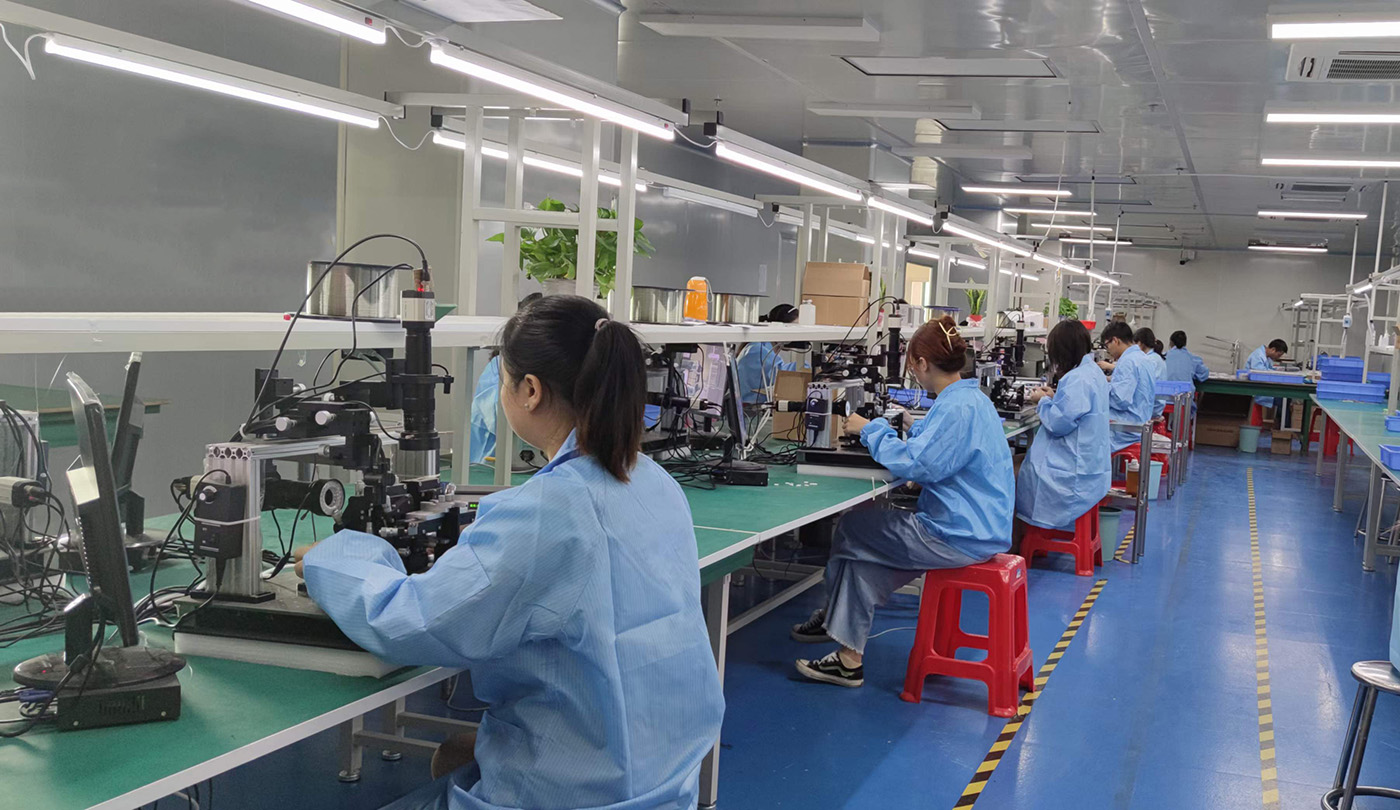
At Kocent Optec, we leverage this localized ecosystem to streamline our production processes. From wafer dicing for PLC splitters to high-precision polishing of fiber optic ceramic ferrules, our operations combine cost-effectiveness with world-class engineering standards. This integration allows us to deliver large-scale OEM orders while accommodating custom requirements for ODM projects.
Our commitment to quality is supported by advanced testing instrumentation, including interferometer checks for ferrule geometry, insertion loss and return loss testing, and environmental chamber cycling. This thorough validation ensures that every component sent to global markets meets or exceeds the specifications required by international telecommunication networks.
Our components are engineered to perform in various demanding environmental and technical conditions.
Providing robust, weatherproof splitters (PLC and FBT) designed for outdoor distribution hubs, pole-mounted terminal boxes, and subscriber wall outlets, ensuring low attenuation across extended loops.
Utilizing high-density MTP/MPO fanouts, patch cords, and fiber management housings to support the high throughput requirements of leaf-spine server architectures and multi-tenant networks.
Deploying advanced 40-Channel DWDM and CWDM Mux/Demux modules to maximize existing fiber capacity, enabling high-speed optical transport over metropolitan core distances.
Our OEM/ODM solutions have been widely deployed in major telecommunication tenders worldwide.
Years of sales and service experience have enabled us to win customers from different regions, including East Asia, Southeast Asia, Middle East, Eastern Europe, Western Europe, Northern Europe, South America, North America, North Africa, and South Africa. Our OEM and ODM products have won Telecom Operator tenders and continue to meet demanding end-user requirements.
Adapting to next-generation demands of high density, spectral efficiency, and structural sustainability.
1. Polarization Insensitivity and High Thermal Stability
As communication channels pack tighter together (particularly in 100GHz and 50GHz grid spacings), Polarization Dependent Loss (PDL) and Thermal Drift must be minimized. Modern DWDM multiplexers must utilize athermal packaging designs to guarantee stable channel isolation and prevent crosstalk without requiring active heating or cooling systems.
2. Evolution to G.657.A2 Bend-Insensitive Fiber
For internal data center cabling and final drop installations in residential properties, space constraints are a constant challenge. Components designed with G.657.A2 single-mode fiber cores allow for a significantly reduced bending radius, minimizing transmission losses caused by cable routing in tight spaces.
3. High-Density Integration
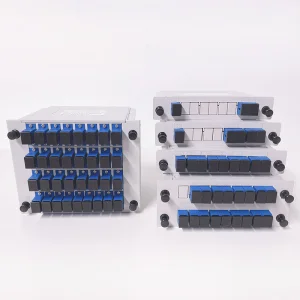
The industry is shifting from traditional 1U Rackmount enclosures to modular LGX cassette cards and sub-miniature splitter packages. This modular layout allows operators to scale their passive networks step-by-step, maximizing space efficiency within central offices and server cabinets.
4. Automated Fast Connectors for Field Assembly
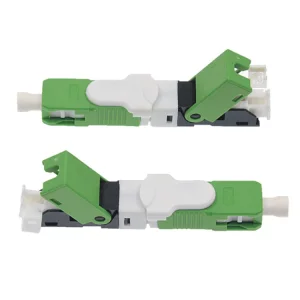
With the acceleration of FTTx rollouts, field termination speed is a key cost driver. High-precision mechanical splice design, as featured in our ESC250D series, allows installation technicians to complete reliable optical connections in under two minutes without requiring expensive fusion splicers.
5. Broad Spectrum Multi-Wavelength Distribution
Modern networks increasingly rely on combining legacy telecommunication wavelengths (1310/1490nm) with video transmission bands (1550nm) and OTDR monitoring signals. Multiplexers like our FWDM series are engineered to deliver flat-pass bands and high isolation across these diverse spectral windows, supporting multi-service delivery over a single optical fiber.
Technical breakdowns addressing the common queries of procurement managers and network engineers.
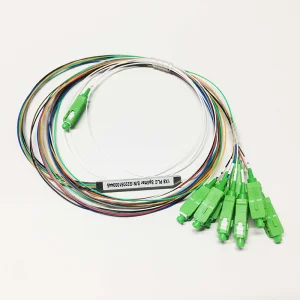
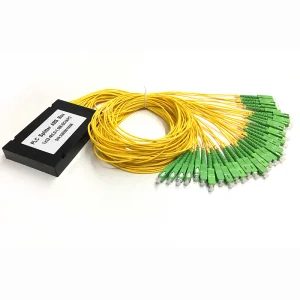
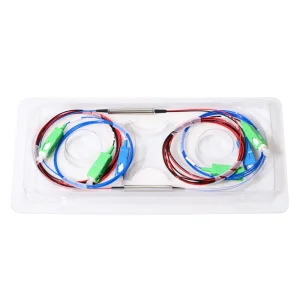
Planar Lightwave Circuit (PLC) splitters use a silica glass waveguide structure to distribute optical signals evenly from 1 input port to up to 128 output channels. This design offers excellent spectral uniformity across all channels, minimal polarization-dependent loss (PDL), and high stability across operating temperatures.
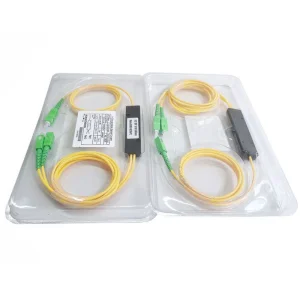
Fused Biconical Taper (FBT) splitters are made by fusing two or more fibers together under heat. FBT splitters are generally limited to configurations like 1x2 or 2x2, but they support dual-window or multi-window transmission and are more cost-effective for simple splitting ratios.
CWDM (Coarse Wavelength Division Multiplexing) has a wider channel spacing of 20nm, allowing for simpler and more cost-effective optical designs. It is ideal for short-to-medium distance metro networks (up to 80km) where fiber capacity requirements are moderate.
DWDM (Dense Wavelength Division Multiplexing) uses a much tighter channel spacing (typically 0.8nm / 100GHz or 0.4nm / 50GHz). It supports up to 80+ channels on a single fiber pair and is suitable for long-haul transmission and large-capacity links.
UPC (Ultra Physical Contact) connectors are polished with a flat end-face. They typically provide a return loss of ≥50dB. UPC connectors are widely used in digital transmission networks and data centers.
APC (Angled Physical Contact) connectors are polished at an 8-degree angle, redirecting reflected light back into the fiber cladding. This angled polish increases the return loss to ≥60dB, making it the preferred choice for analog video distribution, high-power long-haul networks, and FTTx deployments.
While G.652.D is the standard single-mode fiber used in long-haul networks, it is susceptible to bending loss. G.657.A1/A2 fibers are bend-insensitive, allowing for a much tighter bend radius (down to 7.5mm for G.657.A2) without significant attenuation. This makes them ideal for tight spaces like wall boxes and dense patch panels.
Every product undergoes a strict, multi-stage testing process. We perform 100% insertion loss (IL) and return loss (RL) tests, use optical interferometers to inspect ferrule geometry, and carry out environmental chamber aging. This rigorous testing ensures all components meet or exceed the performance parameters defined in ITU-T and Telcordia specifications.
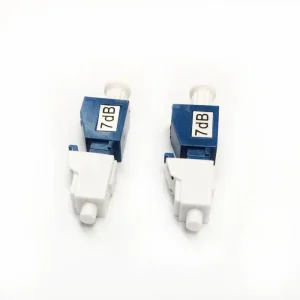
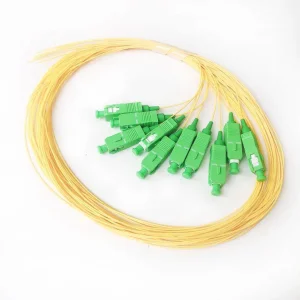
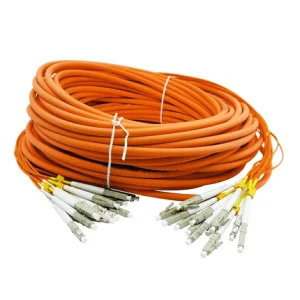
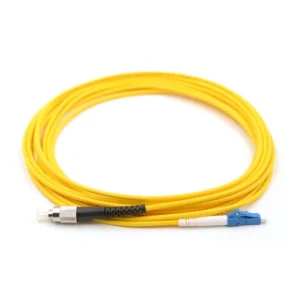
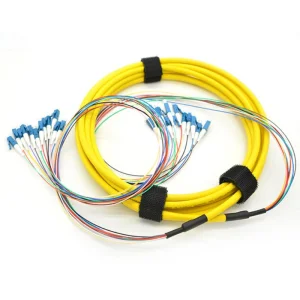
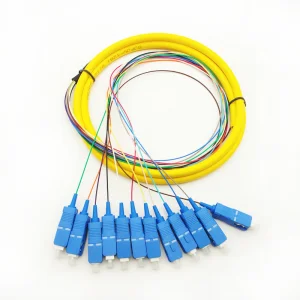
Browse our range of high-density patch cords, optical pigtails, attenuators, and connector housings.
 KOCENT OPTEC