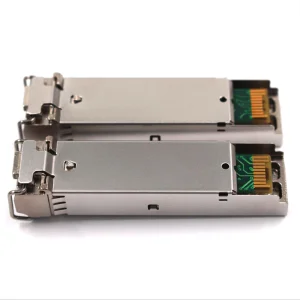
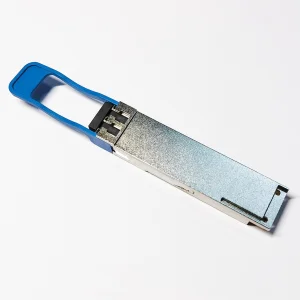
Explore our industrial standard 100G QSFP28 modules and supportive accessories designed for high-performance networks.
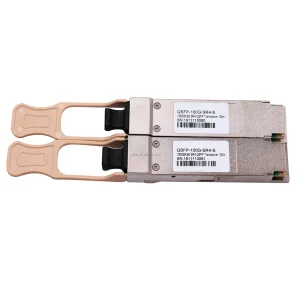
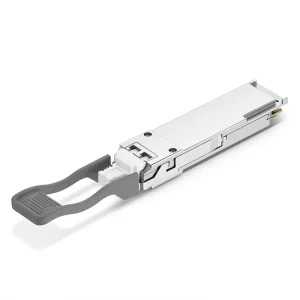
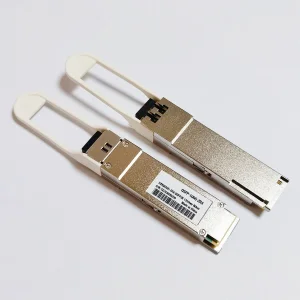
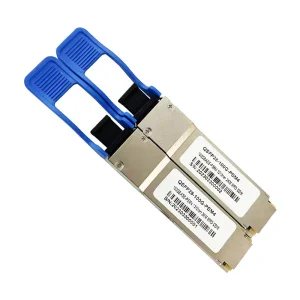
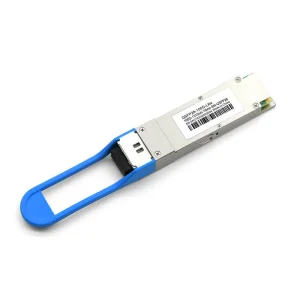
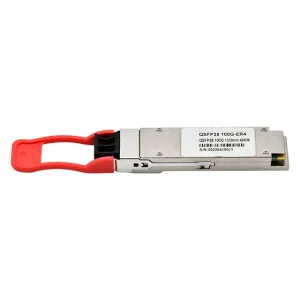
As global data traffic rises exponentially, hyper-scale data centers, high-performance computing (HPC) nodes, and carrier networks are rapidly migrating from traditional 10G/40G structures to robust 100G QSFP28 architectures. Seeking the right 100G QSFP manufacturers involves examining transceiver physical layers, protocol compliances, and cost metrics.
Our KCO series transceivers comply with MSA standards to ensure full compatibility across multiple hardware ecosystems. By using state-of-the-art optical engines and reliable lasers (including VCSEL, DFB, and EML), our transceivers minimize insertion loss, manage thermal dissipation, and reduce power consumption below typical industry averages.
Whether deploying high-density short-reach links inside racks or configuring ultra-long-haul links across metropolitan centers, selecting the appropriate 100G QSFP form factor determines the ultimate efficiency of your operations. Our product line supports SR4, SWDM4 BiDi, PSM4, LR4, ER4, and ZR4 solutions, offering options for distances from 100 meters to 80 kilometers.

Deploying high-speed transceiver architectures across diverse operational and environmental conditions.
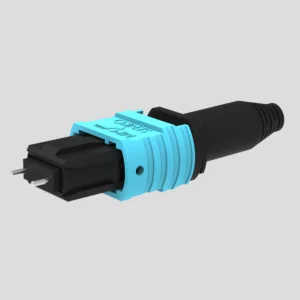
Optimized for high-density leaf-spine cabling configurations. Utilizes 100G QSFP28 SR4 with MPO-12 breakout systems to reduce cable volume and simplify physical path management.
Long-range links utilizing 100G LR4, ER4, and ZR4 transceivers. Connects localized edge server nodes back to metro distribution networks over single-mode fibers up to 80km.
Provides low-latency links required for parallel graphics processor computing pipelines. Helps reduce data transmission delays within deep learning configurations.

Selecting optical hardware partners requires balancing unit costs, technical performance, and delivery schedules. The Chinese optical transceiver supply ecosystem, centered in industrial clusters like Shenzhen and Wuhan, offers notable logistical and material advantages.
At Kocent Optec Limited, we capitalize on these local supply networks. Because we source raw substrates, TOSA/ROSA components, and advanced micro-optics locally, we maintain consistent production lead times. Our direct access to raw components protects our clients from global parts shortages and shipping disruptions.
By integrating automated sub-assembly processes, wafer testing, and digital diagnostic calibration, we reduce manual assembly steps. This structure enables us to provide cost-effective options for large-scale fiber deployments.
Compare the optical and physical specifications of standard 100G QSFP28 modules to align with your project requirements.
| Optical Module Standard | Fiber Type | Connector Type | Laser Source | Wavelength (nm) | Max Transmission Distance | Power Consumption |
|---|---|---|---|---|---|---|
| 100GBASE-SR4 | Multi-Mode (MMF) OM3/OM4 | MPO-12/UPC | 850nm VCSEL | 850 | 70m (OM3) / 100m (OM4) | < 2.5W |
| 100GBASE-SR SWDM4 BiDi | Multi-Mode (MMF) OM3/OM4/OM5 | Duplex LC/UPC | VCSEL Array | 850/880/910/940 (SWDM) | 100m (OM4) / 150m (OM5) | < 3.0W |
| 100GBASE-PSM4 | Single-Mode (SMF) | MTP/MPO-12 APC | 1310nm DFB | 1310 | 2 km | < 3.5W |
| 100GBASE-LR4 | Single-Mode (SMF) | Duplex LC/UPC | LAN-WDM DFB | 1295.56, 1300.05, 1304.58, 1309.14 | 10 km | < 3.5W |
| 100GBASE-ER4 | Single-Mode (SMF) | Duplex LC/UPC | LAN-WDM EML + APD | 1295.56, 1300.05, 1304.58, 1309.14 | 40 km | < 4.0W |
| 100GBASE-ZR4 | Single-Mode (SMF) | Duplex LC/UPC | LAN-WDM EML + SOA | 1295.56, 1300.05, 1304.58, 1309.14 | 80 km | < 5.5W |
Delivering global interconnection solutions from active transceivers to high-density passive components.
Established in 2012 in Hong Kong as a high-tech communication enterprise, Kocent Optec Limited has grown to become one of China's leading fiber optic termination product manufacturers and solution providers.
We are dedicated to developing and manufacturing fiber optic communication products ranging from passive to active categories for telecommunication networks, enterprise networks, and data centers. By leveraging our extensive experience and production capacity gained over the years, we aim to deliver quality products for our customers, helping them expand their core competencies and operate efficiently in their markets.
We focus on customer collaboration and define ourselves as a partner in fiber optic connection solutions. We believe our manufacturing standards and support structure provide clear operational advantages for your network deployments.

Our products are deployed across regional networks and have qualified for telecom operator tenders worldwide. Key terminal telecom operators using our hardware include:
Aligning data infrastructure lifecycle choices with emerging interface standards and scaling requirements.
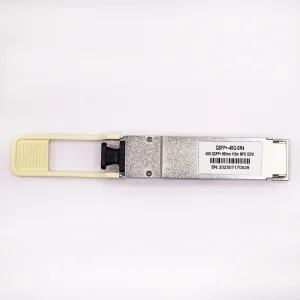
Utilizes 4 channels of 25Gb/s signals to achieve 100G transmission. While still widely deployed for regional networks, standard NRZ optical engines are increasingly being optimized for lower power consumption and improved thermal performance.
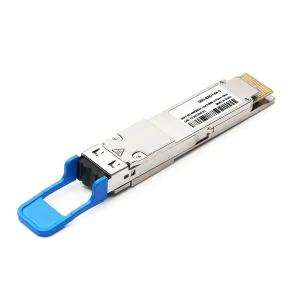
Transitioning to 50G PAM4 and 100G PAM4 technologies. This phase increases throughput within compact module footprints like the QSFP-DD, helping networks transition toward 400G links.
Integrating optical engines directly onto the silicon switch substrate. This architecture bypasses traditional copper traces, addressing interface bottleneck issues at speeds of 800G and 1.6T.
We test and inspect 100% of our products before shipment, following industry-standard optical measurement protocols. Transceivers undergo comprehensive diagnostic checks to verify signal integrity across several operational parameters.
Our quality assurance program measures key performance values, including eye diagram metrics, optical output power, receiver sensitivity, and bit error rate (BER). These steps help prevent field failures and minimize network downtime.
We configure EEPROM code tables to support compatibility with equipment manufacturers like Cisco, Juniper, Arista, and HPE. This ensures our transceivers function as direct replacements in complex, multi-vendor topologies.
Our manufacturing and assembly sites maintain strict quality controls, operating in compliance with international certifications including CE, FCC, RoHS, and REACH standards.
Our modules are configured to match the hardware handshakes of several major networking platforms:
Designed to perform consistently across varied operating temperatures:
Addressing common technical and logistical questions for networks upgrading to 100G architectures.
Pricing variations are primarily driven by the complexity of the optical components. Short-reach transceivers (like SR4) use simpler VCSEL arrays, which cost less than the LAN-WDM laser arrays and optical amplifiers (like SOA) required for long-reach modules (like ZR4). Compliance grade, customization options, and order volumes also affect the final unit cost.
100G SR4 modules use parallel ribbon cables with MPO-12 connectors, transmitting signals across 8 distinct fiber strands. In contrast, 100G SWDM4 BiDi modules transmit over duplex LC fiber cables, utilizing Short Wavelength Division Multiplexing to carry multiple optical signals on a single pair of multi-mode fibers.
Digital Diagnostics Monitoring (DDM), also referred to as Digital Optical Monitoring (DOM), allows administrators to monitor real-time operating metrics like transceiver temperature, laser bias current, optical output power, received optical power, and supply voltage. This data helps identify potential component failures before they disrupt service.
No. Under antitrust laws like the Magnuson-Moss Warranty Act in the US, network equipment manufacturers cannot void their hardware warranties for using third-party compatible optical modules unless they can prove the third-party hardware directly damaged the switch port or chassis.
The KCO QSFP28 ZR4 module supports links up to 80 km over standard single-mode optical fiber (SMF) without external amplification. This is made possible by combining EML transmitters with high-sensitivity APD receivers and an integrated semiconductor optical amplifier (SOA).
Our modules are built to comply with IEEE 802.3bm and IEEE 802.3ba physical layer requirements, as well as QSFP28 Multi-Source Agreements (MSA). This compliance ensures KCO transceivers interoperate reliably with other MSA-compliant hardware.
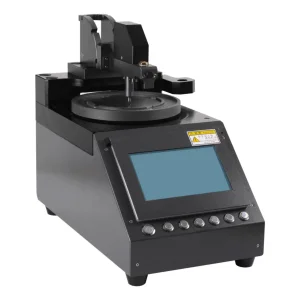
Explore our selection of patch cables, connectors, specialized polishing equipment, and higher-speed interfaces.
 KOCENT OPTEC