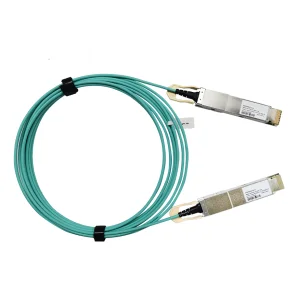
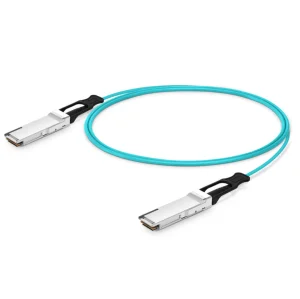
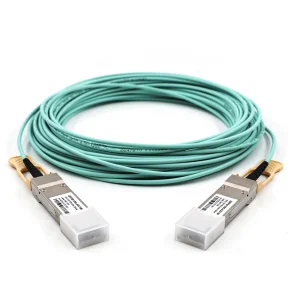
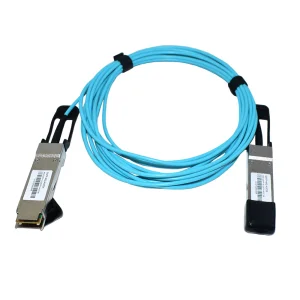
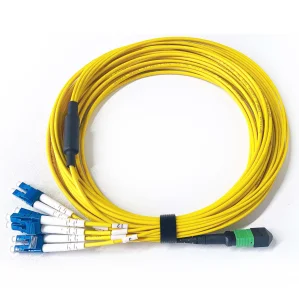
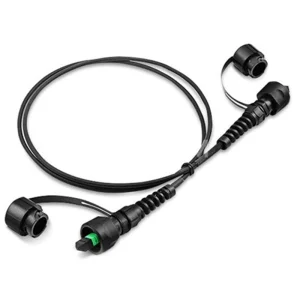
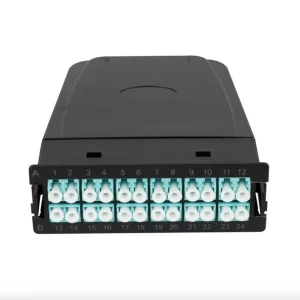
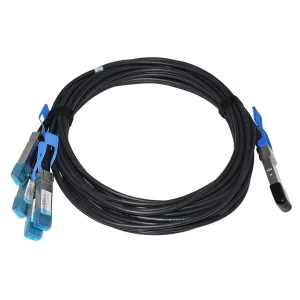
Explore our production line of high-density Active Optical Cables, breakout configurations, and professional optical assembly systems.
As transmission frequencies reach parity with hardware architectural limits, traditional copper cabling solutions (like Direct Attach Copper - DAC) face critical challenges in handling high transmission bandwidth. Above data rates of 10Gb/s, 25Gb/s, and exponentially at 100Gb/s to 800Gb/s, copper mediums suffer severe physical impairments, including skin effect degradation, high electromagnetic interference (EMI) susceptibility, and immense power dispersion profiles. This physical barrier has accelerated the global transition toward Active Optical Cables (AOCs).
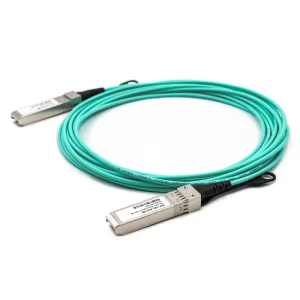
An Active Optical Cable consists of multi-mode or single-mode optical fiber terminated with electrical-to-optical conversion engines at both transceiver ends. By integrating active optical components directly into the connector modules, AOCs replicate the plug-and-play user interface of traditional copper lines, yet achieve transmission distances, signal fidelity, and energy efficiencies that are physically impossible using metallic conductors. This unique structural architecture makes them indispensable components in modern hyperscale high-performance computing (HPC) nodes, telecom central exchanges, and AI processing farms globally.
By routing signals through glass fibers instead of metal cores, AOCs eliminate cross-talk and RF interference. This ensures cleaner data transmission across complex cable structures.
AOC fibers are up to 70% lighter and occupy significantly less volume than thick gauge copper cords, which dramatically improves airflow and rack ventilation schemes.
Unlike copper links which are limited to under 5 meters at high speeds, AOC technology easily bridges distances up to 100 meters or more with zero data loss.
Inspected & Tested Before Shipment
Manufacturing & R&D Excellence
Active High-Speed Optical Architectures
Global Operators Serviced & Supplied
The industry's engineering trajectory is moving quickly towards higher serialization speeds. The step up from NRZ (Non-Return-to-Zero) to PAM4 (Pulse Amplitude Modulation 4-Level) signal processing has enabled engineers to double the capacity per channel. We construct our AOCs with high-efficiency DSPs (Digital Signal Processors) and VCSEL (Vertical-Cavity Surface-Emitting Laser) arrays, guaranteeing minimal bit-error rates (BER) across varied thermal conditions.
As the market shifts towards 800G and 1.6T speeds, our R&D teams are exploring LPO (Linear Drive Pluggable Optics) architectures. By stripping high-power DSP chips from the transceiver end of the cable, LPO AOCs leverage the host ASIC's analog processing circuits, cutting down energy consumption by up to 50% per module. As an industry leader, Kocent Optec Limited continues to research these materials to deliver stable, cost-effective connections for high-volume deployments.
The deployment of AOC arrays is no longer confined to local high-speed server connections. Today, global data-heavy systems rely on optical interconnects to handle massive AI workloads, distributed cloud computing, and real-time financial trading networks. From low-latency pipelines in London and New York to massive regional hyper-scale facilities in Tokyo, Singapore, and Frankfurt, AOC assemblies act as the backbone for high-performance networks.
| Application Scenario | Typical Speed Formats | Recommended Medium / Fiber | Core Advantages |
|---|---|---|---|
| AI / Machine Learning Clusters | 200G QSFP-DD, 400G / 800G OSFP | Multi-mode OM3 / OM4 / OM5 MMF | Ultralow latency routing, minimal packet loss, high bandwidth |
| Hyperscale Data Center Spines | 100G QSFP28, 400G QSFP-DD | OM4 Multi-mode / Single-mode (SMF) | Replaces bulky copper cables, facilitates better airflow |
| Telecom Central Exchanges | 10G SFP+, 25G SFP28, 40G QSFP+ | Single-mode / Multi-mode Hybrid | Full electrical isolation, reliable long-distance links |
| High-Frequency Trading (HFT) | 10G / 25G SFP+ and Custom Breakouts | Low-dispersion Premium Fibers | Sub-nanosecond transit times, zero electromagnetic interference |
In addition, the growth of smart factory environments and high-speed industrial networks is expanding the footprint of high-performance fiber solutions. In these settings, electrical machinery generates significant industrial noise. Standard copper cables struggle under these conditions, whereas AOC systems operate with absolute noise immunity, providing consistent, uninterrupted data transmission.
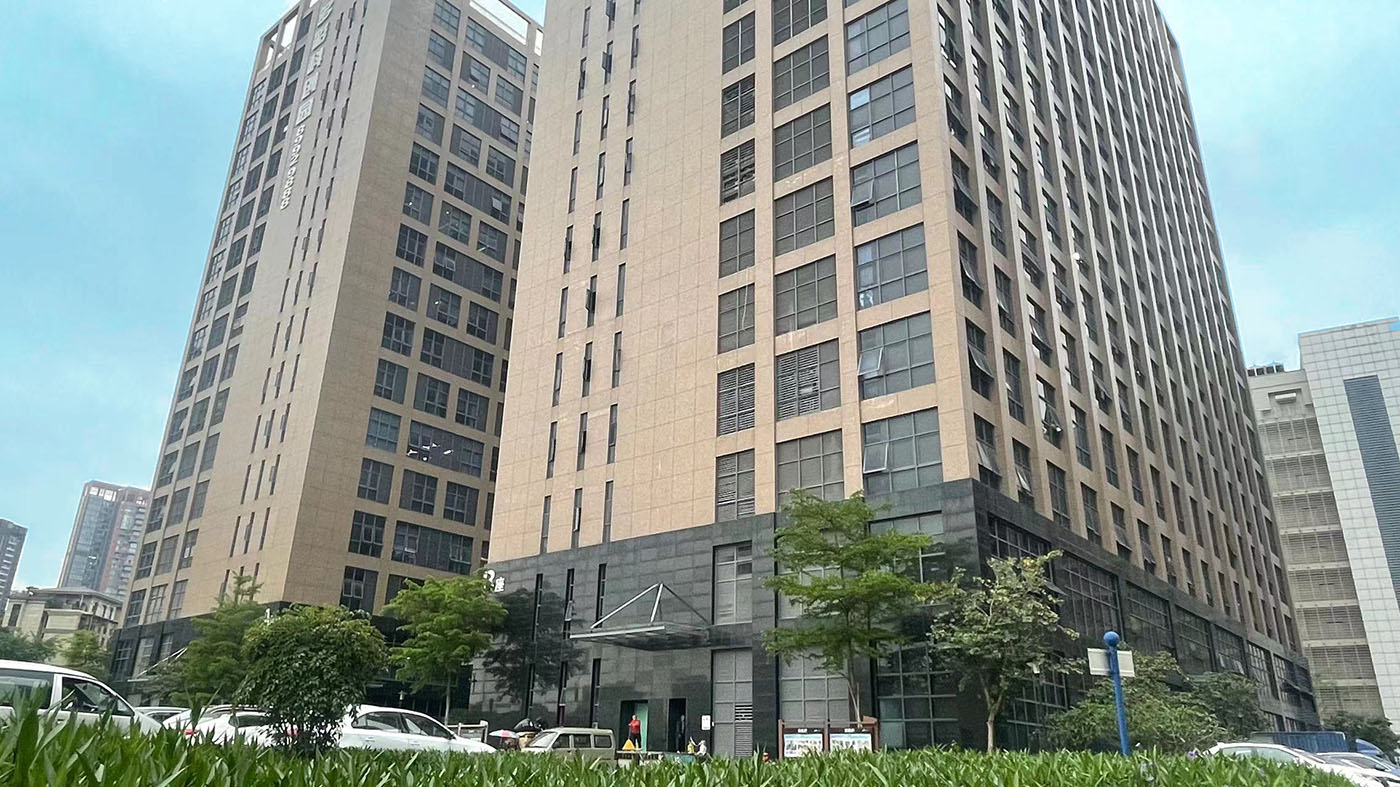
Kocent Optec Limited established in 2012 in Hongkong as a hi-tech communication enterprise, is one of China's leading fiber optic termination product manufacturer and solution provider.
We're dedicated to developing and manufacturing fiber optic communication products ranging from passive to active categories for telecommunication networks, enterprise networks and data centers.
By leveraging our extensive experience and excellent production capacity we gained over the years, we magnify the outcome for our valuable customers, which ultimately expands their core competencies and helps them outperform competitors. We place emphasis on customer collaboration, and we define ourselves as your valuable partner in fiber optic connection solutions. We believe our differentiators are your perceived advantages.

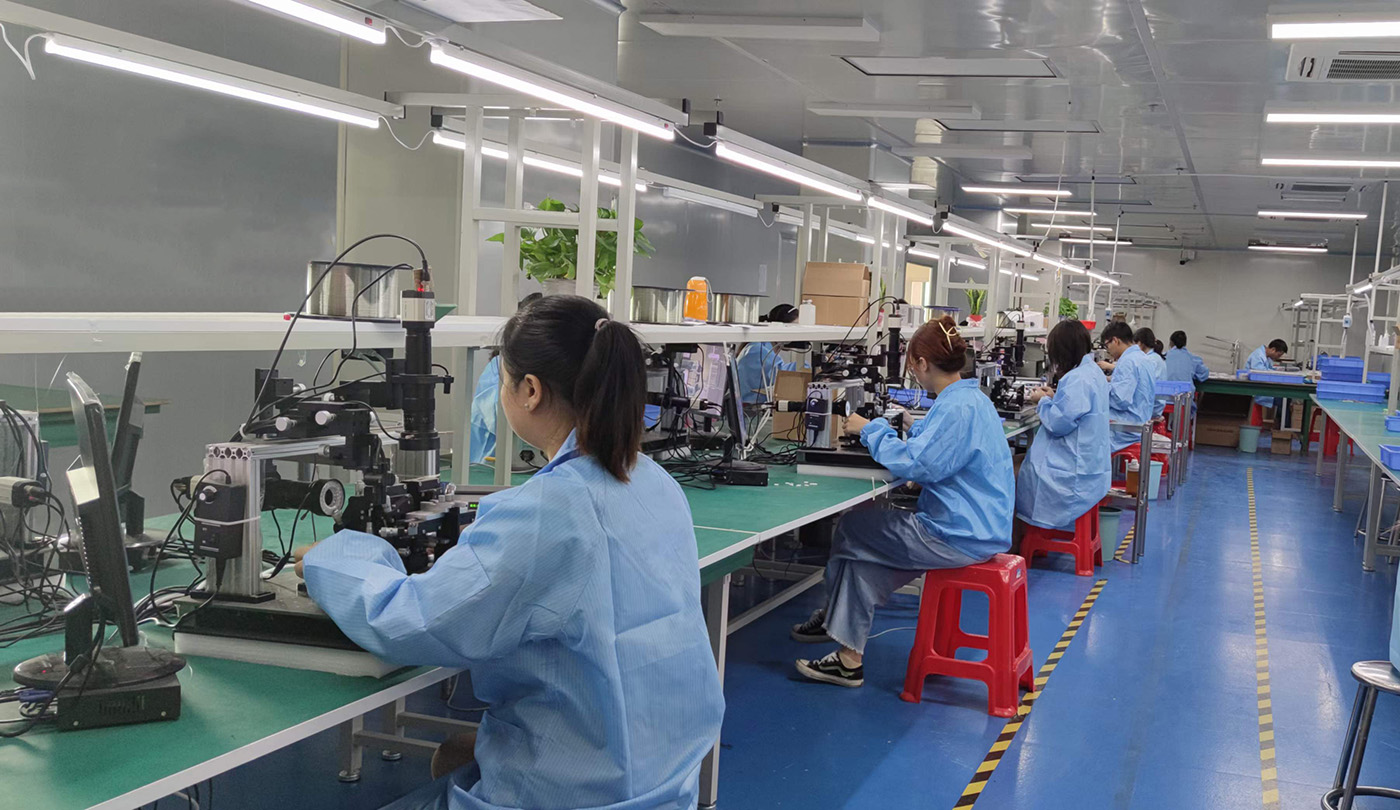
With more than 13 years of experience in manufacturing telecommunication fiber optic products, we follow strictly fiber optic industry standards by using mature scientific methods to deliver your products on time and ensure that 100% products are tested and inspected before shipment.
Years of sales and service experience have enabled us to win customers from different regions. Today, we have customers from East Asia, Southeast Asia, Middle East, Eastern Europe, Western Europe, Northern Europe, South America, North America, North Africa, and South Africa.
Win-win cooperation is our constant goal. Many our OEM and ODM products won the Telecom Operator tender and satisfy end-user request.
Answers to technical and commercial questions on procurement, performance parameters, and compatibility of Active Optical Cables.
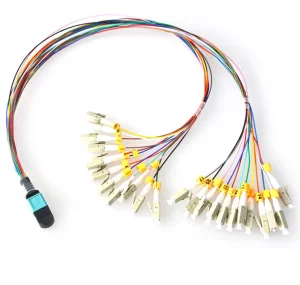
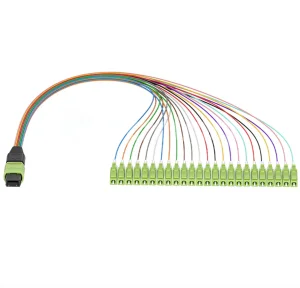
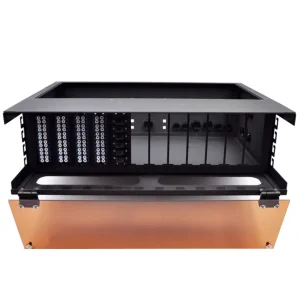
Explore our passive patch cords, breakout cables, and modular rack mount accessories designed to complement high-speed AOC system installations.
 KOCENT OPTEC