In the era of cloud scale computing, machine learning clusters, and high-frequency financial trading systems, direct interconnect throughput has emerged as a major architectural bottleneck.
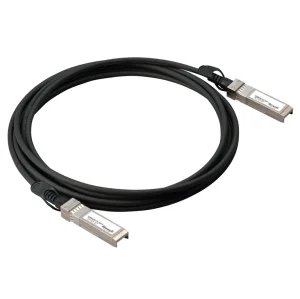
Direct Attach Copper (DAC) cables have evolved into the default solution for short-reach, high-speed interconnects. Deploying DAC assemblies over alternative media forms (like Active Optical Cables or discrete optical transceivers paired with patch cords) offers significant reductions in network infrastructure capital expenditure (CapEx) and operational expenditure (OpEx).
However, off-the-shelf options frequently fail to meet the performance, density, and multi-vendor compatibility demands of custom data center switches. This is where Original Design Manufacturer (ODM) DAC cables become vital, allowing enterprises to customize physical layer parameters such as length, wire gauge (AWG), EEPROM configuration, and pull-tab mechanics to suit their exact hardware needs.
Choosing the right cable type requires balancing link budget, distance requirements, and thermal constraints.
| Feature Spec | Passive DAC (Twinax) | Active DAC (ACC / AEC) | Active Optical Cable (AOC) |
|---|---|---|---|
| Transmission Medium | Copper Twinaxial Cable | Copper Twinaxial Cable with Redriver/Retimer | Multimode Glass Fiber (OM3/OM4) |
| Reach Limits | Up to 7 Meters (at lower speeds; 1-3m at 400G) | Up to 10 Meters (active boost) | Up to 100+ Meters |
| Latency | Near Zero (Speed of light in copper, no conversion) | Very Low (Nanosecond level boost processing) | Moderate (Added delay from electrical-to-optical conversion) |
| Power Consumption | 0 Watts | ~0.5W to 1.5W per end | ~1.0W to 2.5W per end |
| Cost Profile | Ultra-Low (Best ROI for top-of-rack deployments) | Moderate (Affordable intermediate solution) | High (Optics cost premium) |
| Bending Radius | Moderate to Large (Subject to AWG thickness) | Moderate (Thinner copper can be used) | Small (Extremely flexible, immune to EMI) |
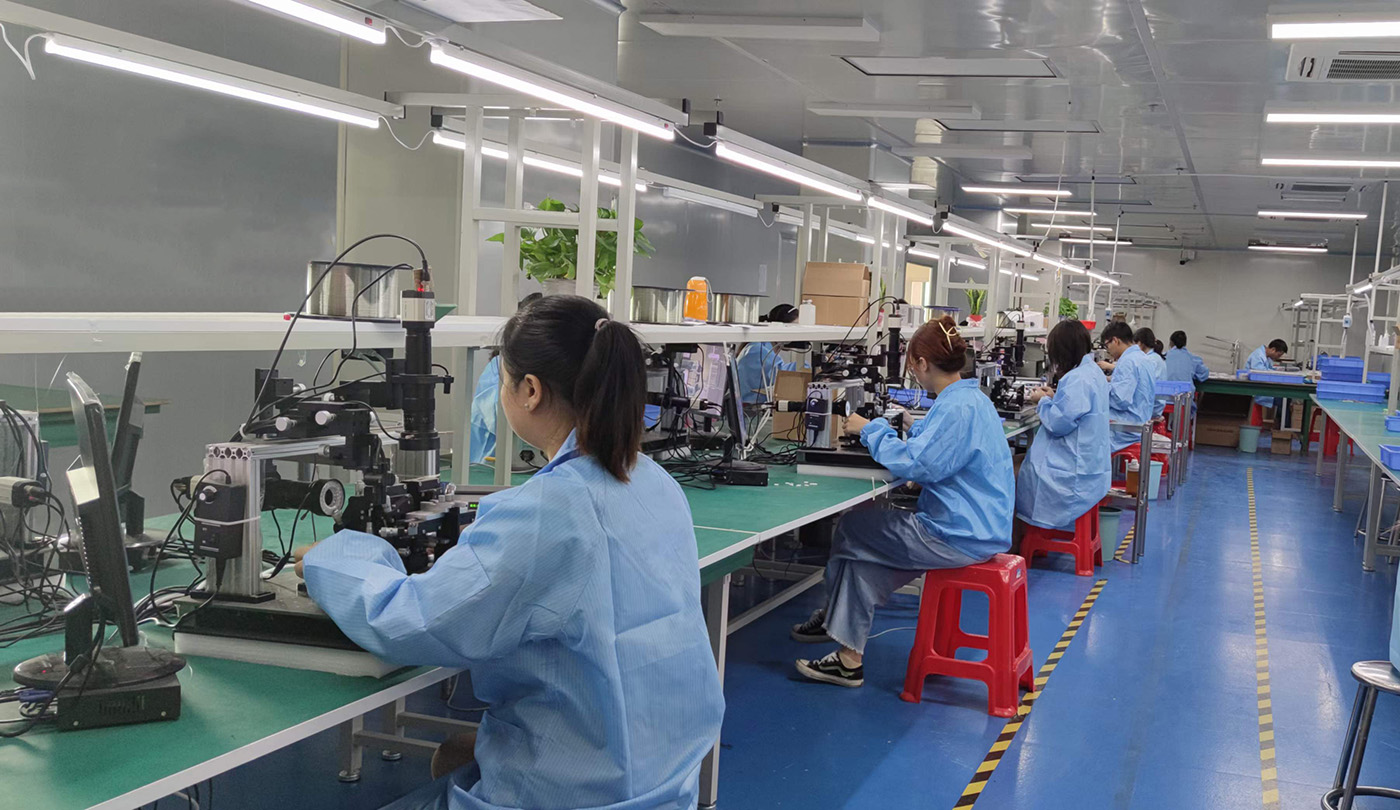
Established in 2012 in Hong Kong as a hi-tech communication enterprise, Kocent Optec Limited has grown to become one of China's leading fiber optic and high-speed copper termination product manufacturers and solution providers.
We are dedicated to developing and manufacturing high-performance communication products ranging from passive to active categories. These solutions are optimized for telecommunication networks, enterprise infrastructures, and next-generation hyperscale data centers.
By leveraging our extensive engineering experience and manufacturing capabilities, we help our clients expand their core competencies and outpace competitors. We define ourselves not just as a vendor, but as a strategic collaborative partner in high-speed connectivity.


With more than 13 years of experience in manufacturing telecommunication and copper interconnect products, we follow fiber optic and copper cabling standards strictly. Our processes utilize mature, scientific methods to ensure order fulfillment timelines are met consistently.
Our commitment to quality means 100% of our products undergo comprehensive testing and inspection before shipment. We perform validation tests covering bit error rate (BER), optical spectrum continuity, Insertion Loss (IL), Return Loss (RL), and detailed Eye-Diagram analysis for high-speed DAC modules.
Years of sales and service excellence have earned Kocent Optec a diverse customer base across East Asia, Southeast Asia, the Middle East, Europe, the Americas, and Africa.
Our commitment to mutually beneficial partnership drives all of our production processes. Our OEM and ODM product portfolios have repeatedly won telecom operator tenders and satisfied strict carrier-grade requirements.
We work closely with major global telecom operators to design and supply custom high-speed cabling solutions. Our custom cabling solutions support infrastructures managed by operators such as SingTel, Vodafone, America Movil, Telefonica, Bharti Airtel, Orange, Telenor, VimpelCom, TeliaSonera, Saudi Telecom, MTN, Viettel, Bitel, VNPT, Laos Telecom, MYTEL, Telkom, Telekom, Entel, FiberTel, StarFiber, Ooredoo, Beeline, and Azercell.
From legacy 10G speeds to advanced 800G and 1.6T systems, here is how copper twinaxial technology continues to meet changing data demands.
Widely using SFP+ and QSFP+ form factors. Standard passive copper cables successfully transmitted signals up to 7-10 meters without significant attenuation. Standardized wire diameters allowed for robust, direct-attach architectures.
The introduction of PAM4 (Pulse Amplitude Modulation 4-level) doubled transmission rates but shortened passive copper reach. Active Copper Cables (ACC) featuring analog equalizers emerged to extend copper limits up to 5 meters, maintaining cost advantages over fiber.
QSFP-DD and OSFP configurations dominate these speeds. Due to significant high-frequency attenuation, passive DAC links are generally limited to 1-2 meters. Active Electrical Cables (AEC) with integrated retimer DSP chips are widely used to maintain reach up to 5 meters at 800G, preserving the cost benefits of copper.
Next-generation 1.6T Ethernet demands new approaches to high-speed signal integrity. Development focuses on ultra-thin 32AWG copper configurations to facilitate airflow in high-density systems, alongside the integration of co-packaged optics (CPO) and linear drive architectures (LPO).
When reviewing direct-attach copper cable price lists, several key cost drivers shape the final proposal.
Thinner cables (like 30AWG) require less raw copper and are highly flexible, but have higher signal attenuation. Thicker cables (such as 26AWG or 24AWG) are necessary for longer distances but cost more and are more rigid.
Cables featuring proprietary EEPROM serialization to ensure compatibility with proprietary switch hardware (like Cisco, Arista, or Juniper) can carry a licensing cost compared to open-source or generic configurations.
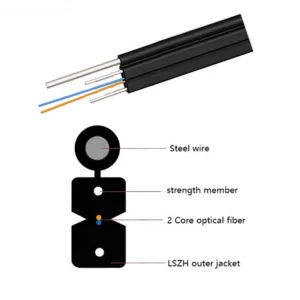
Industrial specifications requiring LSZH (Low Smoke Zero Halogen) jackets or special outer braids for EMI protection in high-density racks will affect cost relative to standard PVC installations.
Answers to critical questions asked by procurement teams and network architects during design phases.
 KOCENT OPTEC