Explore our highly integrated active transceivers and high-performance passive components designed to meet rigorous telecom operator demands.
As modern enterprise networks, institutional campuses, and distributed data centers face skyrocketing bandwidth demands, the underlying fiber optic infrastructure must evolve without incurring prohibitive civil engineering costs. A primary bottleneck exists in legacy multi-mode fiber (MMF) backbones, specifically optical class OM1 (62.5/125 µm) and OM2 (50/125 µm) systems installed during the late 1990s and early 2000s. Standard high-speed optical transceivers, such as 10GBASE-SR, are physically limited to short distances (up to 33 meters on OM1 and 82 meters on OM2) due to severe modal dispersion.
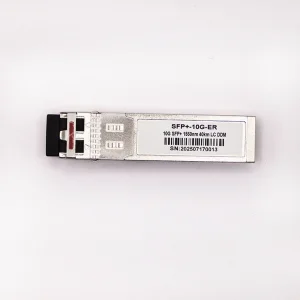
This is where the 10GBASE-LRM (Long Reach Multimode) optical transceiver becomes critical. Operating under the IEEE 802.3aq standard, 10G LRM enables robust 10Gbps transmission up to 220 meters on legacy OM1 and OM2 MMF networks. Rather than replacing miles of in-wall cabling, enterprise network architects deploy LRM optics to squeeze high-bandwidth performance out of their existing physical plant. Key to this capability is the incorporation of Electronic Dispersion Compensation (EDC) on the receive path, which mathematically reconstructs optical signals distorted by modal dispersion.
Established in 2012 in Hong Kong as a high-tech telecommunication enterprise, Kocent Optec Limited has grown to become one of China's premier manufacturers and ODM/OEM solution providers of fiber optic active and passive components. Our production philosophies focus on reliability, absolute standards compliance, and maximizing ROI for our clients.
We work in close collaboration with global telecommunication operators, data center infrastructure planners, and large-scale system integrators. By integrating multi-year hardware engineering experience with scalable production practices, Kocent Optec ensures your optical upgrade paths are seamless, cost-effective, and future-proof.

How 10GBASE-LRM bypasses the physical limits of modal dispersion on legacy multi-mode fiber.
When light pulses propagate down OM1/OM2 multi-mode fibers, different modes travel at different velocities, causing the pulses to spread out in time. LRM technology employs a transmitter design operating at 1310nm coupled with sophisticated Electronic Dispersion Compensation (EDC) on the receiver chip to counteract this Inter-Symbol Interference (ISI).
Fully compliant with the IEEE 802.3aq standard, our 10G LRM transceivers ensure interoperability across various multi-vendor network switch hardware. Working seamlessly within SFP+ MSA (Multi-Source Agreement) limits, it delivers predictable performance in diverse thermal settings.
By leveraging an uncooled FP or DFB laser source coupled with high-sensitivity PIN photo-detectors, Kocent Optec's ODM modules achieve an outstanding optical power budget, guaranteeing zero frame-loss and minimal bit error rates (BER < 10^-12).
| Fiber Cable Type | Core Diameter (µm) | Modal Bandwidth (MHz·km) | 10GBASE-SR Max Range | 10GBASE-LRM Max Range (Kocent OEM) |
|---|---|---|---|---|
| OM1 (FDDI-grade) | 62.5 / 125 | 200 | 33 meters | 220 meters |
| OM2 (Standard MMF) | 50 / 125 | 500 | 82 meters | 220 meters |
| OM3 (Laser-optimized) | 50 / 125 | 2000 | 300 meters | 220 meters |
| Single-Mode Fiber (SMF) | 9 / 125 | N/A | Unsupported | 300 meters (using MCP) |

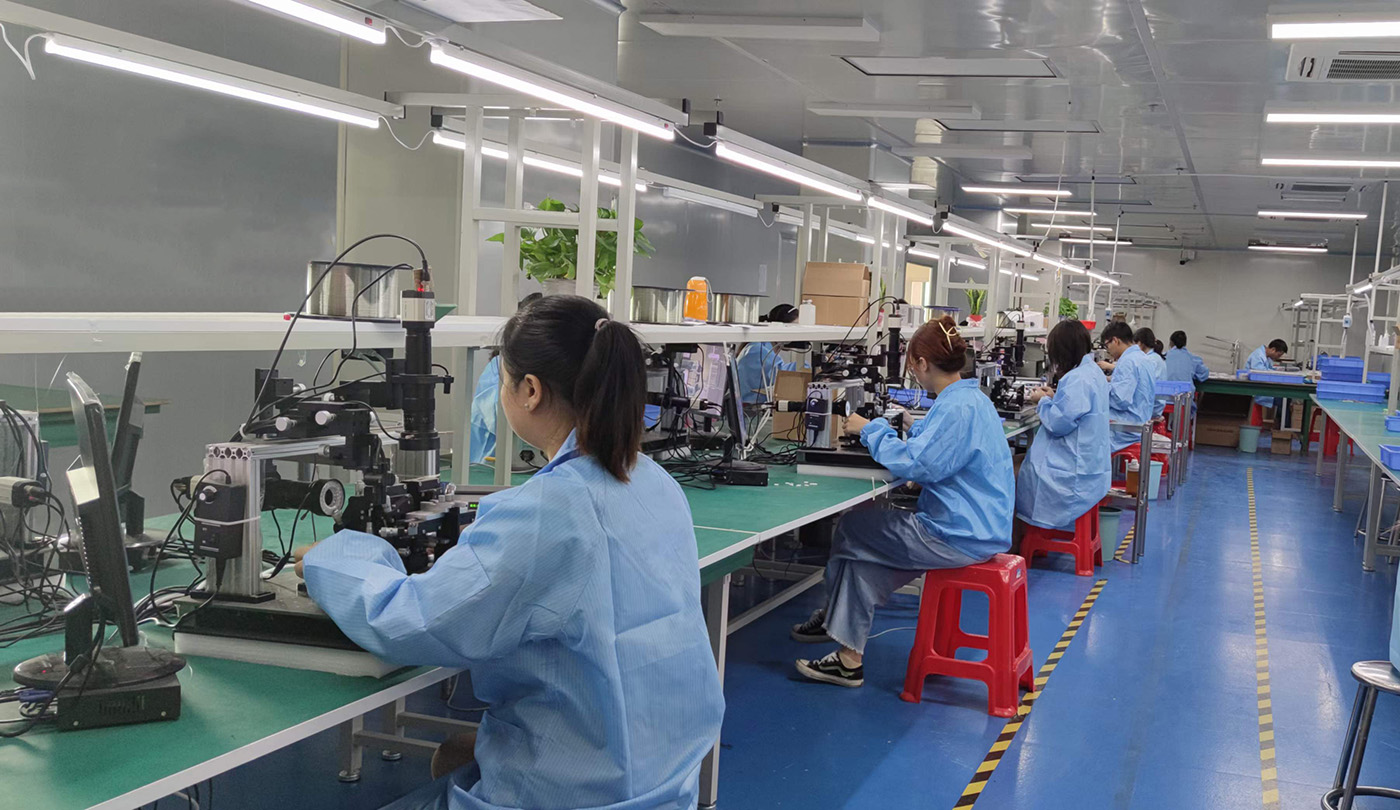
Kocent Optec operates state-of-the-art manufacturing facilities strategically located in China's optical communications hub. This location offers unprecedented access to a complete upstream and downstream supply chain network, providing key manufacturing advantages:
Our collaborative OEM/ODM business structure passes these manufacturing and supply-chain efficiencies directly to network operators, distributors, and bulk purchasers globally.
We deploy carrier-grade active and passive optical modules across international networks, conforming to strict quality and compliance guidelines.
With over 13 years of technical experience in manufacturing fiber optic communication devices, Kocent Optec has successfully passed rigorous quality audits from leading global telecom operators. Our products are widely deployed in networks managed by operators such as SingTel, Vodafone, America Movil, Telefonica, Bharti Airtel, Orange, Telenor, VimpelCom, TeliaSonera, Saudi Telecom, MTN, Viettel, Bitel, VNPT, Laos Telecom, MYTEL, Telkom, Telekom, Entel, FiberTel, StarFiber, Ooredoo, Beeline, and Azercell.
For international system integrators and tier-1 enterprise buyers, compliance is non-negotiable. Kocent Optec ensures all active transceivers and passive components meet global regulatory and environmental standards, minimizing field failures and ensuring network longevity.
Our quality control programs strictly adhere to international benchmarks, including:
Kocent Optec supports customizable firmware configurations for major hardware platforms. Through optimized EEPROM coding, we guarantee seamless compatibility with brands like Cisco, Arista, Juniper, HP, Dell, Huawei, and others, minimizing software-side port lockout issues.
Discover how system architects integrate 10G LRM to solve physical layer challenges across industries.
In academic and corporate campuses with older underground conduits, replacing buried multi-mode cables is highly labor-intensive and costly. 10G LRM transceivers allow network upgrades to 10Gbps using existing OM1/OM2 fibers over distances up to 220 meters.
Industrial networks often feature extensive distances of multi-mode fiber exposed to electromagnetic interference. Applying 10G LRM provides high-speed, noise-resistant optical signals without requiring single-mode fiber transitions or complex mode-conditioning patch cords.
In legacy structured data centers with existing fiber patch panels, using 10G LRM provides a reliable upgrade path for virtualized server rack links. This protects infrastructure investments while facilitating a controlled migration path toward next-generation high-density networking setups.
The networking industry is moving fast. While 10G LRM remains a critical tool for legacy fiber preservation, forward-thinking network operators are designing migration architectures that bridge current and future requirements. Higher bandwidth protocols like 25G, 100G, 400G, and 800G PAM4 technologies are rolling out in hyper-scale cloud environments, influencing design standards for enterprise and edge networks.
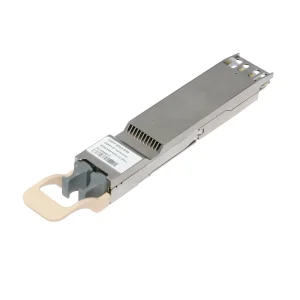
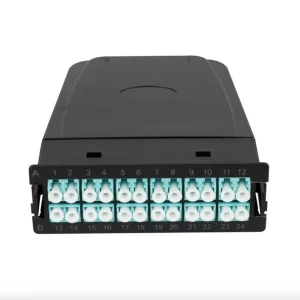
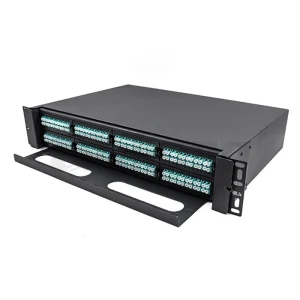
To support this evolution, Kocent Optec develops integrated optical portfolios. We offer passive and active components, including ultra-low-loss MPO/MTP modular cassettes, high-density patch panels, and advanced transceiver lines like 100G QSFP28, 200G QSFP56, and 800G OSFP modules. By aligning passive optical distribution networks (ODN) with modern transceivers, operators can transition smoothly, step-by-step, minimizing operational downtime and replacement costs.
Clear, authoritative technical answers regarding the deployment, compatibility, and operation of 10G LRM transceivers.
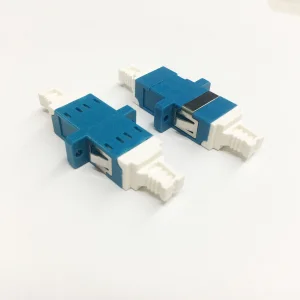
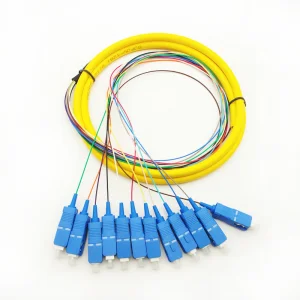
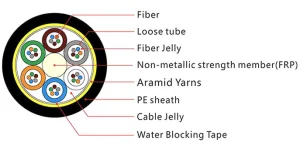
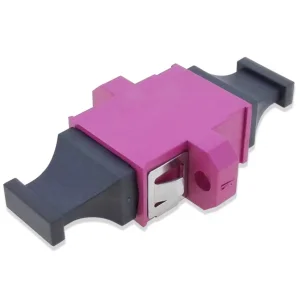
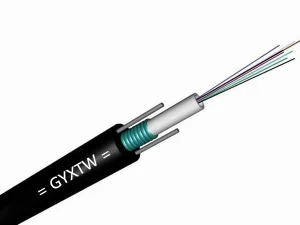
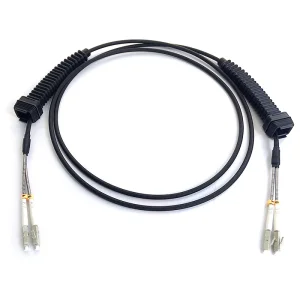
High-quality active transceivers, passive cables, and specialized structural accessories from our manufacturing facility.
 KOCENT OPTEC