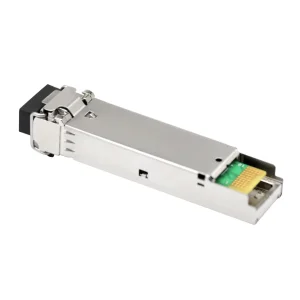
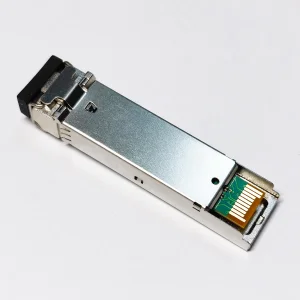
In the field of high-capacity telecommunications, optical transceivers are classified by their reach capacity. The "ZR" designation signifies a "Zero-dispersion Reach," referring to transceiver modules designed to transmit data over single-mode fiber (SMF) links up to 80 kilometers without requiring inline optical amplification. Operating at the 1550nm nominal wavelength—where fiber optic attenuation is physically minimized (approximately 0.2 dB/km)—these transceivers utilize a high-performance Distributed Feedback (DFB) laser or an Electro-absorption Modulated Laser (EML) alongside an Avalanche Photodiode (APD) receiver.
For telecommunication engineers and sourcing managers, procuring industrial-grade 10G ZR SFP+ modules requires an in-depth understanding of the optical link budget. A standard 10G ZR interface operates with a minimum optical budget of 23 dB to 24 dB. This robust budget is engineered to overcome not only the fiber loss across 80 kilometers but also splice losses, connector degradation, patch panel insertion, and chromatic dispersion penalties that accumulate across long distances. Working with a reliable, ISO-certified 10G ZR supplier guarantees that these components are fully compliant with multi-source agreements (MSAs) and perform optimally under varying environmental conditions.

China's optical communications manufacturing hubs benefit from highly integrated supply chains. From silicon photonics wafer processing to optical sub-assembly (TOSA/ROSA) housing, raw component sourcing occurs within tight geographical networks, minimizing logistics lead times and reducing overall production costs.
Leading Chinese exporters like Kocent Optec implement multi-stage Quality Assurance (QA) workflows. Using advanced hardware validation platforms, including Keysight bit error rate testers (BERT) and Agilent optical spectrum analyzers, each module is verified for compliance with eye diagram limits, transmitter power levels, and receiver sensitivity thresholds.
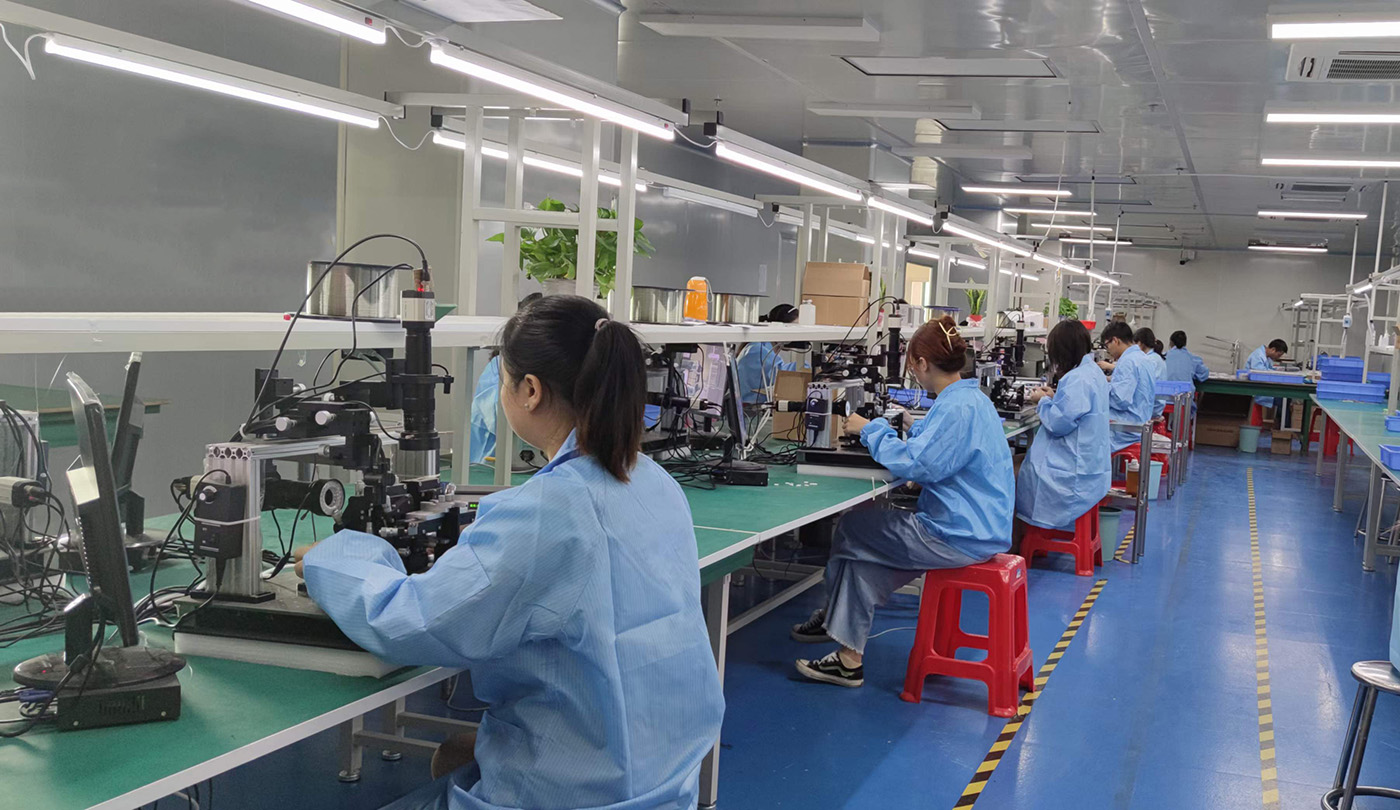
Our manufacturing facility offers flexible OEM/ODM runs. Whether you require specific EEPROM firmware coding to match system vendors (Cisco, Juniper, Huawei, etc.) or custom-labeled pull-tabs for dense patch panel deployments, our automated assembly lines easily adapt to customized requirements.

Established in 2012 in Hong Kong as a hi-tech communication enterprise, Kocent Optec Limited has grown to become one of China's premier fiber optic termination product manufacturers and solution providers. We are dedicated to the research, development, and manufacturing of state-of-the-art optical fiber communication products. Our comprehensive portfolio ranges from passive components to active optical transceivers, designed specifically for telecommunication networks, enterprise infrastructures, and modern data center environments.
By leveraging our extensive production experience and highly optimized manufacturing processes, we enhance operational capabilities for our global clients, enabling them to expand their network footprint and outperform regional competitors. We position ourselves not just as a supplier, but as a strategic partner in fiber optic connection solutions. At Kocent Optec, we firmly believe that our technological differentiators represent your long-term market advantages.
With more than 13 years of specialized experience in telecommunication fiber optic manufacturing, we strictly adhere to rigorous international industry benchmarks. Our engineering workflows utilize mature scientific processes to guarantee prompt delivery schedules. 100% of our products undergo comprehensive physical and optical inspection prior to shipping. This testing scope encompasses insertion loss profiles, return loss compliance, multi-vendor EEPROM verification, and high-temperature stress endurance.
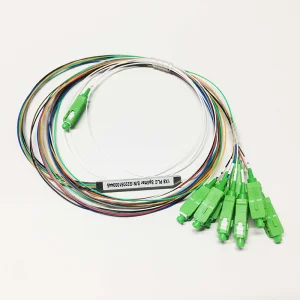
Our commitment to quality ensures that our passive splitters, patch cords, high-density distribution panels, and active transceivers maintain performance integrity in demanding field conditions, protecting the stability of major metropolitan rings and data carrier hubs.
Our extensive sales network and proven product reliability have allowed us to serve markets worldwide. Today, Kocent Optec products are deployed across East Asia, Southeast Asia, the Middle East, Eastern Europe, Western Europe, Northern Europe, South America, North America, North Africa, and South Africa.
Our OEM and ODM components are regularly specified in Tier-1 telecommunication operator tenders globally. We work closely with leading carriers to deploy reliable networking gear, including:
As enterprise cloud applications expand, low-latency, high-bandwidth communication between metropolitan data centers is critical. Incorporating 10G SFP+ ZR transceivers into your architecture enables direct center-to-center single-mode connectivity across 80km links without expensive inline amplification gear, minimizing equipment footprint and maintenance overhead.
For Fiber-to-the-Home (FTTH) networks, connecting Optical Line Terminals (OLTs) in remote central offices to metro aggregation sites is a primary engineering challenge. Using our high-performance 10G ZR transceivers allows operators to maintain high throughput across extensive local fiber loops, ensuring reliable broadband distribution to suburban communities.
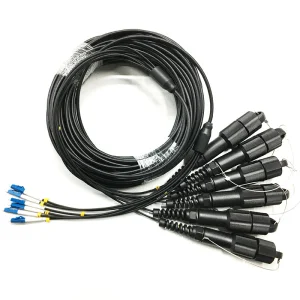
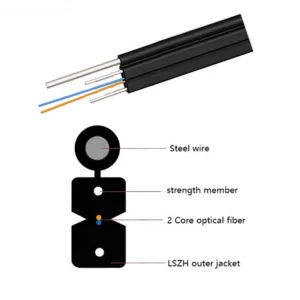
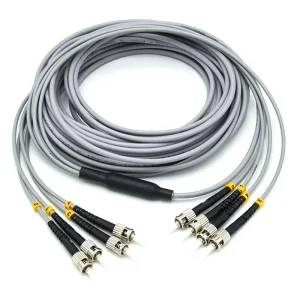
With LTE and 5G network expansions, cell tower baseband units (BBUs) must connect back to core networks over increasingly longer distances. By deploying 10G SFP+ ZR modules paired with weather-proof outdoor patch cords (such as our PDLC field-terminated options), carriers can achieve long-reach, high-speed fronthaul and backhaul links under variable outdoor conditions.
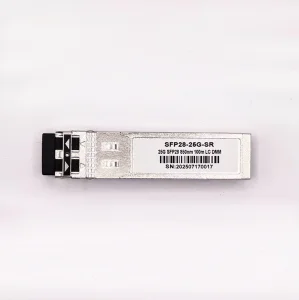
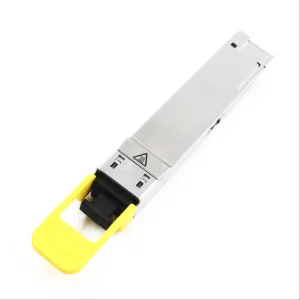
While 10G SFP+ ZR transceivers remain an essential component for cost-effective 80km metro links, the industry is transitioning toward higher spectral efficiency and higher-speed architectures. Driven by cloud compute demands, modern network operators are adopting 25G SFP28, 100G QSFP28, and even 800G OSFP/QSFP-DD PAM4 systems. These changes require components with tighter tolerances, lower power profiles, and improved heat dissipation.
In addition to speed advancements, the industry is increasingly integrating Digital Diagnostic Monitoring (DDM/DOM) protocols. This allows network engineers to monitor parameters such as optical output power, receiver sensitivity, operating temperature, and transceiver voltage in real time. This capability enables predictive maintenance of long-reach links before signal degradation leads to service interruptions.
Another major trend is the replacement of fixed-wavelength transceivers with Tunable DWDM (Dense Wavelength Division Multiplexing) SFP+ modules. These components allow operators to dynamically configure the transmit wavelength across the C-band spectrum. This reduces inventory complexity while maximizing fiber capacity by multiplexing multiple channels onto a single fiber pair.
Kocent Optec continues to monitor and participate in these advancements. We manufacture active modules that comply with MSA requirements, ensuring seamless operation alongside existing legacy devices.
 KOCENT OPTEC