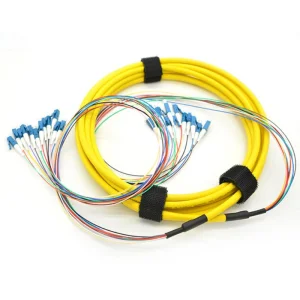
As global internet traffic grows exponentially, driven by AI computing, cloud scaling, and 5G densification, network operators face the double challenge of expanding bandwidth while containing infrastructure footprint and capital costs. Single-Fiber Bidirectional (BiDi) transceivers have emerged as the standard solution for cost-effectively upgrading network capacity.
Established in 2012 in Hong Kong as a high-tech communication enterprise, Kocent Optec Limited has grown into one of China's premier fiber optic termination product manufacturers and solution providers. We specialize in designing and manufacturing active and passive fiber optic devices that serve as the backbone of modern telecommunications networks, enterprise data centers, and campus backbones.
Leveraging our extensive experience and scalable production capacity, we help our global customers optimize their networks, expand their core competencies, and outperform competitors. We position ourselves not merely as a component supplier, but as a strategic partner in fiber optic connection solutions. We believe our strict adherence to quality and technological differentiation translate into clear competitive advantages for our partners.

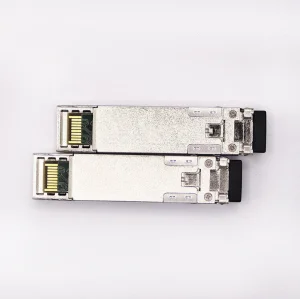
Standard optical transceivers rely on two separate fibers: one for transmitting data (Tx) and another for receiving data (Rx). Single-Fiber Bidirectional (BiDi) transceivers double the capacity of an existing fiber infrastructure by transmitting and receiving signals over a single strand of fiber. This is achieved using wavelength division multiplexing (WDM) diplexers, which segregate the transmit and receive optical channels on distinct wavelengths.
To avoid optical signal interference, 10G SFP+ BiDi modules are always deployed in matched pairs. The most common commercial pairing schemes are:
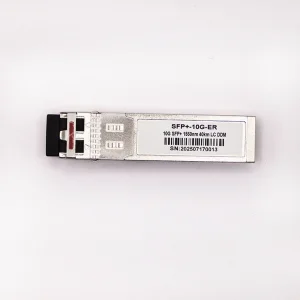
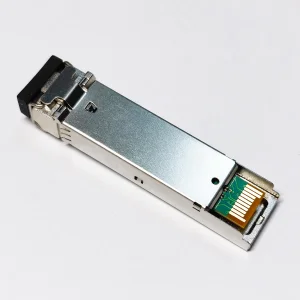
Inside a 10G SFP+ BiDi module, a specialized Bidirectional Optical Sub-Assembly (BOSA) combines a laser diode (typically a DFB or EML emitter) and an optical receiver (PIN photodiode or APD for long-reach applications) along with a WDM filter. By integrating these components into a single sub-assembly, we reduce coupling loss, control power consumption, and maintain an ultra-compact transceiver footprint.
| Parameter Type | 10G BiDi SFP+ 10km (Standard) | 10G BiDi SFP+ 40km (ER equivalent) | 10G BiDi SFP+ 80km (ZR equivalent) |
|---|---|---|---|
| Wavelength Pairs (Tx/Rx) | 1270nm / 1330nm (and vice versa) | 1270nm / 1330nm (and vice versa) | 1490nm / 1550nm (and vice versa) |
| Laser Diode Type | DFB (Distributed Feedback) | DFB (Distributed Feedback) | EML (Electro-absorption Modulated) |
| Receiver Technology | PIN Photodiode | PIN / APD (Avalanche Photodiode) | APD (Avalanche Photodiode) |
| Optical Link Budget | > 6 dB to 9 dB | > 15 dB to 18 dB | > 23 dB to 26 dB |
| DDM / DOM Support | Yes (SFF-8472 compliant) | Yes (SFF-8472 compliant) | Yes (SFF-8472 compliant) |

China's optical communications manufacturing sector has evolved from low-cost assembly to highly automated Industry 4.0 smart production lines. At Kocent Optec Limited, we combine this industrial ecosystem with rigorous testing methodologies to produce reliable, high-performance transceivers.
Our manufacturing workflow is designed around strict quality control. With over 13 years of manufacturing experience, we follow optical industry standards by using scientific methods to deliver your products on time. We ensure that 100% of our products are tested and inspected before shipment.
Every transceiver is subjected to a comprehensive testing regime, including:
10G BiDi SFP+ modules are key components in modern networking projects, balancing network capacity with cost-efficiency across multiple sectors.
5G Baseband Units (BBUs) and Remote Radio Heads (RRHs) require low-latency, high-bandwidth connections. 10G and 25G BiDi modules allow operators to upgrade wireless links using existing fiber lines, bypassing the high costs and logistical delays of deploying new fiber cables.
As spine-leaf networks expand, optimizing rack space and fiber routing is essential. BiDi transceivers reduce cable volume in high-density optical distribution frames (ODFs), improving airflow, reducing cooling requirements, and simplifying cable management.
For municipal fiber deployments and Fiber-to-the-Home (FTTH) expansion, BiDi transceivers help double network capacity at minimal cost. This makes them ideal for municipal offices, educational networks, and residential broadband hubs.
Procuring optical hardware for large networks requires balancing cost with long-term compatibility and component reliability.
Kocent Optec Limited provides OEM and ODM solutions designed to meet the technical standards of telecom operators worldwide. Our products have won bids and are deployed in active network environments by many major telecom operators, including:

Operating on a global scale requires adherence to strict environmental, safety, and operational standards. Kocent Optec Limited matches our manufacturing capacity with international compliance certifications.
Our complete active optical product range is designed and certified to comply with standard industry regulations:
We serve customers across East Asia, Southeast Asia, the Middle East, Eastern and Western Europe, the Americas, and Africa. We offer flexible shipping arrangements, including DAP, FOB, and DDP terms, along with automated inventory systems to support our partners' supply chain and warehousing operations.
As bandwidth demands grow, the optical communications industry is moving from 10G links toward 25G, 50G, and higher-speed bidirectional transmission interfaces.
The rise of 5G C-RAN has accelerated the demand for 25G BiDi SFP28 transceivers. Operating on 1270nm/1330nm bands using PAM4 modulation, these modules allow carriers to transition from 10G networks to 25G channels using their existing fiber assets.
For metropolitan and backhaul connections over 80km, coherent optical transmission is moving to single-fiber BiDi configurations. This enables high-capacity DWDM transmissions over a single fiber, reducing lease costs for long-haul routes.
Next-generation optical designs are integrating silicon photonics to reduce power consumption and simplify manufacturing. By mounting optical engines closer to the switch ASIC, we can achieve higher port densities and reduce parasitic power losses.
No. BiDi transceivers use a single fiber port and rely on distinct transmit and receive wavelengths (e.g., Tx1270nm/Rx1330nm). Dual-fiber transceivers use separate fiber strands, transmitting and receiving on the same wavelength (e.g., 1310nm). Because the optical configurations and physical connections differ, they are incompatible.
Our 10G BiDi SFP+ modules feature Digital Diagnostics Monitoring (DDM) compliant with SFF-8472. This system provides real-time monitoring of key operational parameters, including optical output power, optical input power, internal temperature, laser bias current, and transceiver supply voltage, helping administrators monitor link health and troubleshoot issues remotely.
BiDi modules must be used in matched pairs because they use complementary wavelengths to transmit and receive data over a single fiber. For example, if Module A transmits at 1270nm and receives at 1330nm, Module B must transmit at 1330nm and receive at 1270nm. Using mismatched modules will prevent the link from establishing connection.
Polarization-dependent loss (PDL) occurs when optical signals experience varying attenuation depending on their polarization state. In single-fiber BiDi links, maintaining low PDL is critical to prevent signal degradation and maintain stable Bit Error Rates over long runs. This is achieved through precision manufacturing and optical alignment during the BOSA production phase.
All our active optical transceivers are certified to international standards, including CE, FCC, RoHS, and Class 1 Laser Safety (IEC/EN 60825-1). These certifications ensure compliance with safety and environmental requirements for deployment in enterprise networks globally.
 KOCENT OPTEC