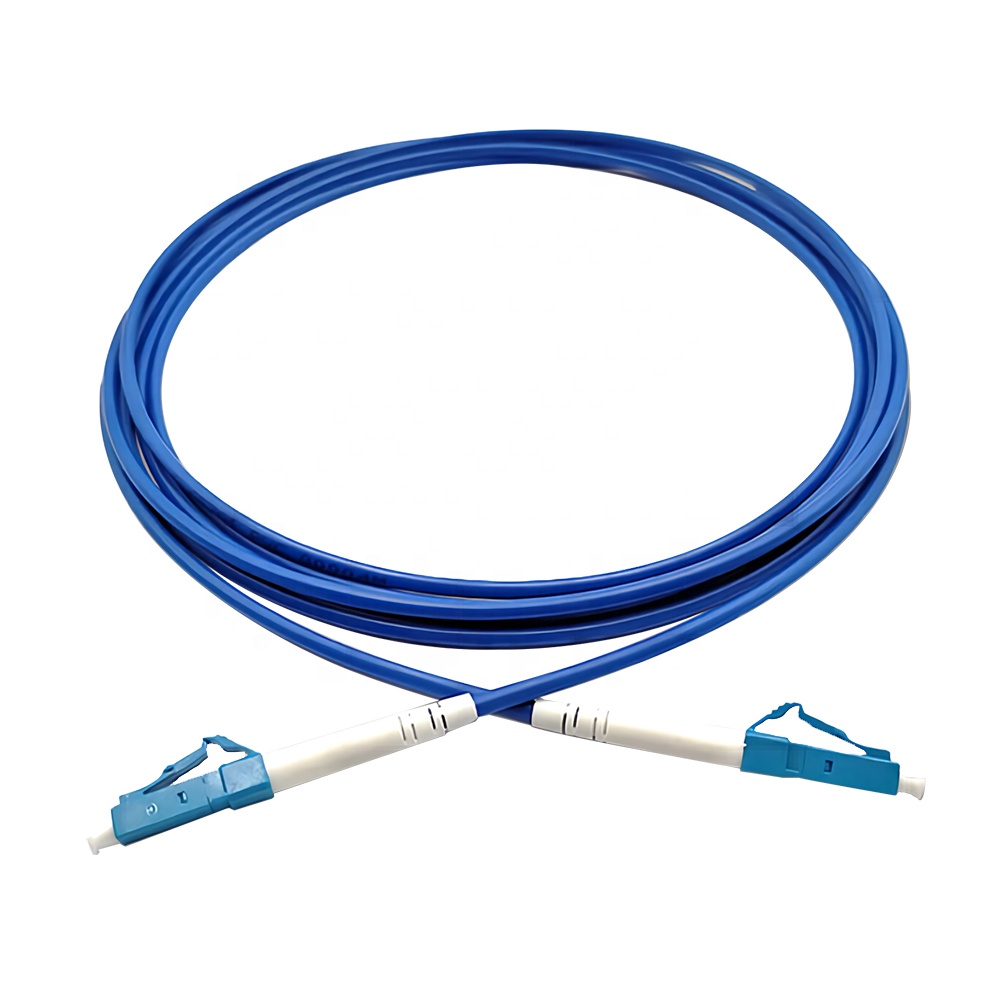
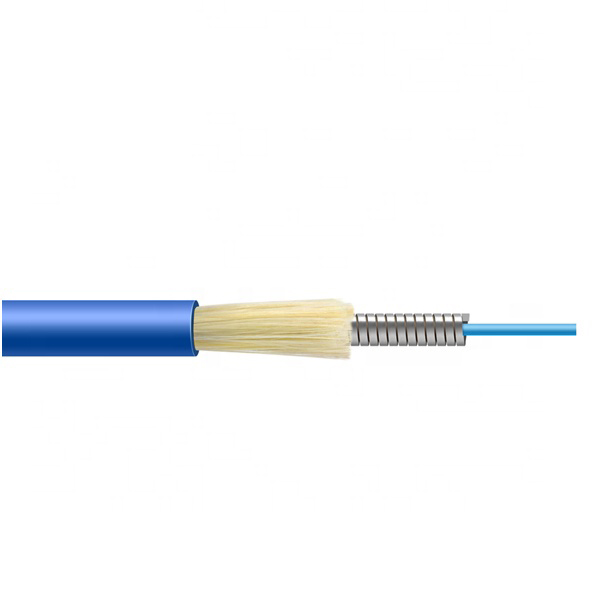
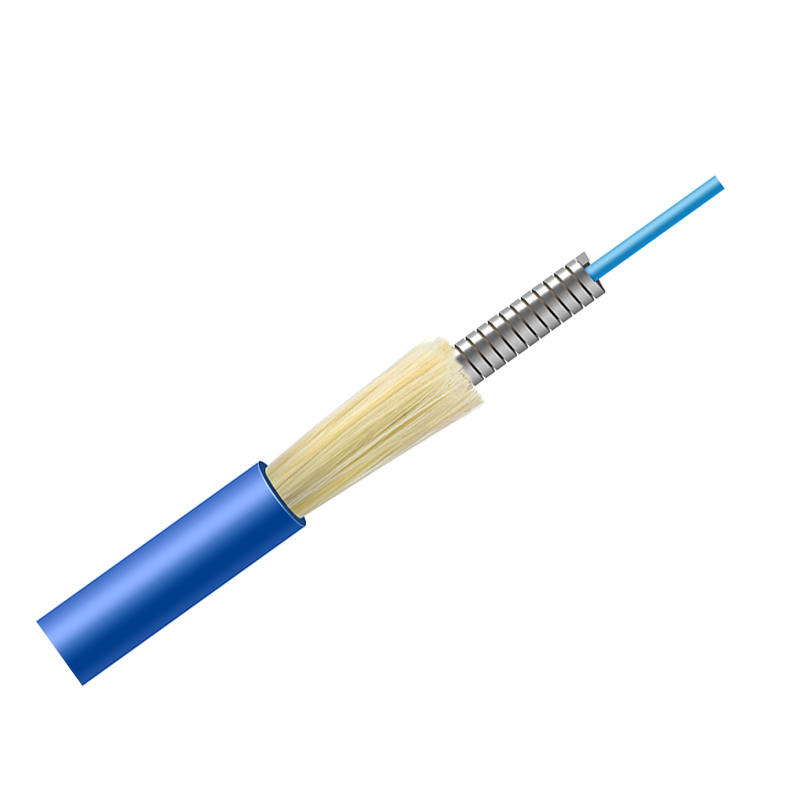
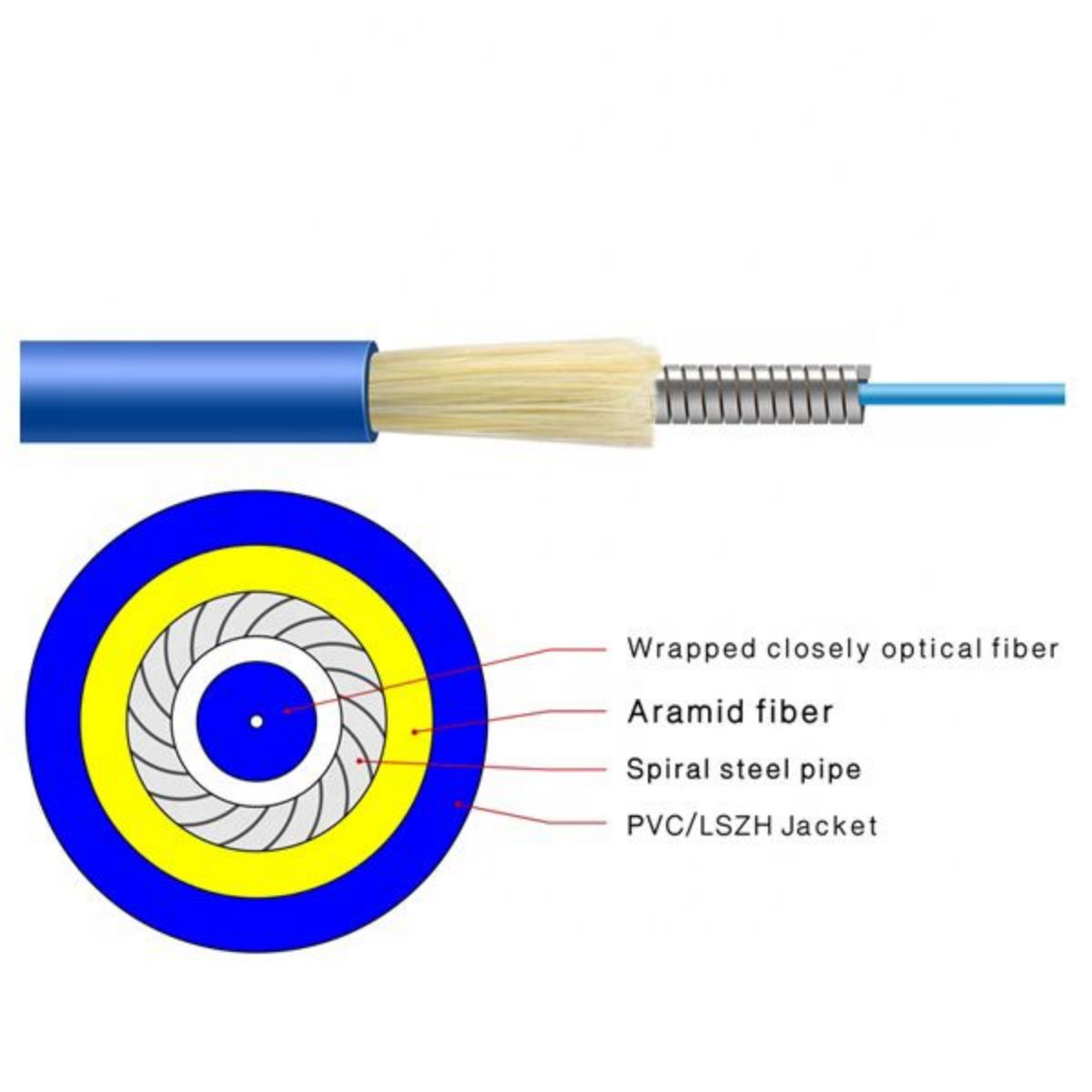
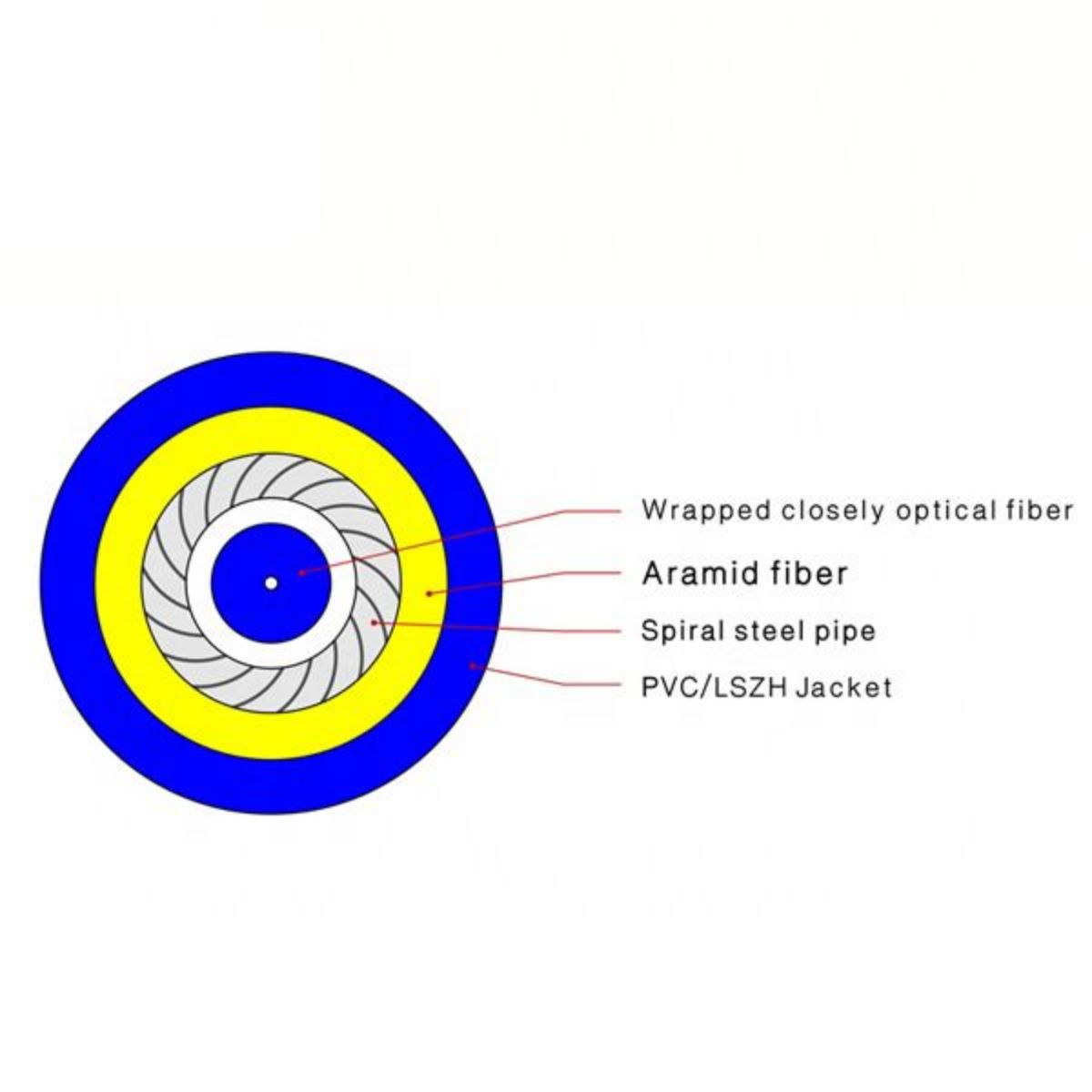
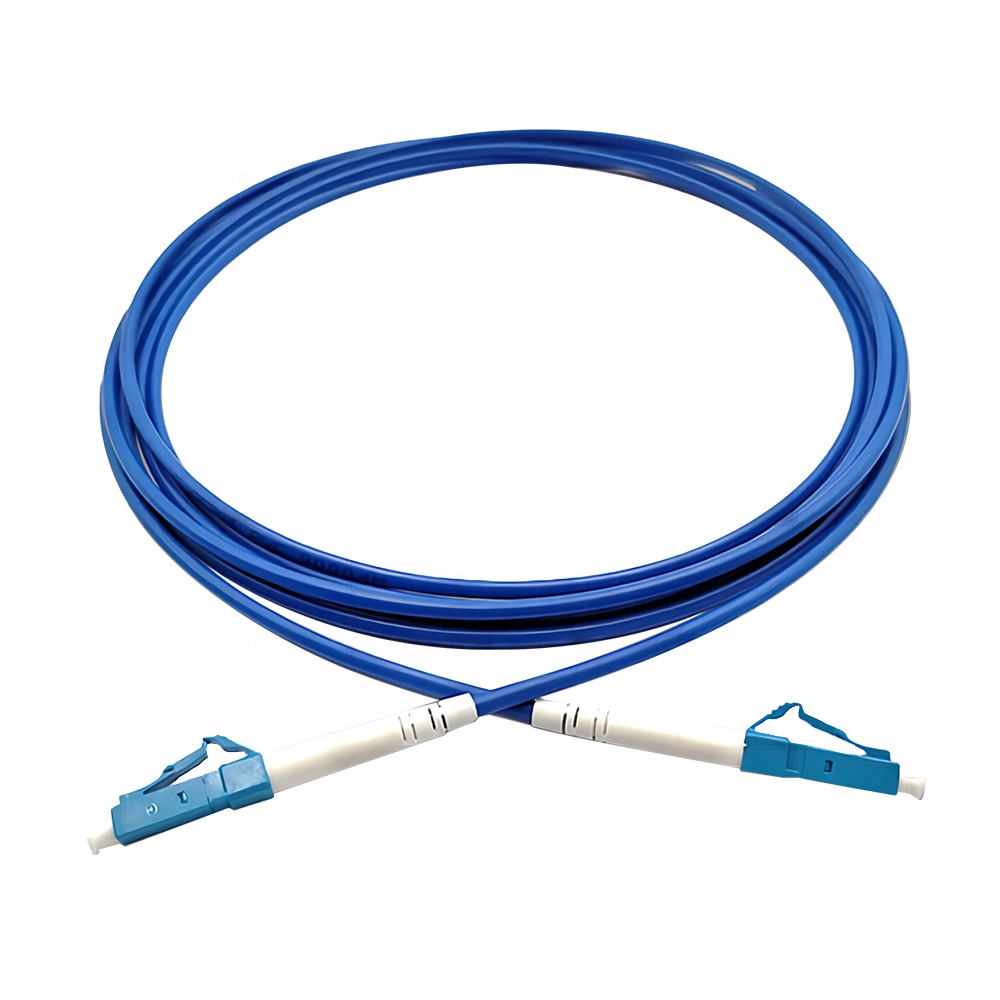
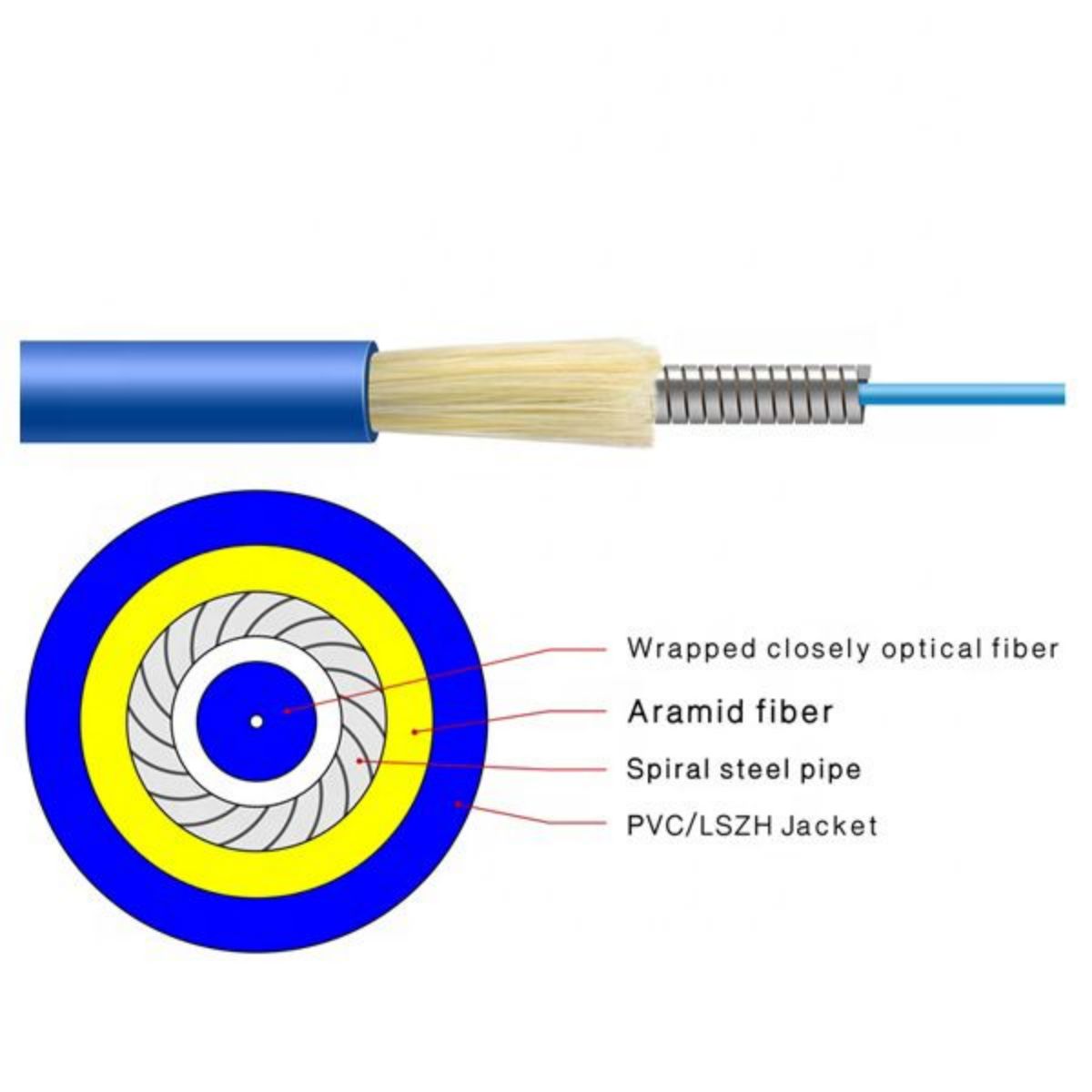
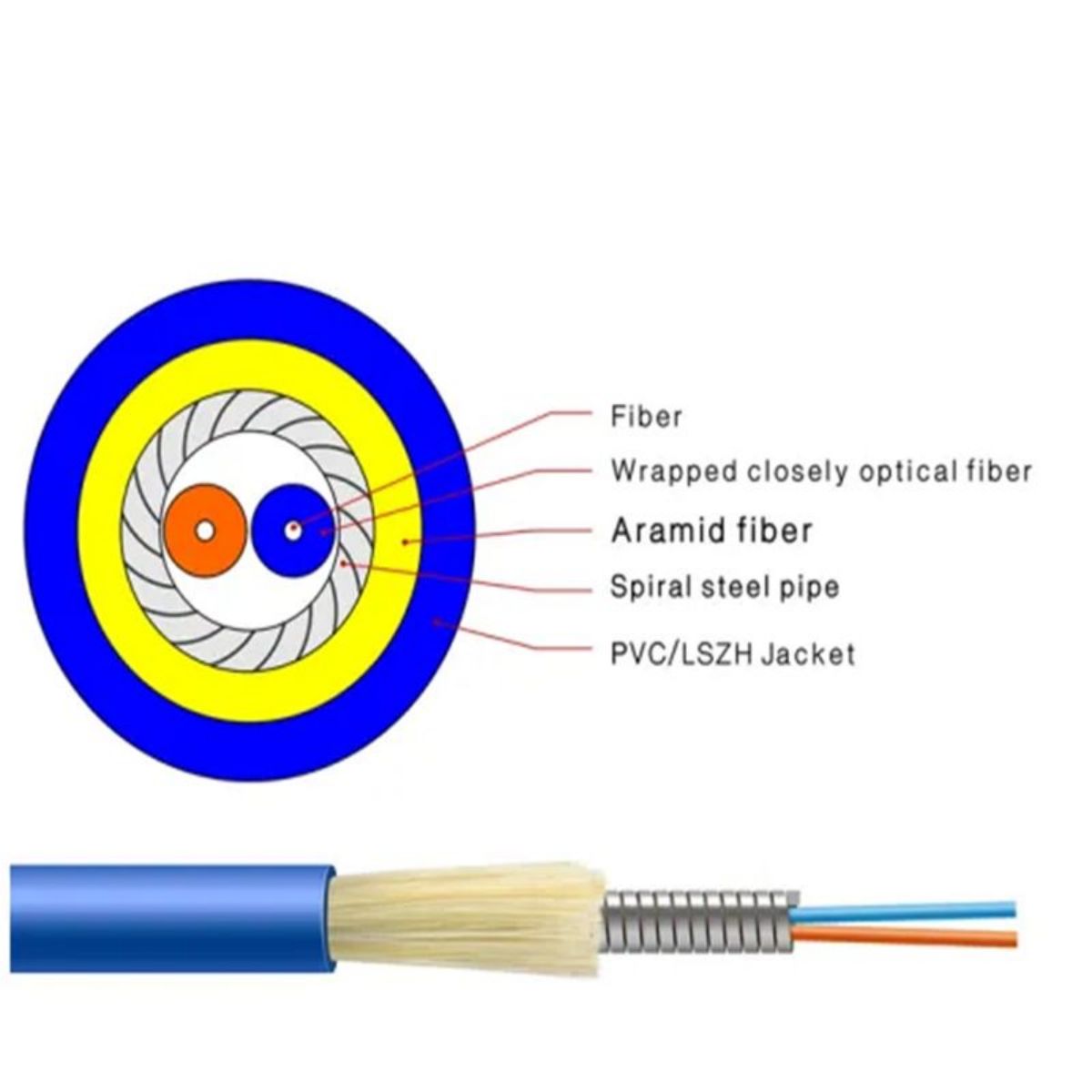
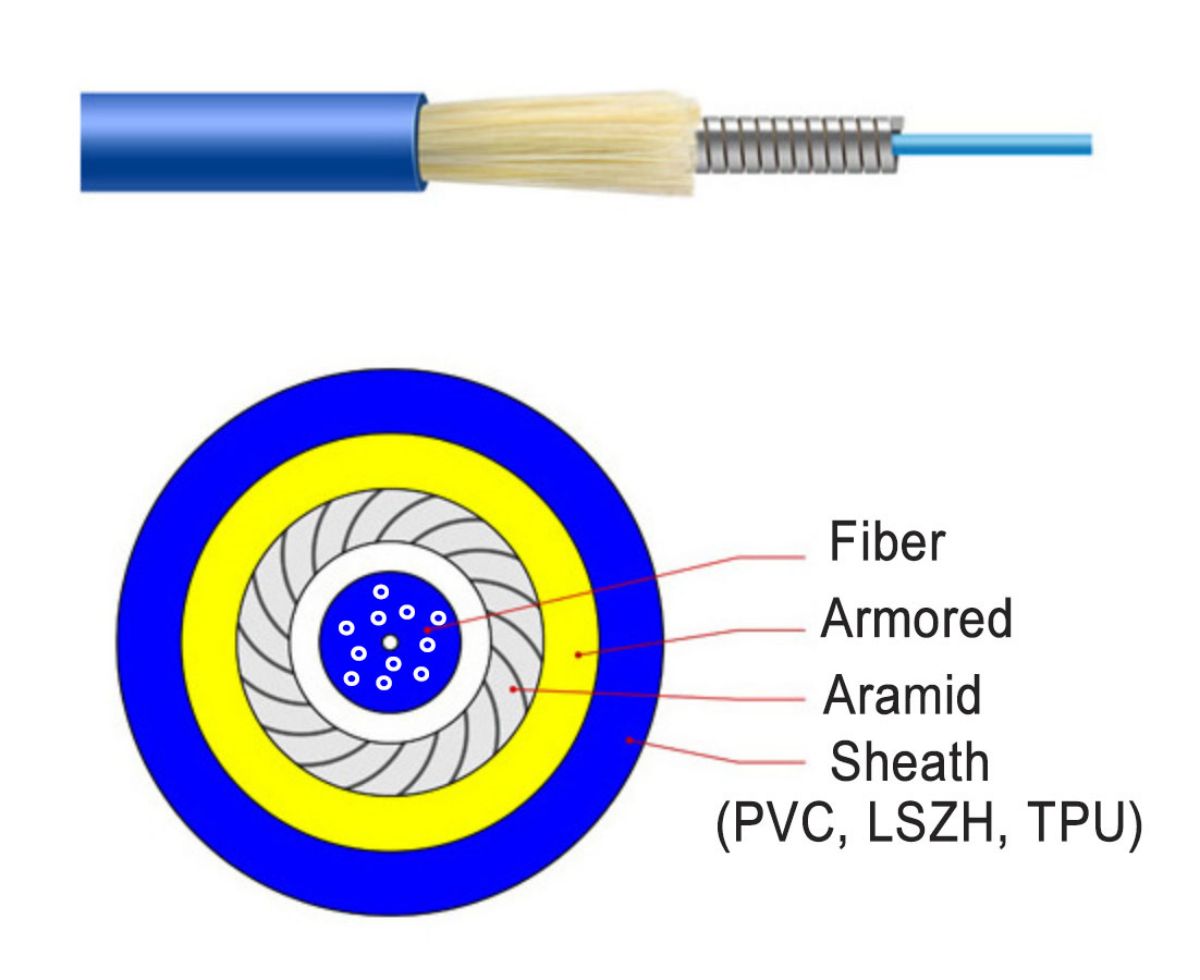
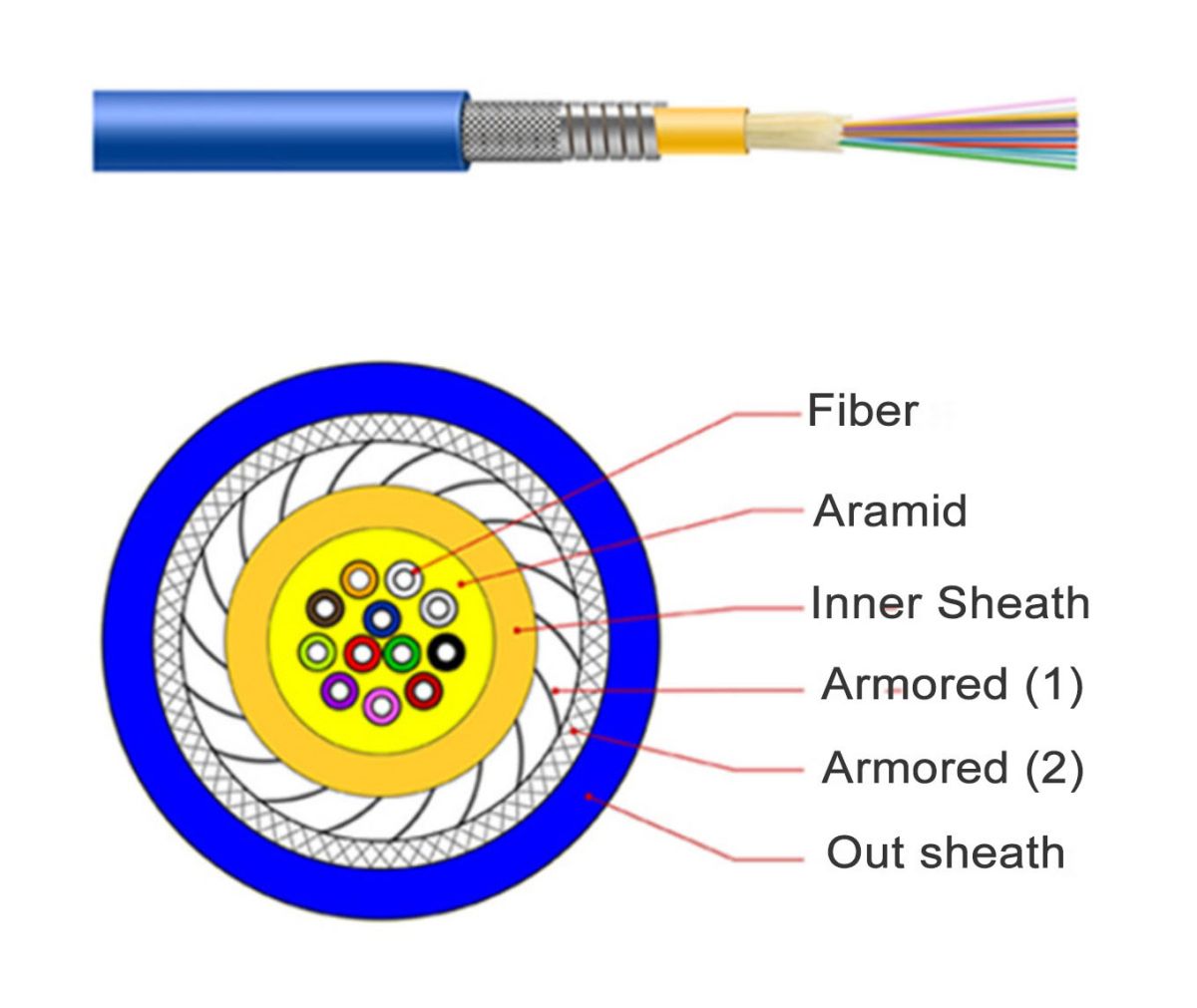
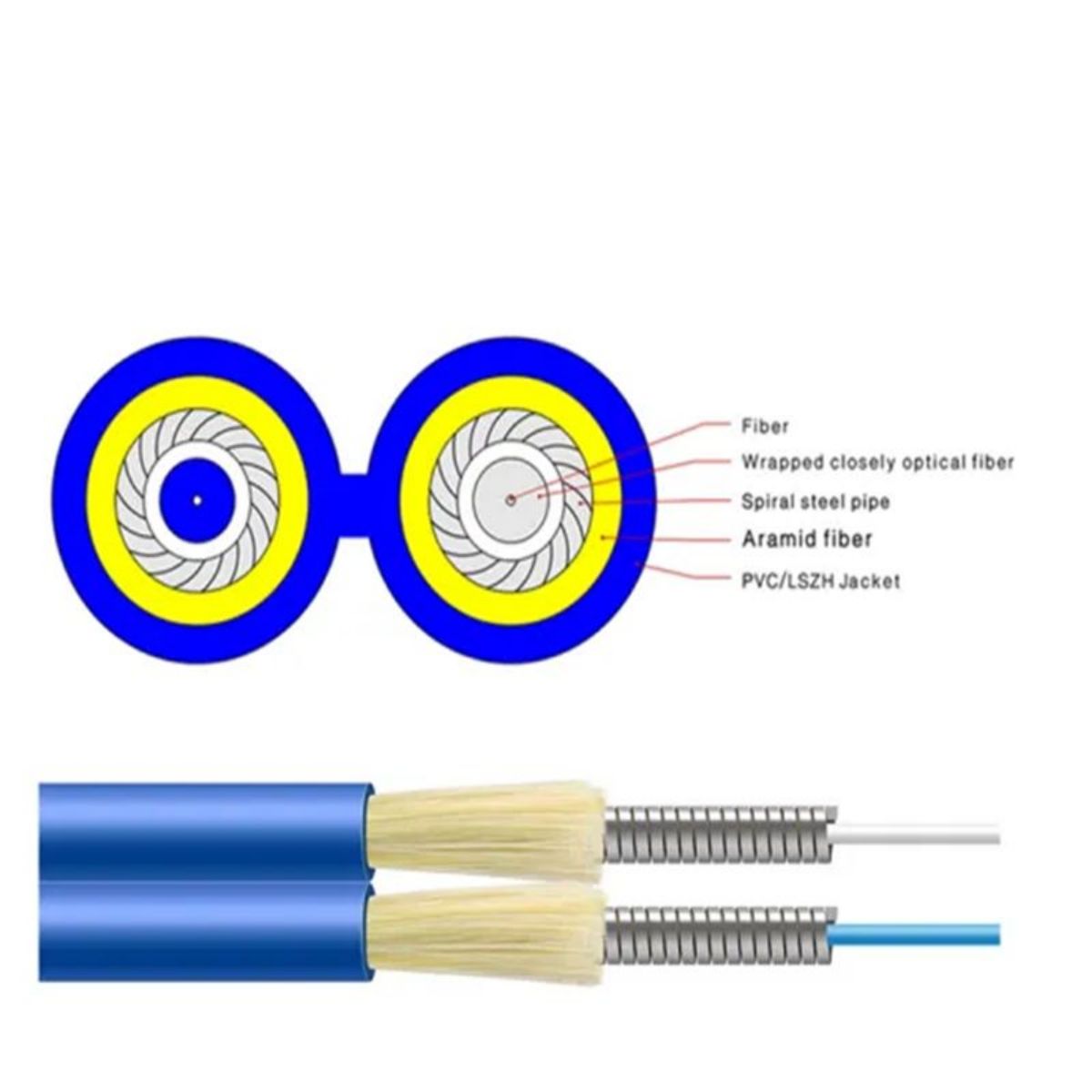
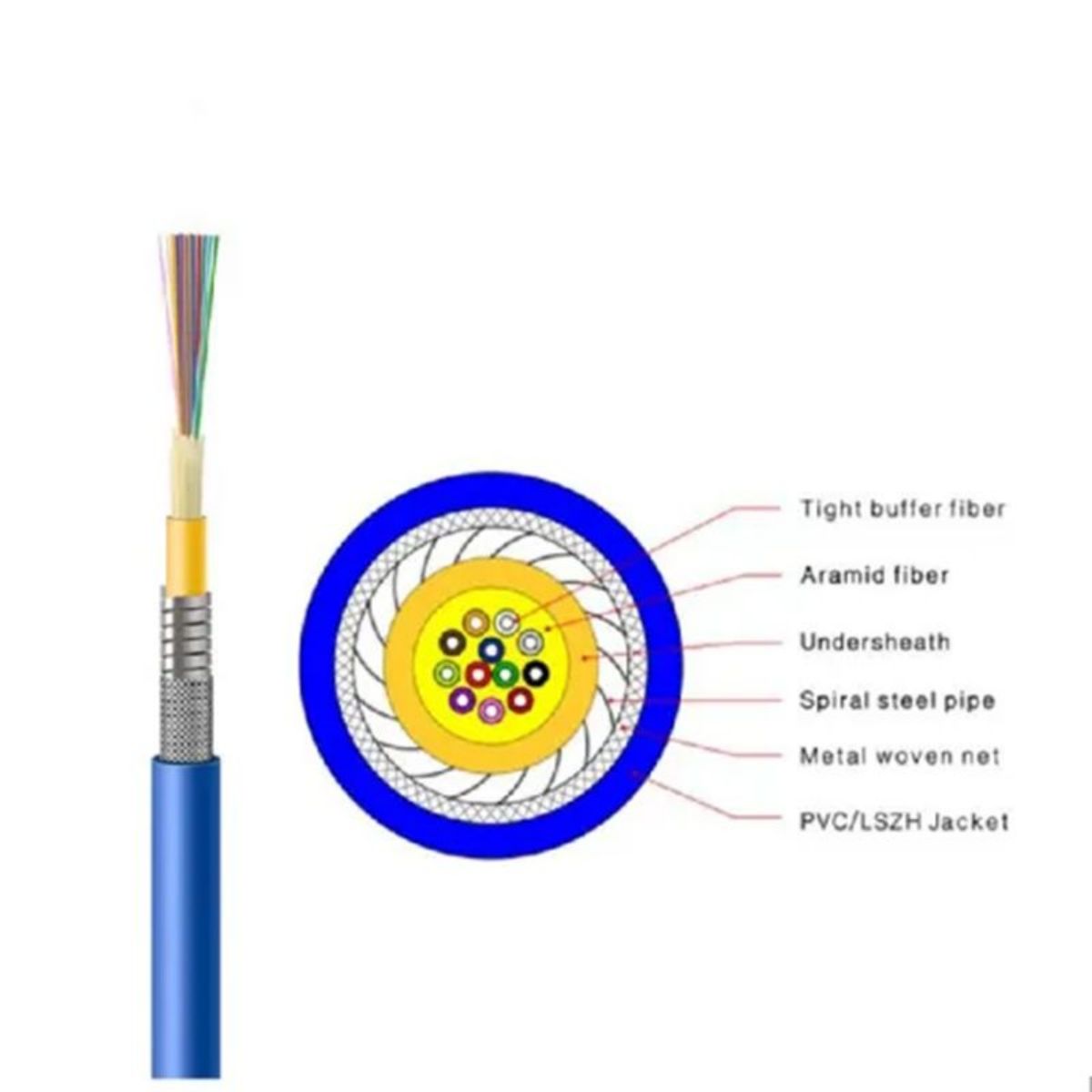
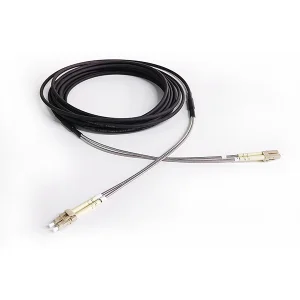
• The Armored fiber optic cables possess several layers to secure the cable. • The plastic outer jacket provides protection against rodents, abrasion, and twist. • Then the light steel tube between the optic fibers and the outer jacket offers better protection to the fibers in the center. • And the Kevlar is placed inside the outer jacket to cover the steel tube.• Good mechanical and environment characteristics.• Flame retardant characteristics meet the requirements of relevant standards.• The mechanical characteristics meet the requirements of relevant standards.• Soft, flexible, easy to splice, and with big capacity data transmission.• Meet various requirements of market and clients.
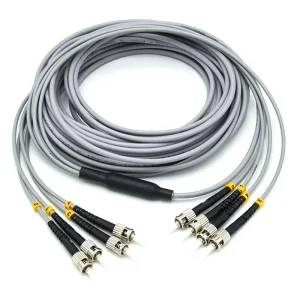
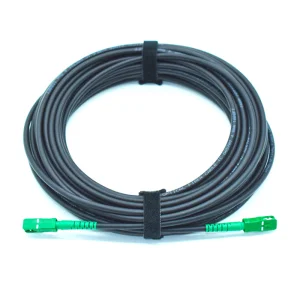
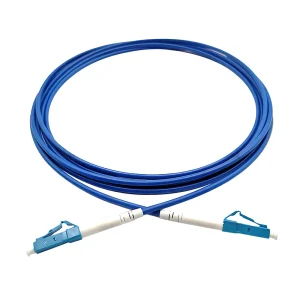
SM (blue, yellow), MM (grey, orange), Outdoor (Black)
• Thickness
0.5±0.1 mm
• Outer diameter
3.0 ±0.1mm
Technical Parameters
Item
Singlemode
Multimode
Outer diameter
3.0mm
3.0mm
Standard color
Blue
Grey
Inner cable diameter
0.6mm, 0.9mm Tight Buffered
Inner cable material
PVC, LSZH
Strength member
Aramid Yarn
Cable out sheath material
PVC, LSZH, TPU or customized
Cable weight
15kg/km approx
Operating temperature
-40℃ ~ +80℃
Storage temperature
-40℃ ~ +80℃
Tensile strength (Short term)
200N
Tensile strength (Long term)
400N
Compression resistant strength
≥3000N/100MM
General attenuation (1310nm / 850nm)
≤0.4dB/km (1310nm)
≤3.0dB/km (850nm)
General attenuation (1550nm / 1300nm)
≤0.3dB/km (1550nm)
≤1.0dB/km (1300nm)
Minimal Bending radius
≥30D
≥30D
Key Characteristics & Advantages
Good mechanical and environment characteristics.
Flame retardant characteristics meet the requirements of relevant standards.
The mechanical characteristics meet the requirements of relevant standards.
Soft, flexible, easy to splice, and with big capacity data transmission.
Meet various requirements of market and clients.
The armored fiber optic cable which can be freely used like electrical wire, this item is protected by flexible stainless steel tube.
Compare with the regular fiber cable, it have advantage performance of high compression & impact resistance, anti-bug.
With fixed standard 3mm fiber optic connector, it is widely used in various terrible environment.
Mini diameter SUS spring tube reinforced ensures good crush resistance to 3000N;
Dupon Kevlar strength member brings good tensile strength of 300N above;
Outer jacket can be PVC, LSZH or TPU. Comply with RoHS;
Light, flexible and easy to bend.
Typical Applications
Used in indoor cabling, especially used as distribution cable.
Used as interconnect lines of equipments, and used in optical connections in optical communication equipment rooms and distribution frames.
Used as pigtails and patch cords.
Frequently Asked Questions
Q1: What makes armored fiber optic cable different from standard fiber optic cable?
Armored fiber optic cables feature a protective flexible stainless steel tube wrapper (SUS204) under the outer jacket. This provides significantly higher crush resistance (up to 3000N/100mm) and rodent protection while maintaining high flexibility, allowing it to be handled similarly to electrical wire.
Q2: Can this armored fiber optic cable be used in outdoor environments?
Yes. While commonly used for indoor cabling and distribution frames, this armored cable is suitable for harsh environments. Outdoor versions typically feature a black outer sheath for enhanced weather resistance, utilizing protective PVC, LSZH, or TPU materials.
Q3: What are the differences between Singlemode and Multimode variants?
The Singlemode variant utilizes a blue or yellow jacket with a lower attenuation rate (≤0.4dB/km at 1310nm), ideal for long-distance transmissions. The Multimode variant uses a grey or orange jacket with attenuation specifications suited for shorter ranges (≤3.0dB/km at 850nm).
Q4: Does the steel armor affect the bending capability of the fiber cable?
No, the mini-diameter SUS stainless steel spring tube design is highly flexible. The cable retains a minimal bending radius of ≥30D (30 times the outer diameter), making it easy to install in tight corners and distribution boxes.
Q5: What jacket materials are available, and are they flame retardant?
The outer jacket is customizable and available in PVC, LSZH (Low Smoke Zero Halogen), or TPU. The LSZH option satisfies standard fire safety regulations by offering excellent flame retardant characteristics.
 KOCENT OPTEC