Providing optimal latency and robust performance for Santiago metropolitan networks, fiber rings, and cloud facilities.
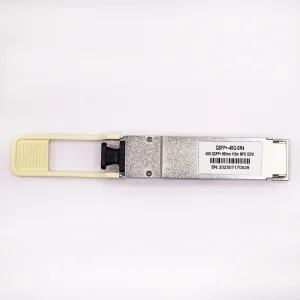
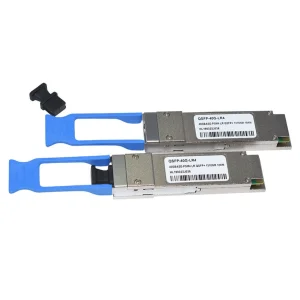
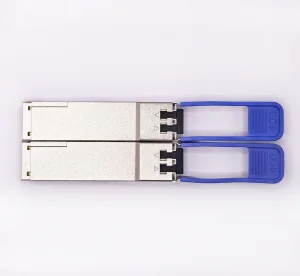
Chile is solidifying its position as the preeminent digital gateway for Latin America. Positioned dynamically with a stable economy and proactive policy frameworks, Santiago has become a prominent magnet for hyperscale cloud providers, including Google, Microsoft, Huawei, and Oracle. With multi-gigawatt installations constructed across Quilicura, Lampa, and San Bernardo, the demand for optical communication hardware has shifted from legacy networks to ultra-high-speed transceivers.
However, scaling up metropolitan networks within the unique topography of Chile presents engineering and economic challenges. Networks spanning the dry climate of the northern Atacama Desert down to the high-humidity, marine environments of southern ports require optical modules designed with premium thermal stability, robust structural housings, and strict adherence to international standardizations.
The Chilean telecommunications authority (SUBTEL) has pushed forward with the National Fiber Optic (FON - Fibra Óptica Nacional) and the Southern Fiber Optic (FOA - Fibra Óptica Austral) initiatives. These government-sponsored projects aim to deploy thousands of kilometers of terrestrial and submarine fiber optic cables. In this context, 40G QSFP+ transceivers act as a crucial technology path, enabling telcos like Entel, Telefónica, and Claro to upgrade backbone distribution networks effectively, ensuring seamless backhaul links from remote cellular base stations and regional data exchanges directly to the central rings of Santiago.

Optimized specifically for the dense multi-tenant environments and high-capacity carrier networks driving Chile's cloud revolution.
Engineered to withstand wide temperature fluctuations, high humidity, and coastal salinity common in Chilean copper mines and shipping terminals.
Fully compliant with Latin American electrical safety protocols, FCC, CE, RoHS, and ITU-T standards for carrier-grade deployments.

Established in 2012 in Hong Kong as a high-tech telecommunication enterprise, Kocent Optec Limited has grown to become one of China's premier fiber optic termination product manufacturers and solution providers. Over the past decade, we have dedicated ourselves to developing and manufacturing state-of-the-art optical components, ranging from passive optical splitters and high-density MPO cabling architectures to active transceivers like 40G QSFP+, 100G SFP28, and 200G/400G QSFP-DD modules.
By leveraging our extensive manufacturing expertise, high-capacity automated production lines, and an integrated global supply chain, we deliver distinct cost and performance advantages to our customers. We do not view ourselves merely as an optical component factory; rather, we are your strategic partner in building reliable, future-proof optical connections. We believe our strict manufacturing differentiators directly translate to the competitive advantage of our customers.
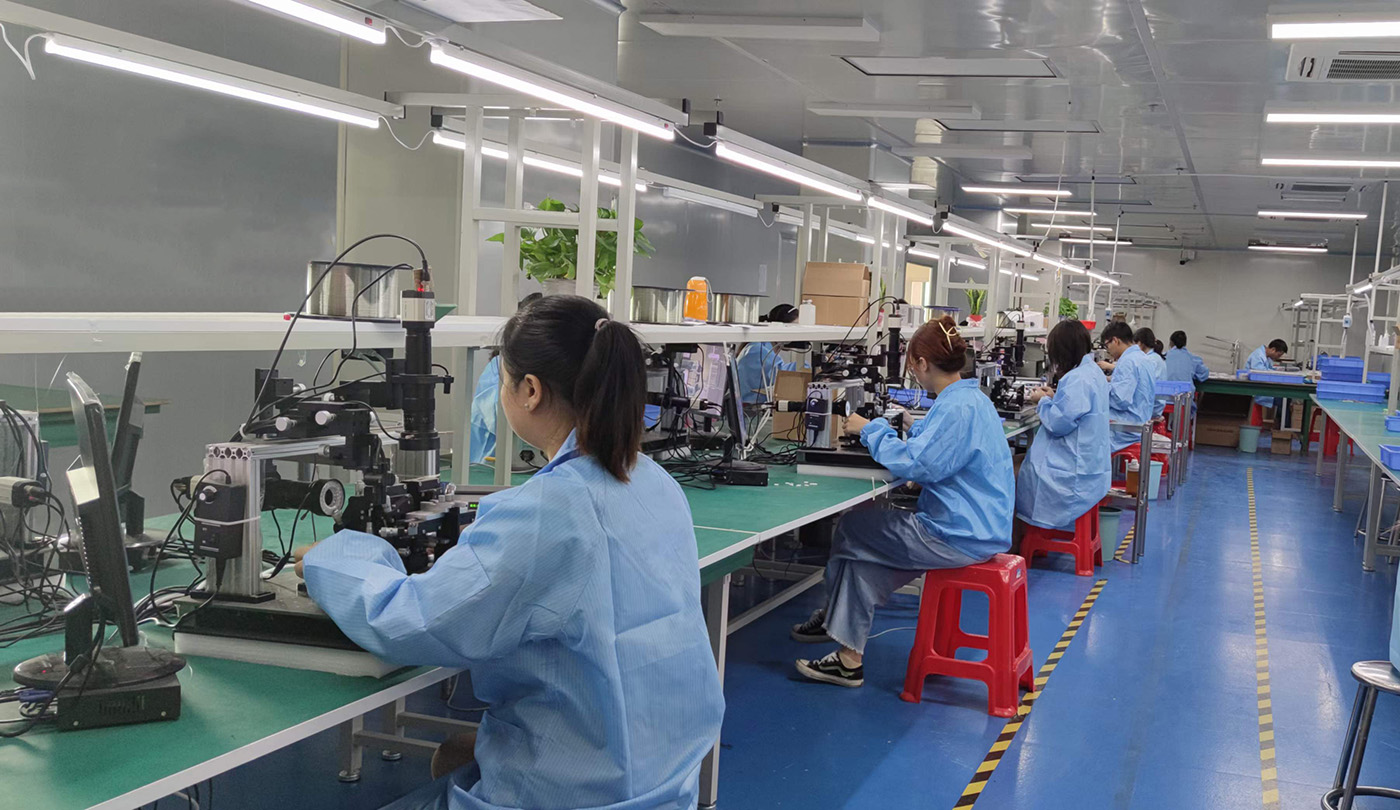
With over 13 years of rigorous experience manufacturing optical systems for international operators, Kocent Optec adheres to strict global telecom standards. Our scientific manufacturing workflow integrates continuous testing. 100% of our active transceivers undergo thorough laboratory inspections before shipment. This protocol includes bit error rate (BER) checks, optical eye diagram verification, and real-switch interoperability testing in our advanced labs.
Our active optical products and passive structural components have won tenders for top-tier global telecommunications operators, demonstrating our capability to support mission-critical infrastructure projects under tight timelines.
To manage the exponential growth of cloud data, the telecommunications industry has moved toward modular architectures. Upgrading networks to 40G QSFP+ represents a critical milestone in this shift. In carrier systems and enterprise data distribution centers, the transition from legacy 10G SFP+ to 40G/100G interfaces requires a calculated combination of active transceivers and optimized high-density passive fiber patch panels.
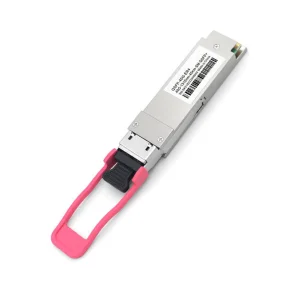
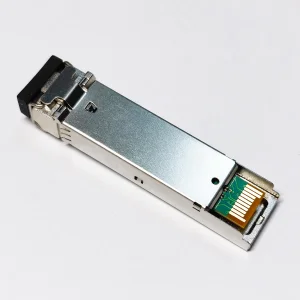
For regional rings and enterprise backbone networks, our 40G QSFP+ transceivers utilize advanced transmitter optical subassemblies (TOSA) and receiver optical subassemblies (ROSA). Technologies such as 40G SR4 allow short-reach (up to 100m) MMF connection configurations via MPO interfaces, perfect for top-of-rack or end-of-row configurations within data centers. For long-distance transport networks, our 40G LR4 and 40G ER4 solutions operate over single-mode fibers (SMF), utilizing coarse wavelength division multiplexing (CWDM) to transmit optical signals up to 10km and 40km respectively, without requiring inline amplification.
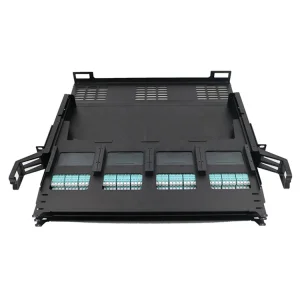
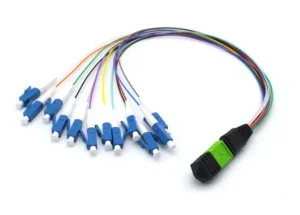
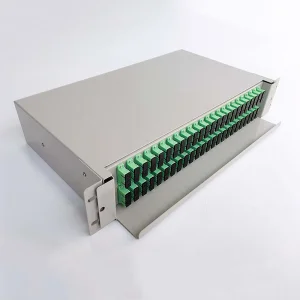
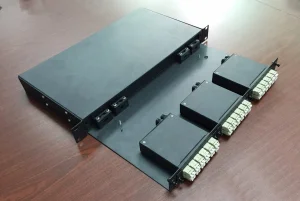
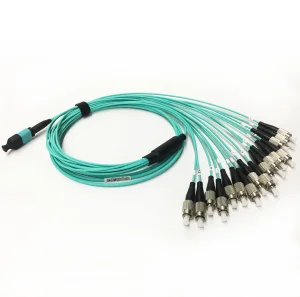
To prevent cable management bottlenecks, modern network architectures employ structured MTP/MPO cabling systems. Standard patch panels, combined with MPO-to-LC fan-out assemblies, allow engineers to scale fiber density inside high-value rack systems efficiently. This deployment model ensures low insertion loss, minimal back-reflection, and clean cable organization—factors that directly lower optical link loss budgets and optimize mean time to repair (MTTR).
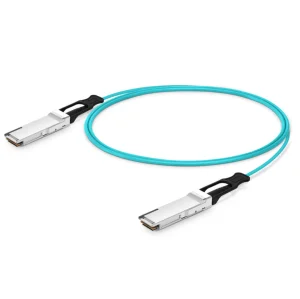
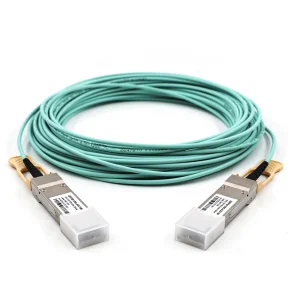
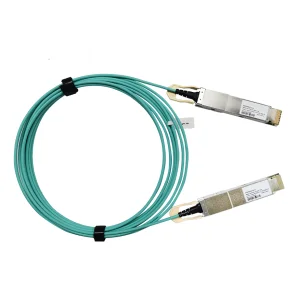
For short-range, inter-rack connectivity where flexibility is crucial, Active Optical Cables (AOC) offer an excellent balance of power efficiency and signal integrity. Standard AOCs, such as the 100G SFP28 and 200G/400G QSFP-DD models, support seamless migrations, allowing operators to build scalable network architectures ready to handle tomorrow's data loads.
Latin American telecom operators require suppliers who can navigate complex import regulations and provide robust local compatibility. Kocent Optec has successfully delivered OEM and ODM products to major regional providers, including:
Primary Regional Carriers Supported:
Entel America Movil / Claro Telefonica / Movistar FiberTel BitelWe work closely with local engineering teams in Santiago, Valparaíso, and Concepción to resolve compatibility concerns with legacy host platforms (such as Cisco, Huawei, Juniper, and Arista). Our team provides custom-coded EEPROM configurations, ensuring our transceivers function as native components without triggering software faults or disabling ports. Additionally, our logistics partners ensure delivery times that match local project schedules, helping you keep construction phases on track.
Expert answers to technical, environmental, and compatibility questions for network engineers and purchasing managers.
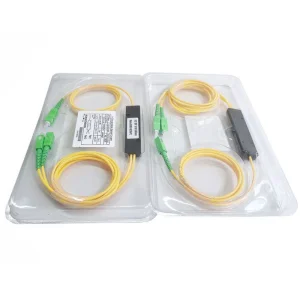
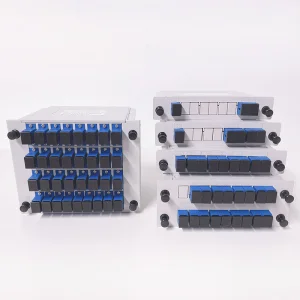
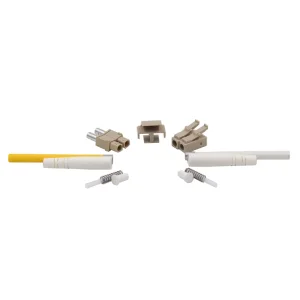
Complete optical ecosystem including passive panels, breakout cabling systems, splitters, and next-generation transceivers.
 KOCENT OPTEC