Deploy high-speed optical frameworks with components built to MSA standards, thoroughly tested for performance metrics.
Established in 2012 in Hong Kong as a hi-tech communication enterprise, Kocent Optec Limited has grown to become one of China's leading fiber optic termination product manufacturers and solution providers. We are dedicated to developing and manufacturing high-performance fiber optic communication products spanning both passive and active categories.
Our solutions cater directly to telecommunication networks, enterprise networks, and next-generation data centers. By leveraging our extensive industry experience and robust production capacity developed over more than 13 years, we magnify the outcome for our valuable customers, expanding their core competencies and enabling them to outperform competitors globally.
We place heavy emphasis on close customer collaboration, defining ourselves not just as a supplier, but as a strategic partner in fiber optic connection solutions.

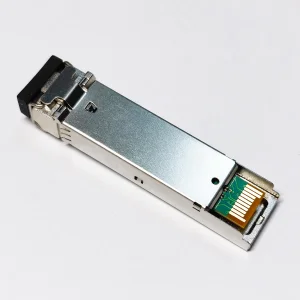
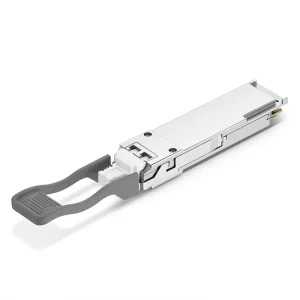
The 10 Gigabit Small Form Factor Pluggable (SFP+) optical transceiver module represents a critical milestone in optical networking. Serving as the primary interface for 10Gbps data transport, SFP+ modules utilize electrical-to-optical and optical-to-electrical conversion processes. By adhering strictly to Multi-Source Agreement (MSA) standards, these compact transceivers provide hot-pluggable flexibility for switches, routers, and network interface cards (NICs).

Modern 10G SFP+ modules are engineered across several optical interfaces to address specific dispersion limits and path attenuation requirements:
As digital transformations accelerate, the global market for SFP and SFP+ modules continues to shift. Understanding these macroeconomic and technical vectors is essential for sourcing managers and network engineers alike.
The proliferation of 5G infrastructure and IoT has moved compute resources closer to the data source. Edge datacenters rely heavily on low-latency 10G links to aggregate edge traffic before transmitting it to central cloud nodes.
Silicon photonics technology is scaling down to SFP+ modules, lowering power consumption below 1W per module. This reduces heat dissipation requirements inside dense switches, minimizing operational cooling costs.
With networks vulnerable to software exploits, modern SFP+ transceivers incorporate secure EEPROM architectures. This ensures unauthorized firmware modifications cannot disrupt hardware-level routing interfaces.
For corporate purchasing departments and network architects, sourcing optical transceivers is a balance of compatibility, reliability, and unit economics. Directly partnering with wholesale SFP module manufacturers provides several advantages:
Many system OEMs write proprietary codes to lock out third-party transceivers. Sourcing from a factory with custom coding capabilities ensures modules can be programmed to interface seamlessly with Cisco, Juniper, Arista, Huawei, and other major brands without triggering system faults.
At Kocent Optec, our quality assurance protocol includes 100% testing. Every module undergoes bit error rate (BER) checks, optical eye-diagram validation, and real-switch compatibility verification prior to packaging. This lowers the return merchandise authorization (RMA) rate to less than 0.05%.
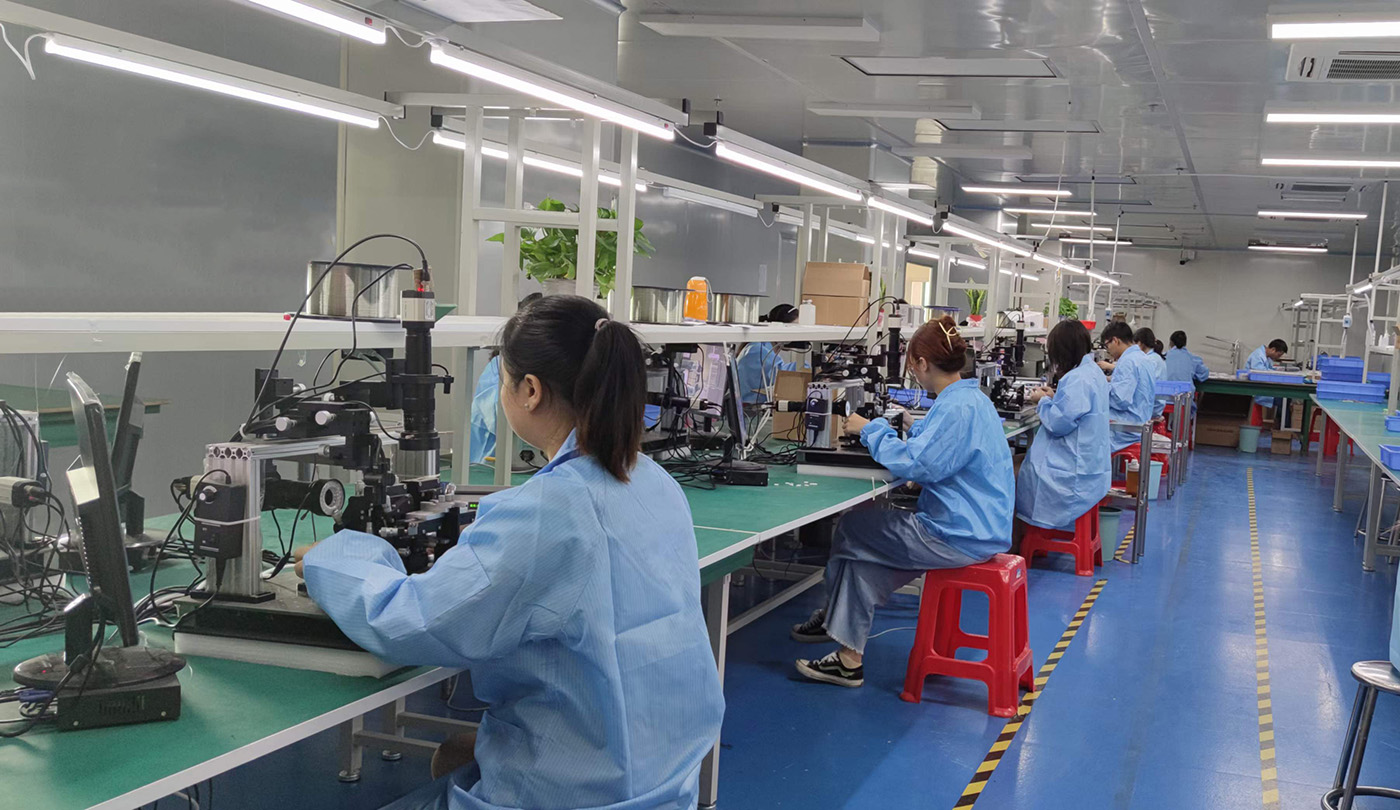
Our products follow strict industry standards using mature scientific methods. All production processes comply with ISO 9001:2015 quality management frameworks. The active transceivers and passive components are compliant with CE, FCC, RoHS, and WEEE directives, ensuring hassle-free imports and deployment across European and North American markets.
Optical modules do not operate in isolation. They are components within larger network ecosystems. Kocent Optec provides end-to-end integration, bridging active transceivers with passive high-density distribution products.
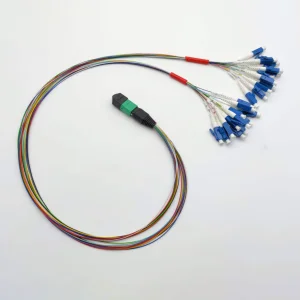
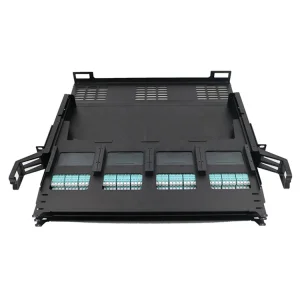
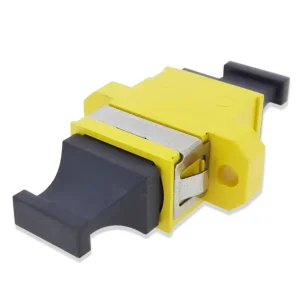
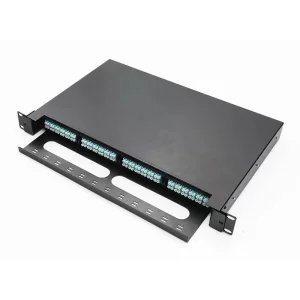
Supporting high-density fiber routing using active transceivers alongside 144fo MPO patch panels and MPO-MTP trunk cables. This configuration supports high bandwidth density and simplified cabling layouts inside enterprise datacenters.
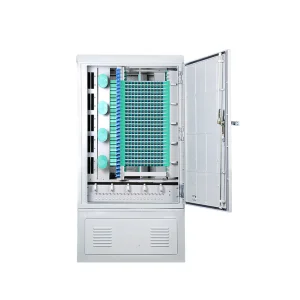
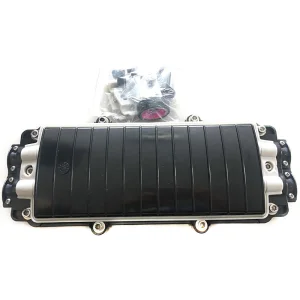
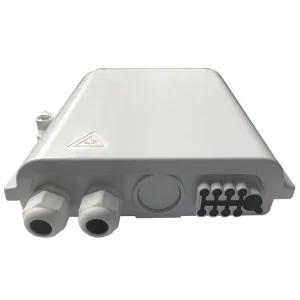
Combining outdoor cross-connection cabinets and fiber optic splice closures with specialized active transceivers. Our solutions support deployment in diverse environmental conditions, maintaining physical layer reliability from the central office to the subscriber.
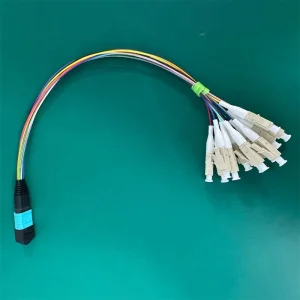
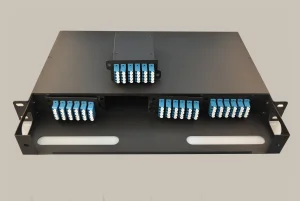
Optimizing multi-building connections using 10G SFP+ LR/ER transceivers, fan-out patch cords, and rackmount distribution panels to maintain signal integrity over campus distances.
| Transceiver Class | Wavelength (nm) | Fiber Type | Connector Type | Max Transmission Distance | Typical Applications |
|---|---|---|---|---|---|
| 10G SFP+ SR | 850 | Multi-Mode (OM3/OM4) | LC Duplex | 300 meters | Intra-rack, Datacenter Core |
| 10G SFP+ LR | 1310 | Single-Mode (OS2) | LC Duplex | 10 kilometers | Campus LAN, Metro Access |
| 10G SFP+ ER | 1550 | Single-Mode (OS2) | LC Duplex | 40 kilometers | Long-haul WAN, Carriers |
| 10G SFP+ ZR | 1550 | Single-Mode (OS2) | LC Duplex | 80 kilometers | Telecom Backhaul, Core Ring |
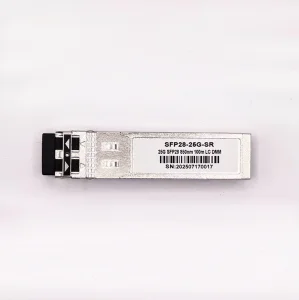
| 25G SFP28 SR | 850 | Multi-Mode (OM4) | LC Duplex | 100 meters | Next-Gen Server Access |
Years of sales and service experience have enabled us to win customers across East Asia, Southeast Asia, Middle East, Europe, South America, North America, and Africa. Many of our OEM and ODM products have won telecom operator tenders, satisfying strict end-user requirements.
While 10G SFP+ remains a reliable workhorse for many enterprise networks, network backbones are transitioning to higher capacities. Sourcing managers need to plan for infrastructure longevity.
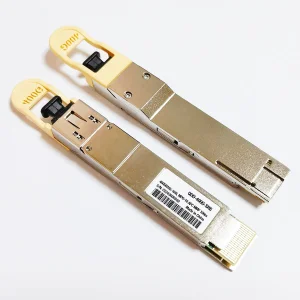
By keeping the physical form factor of the SFP family, 25G SFP28 modules offer a 2.5x speed increase without increasing footprint. For high-throughput requirements, QSFP28 modules leverage four lanes of 25Gbps signals to deliver 100Gbps links, providing an upgrade path for growing networks.
Data centers are rapidly adopting 400G QSFP-DD and 800G form factors. These modules utilize advanced PAM4 modulation and Coherent Optical technology to transmit data over long-haul links, reducing the total cost per gigabit.
Kocent Optec maintains development paths across both active transceiver families and matching passive high-density MTP fiber networks, ensuring compatibility across network upgrades.
The main difference is their transmission rate. Standard SFP modules generally support data rates of 155Mbps to 4.25Gbps (commonly used for 1G links). SFP+ (SFP Plus) is an updated version of the form factor that supports speeds of 10Gbps and higher. While SFP+ slots can accept standard SFP modules at reduced speeds, SFP+ modules cannot function in older, standard SFP slots.
We host a compatibility test center equipped with switches, routers, and servers from various manufacturers. Our engineering team reads and programs the EEPROM of each module with custom firmware configurations tailored to match the specific vendor handshake requirements, preventing compatibility alarms.
DOM (or DDM - Digital Diagnostic Monitoring) allows the network administrator to monitor parameters in real time. These parameters include: transmitter optical power, receiver optical power, transceiver internal temperature, laser bias current, and transceiver supply voltage. This data helps identify potential fiber link degradation before an outage occurs.
Yes, SFP+ modules are hot-swappable. You can insert or remove a transceiver module from an active host device without powering down the system. This helps maintain uptime during upgrades or maintenance.
Sourcing directly from factories like Kocent Optec helps lower intermediary costs, allows for custom coding and packaging, provides direct engineering support, and ensures quality tracking back to the production run.
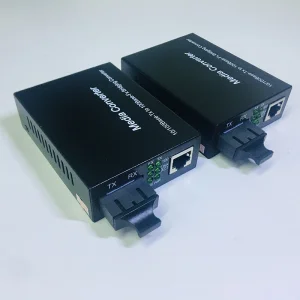
A balanced selection of fiber management enclosures, active optical transceivers, and media converters designed for modern networks.
 KOCENT OPTEC