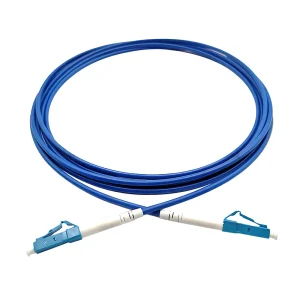
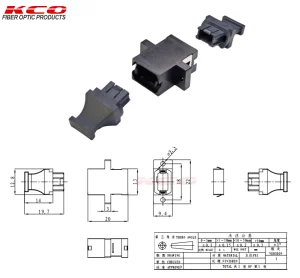
Explore our core high-speed transceivers, ruggedized cabling interfaces, and passive optical distribution accessories, all built to strict international telecom standards.
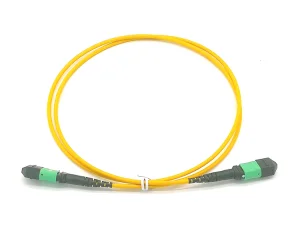
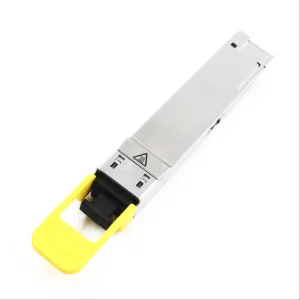
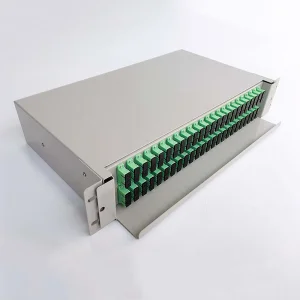
Established in 2012 in Hong Kong as a high-tech communication enterprise, Kocent Optec Limited has emerged as one of China's leading fiber optic termination product manufacturers and solution providers. We are fundamentally dedicated to the design, research, development, and manufacturing of fiber optic communication systems. Our products span the entire technological spectrum from passive components to active optical transceivers, servicing telecom operators, large enterprise networks, and hyperscale data centers worldwide.
By leveraging our extensive experience and excellent production capacity gained over the years, we magnify the outcome for our valuable customers. This strategic manufacturing capability ultimately expands our clients' core competencies and helps them outperform their competitors. At Kocent Optec, we place deep emphasis on structural customer collaboration, defining ourselves not merely as an off-the-shelf vendor but as your valuable partner in fiber optic connection solutions. We believe our differentiators are your perceived advantages.

Industry Experience
Quality Checked & Tested
Tenders Won
MSA Compliance
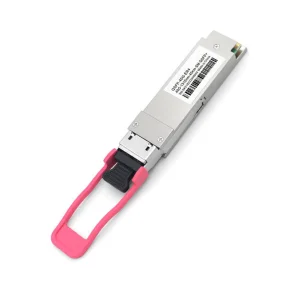
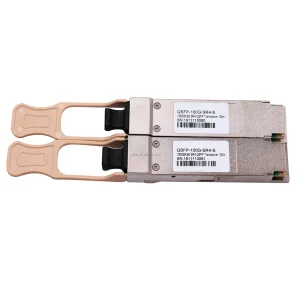
The 100G optical transceiver landscape has become the backbone of modern cloud fabrics and carrier optical transport networks (OTN). Operating primarily in the QSFP28 (Quad Small Form-factor Pluggable 28) mechanical form factor, 100G modules utilize four independent electrical lanes, each running at 25 Gbps (or using PAM4 modulation schemes to transmit 100G over a single lambda).
Understanding the internal structure of 100G transceivers requires an analysis of the optical transmitter and receiver configuration. For instance, the widely deployed 100GBASE-SR4 optical module (e.g., our Cisco-compatible QSFP28) implements 4 parallel channels of 25Gbps VCSEL arrays operating at 850nm over multimode fiber (MMF). In contrast, long-reach modules like 100GBASE-LR4 rely on DFB/EML laser arrays combined with Lan-WDM multiplexers to run 10km over single-mode fiber (SMF) via LC duplex connectors.
To assist optical network architects in selecting the optimal module configuration, the following comparative framework outlines standard MSA specifications:
| Module Type | Wavelength (nm) | Fiber Type | Connector Type | Max Link Distance | Optical Modulation |
|---|---|---|---|---|---|
| 100GBASE-SR4 | 850nm (4x25G) | MMF (OM3 / OM4) | MPO-12 / UPC | 70m (OM3) / 100m (OM4) | NRZ |
| 100GBASE-CWDM4 | 1271, 1291, 1311, 1331 | SMF (G.652) | LC Duplex | 2km | NRZ |
| 100GBASE-PSM4 | 1310nm Parallel | SMF (G.652) | MPO-12 / APC | 500m | NRZ |
| 100GBASE-LR4 | 1295.56, 1300.05, 1304.58, 1309.14 | SMF (G.652) | LC Duplex | 10km | NRZ |
| 100GBASE-ER4 | 1295.56, 1300.05, 1304.58, 1309.14 | SMF (G.652) | LC Duplex | 30km (without FEC) / 40km | NRZ |
| 100G Single Lambda | 1310nm Single Wavelength | SMF (G.652) | LC Duplex | 2km (FR1) / 10km (LR1) | PAM4 (53 GBaud) |
The transition from legacy 100G architectures to 400G and 800G platforms is driving changes in optical design. The historical method of using four channels of 25Gbps (NRZ) is increasingly replaced by 100G PAM4 (Pulse Amplitude Modulation 4-level) signaling. PAM4 doubles the data rate per baud, allowing a single-channel wavelength to carry 100G. This development forms the foundation of modern high-speed designs.
Modules like QSFP28 SR4 and LR4 utilize four 25Gbps lanes. This approach requires more laser components and optical alignment effort, but features mature designs and low processing latency.
By leveraging digital signal processors (DSP) and PAM4, transceivers encode 100G onto a single optical carrier. This halves the laser count, improves reliability, and facilitates a direct migration path to 400G networks (which combine 4 x 100G PAM4 lanes).
Integration of optical components directly onto silicon substrates (Silicon Photonics, or SiPh) reduces component footprint and power consumption. Co-packaged Optics (CPO) move the optical engines close to the host ASIC, addressing high-speed electrical loss issues at 800G and 1.6T.

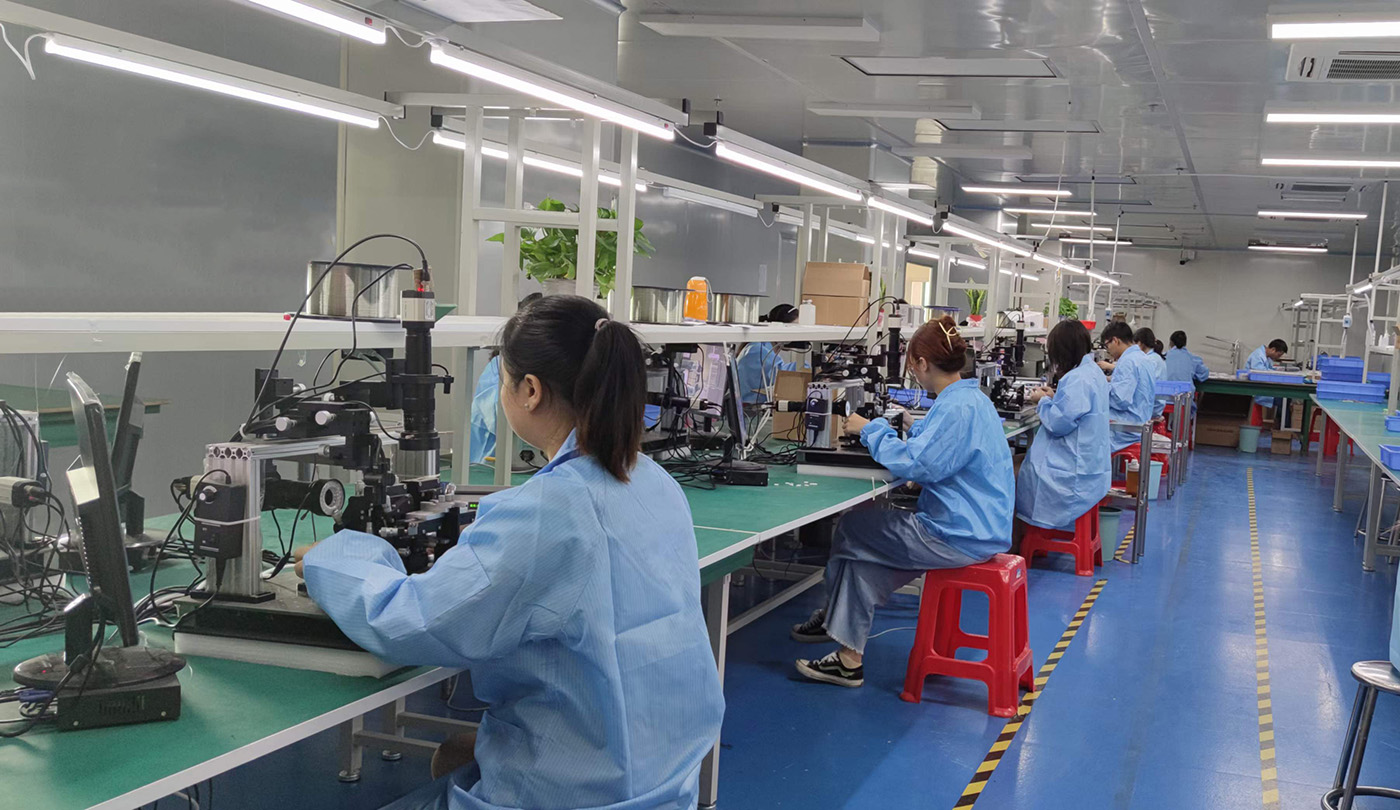
With more than 13 years of experience in manufacturing telecommunication fiber optic products, we strictly adhere to recognized fiber optic industry standards. Our production processes utilize mature scientific methods to deliver your products on time and ensure that 100% of products are tested and inspected before shipment.
Our manufacturing facility in China acts as a centralized production hub. It combines high-speed automated sub-assembly processes with manual verification steps to guarantee high yields. Each QSFP28 100G transceiver undergoes testing for compatibility, eye diagram verification, insertion loss, return loss, and temperature cycle aging. This process ensures stable operation under varying conditions.
This localized supply chain design offers advantages in raw material sourcing (such as high-end TO-cans, photodiode detectors, and optical sub-assemblies). These local sources help mitigate supply chain disruptions and lower production costs, allowing us to pass cost efficiencies directly to our global OEM partners.
Years of sales and service experience have enabled us to win customers across diverse global regions. Today, Kocent Optec maintains an active client footprint spanning East Asia, Southeast Asia, the Middle East, Eastern Europe, Western Europe, Northern Europe, South America, North America, North Africa, and South Africa. Our constant goal remains win-win cooperation, delivering OEM and ODM products that satisfy both telecom operator tenders and end-user requirements.
Our main terminal telecom operators include:
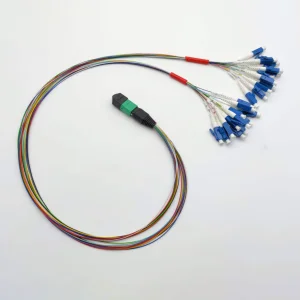
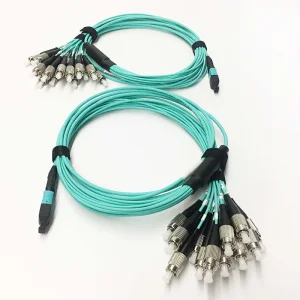
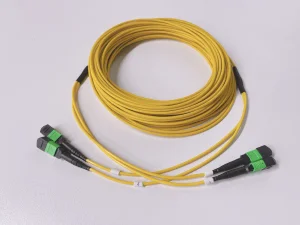
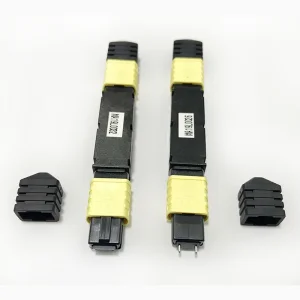
Our high-density QSFP28 100G modules and MTP/MPO ultra-low loss patch cables support leaf-spine physical layouts. These solutions help optimize fiber pathways, reduce routing complexity, and lower energy costs in data center environments.
For long-distance transport networks, our 100G LR4/ER4 modules enable long-span optical transport. They link local exchange nodes to regional datacenters without requiring inline optical amplification.
Enterprise buyers can leverage our multi-platform compatibility options to bridge hardware from various vendors (such as Cisco, Juniper, Arista, and Huawei) under a unified interconnect footprint, reducing vendor lock-in risks.
Global procurement teams must balance unit costs with compliance, import safety, and long-term warranty protection. Kocent Optec operates regional sales desks to assist clients with customs clearing, import compliance, and local documentation requirements.
Our passive fiber assemblies and active transceivers comply with key industry standards, including CE, FCC, RoHS, and WEEE regulations. Our production facilities maintain ISO 9001 certification. We provide a comprehensive warranty on all transceivers, including firmware updates to maintain system compatibility as host switch OS versions evolve.
When sourcing optical transceivers for large-scale projects, procurement teams should evaluate vendors based on key operational parameters:
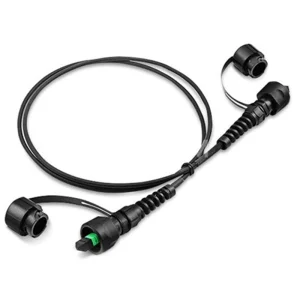
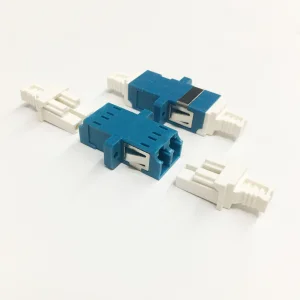
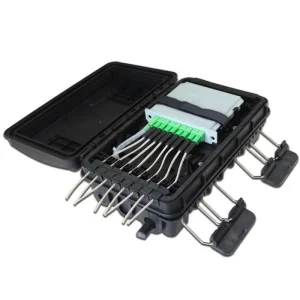
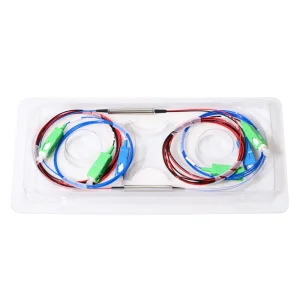
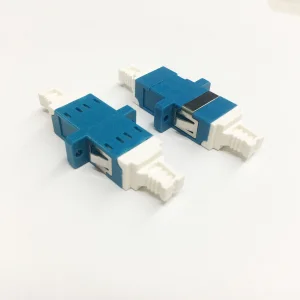
Complete your system setup with our high-density optical distribution cables, mechanical adapters, attenuators, and enclosures.
 KOCENT OPTEC