 KOCENT OPTEC
1 / 4
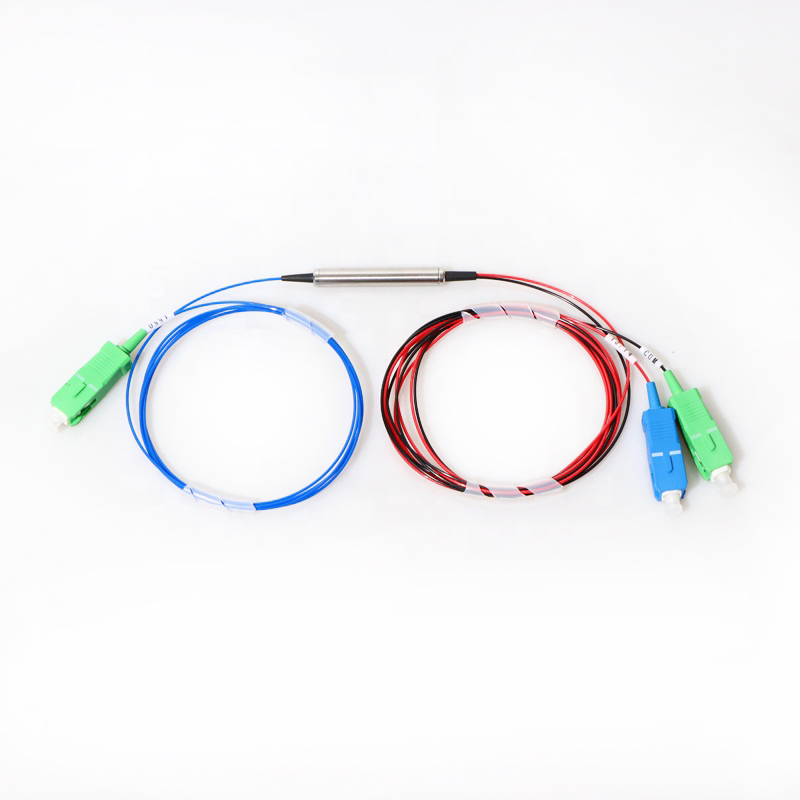
| Type | FWDM | |
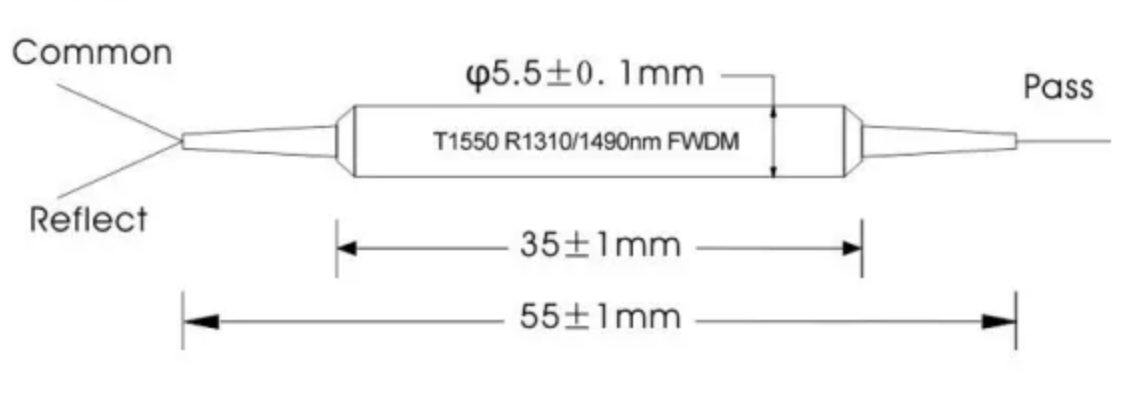
| Operating Wavelength T: transmission wavelength R: reflection wavelength 1310±50,1490±10, 1550±10 1610±10, 1625±25, 1650±20 |
nm | T1550 R1310/1490 |
| T1490 R1310/1550 | ||
| T1310 R1490/1550 | ||
| T1550/1610 R1310/1490 | ||
| T1550/1625 R1310/1490 | ||
| T1625 R1310/1490/1550 | ||
| T1650 R1310/1490/1550 | ||
| Transmission insertion loss | dB | ≤0.80 |
| Reflection insertion loss | dB | ≤0.60 |
| Transmission channel isolation | dB | ≥30 |
| Reflection channel isolation | dB | ≥17 |
| PDL | dB | ≤0.1 |
| Wavelength thermal stability | nm/℃ | ≤0.003 |
| Insertion loss thermal stability | dB/℃ | ≤0.005 |
| Directivity | dB | ≥55 |
| Return loss | dB | ≥45 |
| Operating temperature | ℃ | -20~+70 |
| Storage temperature | ℃ | -40~+85 |
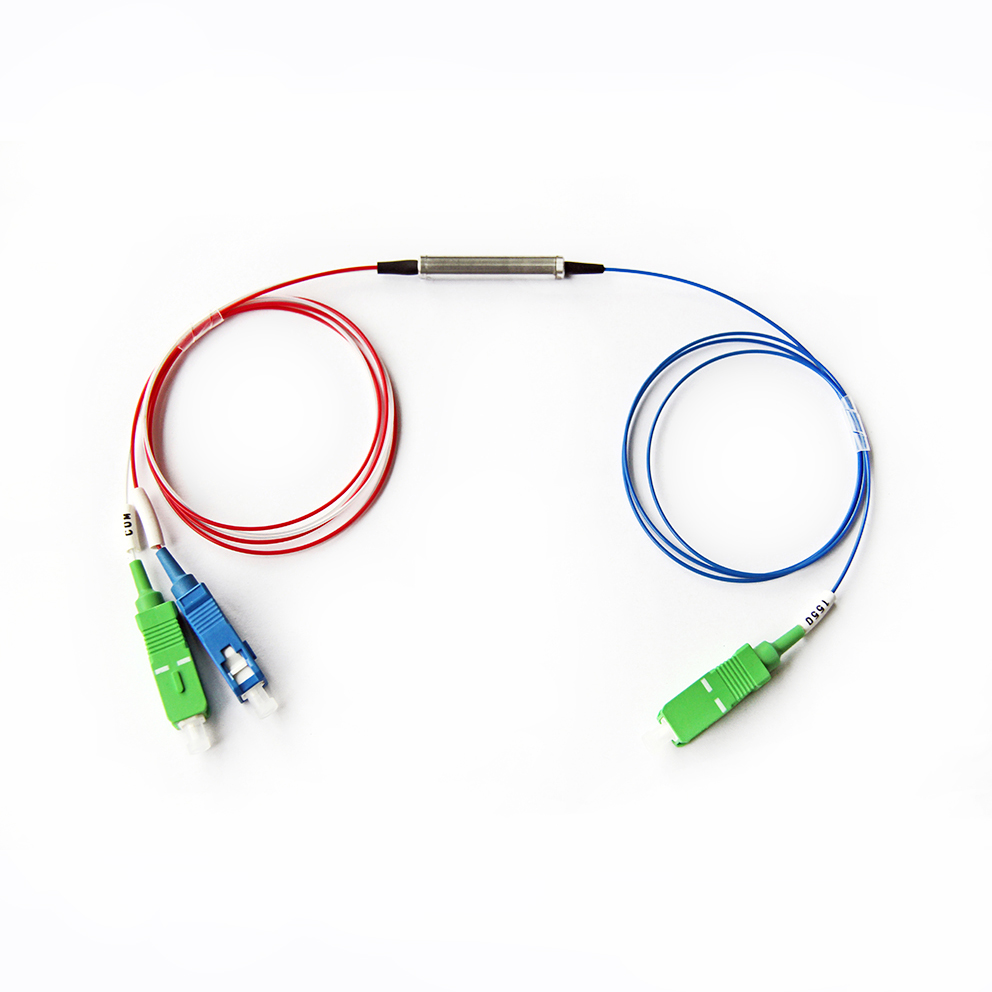
Q1: What technology is the Filter Wavelength Division Multiplexer (FWDM) based on?
A1: The FWDM is based on environmentally stable thin-film filter technology, which combines or separates light at different wavelengths in a wide wavelength range.
Q2: What are the main optical performance advantages of this FWDM?
A2: It features very low insertion loss (IL), low polarization dependent loss (PDL), high isolation, and high extinction ratio, ensuring excellent signal integrity and minimal transmission degradation.
Q3: In what packaging formats is this device available?
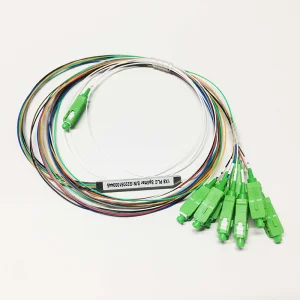
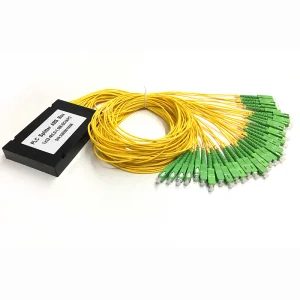
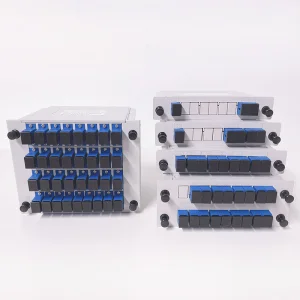
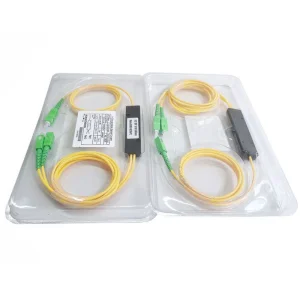
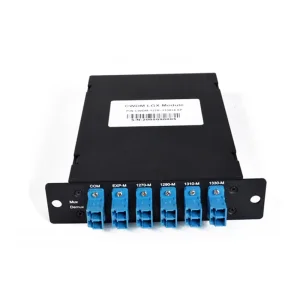
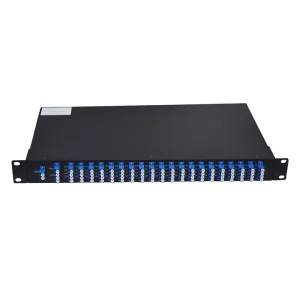
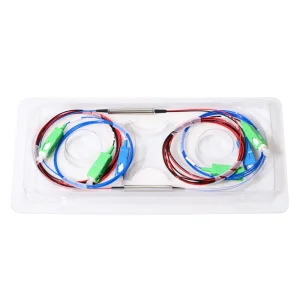
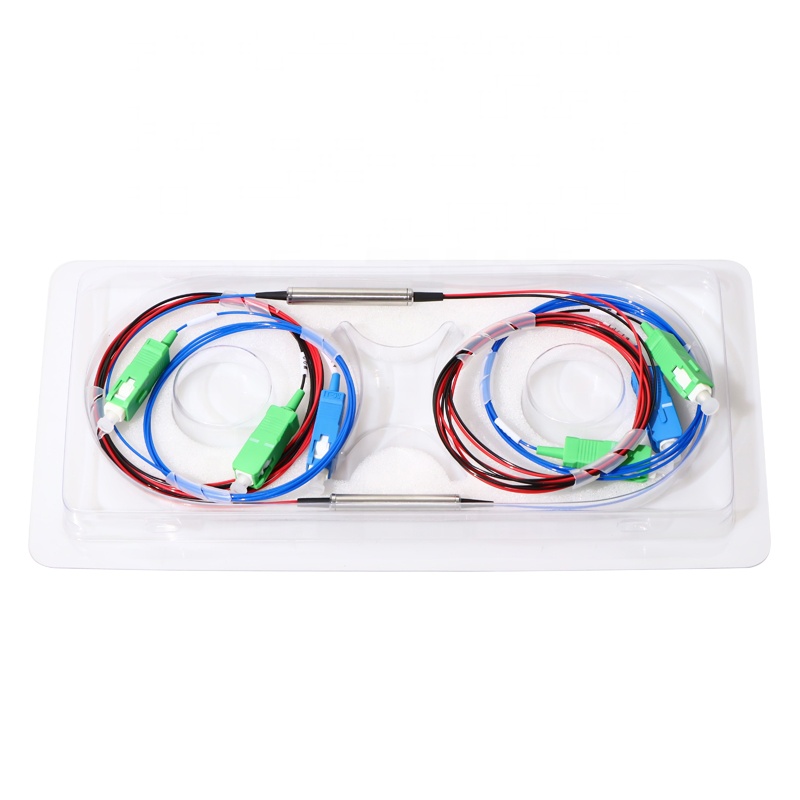
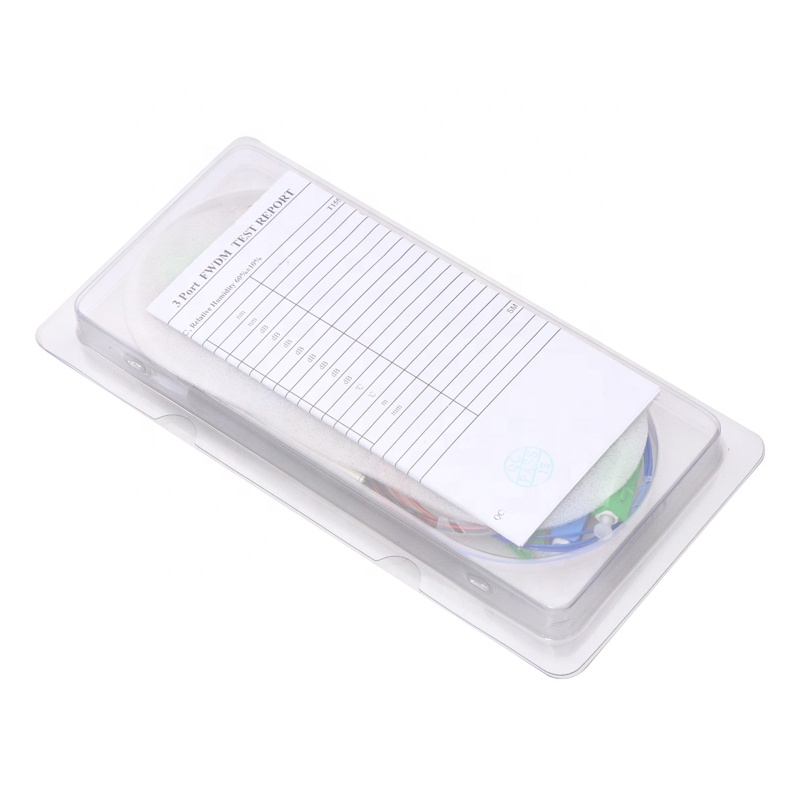
A3: The standard package options include steel tubes and ABS black modular boxes, with inputs/outputs supporting bare optical fiber, 0.9 mm, 2.0 mm, and 3.0 mm cables.
Q4: Can this device be used in high-power systems?
A4: Yes, high power handling capability is achieved through unique pigtail processing and high-quality AR coating.
Q5: What are the common applications for this FWDM?
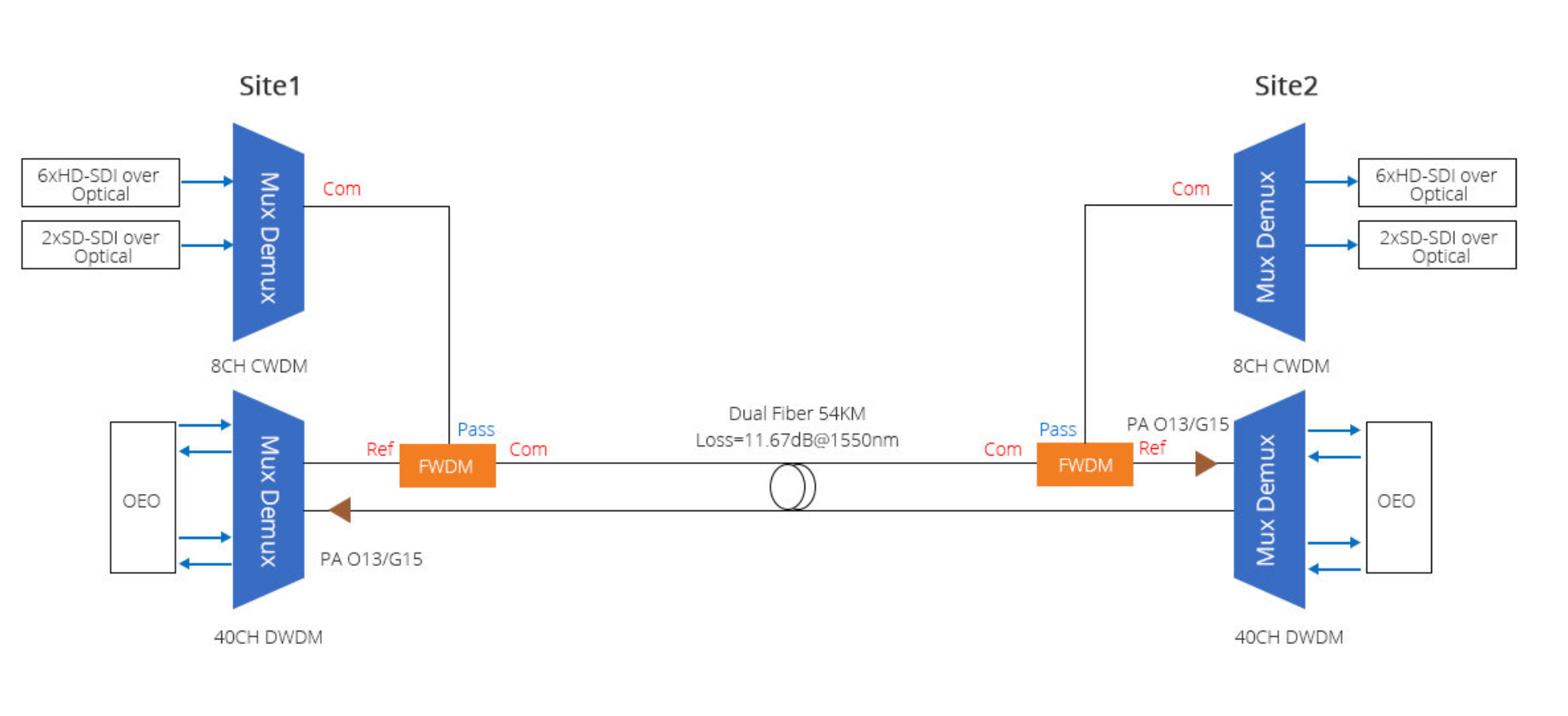
A5: It is widely used in HFC networks (CATV, CCTV), FTTH applications, passive fiber optic network systems, EDFAs, Raman amplifiers, and WDM networks.
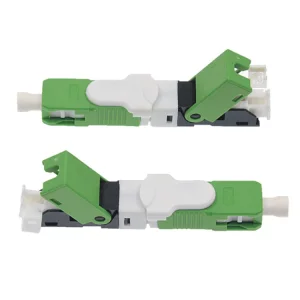
Q6: Are customized specifications and connectors available?
A6: Yes, customization is available. Standard specifications are defined without connectors, and an additional 0.2dB loss is added per connector when requested.