Explore our core telecommunication and data center interconnection components, engineered for zero-latency networking.
Deep-dive specifications, industrial standards, and technical methodologies for modern network architects.
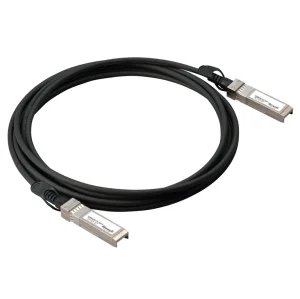
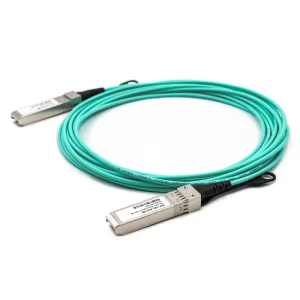
As enterprise storage and cloud services accelerate transition speeds from 10G to 25G and 100G configurations, the 25G SFP28 Direct Attach Copper (DAC) cable emerges as the optimal paradigm for Top-of-Rack (ToR) patching structures. Leveraging high-frequency twinaxial copper media, SFP28 passive copper assemblies deliver low power consumption (virtually 0W) and minimal latency, rendering them irreplaceable for microsecond-sensitive hyper-converged computing environments.
Our engineering architecture incorporates premium shieldings (aluminum foil + braided shield) to support ultra-low cross-talk. Combined with state-of-the-art impedance matching technologies, our 25G DACs consistently outperform IEEE 802.3by return loss guidelines, providing optimal signal integrity at lengths up to 5 meters.
Key Highlights: Zero-latency performance, compliant with SFF-8402 / SFF-8432 specifications, compatible with major global networking vendor OS platforms.

Tailored connectivity systems designed to resolve bottlenecking challenges across diverse verticals.
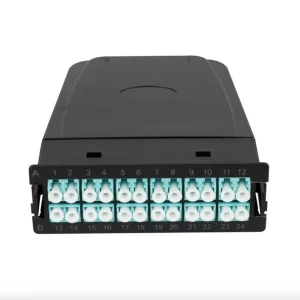
Optimized for Leaf-Spine interconnections, our 25G DACs, active optical cables, and high-density MPO cassette systems streamline structured cabling. They drastically reduce cabinet thermal load and maintain strict compliance with SFP28 MSA standards.
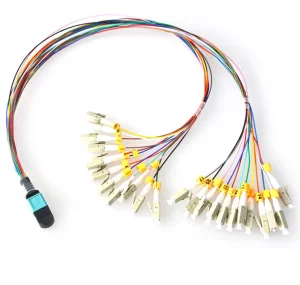
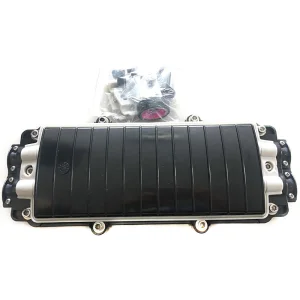
Kocent Optec provides long-haul fiber systems, specialized splice closures, and custom multi-fiber breakout solutions designed to meet the rigorous standards of global telecom giants like Vodafone, Orange, and SingTel.
Every nanosecond counts. By utilizing our low-AWG direct attach copper twinax lines, financial infrastructures minimize routing delay, establishing competitive edges over standard optical transceiver links.
Compare baseline engineering parameters to ensure absolute compatibility with physical and electronic network layer designs.
| Parameter / Specification | Passive 25G SFP28 DAC Twinax | Active 25G SFP28 AOC (Active Optical) | 25G BASE-SR Transceiver (with Fiber) |
|---|---|---|---|
| Typical Reach | 0.5m to 5 meters | 1m to 30 meters | Up to 100m (OM4) / 70m (OM3) |
| Power Consumption | < 0.1W (Passive, effectively 0W) | < 0.8W per end | < 1W per transceiver |
| Latency | Near-zero (~0.1 ns) | ~2 ns (due to E-O conversion) | ~2.5 ns (E-O & O-E conversion) |
| Bending Radius | Min. 5x Outer Diameter (Dynamic) | Min. 30mm | Min. 20mm |
| Cable Gauge Options | 30AWG, 28AWG, 26AWG | OM2 / OM3 / OM4 Fiber Ribbons | Standard Multimode patch leads |
| Compliance Standards | SFF-8402, SFF-8432, IEEE 802.3by | SFF-8431, SFF-8436, IEEE 802.3by | IEEE 802.3by, SFP28 MSA |
A trusted partner in fiber optic termination, copper twinax fabrication, and active communications components.

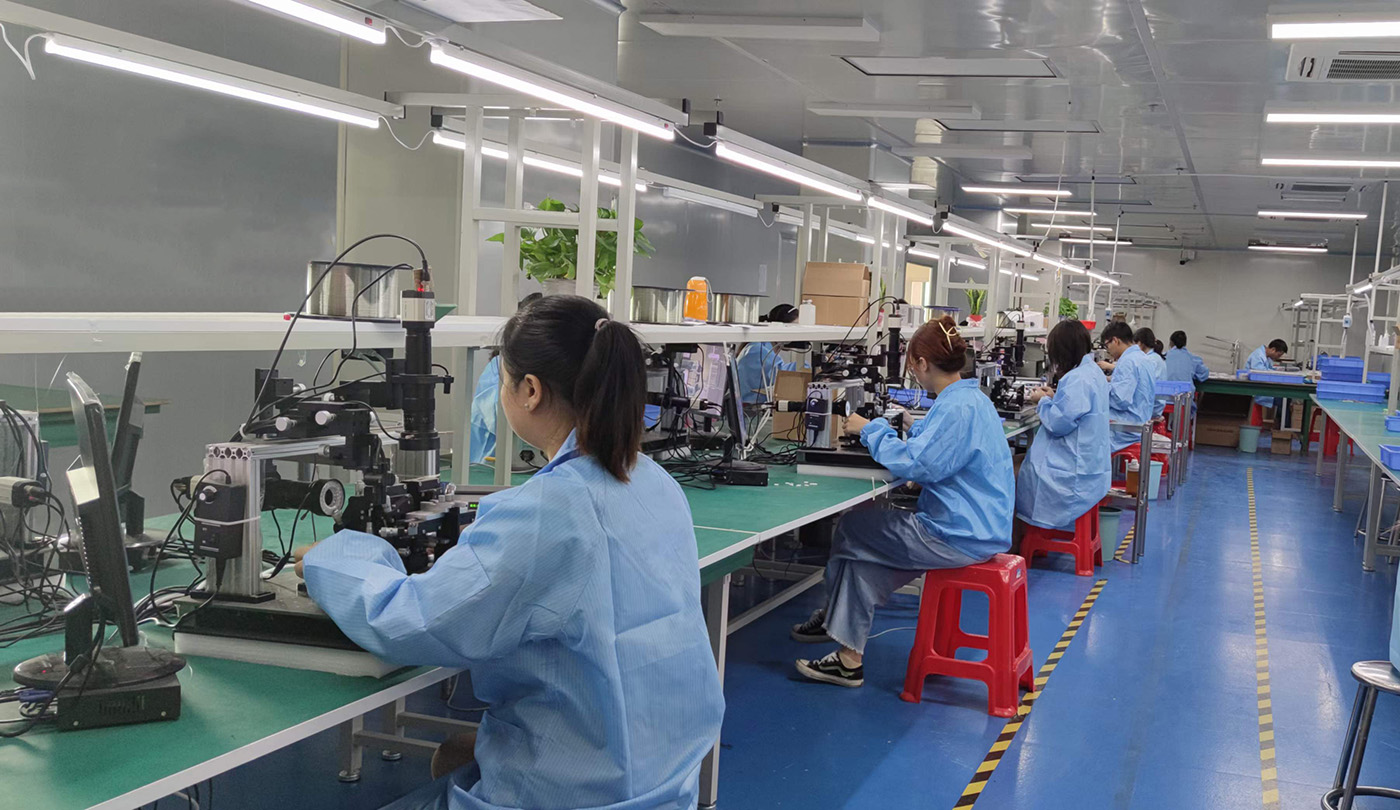
Kocent Optec Limited was established in 2012 in Hong Kong as a high-tech communication enterprise. Today, we stand as one of China's leading fiber optic termination product manufacturers and solution providers. We are dedicated to developing and manufacturing fiber optic communication products ranging from passive to active categories for telecommunication networks, enterprise networks, and data centers.
By leveraging our extensive experience and excellent production capacity we gained over the years, we magnify the outcome for our valuable customers, which ultimately expands their core competencies and helps them outperform competitors. We place emphasis on customer collaboration, and we define ourselves as your valuable partner in fiber optic connection solutions. We believe our differentiators are your perceived advantages.
With more than 13 years of experience in manufacturing telecommunication fiber optic products, we strictly follow fiber optic industry standards by using mature scientific methods to deliver your products on time and ensure that 100% of products are tested and inspected before shipment. Our state-of-the-art quality control flow tests insertion loss, return loss, optical eye diagrams, EEPROM coding compatibility, and structural endurance across extreme thermal environments.
Years of sales and service experience have enabled us to win customers from different regions. Today, we have customers from East Asia, Southeast Asia, Middle East, Eastern Europe, Western Europe, Northern Europe, South America, North America, North Africa, and South Africa. Win-win cooperation is our constant goal. Many of our OEM and ODM products have won Telecom Operator tenders and satisfy strict end-user requests.
Our main terminal telecom operators include, but are not limited to, the following world-class enterprises:
How 25G DAC and active optical technology pave the way to 50G, 100G, 400G, and 800G infrastructures.
Current 25G technologies utilize NRZ (Non-Return-to-Zero) modulation for simple, ultra-low-cost, and robust deployments. Our laboratories are transitioning active designs to PAM4 (Pulse Amplitude Modulation 4-level) formats to double signal capacity over standard copper lanes.
As standard passive copper lines hit length limitations beyond 5 meters at higher bandwidths, Active Copper Cables (ACC) and Active Electrical Cables (AEC) with built-in retimers and equalizers will fill the gap, offering high speed without expensive optics.
Thermal management is key. Our development team prioritizes materials that lower power drop across cable connectors. Switching from optical interfaces to passive copper interfaces where possible translates to megawatts of power saved annually.
Ensuring cross-border compliance, standard-specific safety parameters, and localized site deployment support.
Modern communications systems require stringent safety, environmental, and electro-magnetic validations. Kocent Optec ensures all raw components and finished goods comply with RoHS (Restriction of Hazardous Substances), preserving eco-conscious, lead-free profiles. The mechanical and electrical designs are certified under CE, FCC, and UL standards, allowing seamless international deployment.
Furthermore, our localized integration support provides compatibility assurance for data centers in Germany, USA, Japan, Brazil, and South Africa. Every batch is cataloged via detailed test reports, including S-parameter measurements (insertion loss, return loss, near-end crosstalk, far-end crosstalk) to expedite local operator approvals and client on-site sign-offs.
Proper storage and transit management prevent damage to the delicate internal wire layout of high-speed copper lines. Our 25G SFP28 DAC cables are protected with individual ESD shielding pouches and protective end-caps. Bending-radius limitations are clearly marked on all packaging modules.
For custom orders (OEM/ODM), we offer individualized serialization, color-coding options, and specialized labeling to minimize operational errors during complex high-density structured network expansions.
Deep engineering solutions, installation instructions, and design inquiries answered by our senior product specialists.
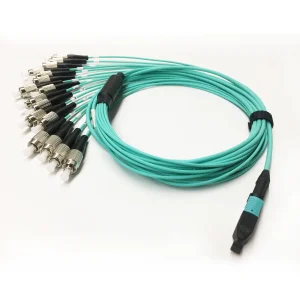
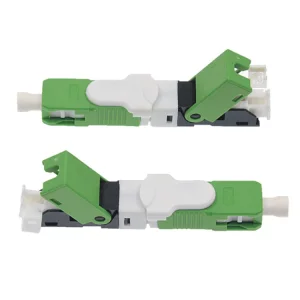
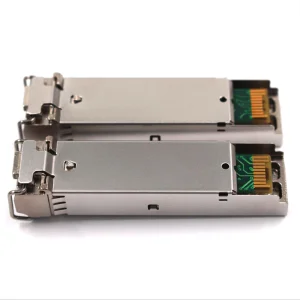
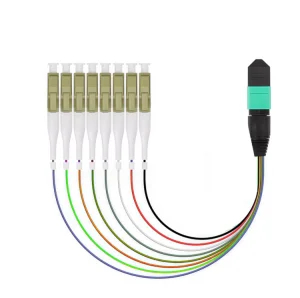
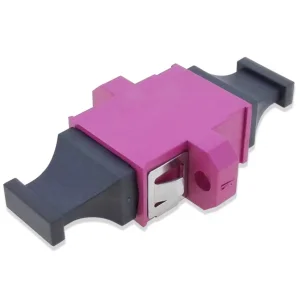
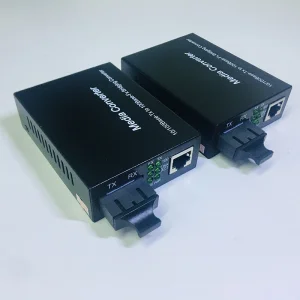
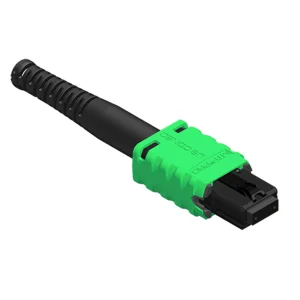
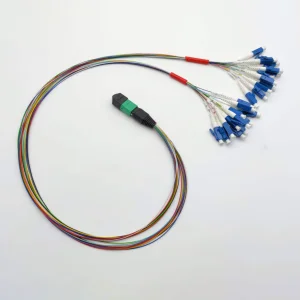
Complete your optical deployment with our certified coupling adapters, cassettes, breakout cabling, and transceivers.
 KOCENT OPTEC