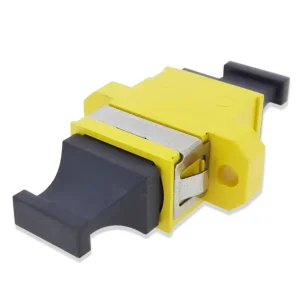
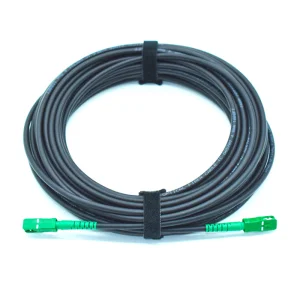
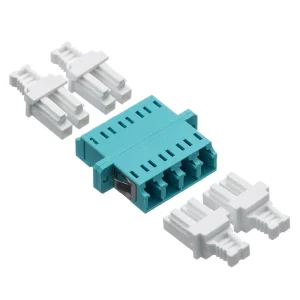

Established in 2012 in Hong Kong as a high-tech communication enterprise, Kocent Optec Limited has grown to become one of China's premier fiber optic termination product manufacturers and solution providers. We are dedicated to developing and manufacturing state-of-the-art fiber optic communication products ranging from passive infrastructure to active optical categories, serving telecommunication networks, enterprise infrastructures, and massive data centers globally.
By leveraging our extensive experience and excellent production capacity gained over the years, we magnify the outcomes for our valued customers. This operational strength ultimately expands their core competencies and helps them outperform competitors in highly dynamic networking landscapes. At Kocent Optec, customer collaboration is the cornerstone of our strategy, defining our identity as a highly reliable partner in fiber optic connection solutions.

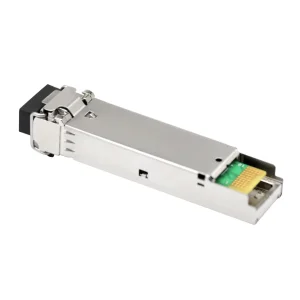
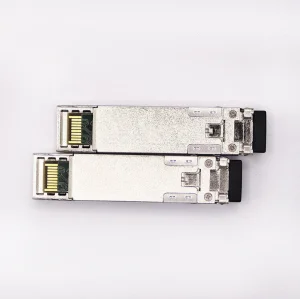
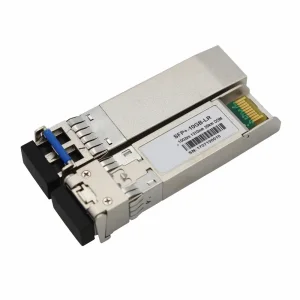
The 10 Gigabit Small Form-factor Pluggable (SFP+) transceiver represents the workhorse of modern enterprise and telecommunication optical links. Standardized by the Multi-Source Agreement (MSA), 10G SFP+ transceivers occupy a significantly smaller footprint than their XFP or SFP predecessors, enabling higher port density per rack unit.
10G optical engines utilize VCSEL lasers for short-reach multimode fiber (SR), while long-reach (LR, ER, ZR) architectures depend on high-performance DFB (Distributed Feedback) or EML (Electro-absorption Modulated) lasers.
Real-time monitoring of transceiver metrics—temperature, supply voltage, laser bias current, transmitted power, and received power—enables proactive network maintenance and faster troubleshooting.
Standardized mechanical and electrical interfaces ensure compatibility across a massive ecosystem of switches, routers, and firewalls, eliminating proprietary vendor lock-in.
From a design standpoint, selecting the appropriate 10G SFP+ module depends heavily on physical link budgets, transmission medium, and temperature operational windows. For instance, commercial temperature ranges (0°C to 70°C) suffice for indoor enterprise environments, whereas rugged industrial-grade transceivers (-40°C to 85°C) are mandatory for municipal, smart grid, or roadside cabinets.
Our manufacturing capacity has evolved to match global telecommunication expansion. The following benchmarks highlight the scope of Kocent Optec Limited's industrial footprint:

China remains the undisputed epicenter for the production of optical transceivers, accounting for a massive share of global SFP assembly capacity. This concentration of raw components, semiconductor packaging, automated testing lines, and PCB manufacturing within regional hubs like Shenzhen and Wuhan creates unmatched supply chain efficiency.
At Kocent Optec Limited, we harness this supply chain integration to shorten lead times and buffer against raw material shortages. Unlike fragmented assembly houses, we maintain complete control over the production workflow, from the initial polishing of optical connectors to the final programming of transceiver EEPROMs. Our mature scientific methods and strict adherence to industry standards guarantee that products are delivered on schedule, with 100% testing on actual target switches before shipping.
Procurement professionals seeking the best "China 10gig SFP pricelist" must understand that unit costs are governed by key variables rather than a simple commodity pricing model. Below are the primary technical drivers of SFP pricing:
| Transceiver Type | Wavelength / Fiber Reach | Optical Components | Pricelist Influence Factor |
|---|---|---|---|
| 10G SFP+ SR | 850nm / Multimode (up to 300m) | VCSEL Laser & PIN Receiver | Lowest cost profile |
| 10G SFP+ LR | 1310nm / Singlemode (up to 10km) | DFB Laser & PIN Receiver | Standard utility balance |
| 10G SFP+ ER / ZR | 1550nm / Singlemode (40km - 80km) | EML Laser & APD Receiver | Higher cost due to high-power optics |
| 10G BiDi (Bi-directional) | Simplex LC Tx1270/Rx1330 (10-40km) | WDM Diplexer Integrated Optic | Moderate premium; saves fiber cost |
Other cost drivers include EEPROM compatibility coding. Many OEM switch vendors construct proprietary firmware parameters that reject generic optical transceivers. Ensuring absolute compatibility with Cisco, Juniper, Arista, Huawei, or HP requires custom EEPROM configurations. At Kocent Optec, we program and test each transceiver against specific switch platform signatures, securing perfect interoperability without charging the inflated brand markups typically found in western markets.
Optical networks must operate reliably in diverse environments. Here is how 10G SFP+ technology is localized for different network architectures:
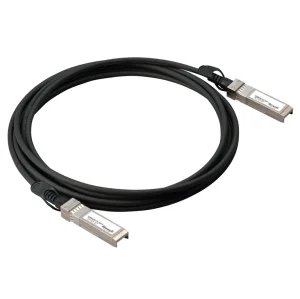
10G SFP+ Direct Attach Copper (DAC) cables and optical transceivers establish top-of-rack (ToR) switch-to-server connections, minimizing latency and maximizing bandwidth efficiency.
Connecting Optical Line Terminals (OLTs) to central office aggregation switches. Bi-directional (BiDi) 10G transceivers are heavily deployed here to halve the required physical fiber cores.
Linking corporate branch distributions to main wiring closets and Network Attached Storage (NAS) grids, offering high resilience, EMI immunity, and future-proof bandwidth.
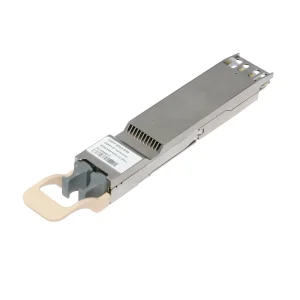
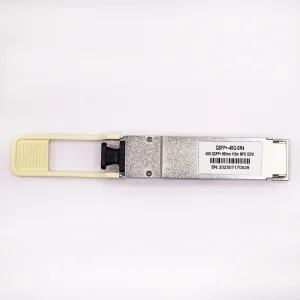
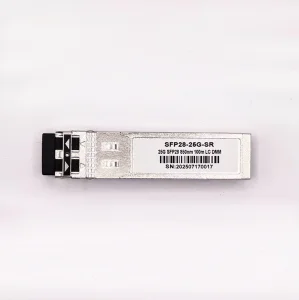
With the rapid adoption of AI, big data, and cloud computing, the network interconnect landscape is experiencing an unprecedented evolution. While 10G SFP+ remains the standard layer for enterprise edge routing and device termination, aggregation nodes are shifting rapidly towards 25G SFP28, 100G QSFP28, and next-generation 800G OSFP coherent transceivers.
For instance, the transition from 10G SFP+ to 25G SFP28 is seamless, utilizing the same physical footprint while delivering a 2.5x increase in bandwidth. Kocent Optec Limited is at the forefront of this evolution, continuously investing in R&D to scale our production lines for ultra-high-speed transceivers, including 800G PAM4 optical modules. By staying aligned with global technology roadmaps, we support our clients as they upgrade their infrastructures from legacy systems to multi-gigabit setups.
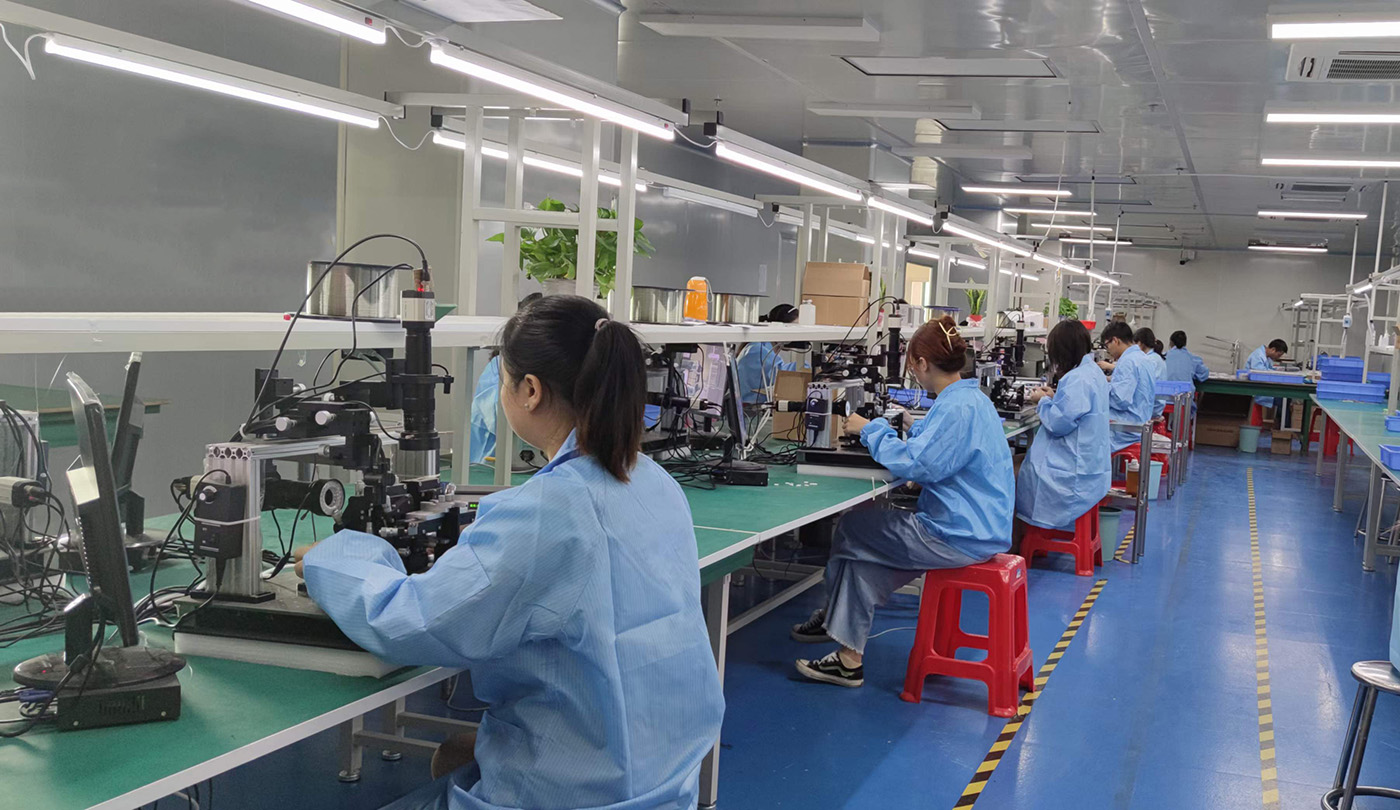
Operating in international markets requires rigorous quality control and regional compliance. With over 13 years of manufacturing expertise, we verify that our transceivers, fiber splitters, and patch cables comply with global directives including CE, FCC, RoHS, and REACH. This compliance ensures trouble-free installation in telecom networks worldwide.
Many of our OEM and ODM products have won telecom operator tenders, meeting the strict requirements of tier-1 companies. Our global customer footprint spans East Asia, Southeast Asia, Middle East, Europe, North/South America, and Africa.
The primary difference is speed. SFP (Small Form-factor Pluggable) typically supports speeds up to 4.25 Gbps, commonly used for 1G Ethernet or Fibre Channel. SFP+ is an upgraded version supporting speeds up to 10 Gbps and higher bandwidth density within the exact same mechanical package.
We use specialized EEPROM coding software to load specific vendor configuration files onto our transceivers. We maintain a lab with switches from Cisco, Juniper, HP, Huawei, and others to verify that each transceiver communicates properly with target host devices before shipment.
Pricelists are quoted FOB (Free on Board) or EXW. International logistics, local customs clearance, import tariffs, and compliance certifications (like CE or RoHS) can affect final landing costs. Bulk ordering helps distribute shipping and customs costs.
BiDi transceivers use Wavelength Division Multiplexing (WDM) to transmit and receive signals on a single optical fiber link (e.g., Tx1270nm/Rx1330nm paired with Tx1330nm/Rx1270nm). This halves the required fiber cabling infrastructure, which is highly cost-effective for long-distance runs.
Yes, in most cases. Most 25G SFP28 ports are backward compatible and can run at 10G speeds when configured in the switch operating system. However, a 25G transceiver will not work in a native 10G SFP+ port unless the port supports rate-governing downward compatibility.
 KOCENT OPTEC