Explore our high-performance components engineered for global enterprise infrastructures


As hyper-scale networks, industrial automation plants, and telecommunication systems undergo structural transformations, selecting a dependable wholesale 1gbps SFP supplier has evolved from a routine component-sourcing request to a strategic infrastructure decision. Optical transceivers serve as the critical hardware links linking modern optical distribution networks, demanding high reliability, uncompromising standard compatibility, and optimal thermal performance.
The Small Form-factor Pluggable (SFP) module—often referred to as a "mini-GBIC"—remains the foundational building block for Ethernet links. While high-capacity data hubs are transitioning rapidly toward 100G, 400G, and 800G interfaces, the 1Gbps SFP continues to dominate edge access systems, industrial networks, cellular base stations, and FTTH deployment designs.
According to market indicators, the requirement for standard 1Gbps SFP transceivers remains highly stable globally. In developing markets, telecoms leverage 1G SFPs for their extensive fiber-to-the-cabinet (FTTC) and fiber-to-the-building (FTTB) programs. In highly industrialized regions, these transceivers are critical components for Supervisory Control and Data Acquisition (SCADA) systems, wind farm infrastructure networks, smart electricity grids, and intelligent transport platforms. SFP form factors are highly valued for their hot-swappable nature, which offers system architects crucial modular adaptability.
SEO Insight & Information Gain: Standard 1Gbps transceivers are not merely commodities. Because they interface directly with legacy optical fiber infrastructure, selecting units with high-quality components, robust laser configurations, and strict compliance with the Multi-Source Agreement (MSA) is critical to preventing packet loss, line jitter, and network downtime.
Working directly with a specialized manufacturer in China provides substantial quality and cost advantages over regional resellers. Global optical supply networks heavily utilize the highly integrated industrial clusters located within the Pearl River Delta and Optical Valley regions.
Direct access to optoelectronic sub-assemblies (TOSA/ROSA) reduces production cycles and ensures consistent material grades.
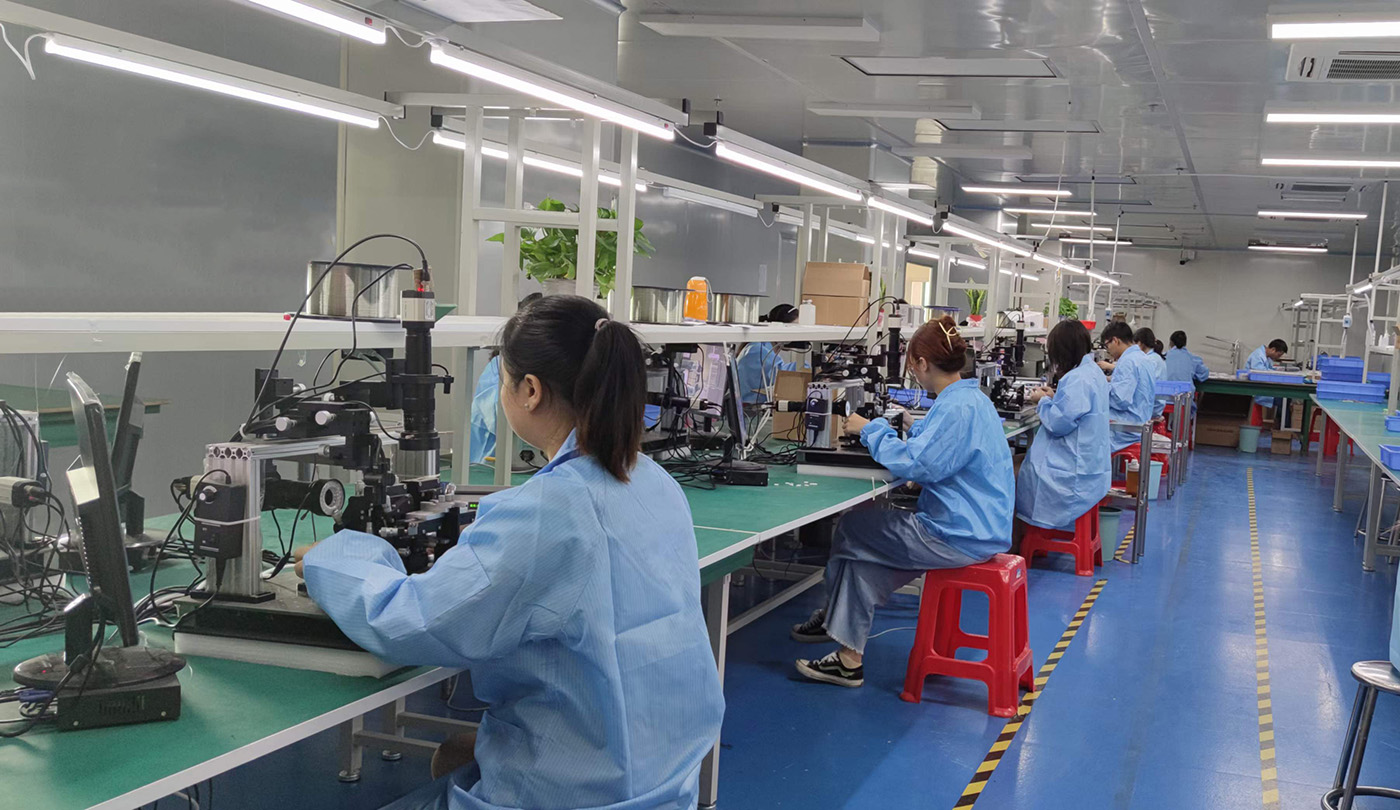
Our production facilities utilize automated testing software to evaluate optical eye diagrams and receiver sensitivity across wide temperature variations.
We configure EEPROM tables on-site to match host devices from brands like Cisco, Huawei, Nokia, HP, and Juniper.
Furthermore, Chinese manufacturing relies on mature optical technology processes. Quality verification is integrated directly into the manufacturing flow. For example, every 1Gbps SFP transceiver undergoes physical line validation using high-precision bit error rate testers (BERT) and digital diagnostic monitoring (DDM/DOM) validation before packaging. This ensures that the transceivers maintain low optical dispersion and stable receiver sensitivity throughout their lifecycle.
Depending on the installation environment and network topology, 1Gbps SFP modules are customized for specific application scenarios:
The optical networking market is focusing closely on energy efficiency and enhanced environmental resilience. Key technology trends include:

Established in 2012 in Hong Kong as a high-tech communications enterprise, Kocent Optec Limited is one of China's premier manufacturers and providers of optical termination products and connectivity systems.
We develop and manufacture passive and active fiber optic products, supporting telecommunication operators, data centers, and enterprise local networks worldwide.
By leveraging years of manufacturing experience, we help our clients increase performance, expand their capabilities, and maintain competitive market advantages. We function as a reliable partner, delivering tailored optical connection solutions.
Proven Carrier-Grade Reliability
Our OEM and ODM components are approved for operator deployments and tender specifications around the world. We work directly with major telecommunications operators, including:

Procurement teams must evaluate key technical specifications beyond just unit cost when sourcing transceivers:
Technical answers to key optical sourcing and system compatibility questions
Professional components and interconnect solutions for modern telecom deployments

 KOCENT OPTEC