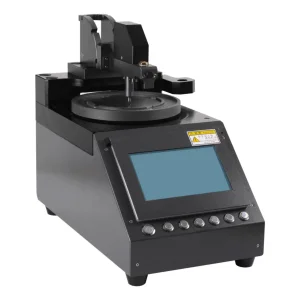
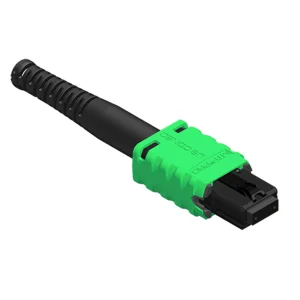
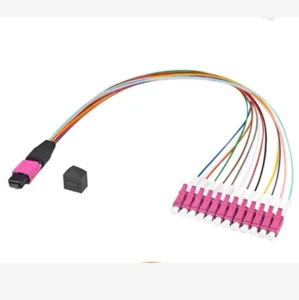
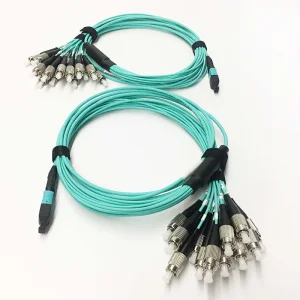
Explore our primary tier of enterprise networking solutions, MTP connectors, fiber patch assemblies, and optical polishing apparatus.
Direct Attach Copper (DAC) cables have transformed modern short-range networking. A 1G DAC Cable utilizes twinaxial copper signaling, directly terminating into SFP (Small Form-factor Pluggable) transceivers on either end.
These assemblies bypass the need for separate optical transceivers and fiber patch cables, packing high signal integrity, zero-latency electrical-to-optical conversion overhead, and incredible mechanical durability into a single pre-terminated system. For data centers, corporate server rooms, and edge distribution nodes, passive 1G SFP DACs provide an optimized physical layer to interconnect hardware within adjacent racks.
By using copper twinaxial media, these cables transmit high-frequency differential signals over paths up to 7 meters (depending on wire gauge constraints like 30AWG or 24AWG). This makes them the ultimate economic choice for 1 Gigabit Ethernet (1GbE) distribution, storage area networks (SAN), and stacking deployment schemes.

Passive 1G DAC cables consume virtually 0 Watts of power. Unlike active optical transceivers that require active driver circuitry, thermal regulation, and lasers, DACs are pure physical layer media, dramatically reducing data center cooling costs and OPEX.
Without the latency overhead introduced by converting electrical signals to light and back again, DAC copper connections achieve a latency of less than 0.1 microseconds. This is vital for high-frequency trading and real-time computing environments.
Fewer connection joints and no optical components translate to an incredibly high Mean Time Between Failures (MTBF). The absence of optical dust contamination risks ensures continuous, uninterrupted uptime.
A rigorous look at the physical architecture, mechanical characteristics, and protocol compliance of 1G SFP copper interconnects.
| Parameter | Specification Detail | Compliance Standards |
|---|---|---|
| Connector Type | SFP to SFP (Small Form-factor Pluggable) | SFF-8431, SFF-8472, INF-8074i |
| Data Rate Compatibility | 1.25 Gbps (Downward compatible to 100 Mbps) | IEEE 802.3z 1000BASE-CX |
| Impedance | 100 Ohm nominal differential impedance | SFF-8431 Signal Integrity standards |
| Wire Gauge Selection | 30AWG, 28AWG, 26AWG, 24AWG options | UL, RoHS certified copper pairs |
| Operating Temperature | -20°C to +75°C (Standard industrial range) | IEC 60068 environmental testing |
| Jacket Classification | PVC (standard), LSZH (Low Smoke Zero Halogen) | UL94-V0 flammability ratings |
A major challenge in procurement of wholesale 1G DAC cables is device compatibility. Switches and routers from vendors like Cisco, Juniper, Arista, HP, and Dell are often configured to reject third-party transceivers. Our 1G DAC cables undergo meticulous EEPROM custom coding at our factory. By flashing vendor-specific MSA (Multi-Source Agreement) data codes, we guarantee 100% interoperability across mixed-hardware network topologies, avoiding annoying link-down statuses and compatibility alerts.

Established in 2012 in Hong Kong as a high-tech communication enterprise, Kocent Optec Limited has emerged as one of China's premier fiber optic and high-speed copper termination manufacturers.
We're dedicated to developing and manufacturing fiber optic communication products ranging from passive to active categories for telecommunication networks, enterprise networks, and data centers. Through over 13 years of technical maturation, we strictly follow fiber optic and copper cable industry standards, using mature scientific methods to deliver your orders on time. We ensure that 100% of our products are fully tested and inspected prior to shipment.
By leveraging our extensive experience and excellent production capacity we gained over the years, we magnify the outcome for our valuable customers, which ultimately expands their core competencies and helps them outperform competitors. We place emphasis on customer collaboration, and we define ourselves as your valuable partner in fiber optic and copper connection solutions. We believe our differentiators are your perceived advantages.
Years of sales and service experience have enabled us to win customers from different regions. Today, we have customers from East Asia, Southeast Asia, Middle East, Eastern Europe, Western Europe, Northern Europe, South America, North America, North Africa, and South Africa.
Win-win cooperation is our constant goal. Many of our OEM and ODM products have won Telecom Operator tenders and satisfy strict end-user requests. Our main terminal telecom operators include: SingTel, Vodafone, America Movil, Telefonica, Bharti Airtel, Orange, Telenor, VimpelCom, TeliaSonera, Saudi Telecom, MTN, Viettel, Bitel, VNPT, Laos Telecom, MYTEL, Telkom, Telekom, Entel, FiberTel, StarFiber, Ooredoo, Beeline, Azercell.
Deploying networking hardware on a global scale requires absolute alignment with localized standards, certifications, and high-performance supply chains.
Whether you are upgrading a private cloud hub in Frankfurt, executing a tier-3 carrier installation in Singapore, or configuring high-speed links for a corporate campus in Chicago, our wholesale 1G DAC cables guarantee flawless operational integration. We support municipal, federal, and enterprise-grade environmental protocols including:
By coupling these certifications with our regional distribution channels, we facilitate rapid Customs clearance and eliminate long supply lead times. Our local technical teams assist network architects in engineering customized length parameters, bulk labeling schemes, and color-coding layouts to optimize network cable tracing.
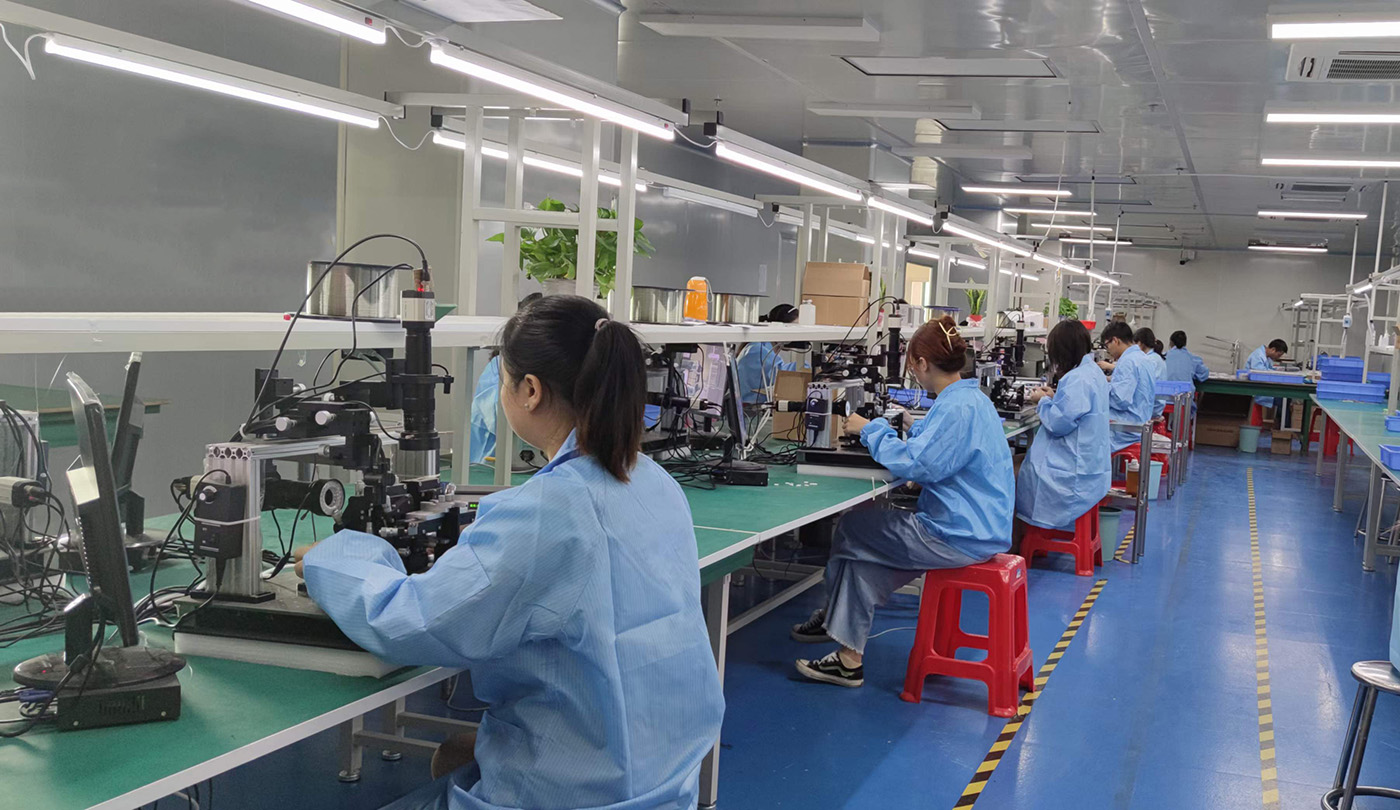
Despite the growth of 10G, 25G, and 100G pipelines, 1G DACs remain an indispensable component in many specific, mission-critical deployment topologies.
Every reliable data center requires an independent OOB management network. Using 1G DACs to connect SFP management ports on primary enterprise switches to central terminal servers ensures remote recovery, BIOS level troubleshooting, and control access even during core network path failures.
In automated manufacturing plants, PLC (Programmable Logic Controller) boxes, industrial IoT gateways, and heavy machinery interfaces aggregate real-time metrics. Copper 1G DACs provide EMI-immune, high-strength connections to withstand physical vibrations and noise.
Smart building security infrastructure relies on multi-channel NVRs (Network Video Recorders) that process multiple HD camera feeds. 1G SFP DACs link high-density PoE switches directly to storage recorders in control rooms, saving valuable rack space and fiber optic transceiver costs.
As standard enterprise data volumes increase, networking architecture trends show a gradual upgrade path toward 10G and 25G to the desktop, and 100G/400G at the core layer. However, 1G physical copper lines remain crucial. Organizations prefer utilizing 1G SFP DAC assemblies for legacy equipment preservation, sensor networks, and edge nodes.
By choosing high-quality copper DACs, IT managers secure future-proof cabling channels. Most 10G SFP+ switch ports are backward compatible with 1G SFP DACs. This gives networking teams the ability to upgrade their switches first, while continuing to utilize existing server network interface cards (NICs) without replacing the physical DAC cable infrastructure immediately.
The core philosophy of modern network design is cost-to-performance optimization. Over-provisioning transceivers and active fiber for simple, short-distance intra-rack links leads to unnecessary capital expenditure (CAPEX).
Wholesale 1G DAC cables solve this problem, saving up to 75% of cost compared to equivalent fiber runs. The massive volume production capacity at our China factories allows Kocent Optec Limited to pass scale economics directly to global system integrators and distributors, offering highly competitive pricing options without compromising signal performance.
In-depth answers to common structural, electrical, and commercial queries from network architects, purchasing agents, and global installers.
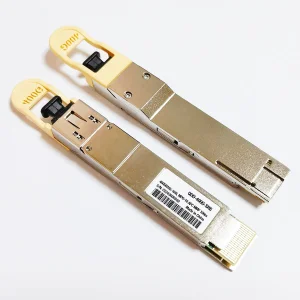
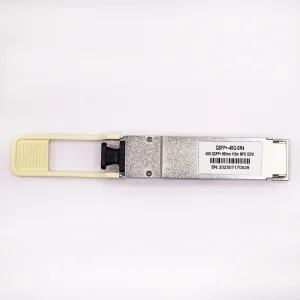
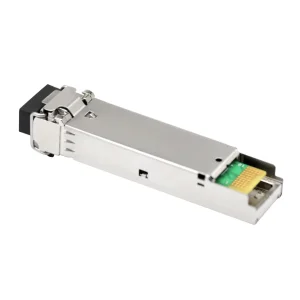
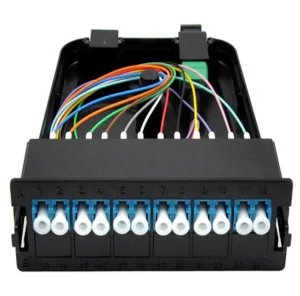
Discover our second tier of optical transceivers, high-density fiber distribution panels, and premium connection components.
 KOCENT OPTEC
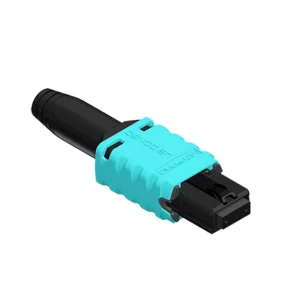
![Cheap [SENKO] Optical Fiber MPO-PLUS Premium Mini Connector](https://site.cdnfile.io/59c8deaa9fdec6072c4782dc4754000c300_300.webp)