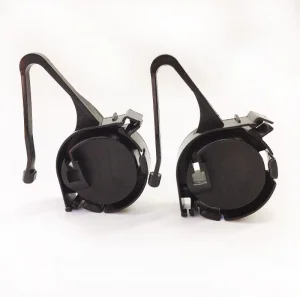
Cheap PA66 Nylon FTTH Drop Optical Fiber Cable Wire Feeder Clamp For Aerial Cable Installation FCST-ACC Product, Products
Explore Product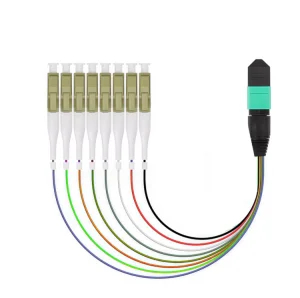
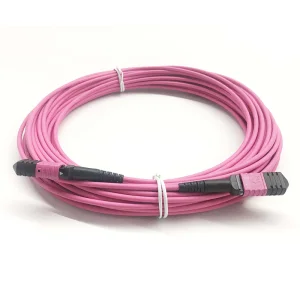
ODM OM3-150 OM3-300 8cores MTP to LC / MPO to LC fanout fiber optic patch cord Manufacturer, Products
Explore Product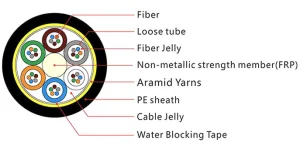
Wholesale SM 12fibers Span 100m Aerial Outdoor Dielectric ADSS Fiber Optical Cable Supplier, Factories
Explore Product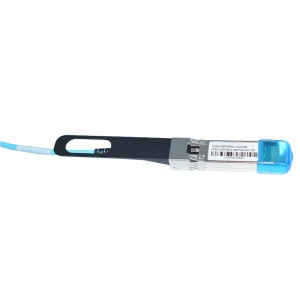
High-Quality Cisco QSFP-4 x 10G-AOC1M Compatible 40G QSFP+ to 4 x 10G SFP+ Active Optical Breakout Cable Factory, Pricelist
Explore Product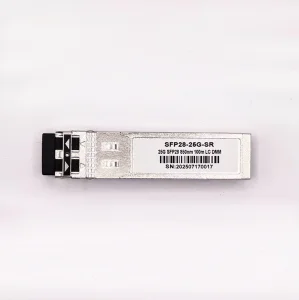
OEM KCO-25G-SFP28-SR LC Duplex 850nm 100m MMF 25Gb/s 850nm Multi-mode SFP28 Transceiver Suppliers, Product
Explore ProductIn modern enterprise backbone and service provider access networks, the 10Gb SFP+ (Small Form-factor Pluggable Plus) module represents the standard for high-density, low-power, and cost-effective ethernet transmission. Underpinned by the SFF-8431 and SFF-8472 Multi-Source Agreements (MSA), these optical transceivers bridge the gap between physical-layer fiber routing and digital packet switching, converting serial electrical inputs into precise optical pulses.
Selecting the appropriate laser variant dictates the overall link budget, transmission range, and physical-medium compatibility. System designers must carefully evaluate:
Typically operating at 850nm, VCSEL-based SFP+ transceivers (10GBASE-SR) are engineered for multi-mode fiber (MMF) networks like OM3 and OM4. Capable of supporting reach up to 300 meters, this configuration provides the lowest entry-level capital expenditure for localized data center server-to-switch links.
Operating at 1310nm or 1550nm on single-mode fiber (SMF), DFB lasers (10GBASE-LR) are engineered to withstand higher chromatic dispersion. They support distances up to 10km or 20km, making them ideal for campus distributions and regional enterprise backbones.
For long-haul telecom deployments (10GBASE-ER/ZR), EML lasers integrate a laser source with an electro-absorption modulator on a single chip. This suppresses chirp and spectral width, permitting error-free transmission up to 80km over single-mode fiber without chromatic dispersion compensation.
To ensure real-time troubleshooting and optical integrity, all premium OEM modules from Kocent Optec feature Digital Diagnostics Monitoring (DDM), also referred to as DOM (Digital Optical Monitoring). This telemetry interface permits network supervisors to continuously poll transceiver telemetry parameters including optical output power, receiver optical sensitivity, internal module temperature, transmitter bias current, and supply voltage.
The deployment of 10G SFP+ modules is no longer limited to centralized corporate data centers. As compute resources shift to the edge, localized enterprise nodes and telecommunication distribution networks rely heavily on robust optical physical layers to support low-latency services.
In high-frequency environments, packet latency is measured in nanoseconds. Here, SFP+ Active Optical Cables (AOC) and Direct Attach Copper (DAC) cables are deployed directly inside localized top-of-rack switch systems. Because physical distance dictates latency, optimizing connection terminations with ultra-short patch arrangements minimizes processing overhead.
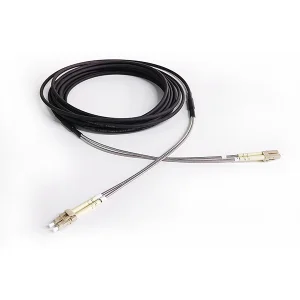
As FTTH (Fiber-to-the-Home) expands globally, telecom carriers utilize Nokia NSN compatible outdoor field patch cords connected to 10G SFP+ transceivers inside remote terminal cabins. These links route massive aggregation streams from multi-dwelling units (MDUs) to municipal optical line terminals (OLTs).
Heavy manufacturing facilities present challenging EMI (Electromagnetic Interference) landscapes. Deploying single-mode optical cabling with hardened, industrial-temperature (-40°C to +85°C) 10G SFP+ modules secures consistent communication channels across factory floors without risking grounding loops or electro-magnetic link failure.
In localized regional deployments, compliance with legal, engineering, and environmental constraints remains vital. Network operators in the European Union rely on RoHS-compliant (Restriction of Hazardous Substances) and CE-certified SFP+ modules, whereas North American infrastructure projects specify FCC-compliant parts that pass rigorous electromagnetic compatibility testing.
Established in 2012 in Hong Kong as a high-tech communication enterprise, Kocent Optec Limited is one of China's leading fiber optic termination product manufacturers and solution providers. We are dedicated to developing and manufacturing fiber optic communication products ranging from passive to active categories for telecommunication networks, enterprise networks, and data centers.
By leveraging our extensive experience and production capacity gained over the years, we magnify the outcome for our valuable customers, which ultimately expands their core competencies and helps them outperform competitors. We place emphasis on customer collaboration, and we define ourselves as your valuable partner in fiber optic connection solutions. We believe our differentiators are your perceived advantages.
Years of sales and service experience have enabled us to win customers from different regions. Today, we have customers from East Asia, Southeast Asia, Middle East, Eastern Europe, Western Europe, Northern Europe, South America, North America, North Africa, and South Africa. Win-win cooperation is our constant goal. Many of our OEM and ODM products have won Telecom Operator tenders and satisfy demanding end-user requests.


Our field-proven products serve end-users globally across multiple Tier-1 networks. Our components and transceivers have been deployed within networks operated by:
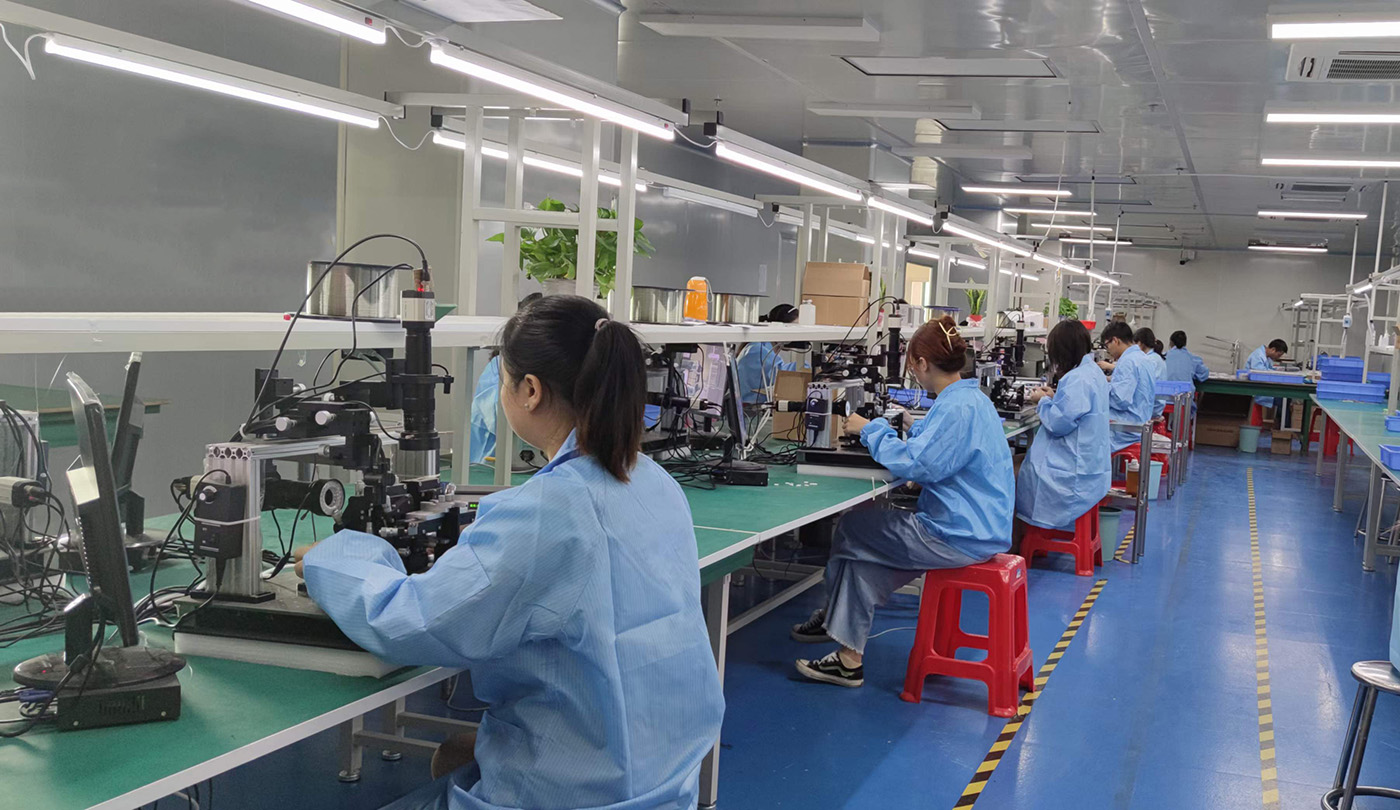
With more than 13 years of experience in manufacturing telecommunication fiber optic products, we strictly follow global fiber optic industry standards. We deploy mature scientific methodologies to deliver your products on time, verifying that 100% of products are tested and inspected before shipment.
Our manufacturing ecosystem integrates raw wafer and laser packaging, automated optical sub-assembly (OSA) alignment, and multi-stage firmware flashing. This level of vertical integration allows us to respond rapidly to client requests, optimize manufacturing pipelines, and insulate downstream buyers from global component shortages.
Every host switch platform applies a proprietary validation algorithm to its transceiver port. To guarantee plug-and-play functionality across brands like Cisco, Juniper, Huawei, Nokia, and Arista, Kocent Optec runs a physical system check using real switch platforms.
Before leaving our facility, SFP+ modules undergo:
While 10Gb SFP+ remains a cost-effective standard for edge distribution networks, infrastructure requirements continue to scale. Modern data center operators and municipal service points are executing strategic roadmaps to bridge legacy 10G topologies with 25G SFP28, 100G QSFP28, and higher-density 400G PAM4 technologies.
The upgrade path relies on keeping the physical SFP footprint comparable while adopting advanced signal modulation strategies:
By running a single 25Gb/s lane rather than combining multiple 10G lanes, the 25G SFP28 interface preserves host card layout space while increasing density and throughput. It serves as the primary access layer configuration for modern enterprise servers and base station aggregation links.
Deploying 100G QSFP28 transceivers over single-mode fibers allows long-distance links to handle growing core backhaul traffic. Using four 25Gbps lanes (or advanced single-wavelength configurations), it supports long-distance interconnect networks without requiring chromatic dispersion compensation.
Integrating lasers directly onto silicon chips reduces thermal dissipation, module size, and overall costs. Transitioning from simple NRZ (Non-Return-to-Zero) encoding to PAM4 (Pulse Amplitude Modulation 4-Level) doubles the data capacity on identical physical optical configurations.
During these infrastructure upgrades, operators rely on cost-effective migration solutions. Deploying custom hybrid interconnect products, such as our QSFP+ to 4x 10G SFP+ Active Optical Breakout Cables, allows legacy switches to connect seamlessly with next-generation core switches, optimizing capital hardware spend.
In enterprise procurement, the unit price of a 10G SFP+ module depends on multiple technical specifications, laser choices, and quality requirements. Understanding how these factors impact product costs helps sourcing teams negotiate favorable pricing schedules for large deployments.
Key parameters that influence final manufacturing costs include:
By sourcing directly from Kocent Optec's factory floor in China, operators can bypass distribution markups. Contact our global sales office with your exact distance, media, and compatibility requirements to receive an optimized, high-volume OEM 10G SFP+ pricelist.
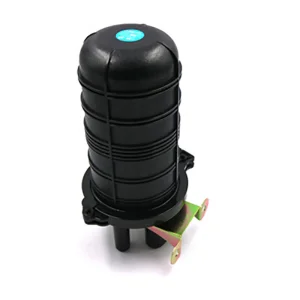
Wholesale FOSC-V13-48ZG Mini Size Vertical Fiber Optic Splice Closure Box Suppliers, Pricelist
Explore Product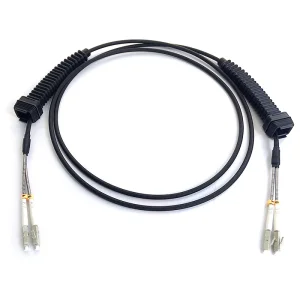
Wholesale OM5 Multimode Fiber 8fo MPO to LC / MTP to LC Fan-out 0.9mm Patch Cord Manufacturers, Product
Explore Product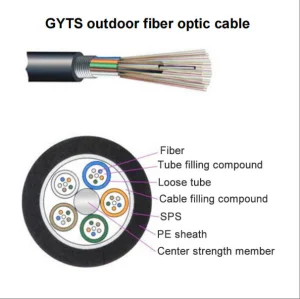
High-Quality Single Mode G652D G657A1 GYTS 12 Core Pipeline Outdoor Fiber Optic Cable Pricelist, Products
Explore Product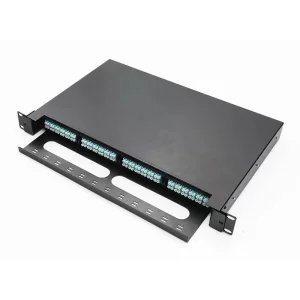
ODM High Density 96fo MPO Fiber Optic Patch Panel with 4 modules Manufacturers, Supplier
Explore Product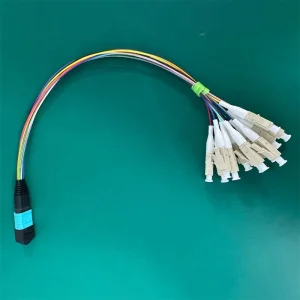
Wholesale OM3 12fibers MTP MPO to LC fanout fiber optic patch cable Factories, Pricelist
Explore Product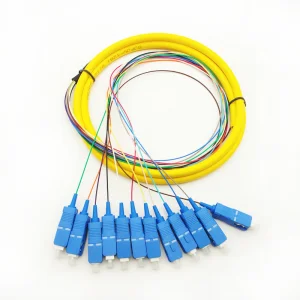
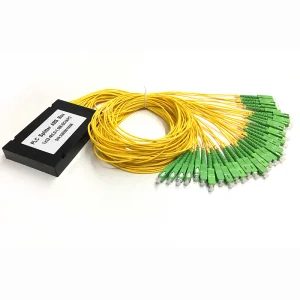
Cheap 12 cores Single Mode G652D SC/UPC Fanout Optic Fiber Pigtail Manufacturers, Factory
Explore Product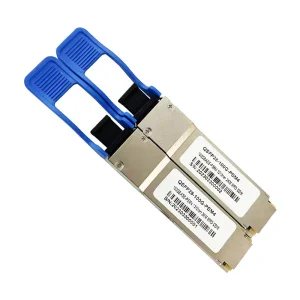
Cheap 100G QSFP28 PSM4 SMF 1310nm 2KM MTP MPO Fiber Optic Transceiver Manufacturer, Manufacturers
Explore ProductThe unit price of an OEM SFP+ module is primary determined by its transmission reach (e.g. 300m vs 80km), optical components (VCSEL vs EML lasers), and operational temperature ratings (commercial vs industrial grade). Custom compatibility configurations and compliance standards (such as Telcordia GR-326, CE, RoHS, and FCC) also affect total manufacturing and validation costs.
Our engineering facility uses native firmware modifications on the transceiver's internal EEPROM, matching target system expectations. Each production batch undergoes live hardware validation on real-world switch interfaces to ensure clean port handshake initialization, active link diagnostic data, and zero-port lockouts.
Commercial-grade SFP+ modules are designed for indoor data center environments operating between 0°C and 70°C. Industrial-grade modules are built for challenging outdoor deployments (such as telecom base stations or industrial plants), operating between -40°C and +85°C. These ruggedized units feature robust laser components and undergo thermal chamber testing to prevent frequency drift and link degradation.
DDM provides real-time access to key link parameters through the 2-wire serial bus defined in the SFF-8472 standard. It allows network monitoring systems to track operational parameters like optical transmit/receive power, internal module temperature, bias current, and voltage. This data helps technicians identify fiber path degradation and clean connections before links fail.
 KOCENT OPTEC