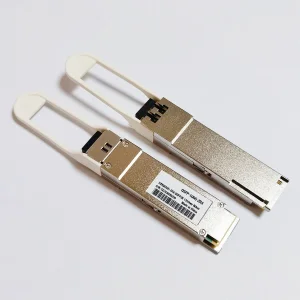
Explore our premium active transceivers, multiplexers, and fiber connectivity products customized for global telecommunication operators and datacenter environments.
Kocent Optec Limited established in 2012 in Hongkong as a hi-tech communication enterprise, is one of China's leading fiber optic termination product manufacturer and solution provider.
We're dedicated to developing and manufacturing fiber optic communication products ranging from passive to active categories for telecommunication networks, enterprise networks and data centers.
By leveraging our extensive experience and excellent production capacity we gained over the years, we magnify the outcome for our valuable customers, which ultimately expands their core competencies and helps them outperform competitors. We place emphasis on customer collaboration, and we define ourselves as your valuable partner in fiber optic connection solutions. We believe our differentiators are your perceived advantages.


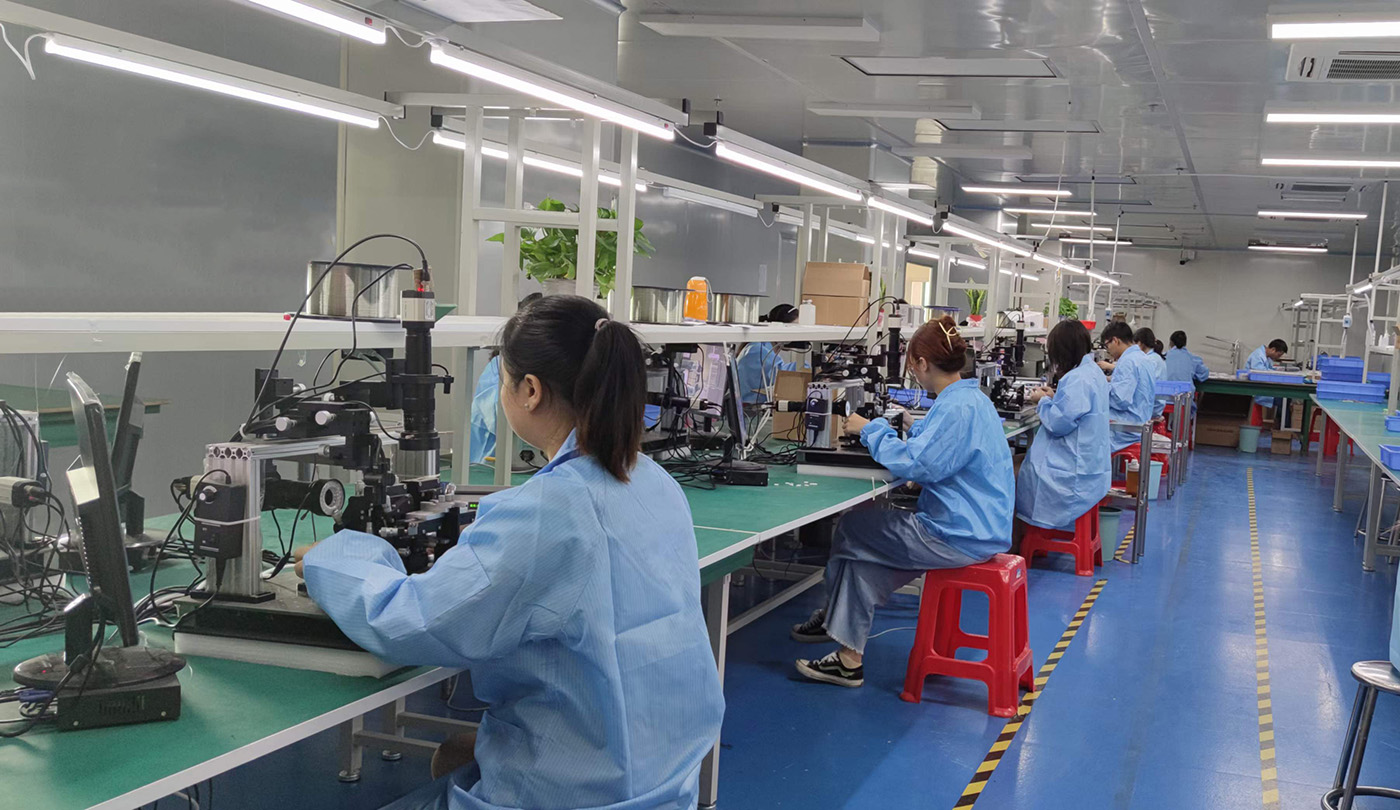
With more than 13 years of experience in manufacturing telecommunication fiber optic products, we follow strictly fiber optic industry standards by using mature scientific methods to deliver your products on time and ensure that 100% products are tested and inspected before shipment.
Our commitment to quality means zero defects on the field. Each 10Gb SFP Single Mode transceiver and passive multiplexer component undergoes rigorous optical validation including spectral testing, back-reflection verification, and compatibility matrix flashing.
Years of sales and service experience have enabled us to win customers from different regions. Today, we have customers from East Asia, Southeast Asia, Middle East, Eastern Europe, Western Europe, Northern Europe, South America, North America, North Africa, and South Africa.
Win-win cooperation is our constant goal. Many our OEM and ODM products won the Telecom Operator tender and satisfy end-user request.
Our main terminal telecom operators include: SingTel, Vodafone, America Movil, Telefonica, Bharti Airtel, Orange, Telenor, VimpelCom, TeliaSonera, Saudi Telecom, MTN, Viettel, Bitel, VNPT, Laos Telecom, MYTEL, Telkom, Telekom, Entel, FiberTel, StarFiber, Ooredoo, Beeline, Azercell.
The telecommunications industry is undergoing a structural paradigm shift driven by massive data consumption, edge computing deployment, and localized distribution architectures. The 10Gb SFP+ (Small Form-factor Pluggable Plus) Single Mode transceiver remains the cornerstone of modern metropolitan networks, corporate WAN infrastructures, and cellular backhaul deployments. While higher speeds such as 100G, 400G, and 800G dominate core hyperscale data centers, 10G networks represent the critical link between corporate endpoints, distributed edge nodes, and regional fiber backbones.
Traditional 10G Single Mode transceivers relied almost exclusively on fixed 1310nm DFB lasers. Today, the market has expanded to incorporate CWDM and high-density DWDM (Dense Wavelength Division Multiplexing) technologies, allowing multiple 10G streams to share a single fiber pair over distances up to 80km. Tunable optical transceivers allow operators to program wavelengths on-the-fly, reducing warehouse complexity and operational costs.
As optical transceivers are pushed out of climate-controlled datacenters into roadside cabinets, cell towers (for 5G CPRI/eCPRI interfaces), and industrial IoT hubs, the demand for hardened "I-Temp" (Industrial Temperature) modules has surged. Our ODM division utilizes specialized high-stability lasers and customized heat sinks to ensure continuous 10Gbps throughput under extreme conditions without thermal runaway.
Modern network management requires granular observability. Digital Diagnostic Monitoring (DDM) or Digital Optical Monitoring (DOM) capabilities are standardized across our 10Gb Single Mode SFP line. This interface provides real-time access to key operating metrics: laser temperature, receiver optical power, transmitter bias current, supply voltage, and internal optical warnings.
Procuring optical modules at scale involves complex operational calculations beyond simple unit prices. Sourcing directors, network architects, and system integrators face unique challenges regarding hardware compatibility, supply chain resilience, and protocol validation. At Kocent Optec Limited, our ODM services address these variables through custom engineering frameworks.
By leveraging custom ODM agreements, procurement teams can secure long-term price stability contracts, dedicated component stocks, and direct access to engineering staff for quick troubleshooting.
Optical connectivity is not an isolated component; it represents the structural nervous system of high-availability operations. To maximize network reliability, we construct complete integrated solutions combining active transceivers with passive splitters, multiplexers, and distribution equipment.
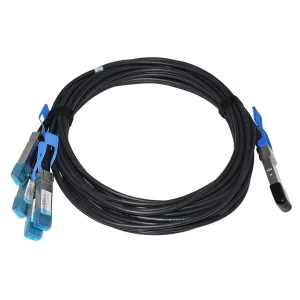
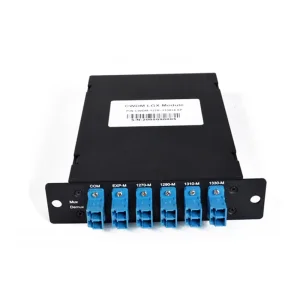
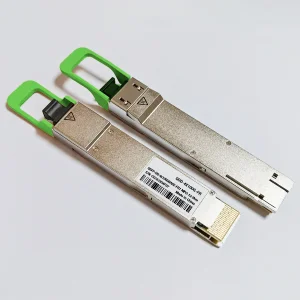
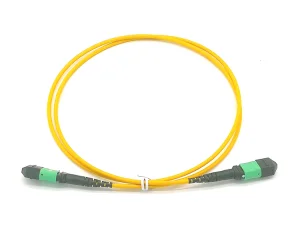
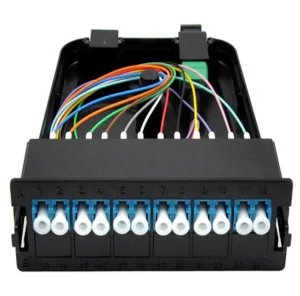
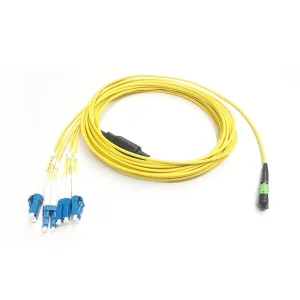
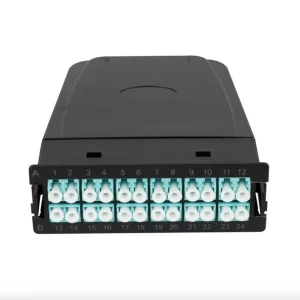
For high-density leaf-spine fabrics, we provide customized 10G SFP+ to 100G QSFP28 breakout configurations, low-attenuation patch cords (such as our MTP/MPO single-mode systems), and custom modular cassettes that optimize rack spacing while minimizing thermal blockage.
5G RRU (Remote Radio Unit) to BBU (Baseband Unit) connections require low latency and high physical tolerance. Our single-mode 10G SFP+ transceivers support CPRI protocol requirements, delivering jitter-free performance across extreme temperature ranges in outdoor base stations.
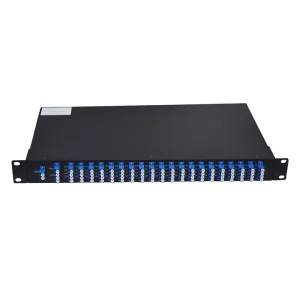
By pairing our rack-mounted 40-channel DWDM Mux/Demux blocks with CWDM/DWDM 10G SFP+ transceivers, regional service providers can scale bandwidth capacity by 40x without trenching new fiber lines.
Reliability in optical communication is validated through absolute compliance with international standards and strict manufacturing processes. Kocent Optec Limited adheres to strict global policies to guarantee safety, quality, and environmental responsibility.
All transceivers conform to IEC 60825-1 (Class 1 Laser Safety standards), preventing accidental eye injuries during installation or maintenance. They also carry CE, FCC, and FDA certifications.
Our complete manufacturing pipeline conforms to RoHS (Restriction of Hazardous Substances) and REACH directives. We guarantee that all plastics, solder connections, and optical fibers are free of hazardous materials.
Our products are engineered in compliance with SFF-8431, SFF-8432, and SFF-8472 MSA standards. This guarantees mechanical, electrical, and register-map compliance with all mainstream host hardware configurations.
Every single batch of ODM transceivers undergoes an exhaustive testing cycle before packaging:
As the industry transitions from traditional discrete optical designs to integrated silicon photonics, the roadmap of pluggable form factors is rapidly evolving. The manufacturing lessons and sub-assembly processes refined on 10G SFP+ lines lay the foundation for higher-order transceivers.
10G SFP+ (Today) -> 25G SFP28 (Edge Upgrade) -> 100G QSFP28 / Single-Lambda 100G -> 400G/800G QSFP-DD / OSFP (Data Center Core)
The emergence of PAM4 (Pulse Amplitude Modulation) and coherent detection mechanisms enables higher speeds, while single-mode fiber (SMF) systems continue to gain market share over multi-mode configurations due to their longer reach and compatibility with future wavelength architectures. Our R&D department is currently expanding capabilities in Silicon Photonics (SiPh), which integrates complex optical circuits onto silicon dies, lowering power requirements and physical complexity.
Expert clarifications regarding compatibility, specifications, and procurement of 10G Single Mode transceivers.
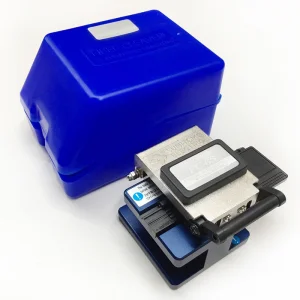
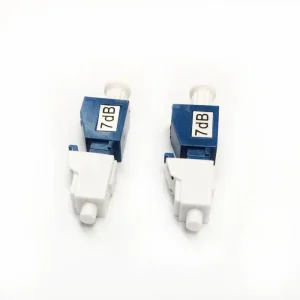
Complete your deployment with our range of fiber harnesses, attenuators, splice cassettes, tools, and industrial termination hardware.
 KOCENT OPTEC