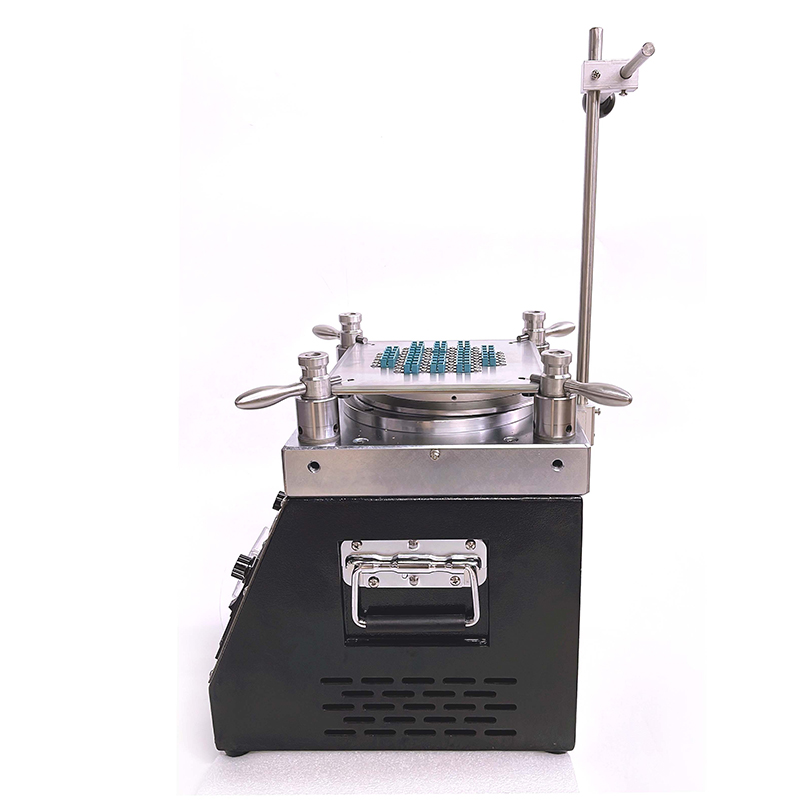
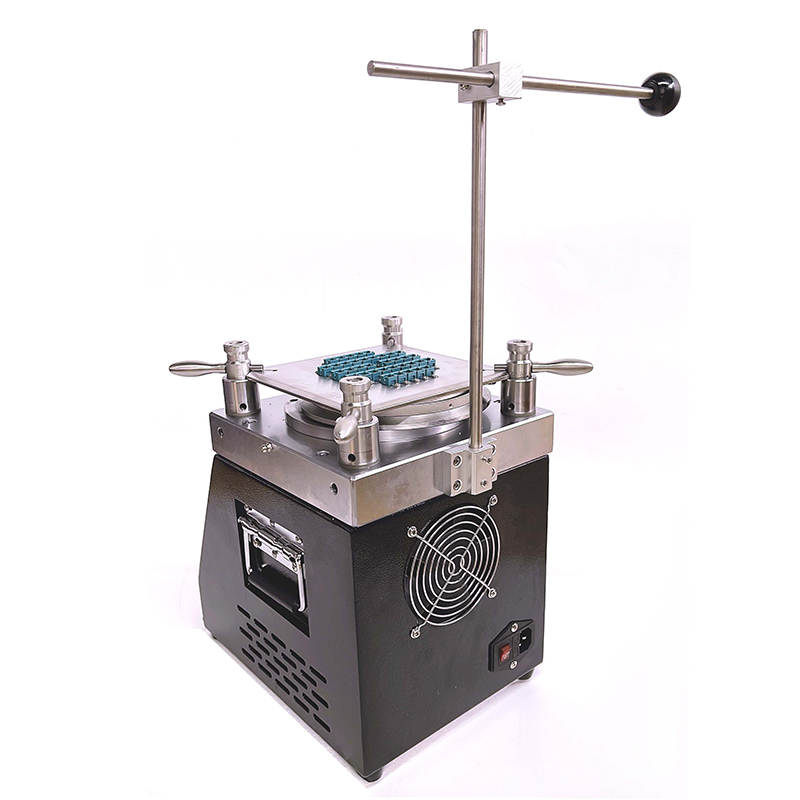
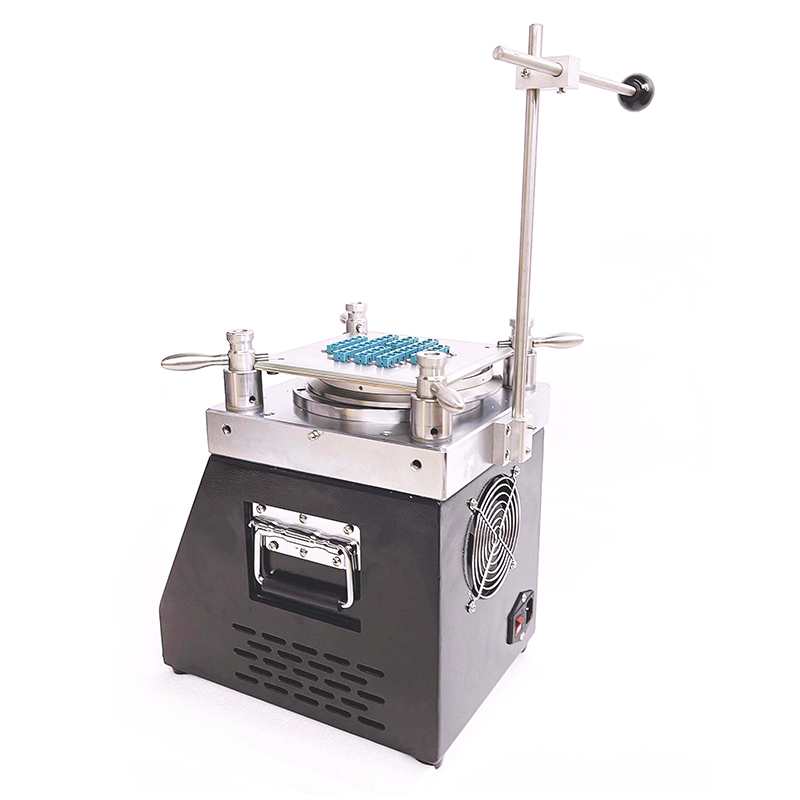
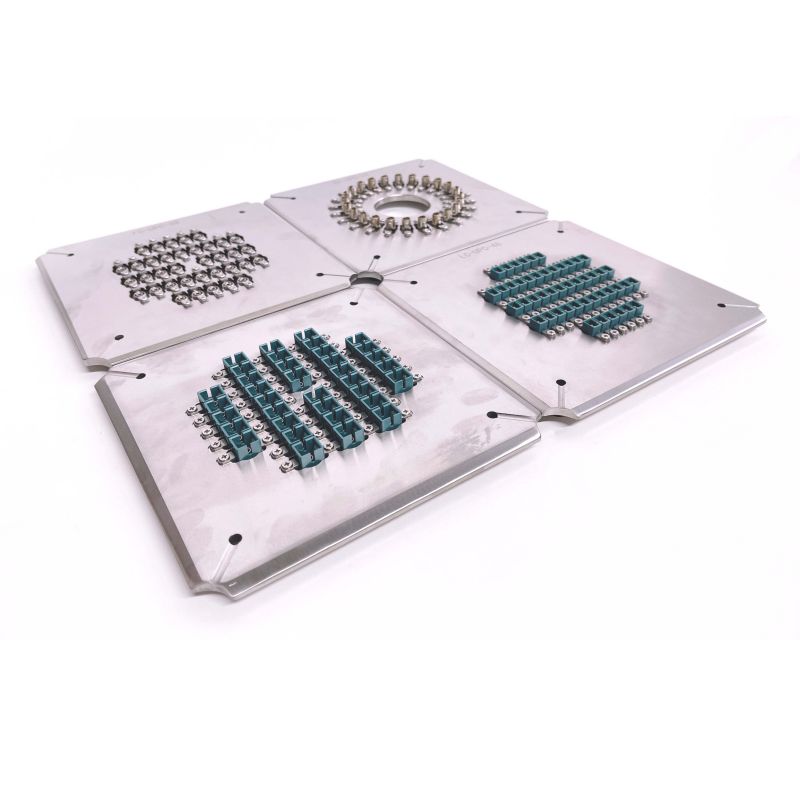
The optical fiber polishing machine controls revolution and rotation by two motors, so as to achieve the effect of 8-shaped polishing. The four-corner pressurized optical fiber grinder applies pressure by polishing the four corners of the fixture, and needs to be achieved by adjusting the spring pressure of the four posts. The four-corner pressurized polishing machine has uniform pressure on the four corners, so the quality of the polishing product is greatly improved compared with the center pressurized polishing machine; and the polishing fixtures and fixtures generally have 20 heads and 24 heads, and the production efficiency is also higher than that of the center pressurized polishing machine. Greatly improved.
Technical Specifications
| Packing way |
wooden box |
| Packing size |
365*335*390mm |
| Gross weight |
25kgs |
| Four corner pressurization |
4 Coil Springs |
| Polishing capacity |
18 heads / 20 heads / 24 heads / 32 heads / 36 heads |
| Power (Input) |
220V (AC), 50Hz |
| Power consumption |
80W |
| Polishing timer (Timer) |
0-99H OMRON rotary/button digital timer, any timing external |
| Dimension (Dimension) |
300mm × 220mm × 270mm |
| Weight |
25Kg |
| Φ2.5mm PC, APC |
FC, SC, ST |
| Φ1.25mm PC, APC |
LC, MU |
| Special Type Support |
MT, mini-MT, MT-RJ PC, AP, SMA905, ... |
Applications
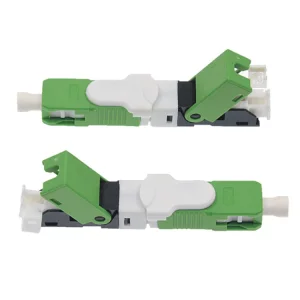
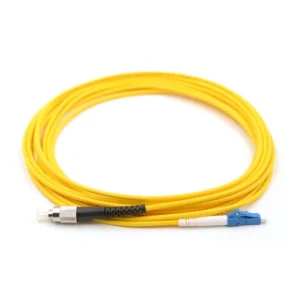
Used to process the optical fiber end surface of optical fiber products, such as optical fiber connectors (jumpers, pigtails, quick connectors), energy optical fibers, plastic optical fibers, and embedded short ferrules of devices.
Widely applied and implemented within the optical communication industry.
Commonly integrated with curing furnace end detectors, crimping machines, testers, and other equipment to form highly productive optical fiber jumper and passive device lines.
Key Features & Functionalities
1
Machinable ceramics (including extremely hard ZrO2), quartz, glass, metal, plastic, and other durable materials.
2
Independent compound motions of rotation and revolution ensure the uniformity and consistency of polishing quality. The revolution can be adjusted steplessly with a speed range of 15-220rpm to meet various processes.
3
Four-corner pressurized design enables arbitrary setting of the polishing time according to strict processing demands.
4
The runout of the surface of the polishing plate at a revolution speed of 100 rpm is strictly maintained at less than 0.015 mm.
5
Automatically records the number of polishing times, effectively guiding operators to adjust polishing times based on paper wear.
6
Pressing, unloading, and replacing the polishing pads of the fixture are designed to be convenient, user-friendly, and fast.
7
The overall processing quality is highly stable, with a low repair rate and exceptional production line efficiency.
8
Add or cancel forward and reverse functions selectively based on specific customer requirements.
9
Utilizes high-quality polymer waterproof materials to guarantee that internal electrical appliances and the chassis are completely sealed.
10
Digital display of revolution speed can be customized according to requirements for exact polishing quality control.
Product Media
Frequently Asked Questions (FAQ)
What types of materials can this polishing machine process?
This machine is capable of processing ceramics (including extremely hard ZrO2), quartz, glass, metal, plastic, and other specified optical fiber materials.
How does the 4-corner pressurized system improve performance?
The four-corner pressurized design applies pressure uniformly across the fixture using 4 coil springs. This ensures stable pressure distribution, leading to significantly higher polishing quality and efficiency compared to center-pressurized alternatives.
What is the production capacity and compatible head counts?
The machine supports multiple fixture heads, offering flexible capacities of 18 heads, 20 heads, 24 heads, 32 heads, or 36 heads to maximize output.
What types of optical fiber connectors does this machine support?
It supports standard Φ2.5mm PC/APC (FC, SC, ST connectors), Φ1.25mm PC/APC (LC, MU connectors), and special types like MT, mini-MT, MT-RJ PC, AP, and SMA905.
Is the polishing speed adjustable?
Yes, the independent compound motions of rotation and revolution can be adjusted steplessly, with a speed range of 15-220rpm to fit varying processing techniques.
How does the machine manage and track the polishing steps?
It automatically records the number of polishing runs, assisting operators in identifying when to adjust polishing times based on the usage state of the polishing paper.
 KOCENT OPTEC