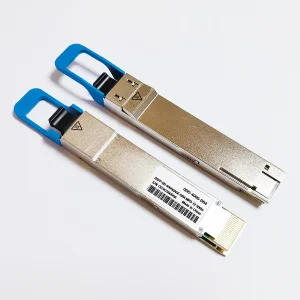
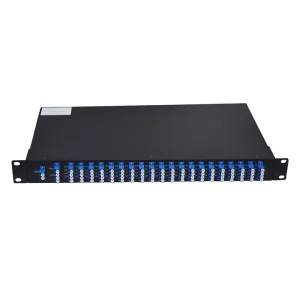
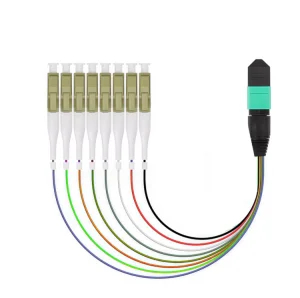
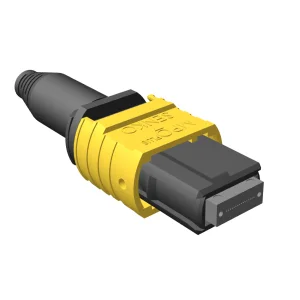
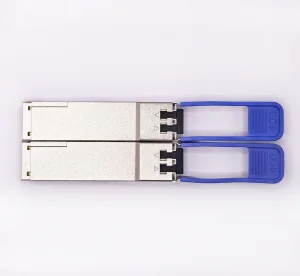
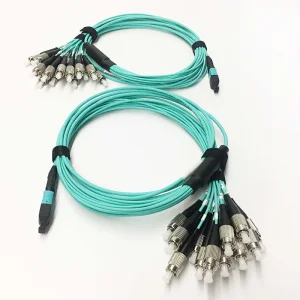
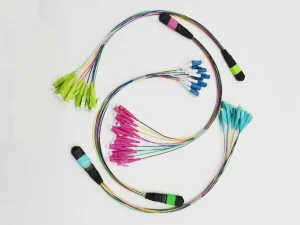
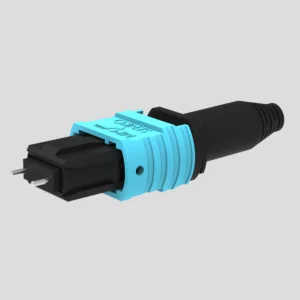
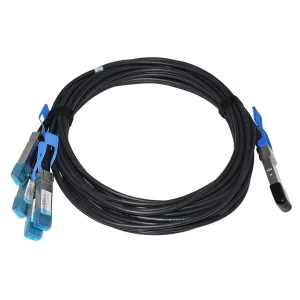
In high-performance data center architectures and telecom transmission matrices, 40G QSFP+ Active Optical Cables (AOCs) represent the optimal intersection of reliability, signal integrity, and cost efficiency. Active Optical Cables are engineered with optical transceivers permanently bonded to high-performance multimode optical fiber (typically OM3 or OM4). This structure mitigates the insertion loss and potential contamination problems common at the physical optical interfaces of traditional optical transceivers and separate patch leads. By replacing electrical copper conductors with active optical components, AOCs offer a lighter weight, tighter bend radius, and absolute immunity to Electromagnetic Interference (EMI).
From an electrical and mechanical standpoint, 40G QSFP+ AOC assemblies incorporate an integrated chip architecture that converts high-frequency electrical signals into optical signals via a VCSEL (Vertical-Cavity Surface-Emitting Laser) array operating at a nominal wavelength of 850nm. Compared with traditional Direct Attach Copper (DAC) cables, which are severely limited in length and suffer from high insertion loss at high frequencies, AOCs support link distances of up to 100 meters on OM3 and 150 meters on OM4 fiber. Crucially, the absence of open optical connectors reduces the risk of contamination from dust or moisture during deployment, yielding an installation model that significantly lowers maintenance overhead for enterprise data centers.
Established in 2012 in Hong Kong as a hi-tech communication enterprise, KOCENT OPTEC LIMITED has evolved into one of China's leading fiber optic termination product manufacturers and solution providers.
We are dedicated to developing and manufacturing fiber optic communication products ranging from passive to active categories for telecommunication networks, enterprise networks, and data centers. By leveraging our extensive experience and excellent production capacity we gained over the years, we magnify the outcome for our valuable customers, which ultimately expands their core competencies and helps them outperform competitors.
We place emphasis on customer collaboration, and we define ourselves as your valuable partner in fiber optic connection solutions. We believe our differentiators are your perceived advantages.

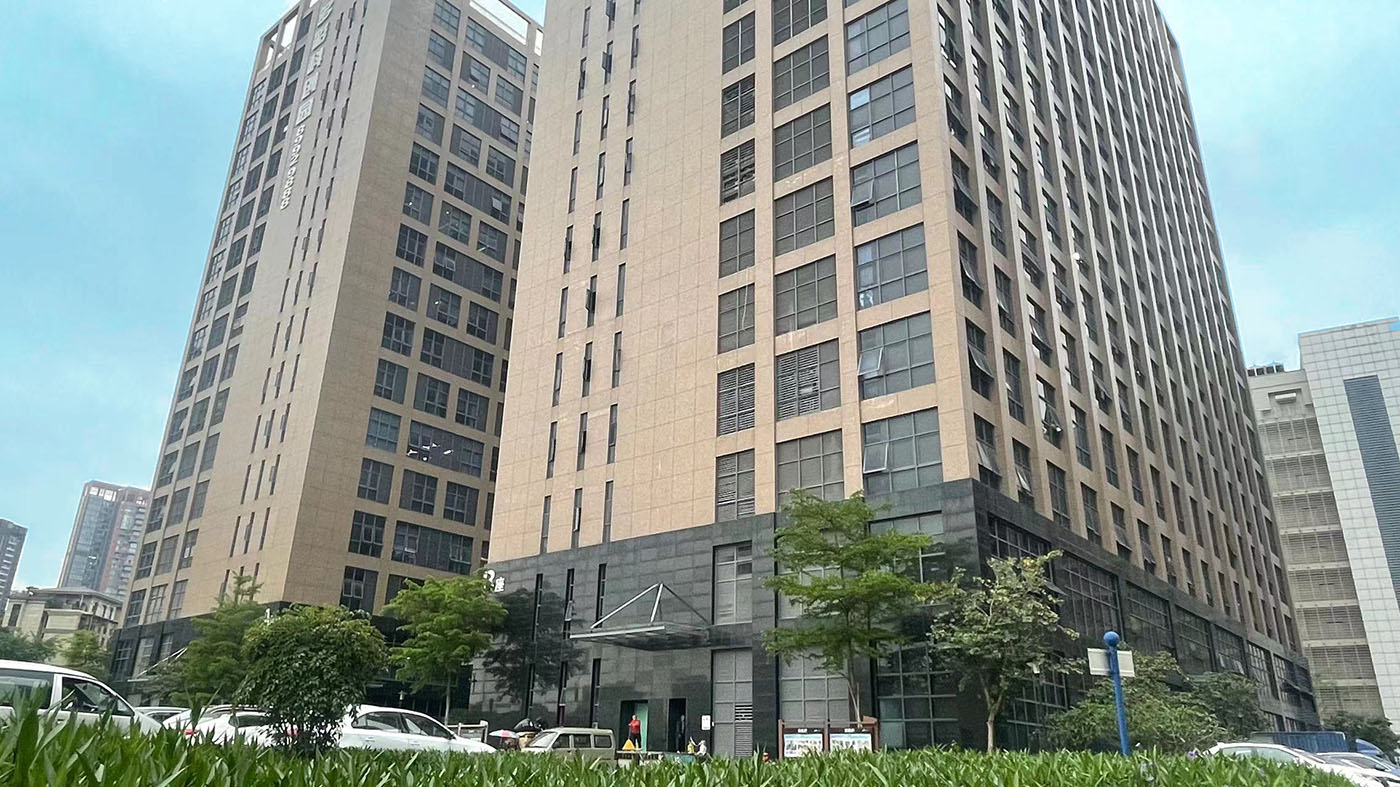
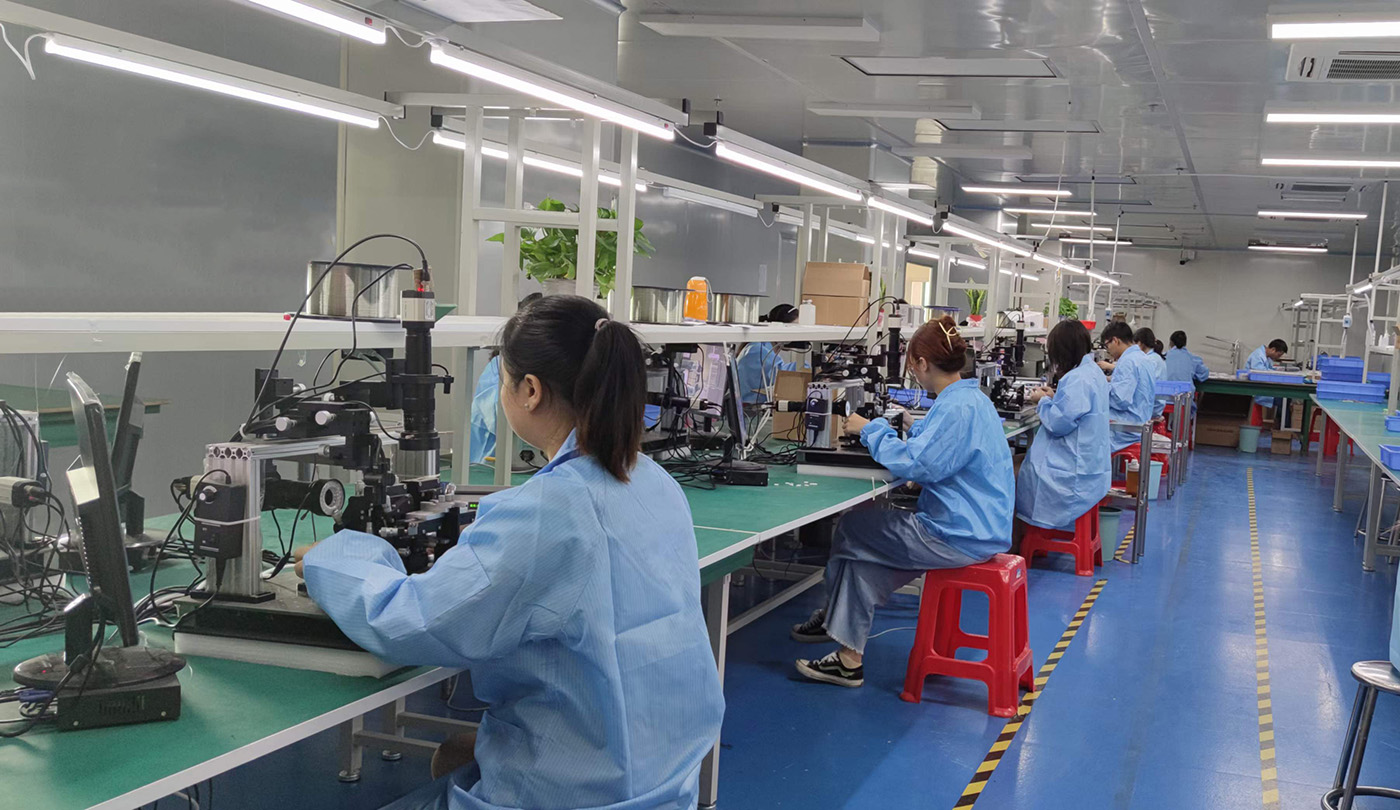
With more than 13 years of experience in manufacturing telecommunication fiber optic products, we follow strictly fiber optic industry standards by using mature scientific methods to deliver your products on time and ensure that 100% of products are tested and inspected before shipment.
Years of sales and service experience have enabled us to win customers from different regions. Today, we have customers from East Asia, Southeast Asia, Middle East, Eastern Europe, Western Europe, Northern Europe, South America, North America, North Africa, and South Africa.
Win-win cooperation is our constant goal. Many of our OEM and ODM products won the Telecom Operator tender and satisfy end-user requests.
Through our dedicated OEM/ODM pipelines, Kocent Optec solutions have been deployed by global tier-1 telecom operators, reinforcing our role in critical infrastructure projects:
In the contemporary global landscape, the surge in cloud-native microservices, containerized workloads, and Artificial Intelligence model fine-tuning has placed unprecedented demands on the switching fabric of hyperscale and enterprise data centers. China's 40G AOC Cable market has emerged as the global production engine, delivering custom-configured, low-latency, and high-density cable assemblies. These assemblies are crucial for interconnecting high-capacity switches, routers, and high-performance server clusters.
Our solutions target key industry sectors where signal degradation and network downtime carry catastrophic financial risks:
Optimizing Top-of-Rack (ToR) to Leaf switch distributions. Provides clean path architectures with lightweight, low-bend sensitivity cables that optimize airflow and thermal management in high-density rack units.
Providing deterministic latency profiles. By removing dynamic connector variation and optimizing high-frequency signal processing, our active optical engine minimizes packets-in-flight delay.
Ensuring complete immunity to electromagnetic noise in manufacturing spaces. By utilizing non-conductive glass media, these cables prevent ground loops and resist heavy industrial interference.
From an international logistical perspective, working with a seasoned China-based optical engineer enables procurement directors to manage product quality while reducing per-port connectivity costs. China's mature vertical supply chain—ranging from raw optoelectronic component manufacturing (such as TO-can optical sub-assemblies and silicon wafers) to precision automated packaging lines—ensures Kocent Optec can maintain rigorous standards while offering flexible pricing options.
B2B pricing for active optical components is determined by several core specifications, including length, coding compatibility, jacket rating, and volume commitments. Understanding these variables enables procurement managers to optimize total cost of ownership:
| Product Code Reference | Interface Type | Cable Length | Fiber Type / Jacket | EEPROM Coding / Compatibility | Estimated Unit Price (FOB Shenzhen) |
|---|---|---|---|---|---|
| KCO-QSFP-AOC-1M | 40G QSFP+ to QSFP+ | 1 Meter | OM3 Multimode (LSZH) | Generic / Cisco / Juniper / Arista | $12.50 - $16.50 |
| KCO-QSFP-AOC-3M | 40G QSFP+ to QSFP+ | 3 Meters | OM3 Multimode (LSZH) | Generic / Cisco / Juniper / Arista | $15.80 - $21.00 |
| KCO-QSFP-AOC-5M | 40G QSFP+ to QSFP+ | 5 Meters | OM3 Multimode (LSZH) | Generic / Cisco / Juniper / Arista | $18.90 - $25.50 |
| KCO-QSFP-AOC-10M | 40G QSFP+ to QSFP+ | 10 Meters | OM3 Multimode (LSZH) | Generic / Cisco / Juniper / Arista | $28.00 - $37.00 |
| KCO-QSFP-AOC-20M | 40G QSFP+ to QSFP+ | 20 Meters | OM3 Multimode (OFNP Plenum) | Generic / Cisco / Juniper / Arista | $45.00 - $58.00 |
| KCO-QSFP-AOC-50M | 40G QSFP+ to QSFP+ | 50 Meters | OM4 Multimode (OFNP Plenum) | Generic / Cisco / Juniper / Arista | $95.00 - $125.00 |
Deploying high-speed networking hardware globally requires strict adherence to international electrical, environmental, and building standards. At Kocent Optec, our manufacturing pathways comply with major regional regulatory frameworks to facilitate smooth customs clearance and build-out authorization:
To support global partners, we offer localized technical consulting and FAE (Field Application Engineering) services. This ensures that whether you are installing a high-density cluster in Amsterdam, Tokyo, or Sao Paulo, our design guides align with the localized performance metrics of regional service providers.
As traffic demand escalates, network engineers must evaluate how current deployments will interface with next-generation speeds. While 40G remains a highly stable and cost-effective option for edge networks and corporate structures, the path to 100G and 400G/800G Ethernet requires careful design choices:
Uses 4 independent optical channels operating at 10 Gbps per channel. Provides a stable and cost-effective connection option for enterprise data centers and corporate local area networks.
Transitions to 4 channels of 25 Gbps each. Fits directly into the same physical envelope as the 40G port but increases density and overall throughput by 2.5x without altering cabling footprints.
Leverages PAM4 (Pulse Amplitude Modulation) coding to deliver high data rates over specialized single-mode and advanced multi-mode optical fiber arrays, supporting AI and high-performance computing.
 KOCENT OPTEC