Engineered for low-loss performance and compatibility across multi-vendor telecom and enterprise environments
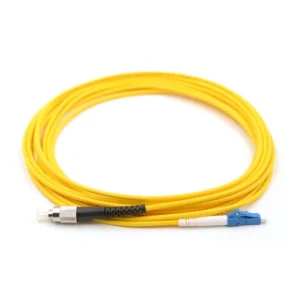 Cheap LC/UPC-FC/UPC Single mode G652D Simplex 3.0mm Fiber Optic Patch Cord LSZH Yellow Supplier, Product
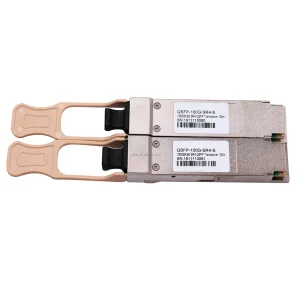 China Cisco Compatible 100GBASE-SR4 QSFP28 850nm 100m DOM MPO-12/UPC MMF Optical Transceiver Module, Breakout to 4 x 25G-SR with DDM Manufacturers, Factory
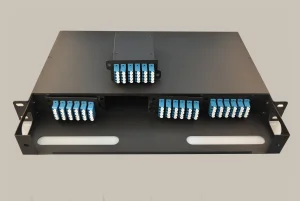 China Fix Type 19 Inch High Density 96 Cores MPO MTP Optical Fiber Patch Panel Factory, Pricelist
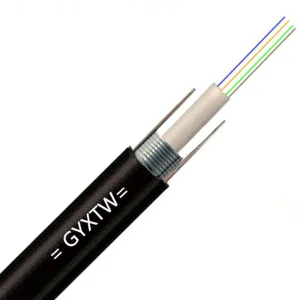 High-Quality OM3 50/125 GYXTW Outdoor Optical Fiber Cable Central Loose Outdoor Cable Factories, Products
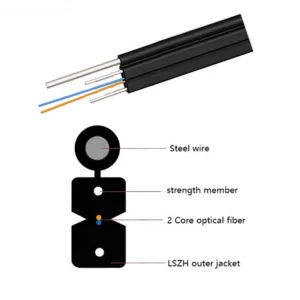 China Outdoor Fiber Optical FTTH Drop Cable GJYXFCH Suppliers, Pricelist
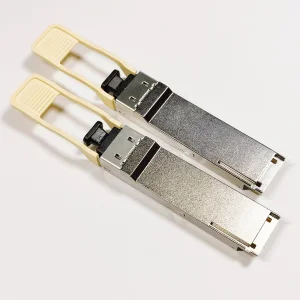 OEM KCO QSFP56 200G SR4 S MMF MPO-12 100m 200Gbps QSFP56 OSFP Multimode 100m MTP MPO Fiber Optic Transceiver Manufacturer, Manufacturers
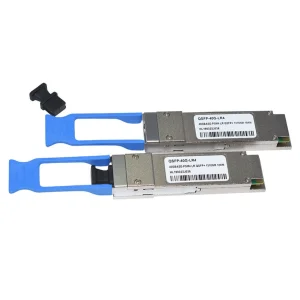 Wholesale KCO QSFP+ 40G PLR4 SMF 1310 10km MPO 40GBASE PSM4 LR PLR4 QSFP+ SMF 1310nm 10km MTP/MPO Connector Optical Transceiver Module Suppliers, Product
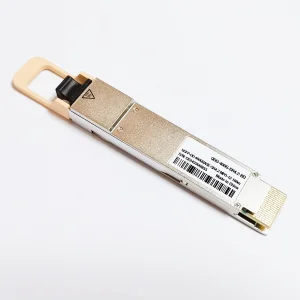 High-Quality 400GBASE-SR4.2 QSFP-DD PAM4 850nm 100m DOM MPO-12/UPC MMF Optical Transceiver Module, Breakout to 4 x 100G-SR1.2 Factory, Products
Established in 2012 in Hong Kong as a high-tech communication enterprise, Kocent Optec Limited has emerged as one of China's leading fiber optic termination product manufacturers and solution providers. We are dedicated to developing and manufacturing fiber optic communication products ranging from passive to active categories for modern telecommunication networks, enterprise structures, and hyperscale data centers.
By leveraging our extensive engineering experience and highly optimized production capacities built over the years, we amplify values for our global partners. We place emphasis on customer collaboration, defining ourselves as a strategic partner in end-to-end fiber optic connection solutions. We believe our differentiators are your perceived advantages.
With more than 13 years of experience in manufacturing telecommunication fiber optic products, we strictly follow international standards (such as Telcordia GR-326-CORE, IEC, and TIA/EIA) using mature scientific methods. Our structured processes ensure that 100% of products are tested and inspected before shipment, guaranteeing zero-defect deployments for critical pathways.

An in-depth look at multi-fiber push-on (MPO) technologies, polarity configurations, and paths to 400G and 800G optical networking.
Choosing the correct MPO backbone design determines the efficiency of your upgrades. Base-8 architectures utilize 8-fiber increments, perfectly matching the 4-channel transceiver layouts (QSFP28/QSFP-DD) without orphaned fibers. Base-12 setups remain standard for trunk distribution, utilizing 100% of high-density patch panels, but require transition modules when mapping to 100G SR4 modules.
For budget-critical 100G/400G networks, link power budgets are extremely tight. While standard MPO insertion losses hover around 0.7dB, our Elite / Ultra-Low Loss MPO connectors feature a maximum loss of ≤0.35dB (and typical losses of ≤0.15dB) by incorporating high-precision MT ferrules and premium Grade-A fibers.
To avoid transmit-to-transmit collisions and maintain a working link, standardizing polarity schemes (Method A: Straight Through, Method B: Crossover, or Method C: Pair-Flipped) is critical. Understanding key orientation (Key Up to Key Down vs. Key Up to Key Up) determines correct patch cord and adapter integration.
| Parameter / Metric | Singlemode MPO (SM APC) | Multimode MPO (MM OM3/OM4/OM5) | Testing Standard Reference |
|---|---|---|---|
| Insertion Loss (Elite/Low Loss) | ≤ 0.35 dB (Typical: 0.15 dB) | ≤ 0.35 dB (Typical: 0.20 dB) | IEC 61300-3-4 |
| Return Loss | ≥ 60 dB (APC 8°) | ≥ 25 dB (UPC Flat) | IEC 61300-3-6 |
| Operating Temperature | -40°C to +75°C | -20°C to +70°C | Telcordia GR-1435-CORE |
| Mating Durability | > 500 matings (Cleanings applied) | > 500 matings (Cleanings applied) | EIA/TIA-455-21A |
| Ferrule Material | High-Precision PPS MT Ferrule | High-Precision PPS MT Ferrule | JIS C5981 compliant |

By leveraging advanced automation in manufacturing, Kocent Optec ensures complete traceabilty and structural consistency of high-density optical assemblies. Modern high-speed optical transceivers rely on sub-micron alignment accuracy; our facilities employ advanced automated polishing platforms alongside real-time 3D optical interferometers.
We test critical geometrical parameters—fiber undercut/protrusion, apex offset, and radius of curvature—to ensure long-term stability and reliability under severe thermal stress. By procuring raw materials (including Corning/YFC glass and US Conec/Senko mechanical bodies) directly from verified global partners, we maintain a robust supply chain that remains immune to sudden logistical bottlenecks.
Whether you require Custom OEM colors, specific breakout lengths, or custom labeling protocols, our standard production lines adapt dynamically to meet bulk delivery schedules while conforming to the rigorous testing requirements of your enterprise architecture.
Years of sales and service experience have enabled us to win customers across diverse regions. Today, our global footprint spans East Asia, Southeast Asia, the Middle East, Eastern and Western Europe, Northern Europe, South America, North America, North Africa, and South Africa.
Our win-win collaboration is our constant goal. Many of our OEM and ODM products have won Telecom Operator tenders and satisfy strict end-user requirements. Our client base includes some of the world's most prominent networks:
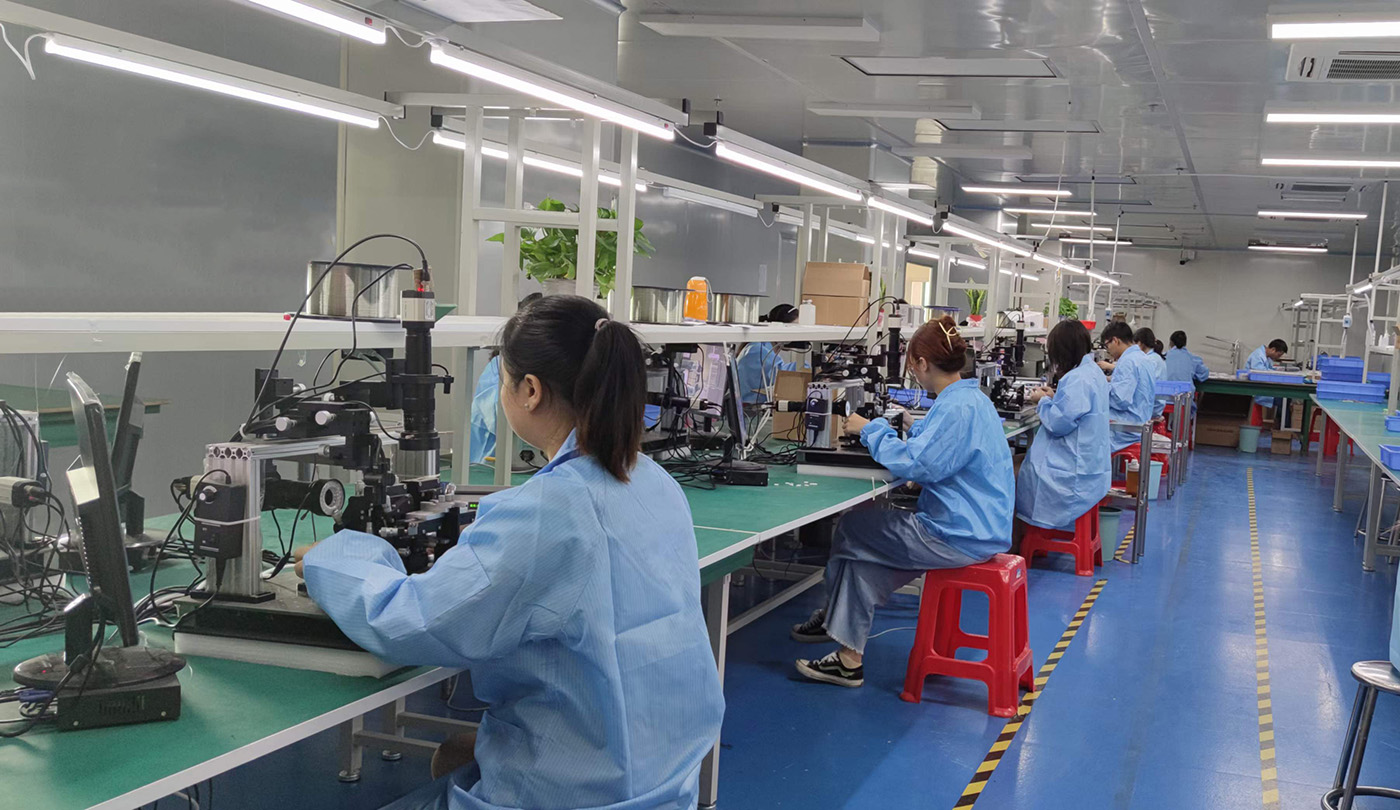
Seamless custom integration, regional regulatory alignment, and door-to-door delivery operations.
Our raw material sourcing and manufacturing methods strictly align with local and international environment regulations. Every MPO patch cable, loopback, and transceiver module conforms to the RoHS (Restriction of Hazardous Substances) and REACH directives. All structural cable jackets utilize LSZH (Low Smoke Zero Halogen) compounds, satisfying EU CPR (Construction Products Regulation) flammability classifications.
We work closely with procurement officers to establish specialized labeling, unique barcoding formats (UDI/DataMatrix), and customized box packaging that directly aligns with automated warehousing software. Integrating our supply pipelines with your corporate resource systems streamlines the check-in process, reducing incoming inspection overhead.
Navigating import duties and international logistics requires careful planning. We provide full shipping options—from standard FOB and CIF configurations to complete DDP (Delivered Duty Paid) models. Through experienced partners across Europe, America, and Southeast Asia, we ensure fast clearance processes and minimize localized tax delays.
When choosing a China-based manufacturer, global engineering teams must prioritize structural testing metrics over simple pricing.
Purchasing components for high-speed networks requires strict attention to component lifecycle engineering. Standard fiber optics might perform reliably during initial testing, but high-density architectures (including multi-row 12-fiber or 16-fiber layouts) face severe physical stress over years of operation. Experienced sourcing directors prioritize several key areas:
Critical technical and business issues addressed by our optical engineering team.
MPO (Multi-Fiber Push-On) is the generic industry standard connector interface defined by IEC 61754-7 and TIA-604-5. MTP® is a registered trademark of US Conec and represents a premium, high-performance MPO connector. MTP connectors feature several mechanical enhancements, including floating ferrules to maintain physical contact under load, elliptical pin designs to reduce guide pin wear, and removable housings that allow for easy mechanical adjustments and polarity changes in the field.
Single-mode fibers feature thin cores (~9 μm) that are highly sensitive to back-reflections. Polishing the ferrule at an 8-degree angle (APC) ensures that reflected light is deflected out into the cladding rather than back down the core, yielding a high return loss (≥60dB). Multimode systems use larger cores (50 μm) and operate on shorter wavelengths where back-reflections are less disruptive. A flat UPC polish provides sufficient return loss (≥25dB) for standard short-reach applications while simplifying polishing and assembly.
We provide full customization for breakouts, including length tolerances down to ±5cm, staggered configurations for neat tray dressing, and choices of protective conduit (including plenum-rated micro-distribution tube or heavy-duty armored sheathing). Each custom design undergoes prototype verification and drawing approvals before full manufacturing runs begin.
Our QSFP28 100G and QSFP-DD 400G modules are programmed and verified on-site for compatibility with major OEM network brands (including Cisco, Arista, Juniper, and Huawei). We analyze the EEPROM signature and verify transceiver parameters over extensive active loops, ensuring seamless integration with host platforms without triggering software blocks.
Complementing 100G MPO backbones with ultra-reliable patch cords, outdoor cables, and breakout transceivers
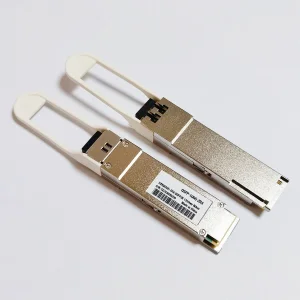 Cheap KCO QSFP28 100G ZR4 SMF 1310nm 80km WDM LC Fiber Optic Transceiver Quotes, Product
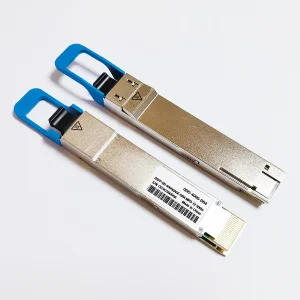 Cheap KCO-QDD-400G-DR4 400GBASE-DR4 QSFP-DD PAM4 1310nm 500m DOM MPO-12/APC SMF Optical Transceiver Module, Breakout to 4 x 100G-DR Pricelist, Products
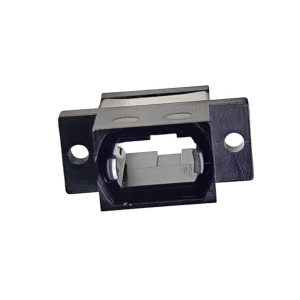 China 16F Up to Down MPO Optical Adapter MTP Fiber Coupler Ultra Low Loss Supplier, Products
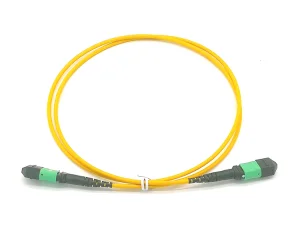 High-Quality MTP 8 / MPO 8 APC Single Mode SM 8fibers Optical Fiber Patch Cable Product, Products
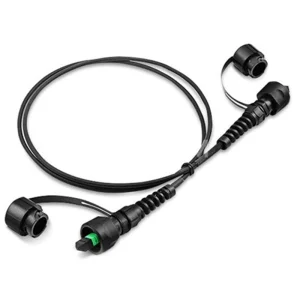 ODM ODVA MPO IP67 Outdoor Fiber Optic Patch Cable Manufacturer, Products
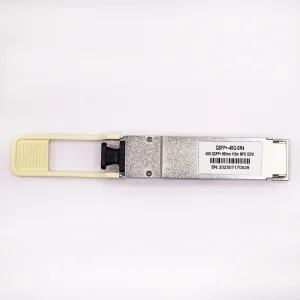 China KCO QSFP+ 40G SR4 40Gb/s QSFP+ MMF 100M MPO Connector Transceiver with DDM Suppliers, Factory
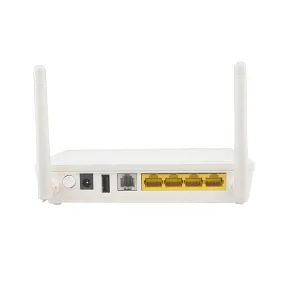 ODM FTTH fiber optic network router Huawei HG8546M GPON ONU 4LAN 1 Voice WIFI 2 Antenna GPON ONU Manufacturer, Manufacturers
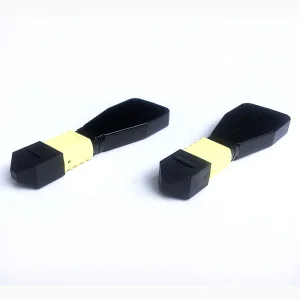 High-Quality Single mode 12 Cores MPO MTP Optical Fiber Loopback Supplier, Pricelist
 KOCENT OPTEC