Premium grade components engineered for high-performance enterprise and telecommunication network infrastructures.
The engineering fundamentals of copper twinaxial high-speed interconnects.
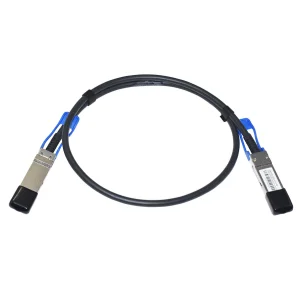
Direct Attach Copper (DAC) cables, or twinax cables, are copper assemblies terminated directly with transceiver-style plugs (such as SFP+, SFP28, QSFP+, or QSFP28) on either end. DACs are passive or active media configurations used primarily in short-distance networking deployments, establishing physical connections directly between ports. Because they operate over copper conductors, DACs bypass the electrical-to-optical conversion stages required by transceivers and active optical cables (AOCs).
This omission of optical conversion lasers allows DACs to operate with virtually zero latency and minimal power draw (often less than 0.1W per port for passive versions). The signal integrity of a DAC assembly depends on twinaxial copper design. This layout positions two copper conductors side-by-side inside a single shielded sleeve. This setup prevents electromagnetic interference (EMI) and stabilizes characteristic impedance at 100 ohms.
By eliminating lasers, photodetectors, and complex internal internal processing circuitry, DACs represent the lowest CapEx interconnect choice for high-bandwidth links under 7 meters.
With direct-wire electrical paths, signal propagation latency is limited only by physical length, making it the system architect’s top choice for algorithmic trading and HPC.
Passive DACs draw negligible electrical power, yielding major cumulative operational cost savings and lower thermal profiles within high-density server racks.
Analyzing physical limitations, distance performance, and transmission medium tradeoffs.
A key system design challenge is determining when to transition from a Passive DAC to an Active DAC or an Active Optical Cable (AOC). Passive DAC cables contain no active processing components to boost the signal. They rely entirely on host system silicon features, like transmitter pre-emphasis and receiver equalization (CTLE/DFE), to resolve distortion and attenuation. This limits the practical reach of passive copper to roughly 5 to 7 meters (depending on transmission speeds, e.g., 10G vs. 100G).
Active DAC assemblies integrate low-power linear equalizer ICs or CDR (Clock and Data Recovery) microchips into the connector hoods. These components reconstruct and amplify the high-frequency electrical signal, extending copper's range to around 10 meters. For links beyond 10 meters, Active Optical Cables (AOCs) are typically used. AOCs convert electrical signals to optical pulses, operating over multimode fiber to overcome the high-frequency attenuation limits of copper twinax.
| Performance Characteristic | Passive DAC (Twinax) | Active DAC (Equalized) | Active Optical Cable (AOC) | |
|---|---|---|---|---|
| Typical Reach Range | 0.5m to 5m (up to 7m at lower rates) | 5m to 10m | 1m to 100m+ | 100m to 10km+ |
| Average Power Consumption | < 0.1 Watts | 0.5 to 1.5 Watts | 1.0 to 2.5 Watts | 1.5 to 3.5 Watts |
| Signal Latency | Extremely Low (Approx. 4.5ns/m) | Low (Equalizer adds negligible lag) | Medium (Optical-Electrical conversion overhead) | Medium (Varies by transceiver DSP) |
| EMI/RFI Immunity | Susceptible to extreme electromagnetic interference | Shielded, but remains susceptible at high frequencies | 100% immune (dielectric optical medium) | 100% immune |
| CapEx Cost Ratio | Lowest (Base reference cost) | Moderate (Approx. 1.5x - 2x of passive) | High (Approx. 3x - 5x of passive) | Highest |
Unlocking cost advantages, reliable supply chains, and specialized engineering expertise.
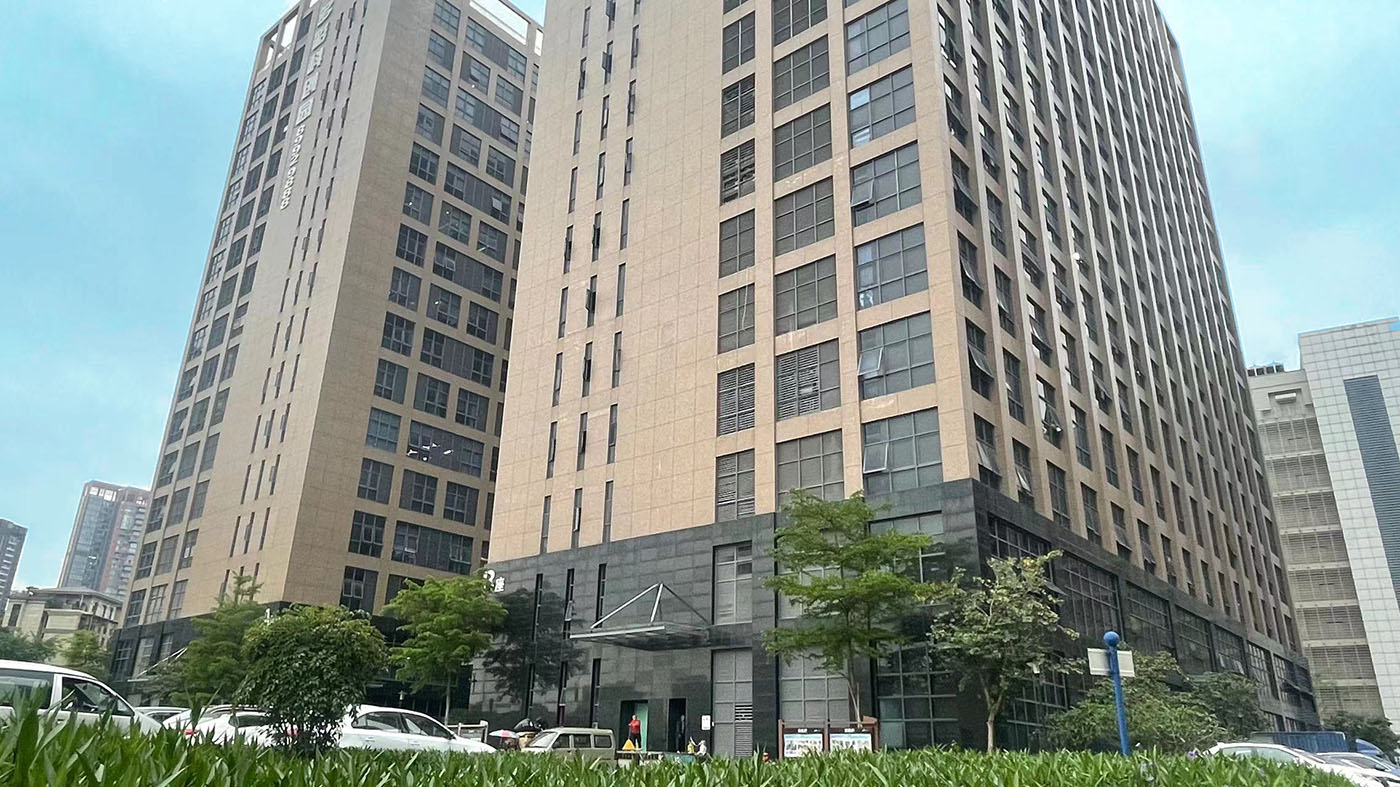
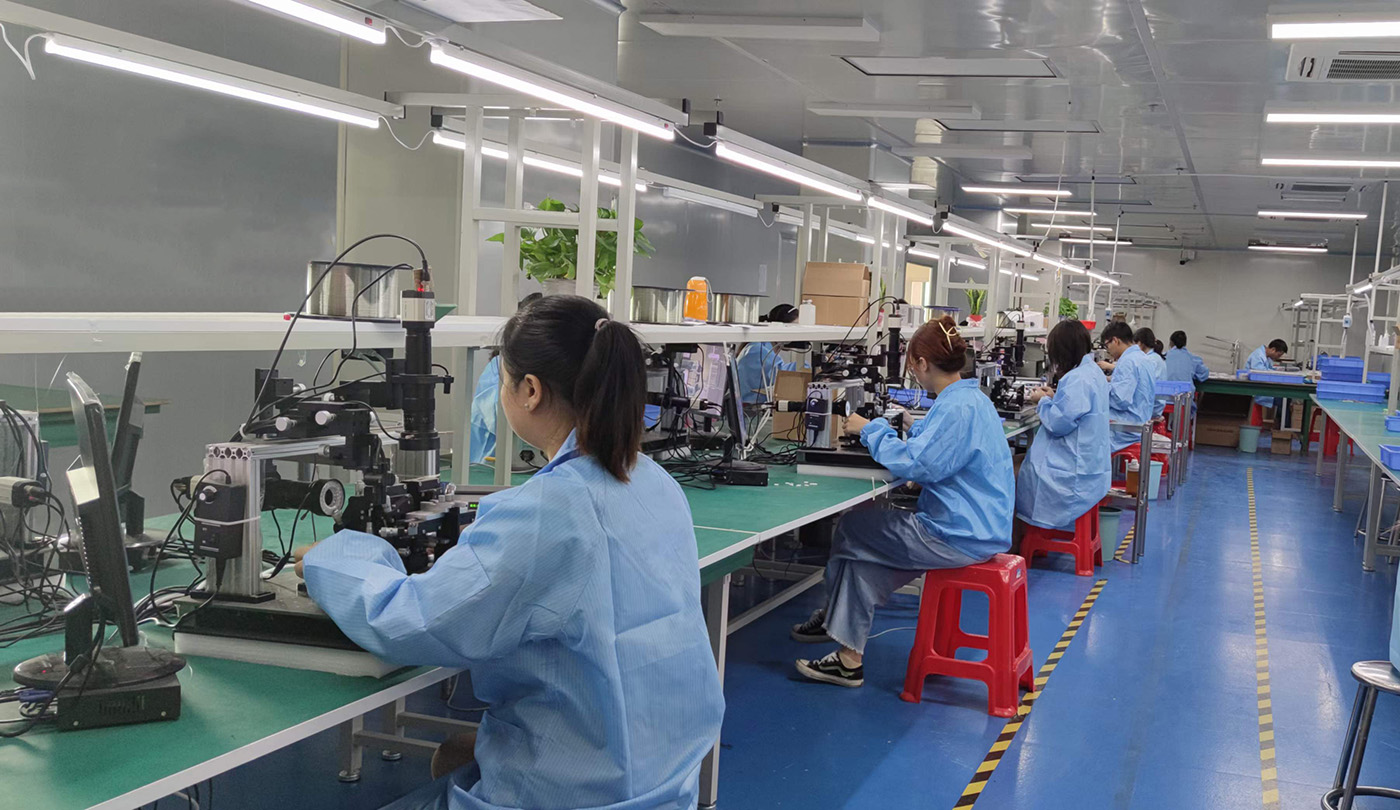
The global supply chain for high-speed network interconnects depends on Chinese manufacturing clusters. Located primarily in Guangdong and nearby economic zones, these hubs specialize in precision manufacturing. Our production facilities at Kocent Optec Limited leverage these regional advantages. We combine advanced metallurgy, automated twinax winding, and automated quality testing to deliver high-quality cables efficiently.
Our competitive advantage relies on vertical integration. We control the supply chain from raw high-purity oxygen-free copper extrusion to precise impedance balancing and automated assembly. Testing facilities use advanced Vector Network Analyzers (VNAs) and Bit Error Rate Tester (BERT) equipment. This ensures every cable meets tight parameters for insertion loss, return loss, and near-end crosstalk (NEXT) before export.
Additionally, our high-volume production scale keeps raw material costs down. This helps us offer competitive pricing while maintaining quality, providing global buyers with reliable, cost-effective networking solutions.

Deploying Twinax interconnects in cloud infrastructure and edge computing architectures.
Modern data center layouts rely on Direct Attach Copper cables to link core processing power. In Leaf-Spine topologies, Top-of-Rack (ToR) switches connect directly to patch panels or storage systems. DACs provide the standard physical link for these connections. This high-density architecture uses short run lengths (typically 1 to 3 meters), making passive copper twinax cables the most cost-effective solution.
For Enterprise Storage Area Networks (SAN), flash arrays and NVMe-over-Fabrics architectures require low-latency pathways. Even minor latency overhead from optical-to-electrical converters can affect overall system throughput. DAC assemblies route high-throughput PCIe signals directly over copper, preserving low latencies for demanding database workloads and high-frequency transaction applications.
At the Edge Computing Layer, remote sites run specialized network equipment in harsh environments. Copper cables tolerate dust and temperature shifts better than optical fibers, which require clean connections to prevent dust and signal loss. Using rugged DAC assemblies reduces maintenance needs and improves reliability in demanding field deployments.
At high speeds (like 28 Gbps per channel for 100G QSFP28), signal integrity is critical. Skin effect attenuation degrades signals along outer conductors. To maintain performance, we use high-grade copper wires (up to 26 AWG for longer distances) wrapped in multiple layers of shielding. This keeps insertion loss and signal reflections within acceptable limits.
We also manage physical cable parameters carefully during assembly. Tight control over bend radius, connector crimping, and EEPROM coding ensures compatibility and reliable link status on host equipment.
Key technical criteria for procurement managers and network infrastructure architects.
Procuring Direct Attach Copper cables requires careful technical verification. Multi-Vendor compatibility is one of the most critical factors. Most switch manufacturers write unique firmware lookup codes onto transceiver EEPROMs. If a cable does not match these codes, the switch port may throw an error. Sourcing partners must offer multi-code programming to ensure cables match target systems, such as Cisco, Arista, Mellanox, or Juniper equipment.
Physical cable parameters must also fit your deployment layout. High-density server cabinets have limited space, requiring thin cables with tight bend radii. However, thinner copper wire (like 30 AWG) suffers higher insertion loss than thicker wire (like 26 AWG). Selecting the right gauge balances space constraints with performance requirements. Sourcing managers should review diagnostic data sheets, cross-talk specs, and insertion loss curves to confirm performance.
Finally, confirm environmental and regulatory compliance. Enterprise installations require cables with LSZH (Low Smoke Zero Halogen) or PVC-CL2 rated outer jackets. Compliance with RoHS, CE, and FCC standards ensures safety and helps your facility meet environmental regulations.
A trusted manufacturing partner for active and passive high-speed networking solutions.
Kocent Optec Limited established in 2012 in Hongkong as a hi-tech communication enterprise, is one of China's leading fiber optic termination product manufacturer and solution provider. We're dedicated to developing and manufacturing fiber optic communication products ranging from passive to active categories for telecommunication networks, enterprise networks and data centers.
By leveraging our extensive experience and excellent production capacity we gained over the years, we magnify the outcome for our valuable customers, which ultimately expands their core competencies and helps them outperform competitors. We place emphasis on customer collaboration, and we define ourselves as your valuable partner in fiber optic connection solutions. We believe our differentiators are your perceived advantages.
With more than 13 years of experience in manufacturing telecommunication fiber optic products, we follow strictly fiber optic industry standards by using mature scientific methods to deliver your products on time and ensure that 100% products are tested and inspected before shipment.
Years of sales and service experience have enabled us to win customers from different regions. Today, we have customers from East Asia, Southeast Asia, Middle East, Eastern Europe, Western Europe, Northern Europe, South America, North America, North Africa, and South Africa.
Win-win cooperation is our constant goal. Many our OEM and ODM products won the Telecom Operator tender and satisfy end-user request.
Our main terminal telecom operators include: SingTel, Vodafone, America Movil, Telefonica, Bharti Airtel, Orange, Telenor, VimpelCom, TeliaSonera, Saudi Telecom, MTN, Viettel, Bitel, VNPT, Laos Telecom, MYTEL, Telkom, Telekom, Entel, FiberTel, StarFiber, Ooredoo, Beeline, Azercell.
Expert insights on compatibility, system integration, and cable selection.
Passive DAC cables rely entirely on the host system's built-in Equalization (EQ) features to maintain signal integrity over the raw copper wire. Active DAC cables integrate equalizer chips into the connector housings, boosting high-frequency signals to extend range and reliability.
We write specific compatible code to the EEPROM inside the transceiver connectors. Using compatible firmware profiles ensures switches recognize the cables as native or approved assemblies, avoiding port blocking or system warnings.
Wire gauge (AWG) determines wire thickness. Thicker wires (like 26 AWG) have lower insertion loss, supporting longer link runs. Thinner wires (like 30 AWG) are more flexible and easier to route but are limited to shorter distances due to higher signal loss.
Yes. Modern switches detect media types on a per-port basis. You can use passive DACs for short connections to adjacent servers and AOCs or optical transceivers for longer runs to core switches.
Every assembly undergoes Vector Network Analyzer (VNA) testing to check parameters like insertion loss, return loss, and crosstalk. We also perform Bit Error Rate (BER) tests on live systems to verify stable link performance before shipping.
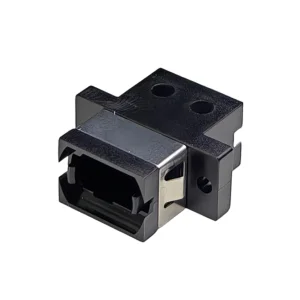
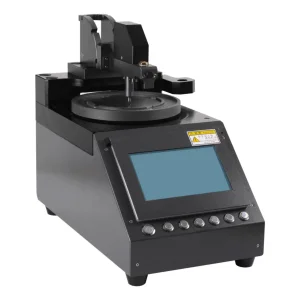
Explore our full range of fiber termination accessories, interconnect assemblies, and polishing equipment.
 KOCENT OPTEC