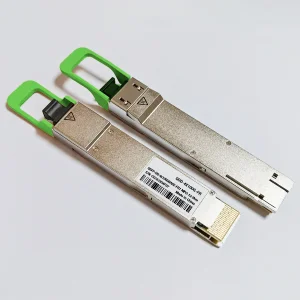
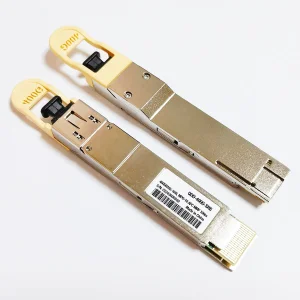
Engineered for low latency and high reliability to meet the performance challenges of Mexico City's data networks.
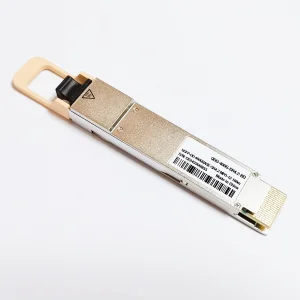
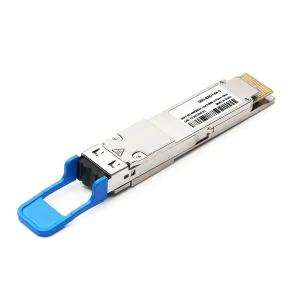
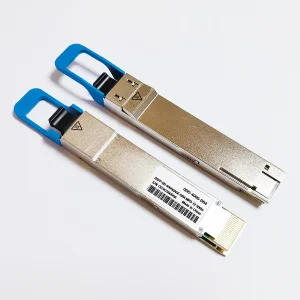
The Nexus of Latin American Telecommunications and Hyperscale Infrastructure
Mexico City (CDMX) stands as the primary financial, administrative, and technological capital of Mexico, exerting a massive influence across the entire Latin American region. Historically characterized by corporate offices and legacy data centers, the broader Metropolitan Area of Mexico City and its adjacent industrial corridor—most notably Querétaro—have transformed into the most critical digital infrastructure hub in Spanish-speaking America. Global cloud service providers like Amazon Web Services (AWS), Microsoft Azure, Google Cloud, and Oracle, alongside colocation giants like KIO Networks, Equinix, and ODATA, have committed billions of dollars to establish multi-zone availability regions. This has generated an unprecedented demand for localized supply chains providing optical communication hardware, specifically high-speed 400G QSFP-DD transceivers.
The industrial landscape in Mexico City is unique. The metro area functions as the nerve center for telecommunication operators, hosting the core switching stations for Telmex, América Móvil, Telefónica, and Totalplay. Connecting these major data points requires massive fiber-optic backbones capable of managing dense wavelength-division multiplexing (DWDM) and high-throughput transmission. The transition from legacy 10G/100G systems to 400G architectures is no longer a future-proofing strategy; it is a current operational necessity to handle 5G infrastructure expansion, IoT networks, cloud computing, and real-time financial trading services.
However, importing and implementing 400G QSFP modules in Mexico City is not without logistical and physical complexities. The geography of the Valley of Mexico introduces extreme operational variables. Mexico City sits at an altitude of approximately 2,240 meters above sea level. This high elevation results in lower atmospheric density, which directly impacts the thermal cooling efficiency of active network hardware. As 400G QSFP-DD modules pull anywhere from 10 to 14 watts of electrical power per port, optimizing thermal dissipation in high-altitude environments is a critical engineering hurdle. Optical transceivers deployed here must feature superior thermal design and testing parameters compared to those engineered strictly for sea-level operation.
Understanding PAM4 Signaling, Form-Factors, and Thermal Performance
The evolution from 100G to 400G required a shift in modulation techniques. Traditional 100G transceivers relied on Non-Return-to-Zero (NRZ) modulation, which transmits binary data using two voltage levels representing 0 and 1. To reach 400Gbps, simply scaling the baud rate of NRZ would lead to unsustainable power consumption and unacceptable signal loss. To solve this, 400G transceivers utilize Pulse Amplitude Modulation 4-Level (PAM4), which uses four distinct voltage levels to transmit two bits of information per symbol interval. This effectively doubles the transmission capacity at the same baud rate, allowing for high density in the QSFP-DD form factor.
However, PAM4 has a trade-off: a smaller Signal-to-Noise Ratio (SNR). This requires the implementation of Forward Error Correction (FEC) algorithms (KP4 FEC for optical and KR4 FEC for electrical interfaces) on the host switch. When designing transceivers for Mexico City's data centers, maintaining an exceptionally low Pre-FEC Bit Error Rate (BER) is critical. Kocent Optec's 400G modules are engineered to keep Pre-FEC BER well within safe margins, ensuring error-free data transmission even under stress.
In Mexico City (2,240m elevation), the air density is roughly 20-25% lower than at sea level. Air cooling is the primary method of heat dissipation for high-density switches. With thinner air, cooling fans move less air mass, leading to higher junction temperatures in optical modules. Kocent Optec solves this issue by incorporating premium internal thermal pads and optimized casing geometries on our QSFP-DD modules, keeping the operating temperature range within standard limits (0°C to 70°C for commercial grade) even in high-altitude environments.
Depending on the deployment distance and layout inside the facility, different transceiver types are required. Below is a detailed technical matrix comparing the standard configurations utilized in metropolitan networks and local hyperscale centers:
| Standard Type | Wavelength (nm) | Connector Type | Fiber Type | Reach Capacity | Power Consumption (Typical) |
|---|---|---|---|---|---|
| 400GBASE-SR4.2 | 850 / 910 (BiDi) | MPO-12 (UPC) | MMF (OM4/OM5) | 70m (OM4) / 100m (OM5) | < 9.5 Watts |
| 400GBASE-SR8 | 850 | MPO-16 (APC) | MMF (OM3/OM4) | 70m (OM3) / 100m (OM4) | < 10.0 Watts |
| 400GBASE-DR4 | 1310 | MPO-12 (APC) | SMF (G.652) | 500 meters | < 10.0 Watts |
| 400GBASE-FR4 | CWDM4 (1271-1331) | Duplex LC | SMF (G.652) | 2 kilometers | < 11.0 Watts |
| 400GBASE-LR4 | LWDM4 (1295-1309) | Duplex LC | SMF (G.652) | 10 kilometers | < 12.0 Watts |
A Globally Recognized Fiber Optic Manufacturer and Solution Provider
Established in 2012 in Hong Kong as a high-tech communication enterprise, Kocent Optec Limited has grown to become one of China's leading fiber optic termination product manufacturers and solution providers. Over the past decade, we have dedicated our engineering resources and manufacturing capabilities to developing premium fiber optic communication products. Our portfolio spans from active transceivers to passive interconnects, serving telecommunication networks, enterprise infrastructures, and hyperscale data centers globally.
By leveraging our extensive manufacturing experience and production capacity, we deliver high-performance components that expand our customers' core competencies. We emphasize customer collaboration, defining ourselves as a reliable partner in fiber optic connection solutions. We believe our technical differentiators are your operational advantages.
With more than 13 years of industry experience, we strictly follow international fiber optic standards. We use mature scientific methods to deliver products on time and ensure that 100% of our products undergo testing and inspection before shipment.


Years of dedicated service have earned Kocent Optec a global customer base across East Asia, Southeast Asia, the Middle East, Eastern Europe, Western Europe, Northern Europe, South America, North America, North Africa, and South Africa. Our ODM and OEM products are proven in municipal telecom tenders and meet the demands of major global operators.
Our key partner operators include: SingTel, Vodafone, América Móvil, Telefónica, Bharti Airtel, Orange, Telenor, VimpelCom, TeliaSonera, Saudi Telecom, MTN, Viettel, Bitel, VNPT, Laos Telecom, MYTEL, Telkom, Telekom, Entel, FiberTel, StarFiber, Ooredoo, Beeline, and Azercell.
Ensuring Seamless Procurement and Technical Adherence in CDMX
Navigating the import framework in Mexico requires understanding both logistics and local regulations. All telecommunications equipment imported into Mexico must comply with the Federal Institute of Telecommunications (IFT) guidelines and hold relevant NOM (Normas Oficiales Mexicanas) certifications. For optical transceivers, standard compliance includes NOM-019-SCFI-1998 (Safety of Data Processing Equipment) and NOM-208-SCFI-2016. Kocent Optec coordinates with local customs brokers and clients to provide the necessary test reports and certifications to streamline the customs clearance process.
Our logistical support matches the speed of the data center industry. With warehousing and distribution channels designed for rapid replenishment, we ensure that operators in Mexico City, Querétaro, and Monterrey receive replacement parts and expansion inventory on time. We handle the documentation—including commercial invoices, detailed packing lists, certificates of origin, and pedimentos (customs declarations)—to eliminate transit delays at major hubs like Mexico City International Airport (AICM) or the port of Veracruz.
Additionally, Kocent Optec provides comprehensive technical support. Our engineering teams assist with remote installation troubleshooting and configuration advice. This technical support ensures that our transceivers integrate smoothly with multi-vendor networks, including Cisco, Arista, Juniper, and Huawei equipment.

Scaling Network Bandwidth for the Next Generation of AI and Cloud Compute
As AI applications and large language models (LLMs) continue to scale, the data traffic within hyperscale networks is projected to double every two years. To address this growth, the optical communications industry is moving from 400G architectures toward 800G and 1.6T. Mexico City's data centers are already planning upgrades to 800G to accommodate these massive AI training workloads. Kocent Optec is at the forefront of this evolution, developing high-density 800G OSFP/QSFP-DD800 modules and researching Co-Packaged Optics (CPO) configurations.
A key technology in this transition is the Coherent Optical Transceiver (e.g., 400G ZR and ZR+). Coherent optics allow data centers to connect regional zones over hundreds of kilometers without needing separate optical amplifiers. This technology is vital for linking Querétaro's massive hyperscale facilities with Mexico City's core switching hubs. By integrating Coherent 400G ZR modules into their DWDM transport systems, operators can achieve high-capacity, low-latency links across metropolitan regions, laying the foundation for future 800G upgrades.
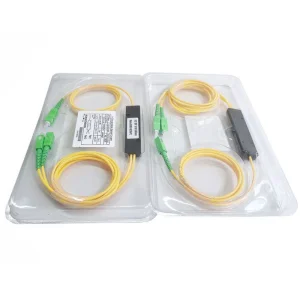
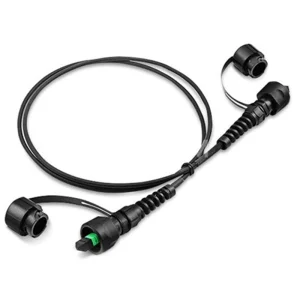
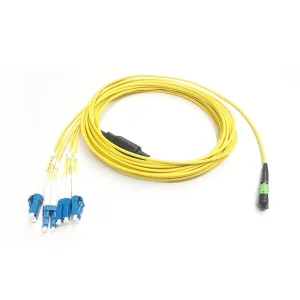
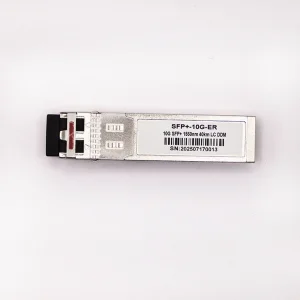
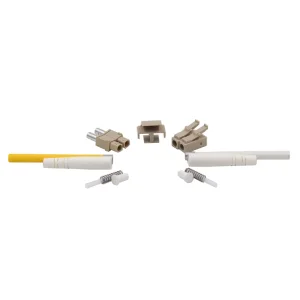
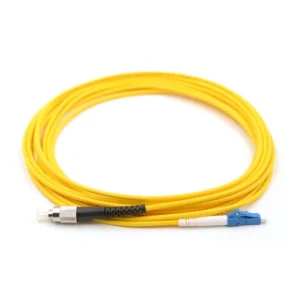
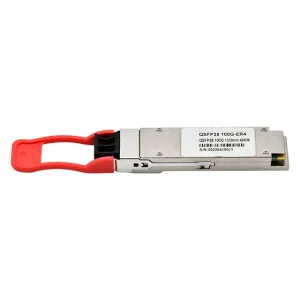
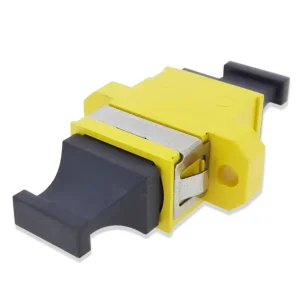
Explore our complete range of active transceivers, passive connectors, splitters, and fiber patch cables.
Key Considerations for 400G Deployment in high-altitude environments and Latin American networks.
Mexico City sits at an elevation of 2,240 meters above sea level, where the lower atmospheric pressure reduces the cooling efficiency of air-cooled network switches. Because 400G QSFP-DD modules pull significant power, standard transceivers can overheat under load. Kocent Optec modules feature enhanced internal thermal pads and casing geometries to maintain operating temperatures within safe limits, ensuring link stability in high-altitude facilities.
Our 400G QSFP-DD transceivers are configured with switch-specific EEPROM code, allowing them to integrate with major hardware vendors like Cisco, Arista, Juniper, and Huawei. This compatibility ensures that the host switches recognize the transceivers correctly, preventing port lockouts and enabling diagnostic monitoring through DOM (Digital Optical Monitoring).
400GBASE-SR4.2 modules utilize bidirectional wavelength multiplexing over multi-mode fiber (MMF), requiring only a 12-fiber MPO connector (MPO-12) to run a 400G link. In contrast, SR8 modules require MPO-16 cabling. Using SR4.2 allows data centers to reuse existing 100G/200G MPO-12 structured cabling, reducing deployment costs and complexity.
Telecommunications hardware imported into Mexico must comply with local safety and electromagnetic compatibility (EMC) regulations, typically managed by the IFT and certified through NOM (Normas Oficiales Mexicanas). Kocent Optec assists our import partners by providing testing documentation and certificates to ensure smooth customs clearance.
Contact our engineering and sales teams to request detailed product specifications, volume pricing, and customized solutions for your Mexico City deployments.
Send Inquiry Now KOCENT OPTEC