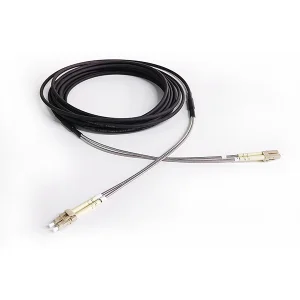
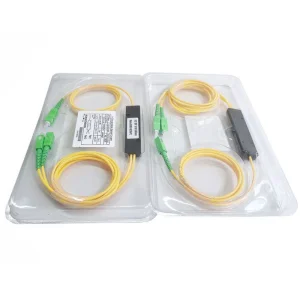
Explore our first tier of engineering solutions designed for enterprise backbones, 5G fronthaul networks, and high-density hyperscale data centers.
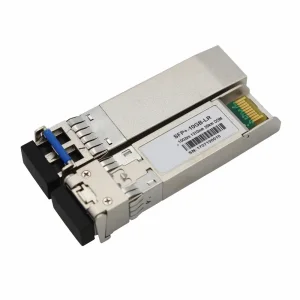
How 25G SFP+ (SFP28) transceivers became the definitive bridge between heritage 10G networks and next-generation 100G/400G hyper-scale environments.
The international optical communication sector has witnessed a profound architectural transition. Standard 10Gbps interfaces are no longer sufficient to sustain the raw throughput demands of modernized enterprise data centers, AI compute clusters, and 5G mobile fronthaul networks. While a direct leap to 40G was initially championed, the telecom and infrastructure sectors recognized that 25G SFP28 (commonly referred to as 25G SFP+ based on mechanical commonality) represents the most cost-effective and energy-efficient upgrade path.
Using a single-lane 25Gbps SerDes channel, 25G transceivers match the mechanical dimensions of 10G SFP+ but deliver exactly 2.5 times the bandwidth. This matches the native single-channel physical layer architecture of 100G networks (which are structured as 4 x 25G lanes), making breakout deployment extremely streamlined.
By retaining the SFP form factor, telecommunication operators and datacenter managers can leverage existing switch racks without costly line card modifications, drastically reducing capital expenditure (CAPEX) while optimizing energy footprint.
A closer look at the physical layer variables, laser technologies, and Multi-Source Agreements (MSAs) governing 25G transceivers.
A trusted, high-tech communication enterprise and global leader in optical fiber termination products and systems.
Kocent Optec Limited established in 2012 in Hongkong as a hi-tech communication enterprise, is one of China's leading fiber optic termination product manufacturer and solution provider.
We're dedicated to developing and manufacturing fiber optic communication products ranging from passive to active categories for telecommunication networks, enterprise networks and data centers. By leveraging our extensive experience and excellent production capacity we gained over the years, we magnify the outcome for our valuable customers, which ultimately expands their core competencies and helps them outperform competitors.
"We place emphasis on customer collaboration, and we define ourselves as your valuable partner in fiber optic connection solutions. We believe our differentiators are your perceived advantages."

With more than 13 years of experience in manufacturing telecommunication fiber optic products, we follow strictly fiber optic industry standards by using mature scientific methods to deliver your products on time and ensure that 100% products are tested and inspected before shipment.
Years of sales and service experience have enabled us to win customers from different regions. Today, we have customers from East Asia, Southeast Asia, Middle East, Eastern Europe, Western Europe, Northern Europe, South America, North America, North Africa, and South Africa.
Win-win cooperation is our constant goal. Many of our OEM and ODM products won the Telecom Operator tender and satisfy end-user requests.

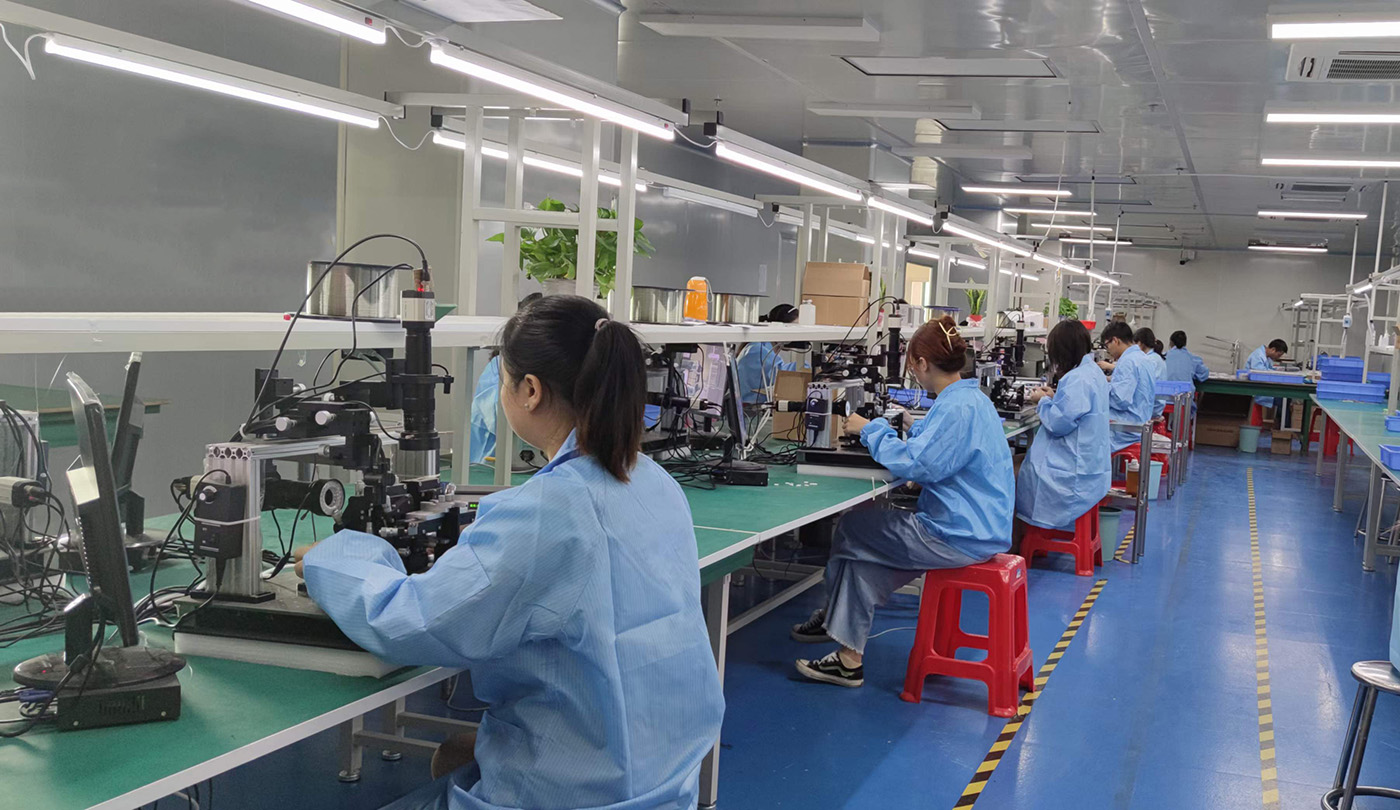
To meet the stringent physical and environment demands of global operators, our active transceivers and passive components are manufactured using premium-grade materials and undergo rigorous validation. This includes thermal cycling chambers, high-precision bit-error-rate testing (BERT), and optical time-domain reflectometer analysis.
Whether dealing with single-mode backbone distributions, dense local loop connections, or tactical tactical field deployments, we supply products designed to ensure absolute network integrity.
Our active and passive products have successfully passed rigorous qualification processes and are deployed inside the infrastructure networks of global industry leaders:
Deploying 25G architectures and customized optical pathways to resolve bandwidth bottlenecks across key industries.
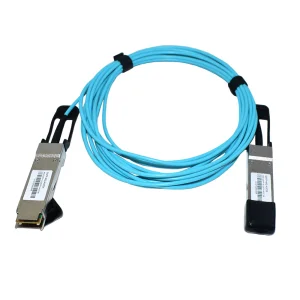
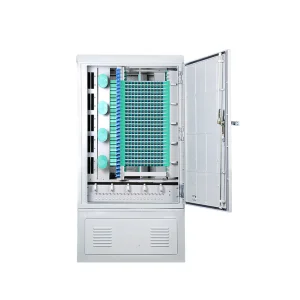
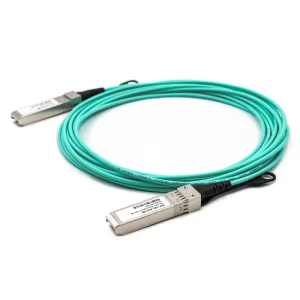
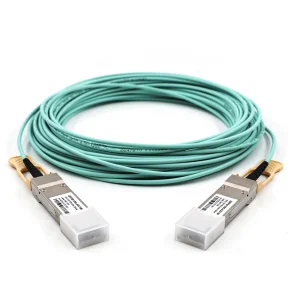
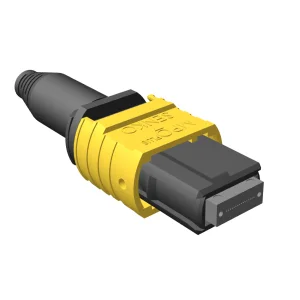
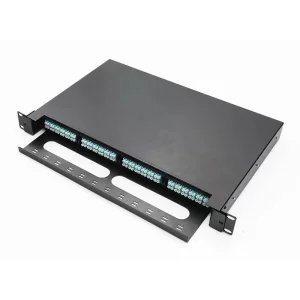
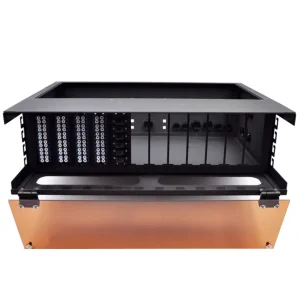
To mitigate traffic bottlenecks inside massive datacenters, we supply high-performance 25G SFP28 SR, LR, and Active Optical Cables (AOC) coupled with ultra-high-density 288-core MPO patch panels. This enables modular, clean breakout paths from spine switches down to individual processing servers.
Our industrial-temperature (I-Temp) 25G BiDi (bidirectional) transceivers optimize single-fiber utilization, enabling operators to double physical fiber capacity down path links from base stations without deploying expensive civil fiber networks.
Upgrade your corporate backbone from legacy 10G to 25G channels. We provide comprehensive OEM-compatible transceivers programmed for exact system environments (e.g., Cisco, Juniper, Arista) to secure flawless hardware handshakes and avoid diagnostic errors.
Providing custom EEPROM coding, environmental compliance, and rapid worldwide fulfillment to prevent supply chain bottlenecks.
System integration issues represent a major risk when ordering bulk transceivers. At Kocent Optec, we utilize customized programming hardware to map the transceiver's memory tables (EEPROM) to conform to specific manufacturer standards. We provide compatibility for brands including:
Kocent Optec products are manufactured under strict ISO 9001:2015 conditions. Our electrical, optical, and physical product categories are certified against global international safety standards:
How current optical investments fit into future networks using PAM4 modulation and advanced multi-lane systems.
As bandwidth requirements climb, the next steps in single-channel fiber performance rely on PAM4 (Pulse Amplitude Modulation 4-Level) signal processing. Unlike NRZ signaling, which carries 1 bit per symbol, PAM4 carries 2 bits, effectively doubling bandwidth over the same optical component bandwidth.
By standardizing on Kocent Optec high-density passive cable structures and rack solutions, your physical plant remains ready to transition from 25G (SFP28) to 50G (SFP56) and 100G (SFP112) active transceivers when you scale up switch backplanes.
Clear, direct technical answers regarding compatibility, deployment, and hardware specifications.
Technically, the correct standard designation for a 25G transceiver utilizing the SFP physical form factor is SFP28. The mechanical footprint is identical to standard 10G SFP+ modules. The core difference lies in the electrical interface, which is designed to handle 25 Gbps using a single-lane SerDes channel (conforming to the SFF-8402 specification). Many network professionals use the terms "25G SFP+" and "SFP28" interchangeably in search queries and technical discussions.
This depends on the firmware configuration and hardware design of the switch. In most instances, 25G SFP28 transceivers can auto-negotiate down to 10G if the switch port is configured manually to 10G mode. However, you will not receive the 25G bandwidth benefits. To ensure reliable performance, consult your switch manufacturer compatibility sheet or contact Kocent Optec engineers for custom EEPROM coding before ordering.
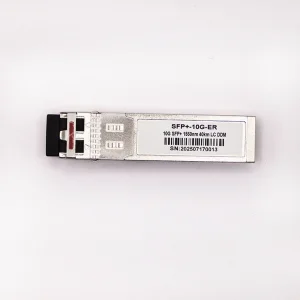
25GBASE-SR (Short Range) transceivers utilize 850nm VCSEL lasers and are meant for multi-mode fiber (OM3 or OM4), yielding maximum transmission distances of 70 meters and 100 meters respectively. 25GBASE-LR (Long Range) transceivers leverage 1310nm DFB lasers over single-mode fiber (SMF) to reach distances up to 10 kilometers. For longer spans, 25GBASE-ER options can reach up to 30km or 40km using 1550nm EML transmitters.
Yes. Digital Diagnostics Monitoring (DDM), also referred to as Digital Optical Monitoring (DOM), is standard on our 25G SFP28 line. It provides real-time system monitoring of operating parameters such as optical output power, optical input power, module temperature, laser bias current, and transceiver supply voltage. This data helps network administrators prevent fiber link failures.
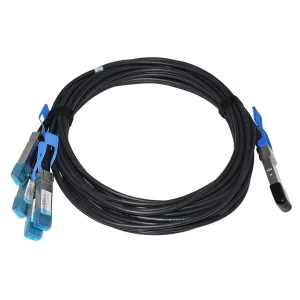
Breakout configurations (such as a 100G QSFP28 to 4x 25G SFP28 Direct Attach Copper cable) allow high-throughput 100G switch ports to connect directly to four separate 25G server network interface cards (NICs). This eliminates the need for intermediate distribution switches, reduces overall power consumption, and maximizes port density inside datacenter racks.
Explore our second tier of components, containing cabinets, splitters, high-speed active optical cables, and compatible multi-mode modules.
 KOCENT OPTEC