Explore our cutting-edge passive and active physical layer connectivity solutions, engineered for telecommunication standard networks and hyperscale cloud infrastructure.
Architectural design, high-density structures, and mechanical performance metrics for mission-critical deployments.
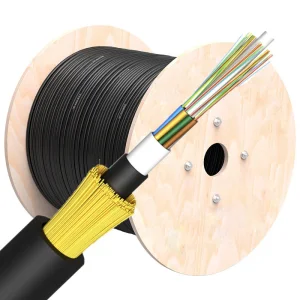
Modern communication systems face the challenging task of managing exponential bandwidth demands while constrained by physically limited underground conduit routes, metropolitan utility rights-of-way, and structural cable tray weight limits. To address this, the 288 Fiber Optic Cable has emerged as the global industry benchmark for ultra-high-density distribution layers, backhaul rings, and data center interconnects (DCIs). Packing 288 individual optical fibers into a single sub-inch protective sheath, these structures allow network operators to maximize cross-sectional area utility.
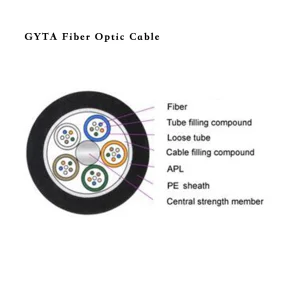
Whether using dry-core loose-tube loose constructions, armored configurations for direct-burial deployment, or lightweight self-supporting dielectric designs (ADSS), the engineering of a 288-core fiber cable requires high precision. Each micro-element—from the selection of the central strength member (CSM) to the gel compound viscidity and physical color-coding of loose tubes under standard TIA-598-D protocols—plays a vital role in preventing mechanical micro-bending and maintaining structural reliability over a typical 25-year service life.
Information Gain Insight: The optical performance of high-density cables depends heavily on their behavior under tension and variable temperatures. A critical factor in selecting 288-fiber configurations is the cable's CTE (Coefficient of Thermal Expansion) mismatch between the glass fibers and the outer polymer sheathing (typically HDPE or LSZH). Professional-grade ODM manufacturers address this by using premium Glass Reinforced Plastic (GRP) rods as central strength members, coated with precise water-blocking dry aramid yarns to ensure stable performance from -40°C to +70°C.
In high-density deployments like FTTx distribution networks and data center cable trays, space constraint is a major design obstacle. When routing 288 fibers within patch panel trays or tight enclosure radius points, bending losses can severely degrade the optical power budget. To counter this, ODM specifications often utilize either ITU-T G.652.D (standard low-water-peak single-mode fiber) or bend-insensitive ITU-T G.657.A1/A2 glass variants.
| Fiber Type / Standard | Minimum Bend Radius (mm) | Macro-bending Loss (at 1550nm) | Primary Application Scenario |
|---|---|---|---|
| ITU-T G.652.D | 30 mm | ≤ 0.1 dB (100 turns, 30mm radius) | Long-Haul Backbone, Metropolitian Ring Networks |
| ITU-T G.657.A1 | 10 mm | ≤ 0.25 dB (10 turns, 15mm radius) | High-Density Trays, FTTx Outdoor Closures |
| ITU-T G.657.A2 | 7.5 mm | ≤ 0.5 dB (10 turns, 10mm radius) | Enterprise Desks, Extremely Compact DCI Enclosures |
Over a decade of high-end optical communication manufacturing, provisioning, and global tier-1 carrier deployments.
Established in 2012 in Hong Kong as a high-tech communication enterprise, Kocent Optec Limited has grown to become one of China's leading fiber optic termination product manufacturers and solution providers.
We are fully dedicated to developing and manufacturing premier fiber optic communication products, ranging from passive components to active electronic transceivers, catering directly to telecommunication networks, enterprise infrastructures, and modern data centers globally.
By leveraging our extensive engineering experience and scalable production capacity gained over the years, we magnify the operational outcome for our valuable customers, which ultimately expands their core competencies and helps them outperform local competitors.

We place high emphasis on customer collaboration and define ourselves as your valuable long-term partner in fiber optic connection solutions. We believe our technical differentiators and strict quality systems translate directly to your perceived competitive advantages in regional bids.
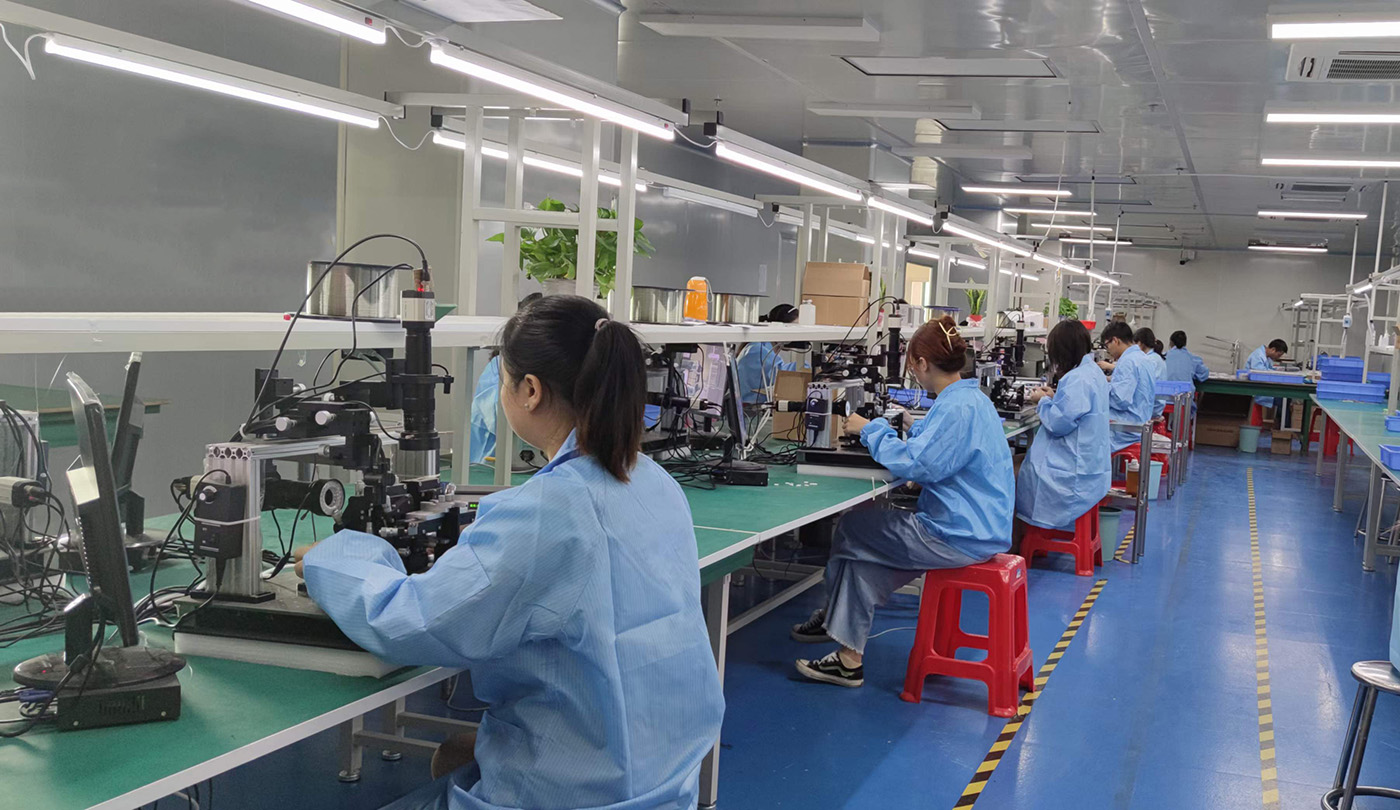
With more than 13 years of rigorous experience in manufacturing telecommunication fiber optic components, we strictly follow regional and international fiber optic standards by employing mature scientific testing methods to deliver your custom products on time and guarantee that 100% of finished products are tested and inspected before dispatch.
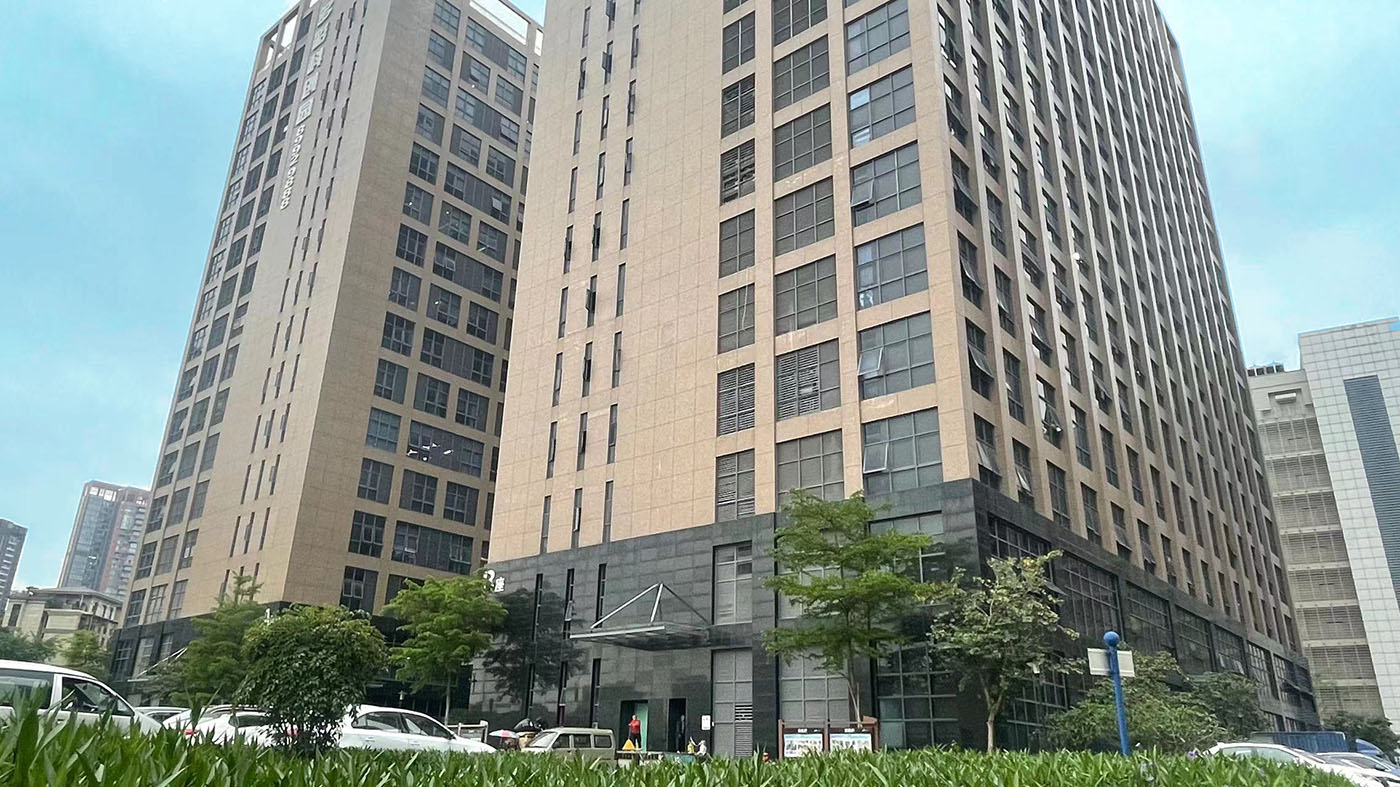
Years of targeted sales and dedicated technical service experience have enabled us to build trust with enterprise clients from diverse regions. Today, Kocent Optec has successfully supplied customers across East Asia, Southeast Asia, the Middle East, Eastern Europe, Western Europe, Northern Europe, South America, North America, North Africa, and South Africa.
Win-win cooperation remains our constant operational goal. Many of our OEM and ODM products have won highly competitive Telecom Operator tenders and satisfy strict end-user requests under demanding environmental conditions.
Our main terminal telecom operator networks include:
Understanding the micro-economics of Chinese production hubs and local installation certifications.
Sourcing high-density fiber optic cables directly from China offers significant cost and scale benefits for international enterprises. Optical manufacturing clusters in Shenzhen, Wuhan (often referred to as China's "Optics Valley"), and Ningbo are backed by a mature raw material ecosystem. This vertical integration covers everything from the purification of high-silica glass preforms (by industry leaders such as YOFC and Hengtong) to the extrusion of specialized engineering plastics like Polybutylene Terephthalate (PBT) for loose tubes.
For custom ODM services, this translates to faster lead times, lower minimum order quantities (MOQs), and highly adaptable designs. For instance, a customer requiring custom-colored loose tubes matching local telecom standards, or specific mechanical adjustments to withstand harsh conditions, can get these modifications quickly. Chinese factories can easily adjust line machinery to incorporate specialized components, like high-tensile aramid yarns (Kevlar) or specific water-blocking gels, without stopping production.
A key challenge in purchasing 288-core fiber optic cables is ensuring alignment with local building codes and safety regulations. In the European Union, the Construction Products Regulation (CPR) requires cables installed in permanent structures to meet strict flame retardancy ratings, ranging from B2ca (highest fire safety class) to Dca and Eca. These ratings are determined through rigorous testing of heat release, flame spread, smoke production, acidity, and flaming droplets (EN 50399 standards).
In North America, fire safety standards are set by Underwriters Laboratories (UL), requiring OFNR (Riser) or OFNP (Plenum) ratings for indoor installations. Additionally, outdoor installations must adhere to standards like Telcordia GR-20-CORE, which outlines strict requirements for water penetration resistance, aging, and tensile strength under extreme conditions. Working with an experienced ODM supplier like Kocent Optec ensures that cables are custom-manufactured to meet these specific regional standards, avoiding compliance issues and securing smooth project approvals.
Information Gain Insight: Many budget manufacturers cut costs by using thin or low-grade LSZH compound outer jackets. During installation, these sub-standard materials are prone to cracking under high tension, exposing the interior layers to water ingress. High-quality ODM manufacturing processes utilize UV-stabilized, high-density polyethylene (HDPE) or premium LSZH materials with optimized carbon black content. This combination ensures long-term UV resistance for aerial ADSS cables and strict compliance with CPR and UL fire safety requirements for indoor use.
When purchasing 288-core fiber optic cables, focusing solely on the per-meter price can be misleading. Procurement teams must evaluate the Total Cost of Ownership (TCO), which includes shipping costs, custom duties, ease of installation, and long-term maintenance. High-density cables designed with reduced outer diameters (such as micro-sheath cables) significantly lower shipping volume and weight, which in turn reduces freight costs and makes handling easier for field technicians. Furthermore, integrating features like pre-installed pulling eyes or dry water-blocking materials simplifies splicing, saving time and labor costs during deployment.
How 288-Core Fiber Cables are tailored for specific geographical and infrastructure requirements.
For high-capacity connections between neighboring data center buildings, 288-core configurations provide the necessary density. Specialized ODM versions use flame-retardant LSZH outer jackets and high-density ribbon fibers. This combination enables rapid mass-fusion splicing, saving field technicians hours of manual alignment during installation.
In municipal fiber rollouts, a 288-fiber cable serves as the primary distribution trunk, branching off to smaller distribution units. In these outdoor environments, double-jacketed armored structures (like GYTA53) are typically used to protect against physical hazards, rodent damage, and water ingress in underground ducts.
Using All-Dielectric Self-Supporting (ADSS) 288-fiber cables, municipal utilities can run high-density networks along existing high-voltage transmission lines. These custom cables utilize high-modulus aramid yarns and track-resistant outer jackets to withstand electrical arcing and harsh weather conditions like heavy wind and ice loading.
How the market is adapting to next-generation optical demands and physical layer innovations.
As underground ducts become increasingly crowded, the physical size of cables is a key challenge. Traditional loose-tube 288-core cables, while reliable, can have outer diameters exceeding 18mm, making them difficult to pull through congested ducts. The industry is moving toward micro-cables, which reduce this outer diameter by up to 40% through thinner outer jackets and smaller 200μm fiber coatings instead of the standard 250μm.
In parallel, rollable ribbon fiber technology is gaining traction. This design rolls 12 or 24 fibers into a compact bundle that behaves like a loose-tube cable during installation but can be flattened for mass-fusion splicing in the joint box. By combining micro-cable casing with rollable ribbon cores, operators can install a 288-fiber cable in standard micro-ducts, significantly increasing network capacity without the need for expensive new duct construction.
The growth of AI clusters and high-performance computing (HPC) has increased the bandwidth requirements between data centers. High-speed transceivers, such as 800G and 1.6T modules, rely on parallel optics configurations like MPO-16 and dual-MPO-12. These setups require large quantities of single-mode fiber to function effectively.
In this environment, a 288-core fiber cable acts as a vital connection, linking rows of high-speed servers directly to core network switches. Even minor fiber variations can cause signal delays (skew) that impact computing performance. This makes manufacturing quality essential: core concentricity, cladding geometry, and fiber path consistency must be tightly controlled to prevent transmission errors in high-speed optical systems.
Expert technical answers to common questions about selecting, deploying, and sourcing 288-core fiber optic cables.
The physical dimensions of a 288-core cable depend on its structural design. A standard outdoor stranded loose-tube armored cable (such as GYTY53 or GYTA53) has an outer diameter of approximately 17.5mm to 19.5mm and weighs between 250kg and 320kg per kilometer. In contrast, modern micro-duct loose-tube cables or rollable ribbon cables can reduce the outer diameter to 9.5mm–11.5mm, significantly lowering the overall weight to roughly 85kg–110kg per kilometer.
ODM customization allows for adjustments to the physical structure of the cable to suit specific project needs. For aerial installations, the supplier can modify the aramid yarn count and outer jacket thickness to meet specific span lengths and weather conditions (ADSS). For underground ducts, rodent protection can be added using corrugated steel tape armoring or glass yarn strength members. Additionally, outer jackets can be tailored to meet local safety standards, such as LSZH for European CPR classes or UL-rated compounds for North American plenum spaces.
Standard loose-tube cables require technicians to splice each of the 288 fibers individually, a process that can take 4 to 6 hours using single-fiber fusion splicers. Ribbon 288-core cables organize fibers into 12-fiber ribbons, allowing technicians to splice all 12 fibers simultaneously using mass-fusion splicing equipment. This reduces the total splicing time to approximately 45 to 90 minutes, lowering labor costs and accelerating network deployment.
Global standard compliance is essential for reliable network performance. Quality manufacturers test all cables in accordance with international standards, including IEC 60794 for optical cable design, Telcordia GR-20-CORE for environmental and mechanical reliability, and ITU-T G.652.D or G.657.A1/A2 for optical performance. Crucial parameters like attenuation, dispersion, and tensile strength are verified using OTDRs and interferometers before shipment.
Complementary passive distribution equipment and high-performance transceivers for your end-to-end optical link design.
 KOCENT OPTEC