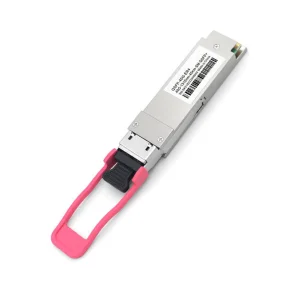
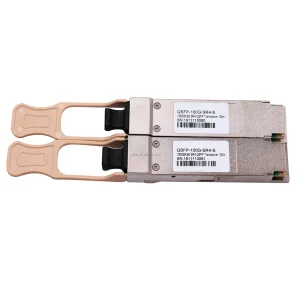
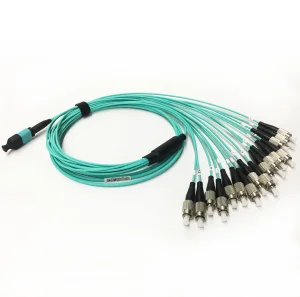
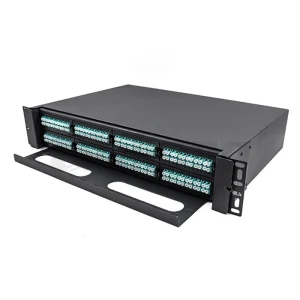
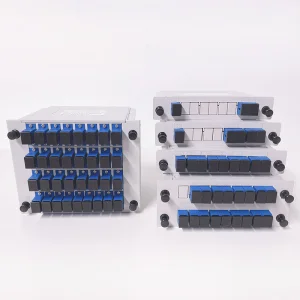
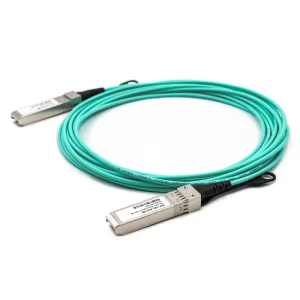
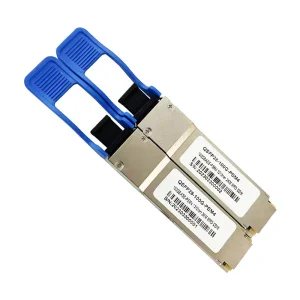
Explore our production-ready series of optical modules, high-density interconnect interfaces, and passive optical network modules.
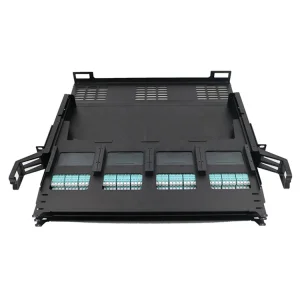
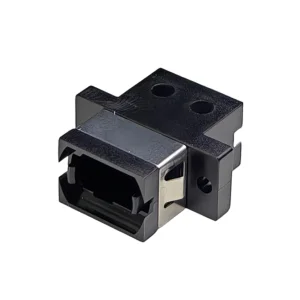
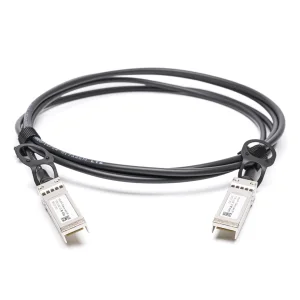
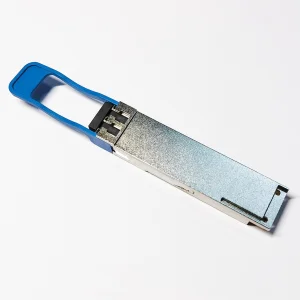
Kocent Optec Limited established in 2012 in Hongkong as a hi-tech communication enterprise, is one of China's leading fiber optic termination product manufacturer and solution provider.
We're dedicated to developing and manufacturing fiber optic communication products ranging from passive to active categories for telecommunication networks, enterprise networks and data centers.
By leveraging our extensive experience and excellent production capacity we gained over the years, we magnify the outcome for our valuable customers, which ultimately expands their core competencies and helps them outperform competitors.

The global telecommunications and network hardware industry continues to experience robust evolution. Despite the progressive deployment of ultra-high-speed interfaces such as 100G, 200G, 400G, and 800G in data center cores and metropolitan area backbone systems, the 10G SFP+ (Small Form-factor Pluggable Plus) form factor remains a primary commercial backbone. In enterprise localized area networks (LANs), storage area networks (SANs), 5G fronthaul/midhaul radio access networks (RAN), and fiber-to-the-home (FTTH) access systems, 10G transceivers represent the sweet spot for structural cost efficiency, low thermal output, and reliable multi-system compatibility.
According to industrial hardware data, the global 10G transceivers market continues to command a massive share of unit shipment volume worldwide. This ongoing demand is driven by the structural digitalization of developing regions, widespread migration to cloud edge computing infrastructures, and the massive deployment of 10G-PON technology by national telecommunications operators. Within this framework, Original Design Manufacturer (ODM) capabilities have become vital. Custom product engineering allows systems integrators and service providers to specify exact custom optical performance traits, distinct EEPROM digital signature profiles, and rugged temperature specifications tailored to diverse operational environments.

At Kocent Optec Limited, we place significant emphasis on customer collaboration. We define ourselves as your valuable partner in fiber optic connection solutions. We believe our key differentiators—including automated packaging, active optical sub-assembly aligning, and specialized vendor code programming—translate directly into tangible market advantages for our partners.
By leveraging our deep knowledge base, clients bypass long R&D cycles and secure market-ready products certified to meet international standards such as IEEE 802.3ae, SFF-8431, and SFF-8472.
To understand the structural versatility of 10G optical hardware, it is essential to map the standard configurations engineered within OEM and ODM production facilities. The table below represents the dominant technology architectures for standard 10G optoelectronic modules:
Operating over Multi-mode Fiber (MMF) at a wavelength of 850nm. Utilizes a VCSEL transmitter to achieve reach distances up to 300m. Ideal for intra-rack data center distribution and localized enterprise backbones.
Optimized for Single-mode Fiber (SMF) using a 1310nm DFB laser source. Supports reliable transmissions up to 10km. This is the global standard for building-to-building enterprise connections and campus-wide rings.
Operating at a 1550nm wavelength over SMF. Features cooled EML lasers and high-sensitivity APD photodetectors. Reaches spans of 40km (ER) up to 80km (ZR) without active in-line amplification.
Modern carrier-grade 10G optical modules must feature real-time diagnostic capacities. The Digital Diagnostics Monitoring (DDM) interface, specified according to the industry-standard SFF-8472, allows real-time access to key parameters:
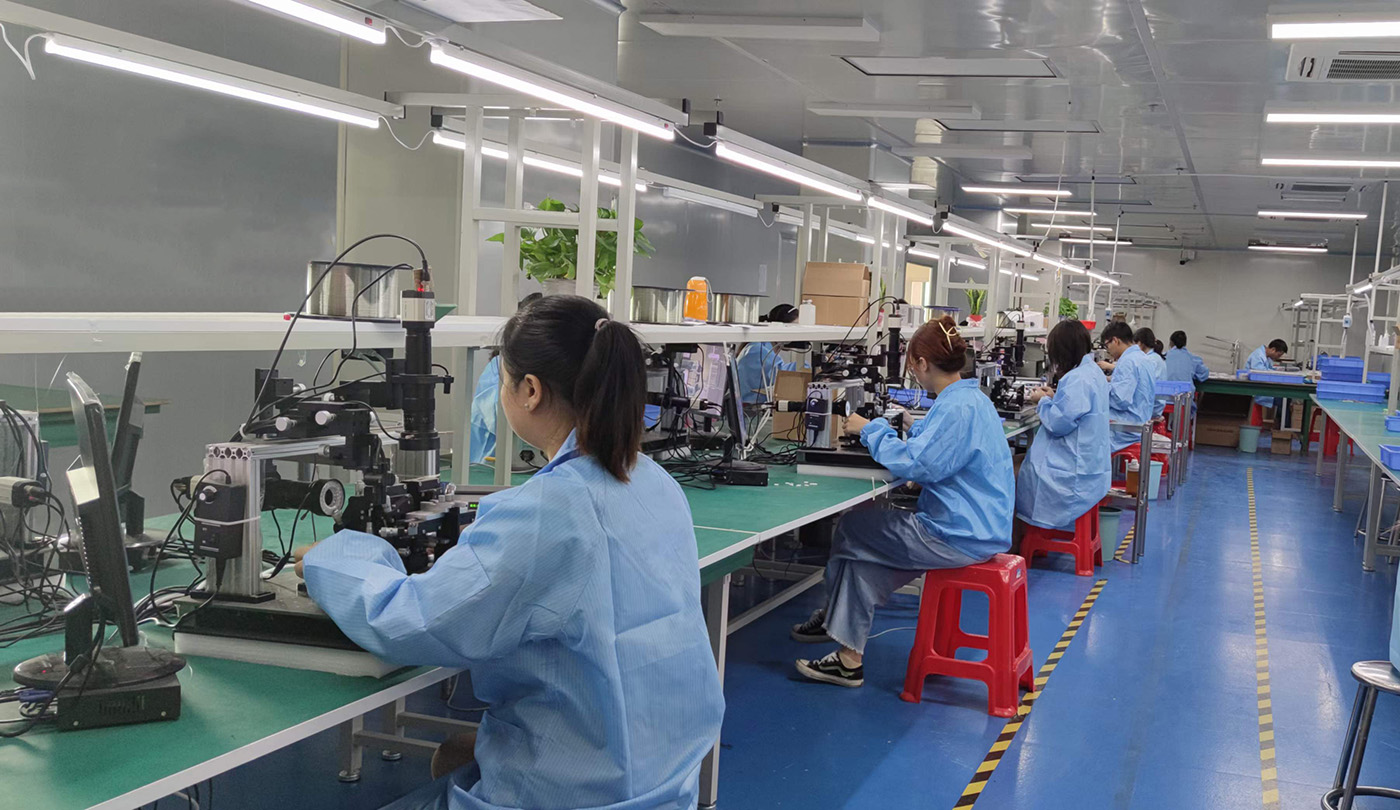
With more than 13 years of experience in manufacturing telecommunication fiber optic products, Kocent Optec follows strictly fiber optic industry standards by using mature scientific methods to deliver products on time and ensure that 100% of products are tested and inspected before shipment.
Quality assurance within our advanced facilities is divided into three key phases:
Our production protocols are aligned with international certifications. By maintaining control over the components, we achieve high manufacturing yields. This enables Kocent Optec to deliver cost-effective solutions while maintaining high structural quality and performance.
Our commitment to quality extends to our passive termination hardware, patch panels, and adapters, ensuring robust signal integrity throughout the physical plant.
Optical hardware is not a standalone system; it functions as part of a larger network topology. In modern infrastructures, 10G optical modules integrate with passive distribution equipment to deliver end-to-end data pipelines:
Modern data centers employ a Spine-and-Leaf architecture. High-density MPO patch panels and multi-core fiber trunks carry aggregated channels to intermediate distribution systems. 10G Active Optical Cables (AOC) and Direct Attach Copper (DAC) twinax cables handle short top-of-rack (ToR) switch connections, while 10G SFP+ SR modules link server NICs to distribution switches.
Telecommunications operators deploy OLT (Optical Line Terminal) switch systems equipped with 10G modules. These signals are divided using PLC (Planar Lightwave Circuit) splitters to distribute high-speed broadband to multiple residential or commercial end-users via GPON and XG-PON protocols.
Smart cities, intelligent transportation systems (ITS), and oil & gas telemetry require optical links that operate reliably under extreme conditions. Kocent Optec's industrial-grade SFP+ modules are engineered to operate in outdoor environments, preventing link degradation and maintaining signal integrity despite wide temperature fluctuations.
Years of sales and service experience have enabled us to win customers from different regions. Today, many of our OEM and ODM products have won Telecom Operator tenders and satisfy strict end-user requests.
Technical clarifications, compatibility info, and deployment guidance on 10G and high-speed fiber solutions.
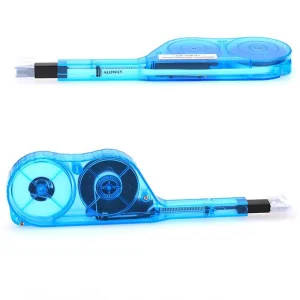
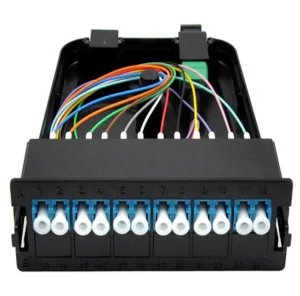
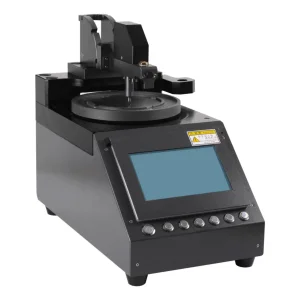
Complete your fiber network infrastructure with our high-density adapters, custom patch cords, polishing machinery, and cleaning accessories.
 KOCENT OPTEC