Established in 2012 in Hong Kong as a high-tech communication enterprise, Kocent Optec Limited has grown to become one of China's premier fiber optic termination and structural copper interconnect manufacturers.
We are dedicated to developing and manufacturing advanced optical and copper communication systems ranging from passive structural termination elements to high-speed active optical transceivers. Serving telecommunication operators, cloud datacenters, and enterprise environments worldwide, we define customer collaboration as our core value: our differentiation represents your strategic advantage in competitive markets.


By leveraging our extensive production capacity, we enable our valuable partners to outperform competitors through enhanced latency control and reliability.
Understanding the balance of power, efficiency, and scalability in high-density networking.
In modern hyperscale environments, 40G DAC (Direct Attach Copper) twinaxial cables dominate Top-of-Rack (ToR) interconnects. Connecting access switches to servers within 1 to 7 meters, they provide the lowest latency profile compared to optical modules.
Unlike active optical transceivers, passive 40G QSFP+ DAC assemblies do not require active optical-to-electrical conversion circuits. This drops the power usage per link to less than 0.1W, translating to megawatts of savings in large-scale server fields.
With massive deployments in IoT backbones and cloud compute platforms, global procurement mandates demand suppliers offering strict MSA standard compliance, cross-brand switch compatibility, and rapid production capacities.
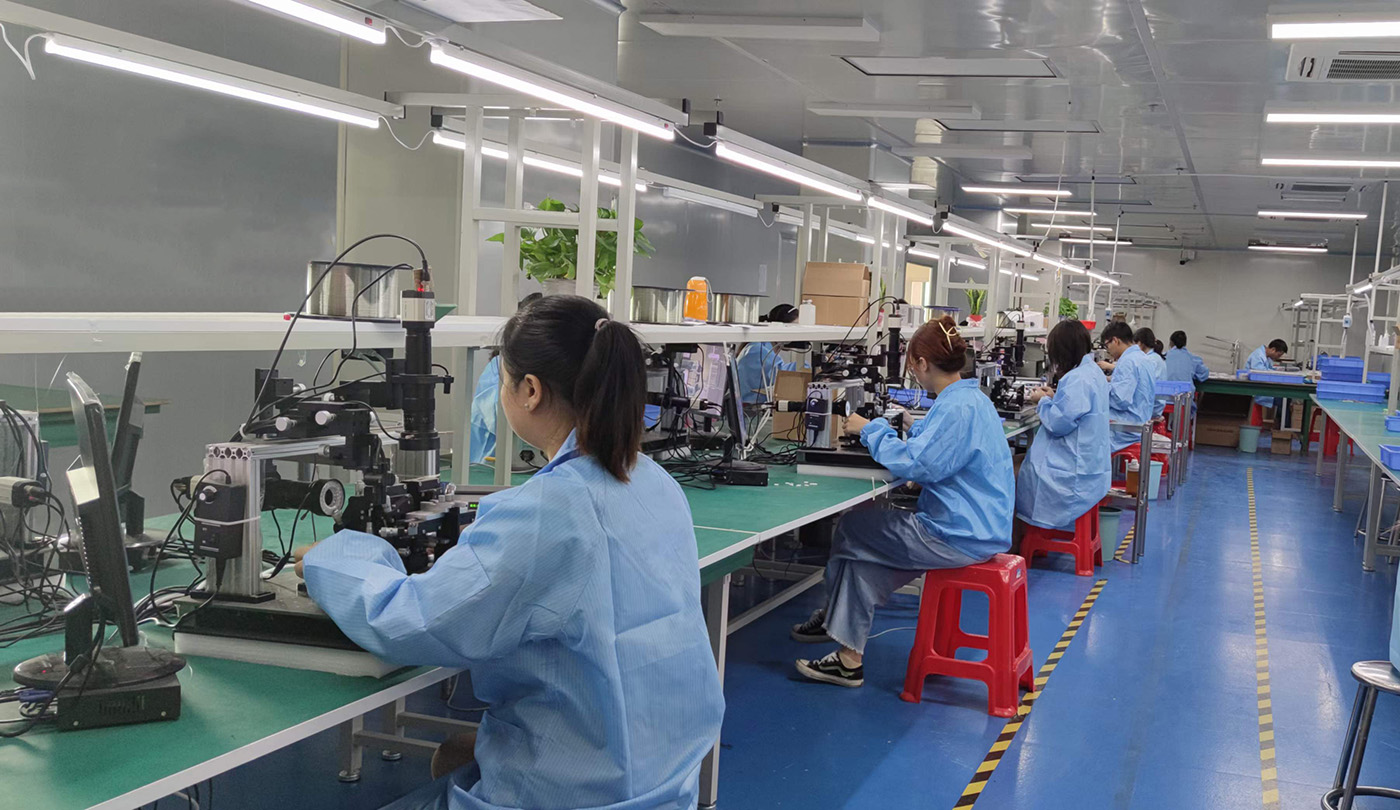
Over 13 years of manufacturing expertise ensures Kocent Optec meets stringent international testing protocols with 100% inspection before dispatch.
Why sourcing from specialized Chinese manufacturers offers major operational advantages for global operations:
Demonstrated industrial scale, quality, and reach since 2012.
Deploying copper interconnects to maximize bandwidth while keeping capital and operational expenditures in check.
Utilized for connections between high-density Top-of-Rack (ToR) switches and core distribution layers. With short lengths (1m to 3m), 40G DACs minimize thermal emissions within cabinets, reducing the power needed for cooling infrastructure.
Ideal for setting up core switch stacks and linking high-capacity network-attached storage (NAS) devices. Direct attach copper cables eliminate the need for expensive optical patch cables and transceivers, lowering setup costs.
Providing the interface links for edge server racks in 5G distribution points. The high shielding effectiveness of twinaxial cables protects signals from RF noise and electromagnetic interference in crowded telecom hubs.
How the market is adapting to changing data demands and what it means for your physical layer setup.
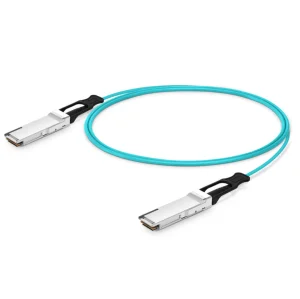
While 40G Active Optical Cables (AOC) are lighter and can cover distances up to 100 meters, they cost significantly more. At lengths under 5 meters, 40G DAC assemblies offer superior cost efficiency, better thermal management, and lower latency. The latency benefits of copper are particularly valuable for high-frequency trading networks and AI training clusters.
As main networks move to 100G and 400G configurations, 40G interfaces remain critical for legacy and peripheral hardware. Using breakout configurations—like one QSFP+ port splitting into four 10G SFP+ ports—helps operators protect their existing investments while expanding capacity, avoiding expensive forklift upgrades.
Key technical specifications that distinguish enterprise-grade cables from lower-quality alternatives.
Thicker wire (like 26AWG or 28AWG) reduces signal loss over longer lengths (3m-7m) but makes the cable stiffer. Thinner wire (such as 30AWG) is more flexible and makes routing easier in tight spaces, but is best kept for shorter distances.
High-quality twinaxial cables feature double-shielding (foil plus braid) to prevent alien crosstalk (ANEXT). The design should also allow for tight bends without crushing the inner dielectric layer, preserving signal integrity.
The cable EEPROM must be programmed correctly to comply with SFF-8436 MSA specifications. Proper programming prevents switch ports from flagging "Unsupported Transceiver" alerts, which can disable critical network links.
Our OEM and ODM products regularly win telecom operator tenders and meet strict carrier requirements. We work closely with major networks worldwide, including:
SingTel • Vodafone • America Movil • Telefonica • Bharti Airtel • Orange • Telenor • VimpelCom • TeliaSonera • Saudi Telecom • MTN • Viettel • Bitel • VNPT • Laos Telecom • MYTEL • Telkom • Telekom • Entel • FiberTel • StarFiber • Ooredoo • Beeline • Azercell
Expert answers to common engineering and sourcing questions.
Passive DACs contain no active electronics; they simply pass the electrical signal directly through copper wire. They are highly reliable and use zero power, but are limited to short runs (typically up to 5 meters). Active DACs include built-in signal conditioning chips to boost the high-frequency signal, allowing for thinner wires and longer distances (up to 7-10 meters), though they draw a small amount of power.
AWG determines the diameter of the copper conductor. Thicker wire (26AWG) has lower resistance and attenuation, making it ideal for longer lengths (5m to 7m). However, it is heavier and harder to bend. Thinner wire (30AWG) is highly flexible and improves airflow in high-density racks, but should be used for shorter lengths (0.5m to 2m) to prevent signal loss.
Yes, using a breakout configuration. A QSFP+ to 4x SFP+ breakout DAC connects a single 40G port (configured as 4x 10G in the switch OS) to four individual 10G SFP+ ports on servers or downstream switches. This is a highly cost-effective way to transition between different speed tiers.
Every cable undergoes a two-step validation process. First, we write vendor-specific compatibility code to the EEPROM based on SFF-8436 standards. Second, we test the cable in our lab using target switches (such as Cisco Nexus, Arista, and Juniper) to confirm the link initializes properly, reports correct diagnostics, and operates without packet loss.
 KOCENT OPTEC