The global digital economy relies heavily on high-speed, reliable transmission channels. While 100G, 400G, and 800G optical interfaces are deployed in massive hyperscale data centers, 10Gb SFP+ (Small Form-factor Pluggable Plus) modules remain the absolute workhorse of global enterprise, telecom, and campus networking environments. The transition from legacy gigabit ethernet to 10G represents a massive leap in optical efficiency, allowing network operators to handle modern data payloads, cloud computing, and real-time streaming without complex overhauls.
As a crucial link in modern telecommunications, 10G SFP+ modules have evolved significantly in terms of power efficiency, thermal performance, and diagnostic capabilities. High-quality 10G transceivers are critical for optimizing spectral efficiency and reducing the cost-per-bit in long-haul (LH) and short-reach (SR) applications. Hardware architects and global procurement managers must seek suppliers who not only produce standard components but also engineer transceivers that comply with strict Multi-Source Agreements (MSA). This ensures seamless performance across legacy switch platforms while keeping power consumption below the crucial 1.0W threshold.
Established in 2012 in Hong Kong as a high-tech communication enterprise, Kocent Optec Limited has emerged as one of China's premier fiber optic termination product manufacturers and optical solution providers. We are dedicated to developing and manufacturing a comprehensive range of fiber optic communication products spanning passive and active categories for telecommunication networks, enterprise networks, and cloud-scale data centers.
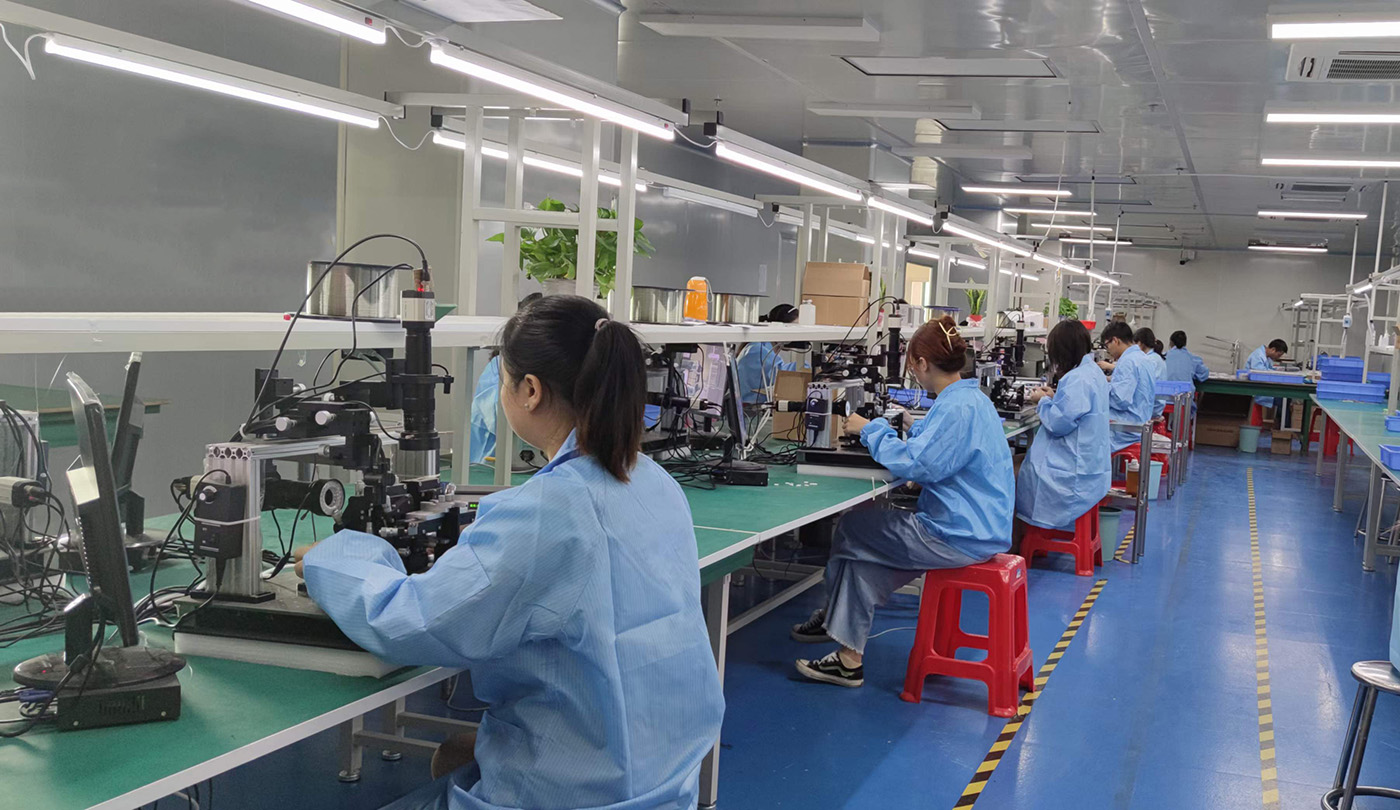
By leveraging our extensive engineering experience and state-of-the-art production capacity accumulated over more than 13 years, we maximize connectivity performance for our clients. We work closely with our partners, defining our role as a trusted manufacturing partner rather than a simple component supplier. Our core differentiator lies in our meticulous quality standards, strict adherence to testing protocols, and deep customization capabilities that empower customers to outperform their competitors.

With more than 13 years of expertise in telecom-grade manufacturing, Kocent Optec adheres to strict industry standards. We implement mature scientific methods to deliver orders on time while maintaining a 100% inspection rate. Every single 10G SFP module and fiber patch cord undergoes comprehensive physical inspection, optical power testing, and multi-vendor switch compatibility verification before shipping.
Our testing process includes verification of parameters such as center wavelength, spectral width, side-mode suppression ratio (SMSR), optical extinction ratio, and eye diagram compliance. This thorough validation process prevents field failures, minimizes packet loss, and ensures long-term reliability in demanding network conditions.

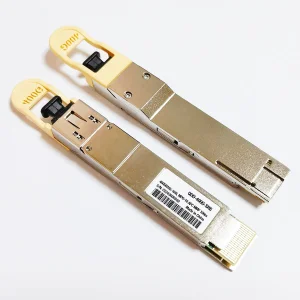
10G SFP+ transceivers are highly compact, hot-pluggable modules that operate over optical fiber or copper cables. To provide procurement teams with maximum clarity, we have categorized the dominant variants based on wavelength, transmission media, and maximum optical distance limits:
| Module Type | Wavelength (nm) | Fiber Type | Max Distance | Connector Type | Typical Applications |
|---|---|---|---|---|---|
| 10G SFP+ SR | 850nm | Multimode (OM3/OM4) | 300m / 400m | Duplex LC | Data Center Rack-to-Rack, Intra-building Links |
| 10G SFP+ LR | 1310nm | Singlemode (OS2) | 10km | Duplex LC | Campus Backbone, Metropolitan Area Networks |
| 10G SFP+ ER | 1550nm | Singlemode (OS2) | 40km | Duplex LC | Regional Enterprise Links, Telecom Transport |
| 10G SFP+ ZR | 1550nm | Singlemode (OS2) | 80km | Duplex LC | Long-Haul Backhaul, ISP Distribution Networks |
| 10G BiDi SFP+ | Tx1270/Rx1330 (or vice versa) | Singlemode Simplex | 10km - 80km | Simplex LC | Single-fiber telecom networks, maximizing fiber utility |
One of the primary challenges in optical network deployment is multi-vendor lock-in. Many major network equipment manufacturers program their switches to reject third-party transceivers. At Kocent Optec, our engineering team utilizes advanced EEPROM coding stations to ensure our 10G SFP+ modules are fully compatible with major networking brands, including Cisco, Juniper, Arista, HPE, Huawei, Dell, and Ubiquiti.
We program our transceivers with precise vendor-specific configurations and serialize each unit to support Digital Optical Monitoring (DOM). Also known as Digital Diagnostic Monitoring (DDM), this feature allows network administrators to monitor real-time parameters such as optical output power, receiver sensitivity, operating temperature, and transceiver supply voltage directly from the switch console. This supports proactive link maintenance and quick troubleshooting.
Years of sales and service experience have enabled us to win customers from different regions. Today, Kocent Optec proudly serves clients across East Asia, Southeast Asia, the Middle East, Eastern Europe, Western Europe, Northern Europe, South America, North America, North Africa, and South Africa.
Win-win cooperation is our constant goal. Many of our OEM and ODM optical products successfully win Telecom Operator tenders and satisfy strict end-user requirements. Our manufacturing consistency, competitive pricing, and technical support help us build relationships with key service providers and enterprises globally.
Selecting a transceiver supplier requires more than checking compatibility; it requires evaluating their technical roadmap and commitment to global environmental and safety compliance. As optical transmission demands move towards higher bandwidth, our engineering team works to keep our manufacturing facility prepared for next-generation architectures.
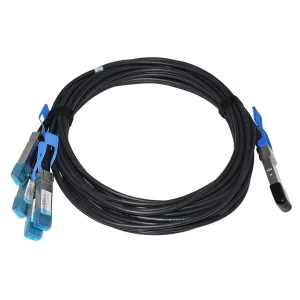
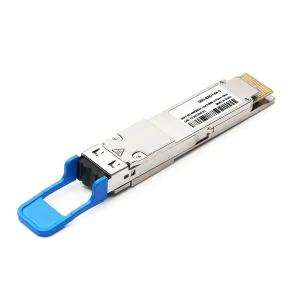
While 10G remains common for access networks, modern data centers are migrating to 25G SFP28, 100G QSFP28, and 400G QSFP-DD interfaces. Kocent Optec offers a migration path with products like the 100G QSFP28 to 4 x 25G SFP28 Passive Direct Attach Copper Breakout Cable and 400GBASE-LR4 QSFP-DD Transceivers. This allows operators to scale up their switch fabrics without needing to work with multiple vendors.
Our manufacturing processes comply with strict global directives. Our products are lead-free and conform to the RoHS (Restriction of Hazardous Substances) directive. Additionally, our active modules are certified under CE, FCC, and UL, ensuring they meet electrical and electromagnetic emissions standards. This compliance is essential for operators in Europe, North America, and other regulated markets.
Standard catalog products do not always fit specialized environments. We offer custom ODM services, including customized optical fiber lengths, customized EEPROM coding for proprietary hardware systems, custom branding/labeling, and specialized packaging for bulk installations.
Generally, no. SFP+ modules running at 10Gbps cannot auto-negotiate down to 1Gbps when inserted into a dedicated 1G SFP port, as most 1G ports do not support 10G signaling rates. However, many 10G SFP+ ports on switches can accept 1G SFP modules, though they must be manually configured to 1G speed.
SFP+ SR (Short Reach) operates at 850nm over multimode fiber (OM3/OM4) for distances up to 300m-400m, utilizing cost-effective VCSEL lasers. SFP+ LR (Long Reach) operates at 1310nm over singlemode fiber (OS2) up to 10km, utilizing DFB lasers. LR modules are ideal for campus connections and longer cable runs.
Digital Optical Monitoring (DOM) provides real-time diagnostic data from the transceiver. It monitors temperature, laser bias current, Tx power, Rx power, and supply voltage. This data helps network administrators identify issues like fiber bending or degrading lasers before a complete link outage occurs.
We write and test custom EEPROM signatures for specific target systems (e.g., Cisco, Arista, Juniper). Our programming matches the vendor's required protocols, ensuring the switch recognizes the module without generating port lock-out errors.
BiDirectional (BiDi) modules transmit and receive signals over a single strand of fiber by using two different wavelengths (e.g., 1270nm and 1330nm). This configuration allows operators to double their fiber capacity without running new cables, helping to reduce fiber leasing costs.
Yes, all our optical transceivers and passive components are manufactured in compliance with international environmental standards, including RoHS, CE, FCC, and WEEE directives, ensuring safe and eco-friendly deployments.
 KOCENT OPTEC