Explore our factory-direct network connectivity options, certified for high compatibility and optimal insertion loss performance.
A premier manufacturer and global solution provider for enterprise networks, telecommunication networks, and data center infrastructures.
Kocent Optec Limited establish in 2012 in Hongkong as a hi-tech communication enterprise, is one of China's leading fiber optic termination product manufacturer and solution provider.
We're dedicated to developing and manufacturing fiber optic communication products ranging from passive to active categories for telecommunication networks, enterprise networks and data centers.

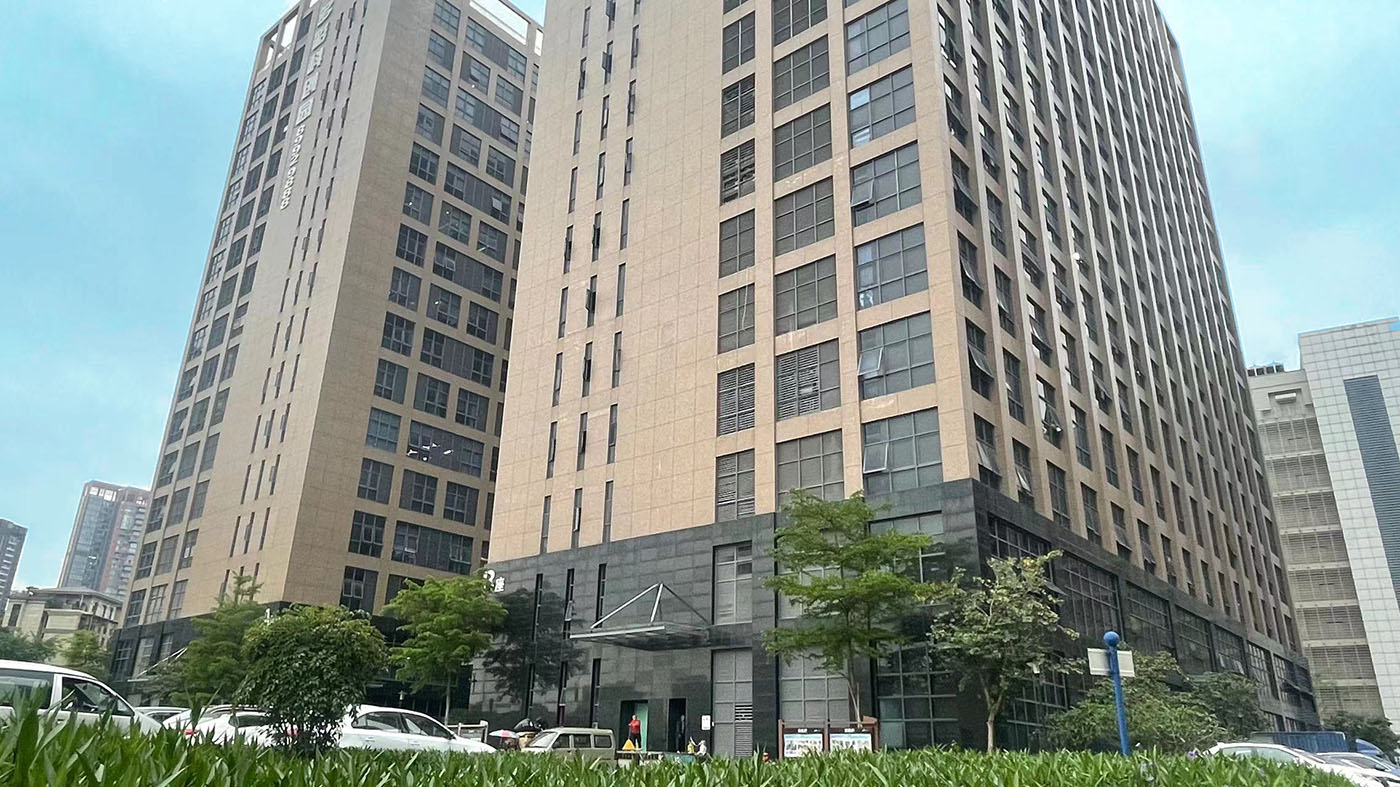
By leveraging our extensive experience and excellent production capacity we gained over the years, we magnify the outcome for our valuable customers, which ultimately expands their core competencies and helps them outperform competitors.
We place emphasis on customer collaboration, and we define ourselves as your valuable partner in fiber optic connection solutions. We believe our differentiators are your perceived advantages.
With more than 13 years of experience in manufacturing telecommunication fiber optic products, we follow strictly fiber optic industry standards by using mature scientific methods to deliver your products on time and ensure that 100% products are tested and inspected before shipment.
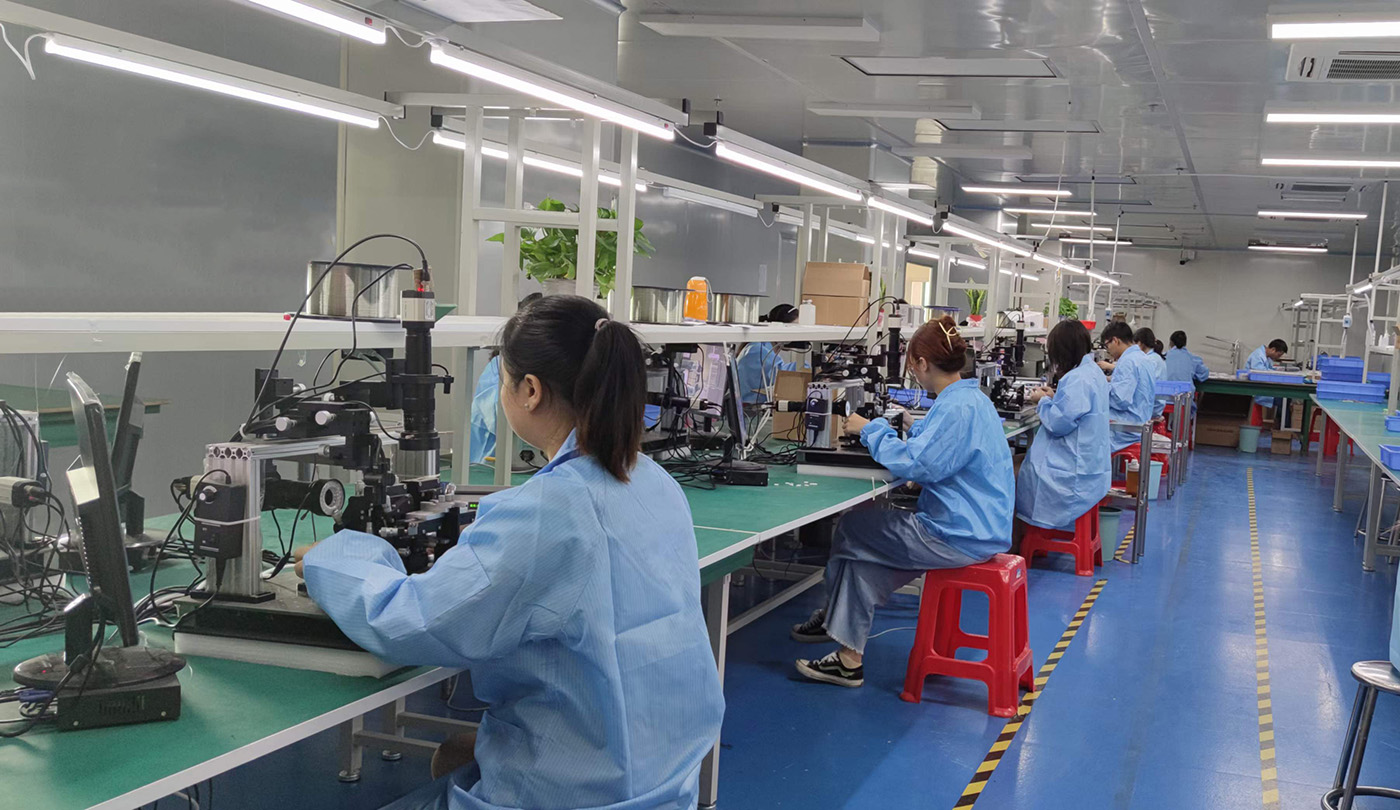
Years of sales and service experience have enabled us to win customers from different regions. Today, we have customers from East Asia, Southeast Asia, Middle East, Eastern Europe, Western Europe, Northern Europe, South America, North America, North Africa, and South Africa.
Win-win cooperation is our constant goal. Many our OEM and ODM products won the Telecom Operator tender and satisfy end-user request.
Understanding SFF-8431, Signal Integrity, and the Economics of Direct Attach Copper (DAC) vs Active Optical Cables (AOC).
In modern enterprise networks and cloud computing data centers, the 10G SFP+ cable remains a core building block. Used extensively for Top-of-Rack (ToR) switch links, server-to-switch interfaces, and storage area network (SAN) configurations, these cables support data rates up to 10.3125 Gbps. While optical transceivers paired with structured LC fiber cables are ideal for long-distance runs, they introduce higher power profiles, elevated thermal outputs, and significant capital expenditure (CapEx) when deployed at scale.
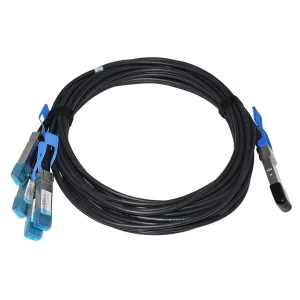
This is where SFP+ Direct Attach Copper (DAC) and Active Optical Cables (AOC) offer critical economic and physical advantages. By combining the transceivers and cable into a single integrated assembly, data centers eliminate the cost of separate transceivers and optical patch cords. SFP+ passive twinaxial copper assemblies communicate directly over differential copper pairs up to 7 meters (depending on the wire gauge), consuming virtually zero power (under 0.1W per port) and introducing negligible latency.
| Parameters | SFP+ Passive DAC | SFP+ Active DAC | SFP+ AOC (Active Optical) |
|---|---|---|---|
| Maximum Reach | Up to 7 Meters (typically 1m - 5m) | Up to 10 - 12 Meters | Up to 100 Meters (OM3/OM4) |
| Power Consumption | < 0.1 Watts per end | < 0.5 Watts per end | < 1.0 Watts per end |
| Bit Error Rate (BER) | < 10-12 to 10-15 | < 10-12 | < 10-15 |
| Cable Diameter (OD) | 4.5mm - 6.8mm (depends on AWG) | 4.5mm - 6.2mm | 3.0mm (extremely flexible) |
| EMI Susceptibility | Low (shielded twinax construction) | Low | Immune (optical transmission) |
| Cost Metric (Pricelist) | Lowest Cost ($) | Moderate Cost ($$) | High Performance ($$$) |
A passive SFP+ DAC twinax cable is constructed using shielded copper differential pairs. The thickness of the copper wire, designated by AWG (American Wire Gauge), dictates the maximum distance the signal can travel without significant degradation. Common gauges include 30AWG (for short runs up to 1.5m to 2m), 28AWG (for up to 3m to 5m), and 24AWG (for up to 7m). Thicker gauges reduce attenuation but increase cable stiffness and physical weight, making airflow management within server racks more challenging. Modern manufacturing facilities, such as Kocent Optec Limited, utilize precision automated soldering and micro-coaxial cable termination processes to guarantee low return loss and cross-talk performance, maintaining full compliance with the SFF-8431 standard.
How telecommunications and edge computing applications are driving the demand for custom optical interconnect configurations.
A close look at the testing sequences implemented at the factory level to ensure 100% field reliability and interoperability.
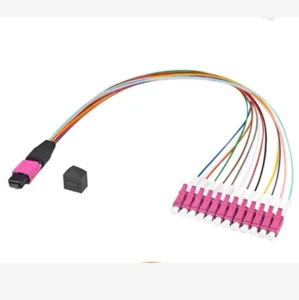
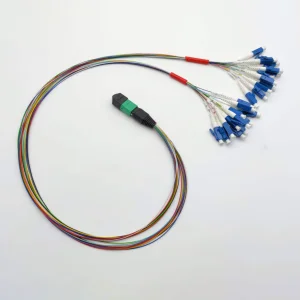
Unlike standard off-the-shelf patch cables, high-speed interconnect assemblies (such as 10G SFP+ DACs, AOCs, and high-density MPO breakout harnesses) require multi-stage validation to protect the network against packet loss and system downtime. At Kocent Optec Limited, each batch undergoes a comprehensive testing sequence that addresses electrical, optical, and mechanical performance parameters.
1. Signal Integrity & Eye Diagram Measurement: By using high-bandwidth sampling oscilloscopes and Bit Error Rate Testers (BERT), engineers verify the signal eye amplitude, jitter levels, and rise/fall times. This guarantees that copper assemblies meet the tight margin requirements of the SFF-8431 specifications, keeping the Bit Error Rate below 10-15.
2. EEPROM Coding and Multi-Platform Compatibility Validation: A major challenge in mixed-vendor environments is hardware lock-in. SFP+ transceivers and DAC connectors contain EEPROM chips containing specific vendor data. The factory programs and tests these components on targeted host switches (e.g., Cisco, Arista, Juniper, Huawei, HPE) to verify MSA compliance, preventing compatibility errors when deployed in production environments.
3. Optical Interface Inspection (for AOC & Fiber Harnesses): Using 3D interferometers, the fiber end-faces are analyzed for geometric consistency (including radius of curvature, apex offset, and fiber height). The end-faces are polished to meet high return loss standards, preventing light reflections back into the laser cavity.
Understanding the transition from 10G to 25G, 100G, 400G, and the long-term utility of SFP+ cabling systems.
While massive hyperscale cloud installations are driving the transition toward 400G and 800G optical architectures, the 10G SFP+ form factor remains a crucial component for mid-sized enterprise data centers, telecom base stations, and edge computing sites. It serves as a cost-effective option for secondary networks, legacy infrastructure, and management consoles where higher bandwidth configurations are not economically justified.
Transition Paths (10G to 25G and Beyond): The transition from 10G to 25G is relatively straightforward because the SFP28 interface maintains physical backward compatibility with the SFP+ port. System administrators can often utilize the same rack layout and cabling pathways, swapping the active transceivers or DACs for 25G alternatives when upgrading host systems. This provides a clear, incremental upgrade path that protects existing infrastructure investments.
Expert technical answers to common integration questions regarding SFP+ direct attach copper and optical cabling systems.
Passive DAC cables do not contain active signal conditioning components within the connector housing. They rely entirely on the host port's transmitter/receiver to drive the high-frequency copper signal over distances up to 7m. Active DAC cables incorporate internal signal amplifiers and equalization circuits, allowing them to extend transmission distances up to 10m or more while using thinner wire gauges.
Yes, you can physically plug an SFP+ cable into an SFP28 port, as they share the same physical form factor. However, the connection will operate at the lower speed of 10G rather than the 25G maximum speed of the port. Compatibility depends on the host switch's firmware settings, which must support running the port at a reduced 10G rate.
To ensure compatibility, Kocent Optec Limited programs each cable's EEPROM with customized data structure profiles matching the required switch vendor. By verifying these configurations on physical test switches, the cables are recognized as fully compatible without triggering administrative lockout messages.
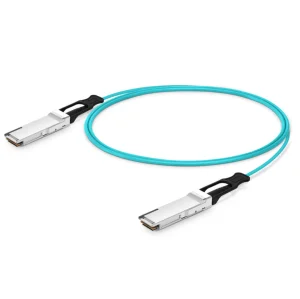
Active Optical Cables (AOC) utilize optical fiber rather than copper wire, allowing them to support distances up to 100 meters while featuring a thinner, more flexible cable structure. This layout makes AOCs ideal for routing through high-density cable pathways. They are also immune to Electromagnetic Interference (EMI), which is critical in high-density industrial and colocation datacenters.
A further collection of specialized optical termination products, active network cabling, and industrial manufacturing solutions.
 KOCENT OPTEC