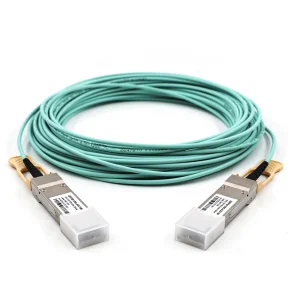
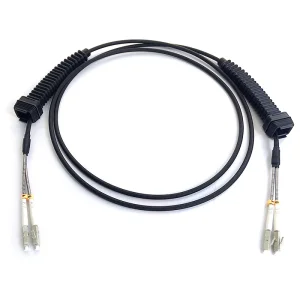
Explore our latest standard components deployed across enterprise backbones and telecom access architectures globally.
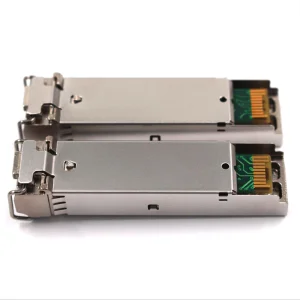
The 1G SFP LX transceiver (1000BASE-LX/LH) is one of the most reliable and enduring standards in optical fiber communications. Working at a nominal wavelength of 1310nm, it uses a high-performance Distributed Feedback (DFB) laser or Fabry-Perot (FP) laser to send data over long distances via Single-Mode Fiber (SMF), reaching up to 10 kilometers. It is also compatible with Multi-Mode Fiber (MMF) up to 550 meters when used with a mode-conditioning patch cable, which helps prevent Differential Mode Delay (DMD).
As telecom networks and data centers upgrade to 10G, 100G, and even 400G systems, the 1G SFP LX interface remains essential for edge connectivity, industrial IoT, supervisory control and data acquisition (SCADA) systems, and fiber-to-the-home (FTTH) GPON uplink networks. It offers low power consumption, reliable performance over wide temperature ranges, and cost efficiency, making it a key component for worldwide network architectures.
| Parameters | Specifications (Standard 1G SFP LX) |
|---|---|
| Data Rate | 1.25 Gbps (1000BASE-LX) |
| Wavelength | 1310 nm |
| Fiber Type | Single-Mode Fiber (SMF) / Multi-Mode (MMF) |
| Max Distance | Up to 10 km on SMF (9/125µm) |
| Optical Transmitter | DFB or FP Laser Source |
| Receiver Type | PIN Photo-detector |
| Connector Type | Duplex LC Interface |
| DDM / DOM | Supported (Digital Diagnostics Monitoring) |
How legacy 1.25G interfaces are adapting to next-generation system demands, low-latency requirements, and green-computing initiatives.
By shifting to silicon photonics (SiPh), next-generation 1G/10G transceivers can integrate multiple optical functions on a single silicon chip. This reduces power consumption, enhances thermal stability, and lowers unit production costs for large-scale deployments.
Modern applications like 5G front-haul networks and smart city utility poles require optical modules to work reliably in harsh conditions. Modern manufacturers produce specialized Industrial Temperature Range (-40°C to +85°C) SFP LX modules to ensure uninterrupted performance in extreme environments.
Advanced DDM (Digital Diagnostics Monitoring) interfaces now feature built-in predictive analytics. By monitoring laser bias current, optical output power, receiver sensitivity, and temperature in real-time, network operators can prevent system failures before they happen.
The implementation of 1.25G optical transceivers in major global communication infrastructure projects.
In Fiber-to-the-Home (FTTH) architectures, 1G LX modules provide stable connections between the Optical Line Terminal (OLT) and local aggregation switches, helping supply consistent broadband services to residential areas.
Smart utility stations rely on real-time SCADA monitoring. The EMI (electromagnetic interference) resistance of single-mode optical fibers combined with 1G LX transceivers ensures dependable telemetry transmission across power transmission lines.
Many business offices utilize cost-effective 1G SFP LX interfaces to link access floor switches to central core distribution engines. This ensures high-speed, low-latency local area network (LAN) operations.

Kocent Optec Limited, established in 2012 in Hong Kong as a high-tech communications enterprise, is one of China's leading fiber optic termination product manufacturers and solution providers.
We are dedicated to developing and manufacturing a wide range of fiber optic communication products, from passive to active categories, for telecommunication networks, enterprise networks, and data centers.
By leveraging our extensive experience and excellent production capacity gained over the years, we maximize output for our valuable customers. This helps expand their core competencies and enables them to outperform their competitors.
We place high emphasis on customer collaboration and define ourselves as your valuable partner in fiber optic connection solutions. We believe our differentiators are your perceived advantages.

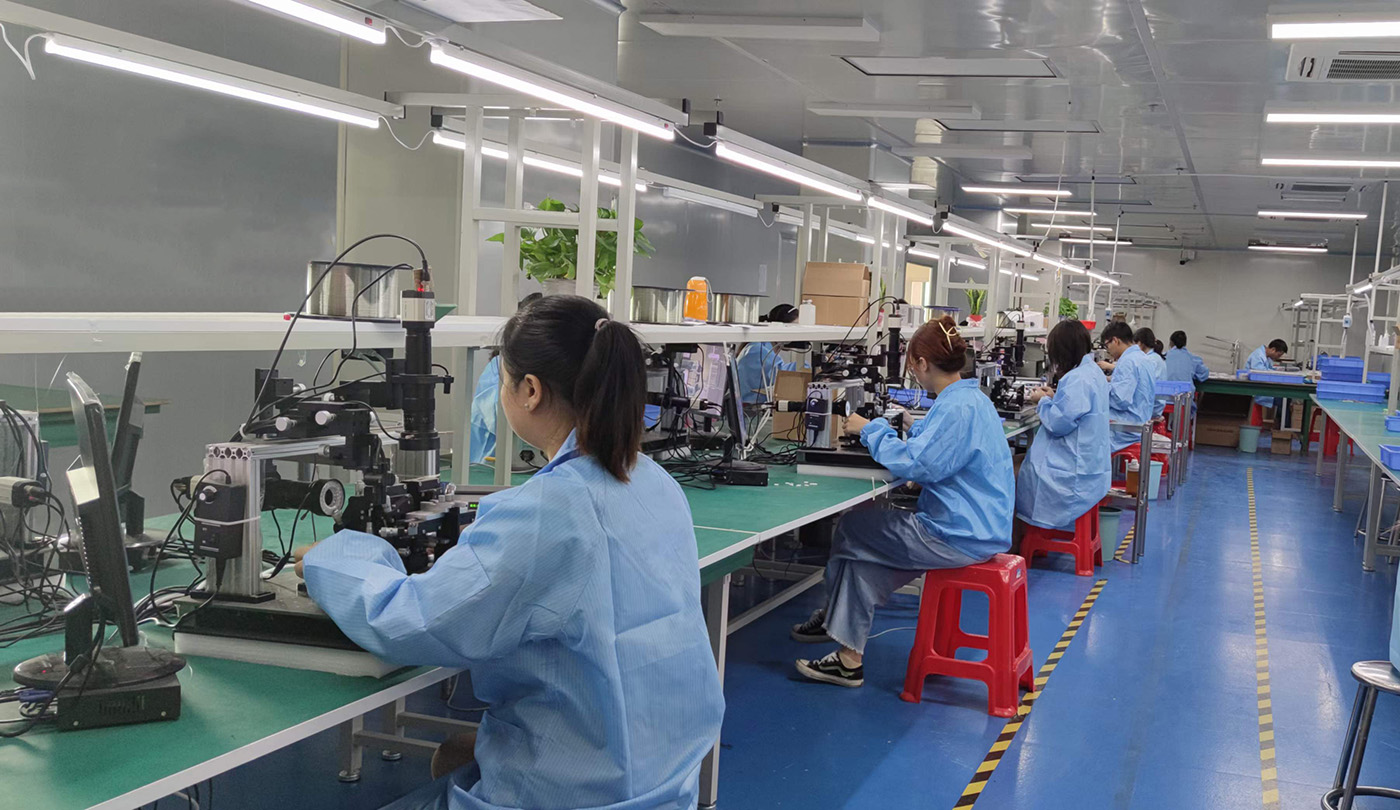
With more than 13 years of experience in manufacturing telecommunications fiber optic products, we strictly follow industry standards. We use mature scientific methods to deliver your products on time and ensure that 100% of products are tested and inspected before shipment.
Years of sales and service experience have enabled us to win customers from different regions. Today, we serve clients in East Asia, Southeast Asia, the Middle East, Eastern Europe, Western Europe, Northern Europe, South America, North America, North Africa, and South Africa.
Why global telecom operators choose Chinese factories for optical transceiver assembly and system testing.
Chinese optical transceiver factories have transitioned from manual assembly lines to automated Smart Factory 4.0 systems. The integration of high-precision component placers, automatic wire bonders, and robotic optical sub-assembly coupling stations has drastically improved production yields and consistency. This automation ensures that each SFP LX module meets performance standards, minimizing signal variations from batch to batch.
In addition, China’s complete manufacturing ecosystem provides exceptional supply chain resilience. From local semiconductor wafers to optical lenses, plastic housings, and circuit boards, all necessary raw materials are sourced locally. This reduces transit times and helps insulate production from global logistics delays, allowing Kocent Optec to maintain stable lead times even during volatile market conditions.
Furthermore, this vertical integration delivers significant cost advantages without sacrificing quality. By sourcing components and manufacturing in one region, we reduce overhead and logistics expenses. This allows us to offer premium products at competitive price points, helping network operators maximize their return on investment.
Finally, our factories feature advanced environmental control systems and green manufacturing practices. By optimizing energy usage and reducing chemical waste during production, Kocent Optec is committed to delivering sustainable networking solutions that align with modern global environmental standards.
Years Manufacturing Experience
Tested Before Shipment
Global Operators Serviced
Standard Single-mode Reach
For international buyers and network engineers, the critical challenge of sourcing optical transceivers lies in multi-vendor interoperability. A network infrastructure often utilizes switches, routers, and firewalls from different manufacturers (such as Cisco, Huawei, Juniper, Nokia, and HPE). SFP transceivers must communicate seamlessly across all these platforms without triggering software lockouts or port errors.
To ensure this compatibility, Kocent Optec utilizes state-of-the-art programming systems and tests transceivers in our dedicated switch lab. We cross-verify each EEPROM code structure against the Multi-Source Agreement (MSA) standard, guaranteeing that our modules function just like original brand components.
Our OEM/ODM products have successfully won tenders for major telecommunication operators worldwide, satisfying strict technical requirements and demanding operational conditions.
SingTel, Vodafone, America Movil, Telefonica, Bharti Airtel, Orange, Telenor, VimpelCom, TeliaSonera, Saudi Telecom, MTN, Viettel, Bitel, VNPT, Laos Telecom, MYTEL, Telkom, Telekom, Entel, FiberTel, StarFiber, Ooredoo, Beeline, Azercell, and more.
✓ Win-win cooperation is our constant goal.
Mitigating regulatory risks through comprehensive international certifications and technical support networks.
Our active SFP modules comply with European Union CE requirements and United States FCC electromagnetic emission standards, ensuring safe installation in municipal and corporate networks.
We are committed to environmental sustainability. Our products are manufactured lead-free and free of hazardous substances, complying with RoHS and WEEE directives for green procurement.
We provide localized post-sales support through distributor networks in Western Europe, the Middle East, and South America, offering troubleshooting and firmware updates for switch systems.
Answers to common technical, design, and integration questions for engineers and purchasing managers.
Yes. Although designed for Single-Mode Fiber (SMF) up to 10km, a 1G SFP LX module can run on Multi-Mode Fiber (OM1, OM2, OM3) up to 550 meters. To prevent Differential Mode Delay (DMD) jitter, it is recommended to use a Mode-Conditioning Patch (MCP) cable when connecting to legacy MMF cores.
SFP SX uses an 850nm laser designed purely for short-range Multi-Mode Fiber (up to 550m). SFP LX runs on a 1310nm laser designed primarily for Single-Mode Fiber (up to 10km). LH (Long Haul) is a vendor-specific term that often overlaps with LX or EX, supporting distances from 10km up to 40km on SMF.
DOM (Digital Optical Monitoring) and DDM (Digital Diagnostics Monitoring) refer to the same technology. It allows switches and routers to monitor parameters like supply voltage, laser temperature, laser bias current, transmitted optical power, and received optical power in real-time, helping identify potential issues before they cause downtime.
We employ a strict quality assurance process. Every single optical module undergoes visual inspection, performance parameter verification, and aging chamber testing. Furthermore, transceivers are tested in our multi-vendor compatibility lab to ensure they function properly across major switches and routers before shipment.
Yes. All of our active optical components are built to comply with the official SFP Multi-Source Agreement (MSA) standards. This ensures physical size, electrical pin configuration, and software registers align with international industry specifications, allowing you to use them in any MSA-compliant network switch.
Supporting your network infrastructure needs with a full range of active modules, passive connectors, and fiber management tools.
 KOCENT OPTEC