Explore our industry-standard compatible optical engines and high-density structural cabling products.
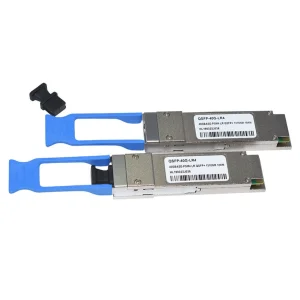
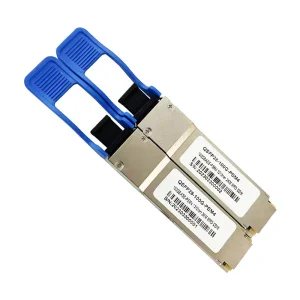
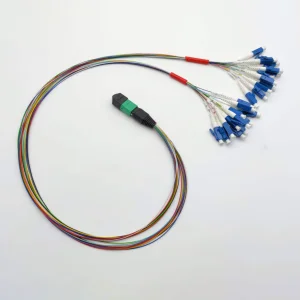
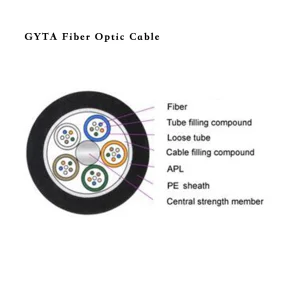
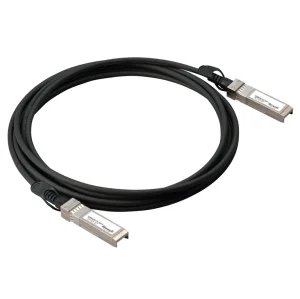
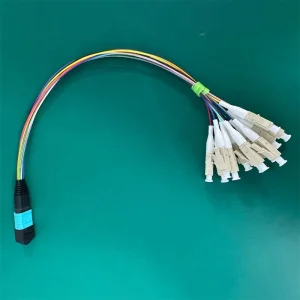
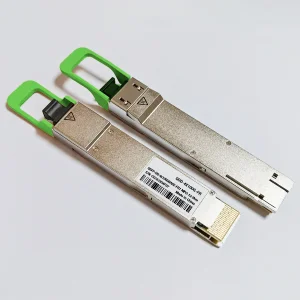
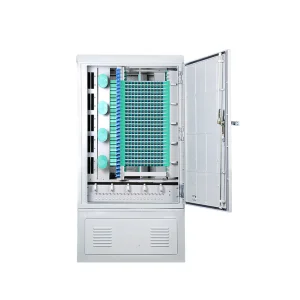
In modern telecommunication structures, bandwidth expansion is consistently constrained by fiber infrastructure availability and deployment CAPEX. 10G Bidirectional (BiDi) SFP+ transceivers resolve these operational friction points by doubling network capacity utilizing existing single-strand fiber lines. As a pioneer in active optoelectronic systems, Kocent Optec Limited presents this comprehensive technical guide to analyzing the design, sourcing, and optimization strategies for 10G BiDi SFP+ deployments.
Standard optical links employ two distinct fibers: one for transmission (Tx) and another for reception (Rx). BiDi optical transceivers, governed by multi-source agreements (MSA), utilize Wavelength Division Multiplexing (WDM) to transmit and receive signals over a single optical channel. By splitting the optical frequencies, the transceiver isolates upstream and downstream signals, eliminating crosstalk.
This single-fiber duplex configuration relies on two matched optoelectronic units:
Equipped with highly integrated diplexers, these modules separate the optical reflections and guarantee return loss parameters matching MSA tolerances. Standard reach variations encompass 10km, 20km, 40km, and 80km links, deploying DFB (Distributed Feedback) lasers for medium range, and APD (Avalanche Photodiode) receivers for long-reach networks requiring high optical power sensitivity.
Municipal operators, enterprise datacenters, and industrial installations are migrating rapidly towards single-fiber networks to counter the soaring costs of new fiber trenching. In metro area networks, leasing dark fiber is often charged per core. By switching to 10G BiDi SFP+ setups, operators realize a direct 50% reduction in fiber leasing tariffs.
Furthermore, within hyperscale data centers, routing configurations require efficient rack space utilization. BiDi transceivers effectively double the patch panel capacity without modifying the internal layout, streamlining hardware scaling plans.
Kocent Optec Limited, established in 2012 in Hong Kong as a hi-tech communication enterprise, is one of China's leading fiber optic termination product manufacturers and solution providers. We are dedicated to developing and manufacturing fiber optic communication products ranging from passive to active categories for telecommunication networks, enterprise networks, and data centers.
By leveraging our extensive experience and excellent production capacity we gained over the years, we magnify the outcome for our valuable customers, which ultimately expands their core competencies and helps them outperform competitors. We place emphasis on customer collaboration, and we define ourselves as your valuable partner in fiber optic connection solutions.

With more than 13 years of experience in manufacturing telecommunication fiber optic products, we strictly follow fiber optic industry standards by using mature scientific methods to deliver your products on time and ensure that 100% of products are tested and inspected before shipment.
This rigid quality standard is vital for active optics like our 10G BiDi SFP+ modules. Each transceiver is subjected to automated bit-error-rate testing, optical spectrum validation, temperature sweep chambers, and real-switch compatibility testing platforms, eliminating DOA (Dead On Arrival) risks and guaranteeing prolonged field durability.

Sourcing optical transceivers from a reliable Chinese manufacturer like Kocent Optec yields structural pricing and assembly benefits. The concentration of optoelectronic raw material providers in South China establishes a robust ecosystem that reduces production lead times and limits supply chain shocks.
From die bonding, TO-can packaging, optical sub-assembly (OSA) alignment to automated testing, we run a unified workflow that prevents markups from intermediate brokers.
We program and test EEPROM registers individually for target hosts, matching standard protocols for Cisco, Juniper, Huawei, Arista, HP, Mikrotik, and Ubiquiti systems.
Our high-speed automated equipment provides massive capacity scale, allowing us to respond quickly to operator tenders and unexpected spikes in regional fiber demand.
Understanding how 10G BiDi modules operate across local network topologies helps engineers implement configurations optimized for specific optical losses and fiber conditions:
Modern mobile deployment demands high density of small cells and remote radio units (RRUs). Running dual fibers to every antenna array presents deployment challenges and escalates deployment costs. Implementing 10G SFP+ BiDi optics reduces the cable run requirements by half, maintaining low latency parameters required by CPRI/eCPRI interfaces.
GPON and XGS-PON systems serve multiple end-users via passive optical splitters. For local central offices aggregating regional users, 10G BiDi modules link the primary distribution frame to the localized switch infrastructure, keeping operations lean and space requirements minimized.
When connecting multiple corporate buildings across a wide campus, optical duct networks are often congested. Upgrading to a 10G network over a single strand of single-mode fiber circumvents the need to lay down new underground conduits. Our industrial-grade transceivers perform reliably in campus bypass enclosures, tolerating sub-zero temperatures and high-heat scenarios without experiencing spectral shifts or optical link drops.

Years of sales and service experience have enabled us to win customers from different regions. Today, we have customers from East Asia, Southeast Asia, Middle East, Eastern Europe, Western Europe, Northern Europe, South America, North America, North Africa, and South Africa.
Win-win cooperation is our constant goal. Many of our OEM and ODM products have won Telecom Operator tenders and met the performance demands of end-users.
Our main terminal telecom operators include: SingTel, Vodafone, America Movil, Telefonica, Bharti Airtel, Orange, Telenor, VimpelCom, TeliaSonera, Saudi Telecom, MTN, Viettel, Bitel, VNPT, Laos Telecom, MYTEL, Telkom, Telekom, Entel, FiberTel, StarFiber, Ooredoo, Beeline, and Azercell.
As standard networks expand past 10G speeds, the WDM approach remains highly applicable. The transition trajectory scales from 10G BiDi to 25G BiDi (using PAM4 modulation or faster DFB lasers), and onwards to 50G BiDi. By adopting 10G BiDi frameworks today, engineers build modular compatibility with future optical components, minimizing structural network redesigns.
Since the modules utilize different transmission and reception wavelengths, they must align to function. The upstream module (BX-U) transmits at 1270nm and receives at 1330nm, which matches the downstream module (BX-D) that transmits at 1330nm and receives at 1270nm. Two identical transceivers (e.g., two BX-U units) will fail to establish a link because they will both transmit on the same wavelength.
Digital Optical Monitoring (DOM) allows network administrators to view parameters like optical output power, receiver input power, laser bias current, module temperature, and internal supply voltage in real time. This assists in identifying fiber breaks, dirty connectors, or laser degradation before a link fails.
Our transceivers are engineered using high-reliability lasers with a Mean Time Between Failures (MTBF) exceeding 100,000 hours under operating parameters, ensuring long-term deployment stability.
No. BiDi WDM optical engines require single-mode fiber (SMF, standard G.652 or G.657) to ensure proper light propagation and minimal attenuation. Multi-mode fiber causes high dispersion, disrupting the transmission of WDM wavelengths.
Yes, our transceivers undergo customized firmware programming to match compatibility keys for major brands, including Cisco, Juniper, Arista, Huawei, HP, and Mikrotik, ensuring reliable hardware integration.
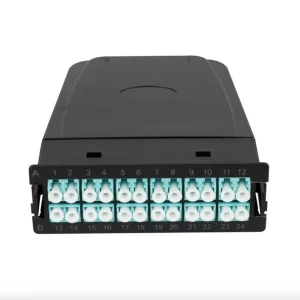
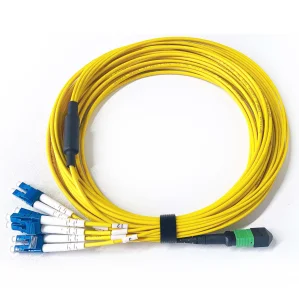
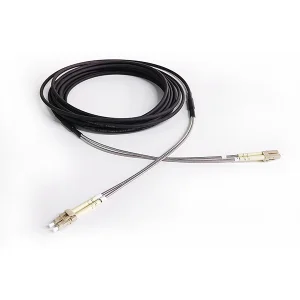
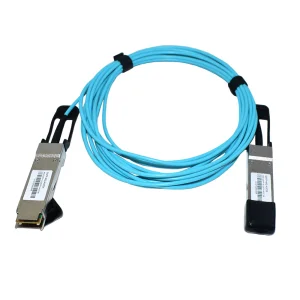
Complement your transceiver deployments with our high-density optical distribution and connection products.
 KOCENT OPTEC