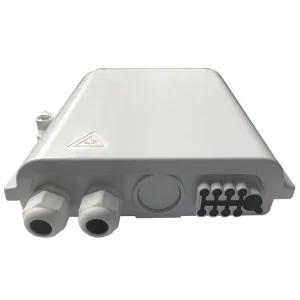
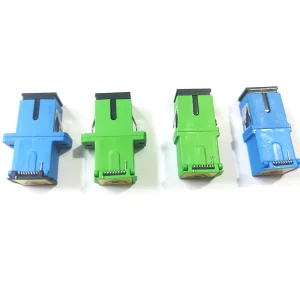
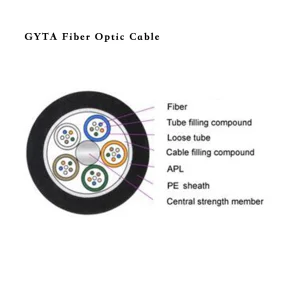
Explore our premium grade products designed to optimize cost and performance for enterprise networks, edge aggregation, and carrier backhauls.
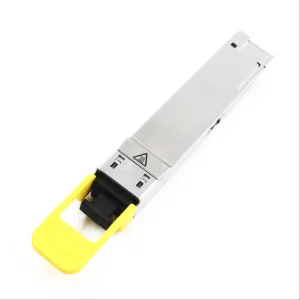
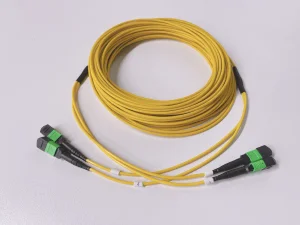
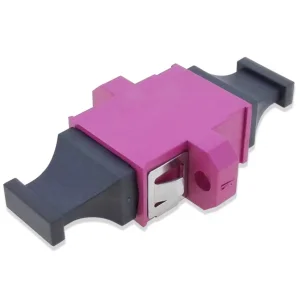
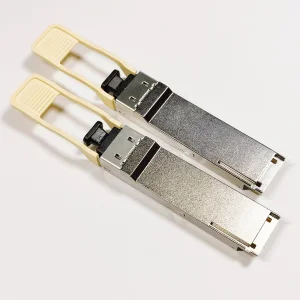
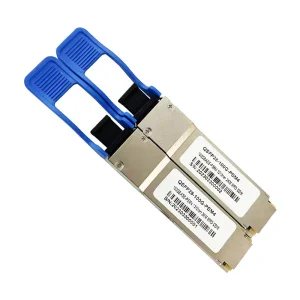
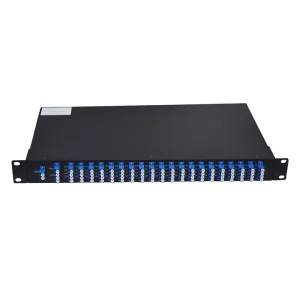
The 100G QSFP28 ER4 represents a critical design milestone in high-performance networking, allowing operators to span up to 40km of Single-Mode Fiber (SMF) without relying on costly inline EDFA (Erbium-Doped Fiber Amplifier) systems. Optimized to meet the demands of modern cloud architectures and metropolitan backhauls, the ER4 module converts 4 input channels of 25 Gbps electrical data into 4 channels of LAN WDM optical signals, multiplexing them into a single port for 100 Gbps optical transmission.
Unlike shorter-reach transceivers such as SR4 (which operates over multimode fiber) or LR4 (limited to 10km), the ER4 architecture integrates specialized Electro-absorption Modulated Lasers (EML) combined with high-sensitivity Avalanche Photodiode (APD) receivers. The use of EML transmitters allows precise wavelength control on the standard LAN WDM grid (1295.56nm, 1300.05nm, 1304.86nm, and 1309.14nm), suppressing chromatic dispersion penalties over the extended 40km link budget.
| Parameters | QSFP28 ER4 Technical Specifications | User Benefits & Network Impact |
|---|---|---|
| Wavelength Channels | LAN WDM (1295.56, 1300.05, 1304.86, 1309.14 nm) | Low dispersion over long-distance single mode fiber |
| Receiver Sensitivity | Exceeds -21 dBm (utilizing high-gain APD) | Guarantees error-free data transfer across 30km (no FEC) to 40km (with host FEC) |
| Form Factor | QSFP28 (Quad Small Form-factor Pluggable 28) | High density, hot-pluggable, and lower power consumption compared to CFP/CFP2 |
| Connector Interface | Duplex LC Interface | Compatible with standard structured single mode patch cords |
| Diagnostics | Digital Diagnostic Monitoring (DDM / DOM) | Real-time tracking of laser temp, bias current, and optical power |
By implementing a 100G ER4 solution, network engineers can achieve robust, high-bandwidth pipelines between geographically separated server locations while maintaining strict budget boundaries. For procurement managers sourcing from reliable cheap 100g er4 manufacturers, the goal is to align these high-level technical standards with economical production techniques to drive down cost-per-gigabit metrics.
As remote work, cloud hosting, AI computing pipelines, and 5G penetration scale globally, telecom backbones are facing massive data bottlenecks. Although next-generation 400G and 800G modules are dominating hyperscale data center cores, 100G optics remain the dominant choice for regional enterprise WANs, metro-access systems, and carrier edge networks. Here, the 100G ER4 acts as a reliable bridging technology.
From a commercial perspective, tier-2 telecom carriers, regional utilities, and governmental networks are actively migrating from legacy 10G networks directly to 100G. Standardizing on the 100G QSFP28 form factor is significantly more budget-friendly than upgrading whole architectures to 400G, which requires massive forklift upgrades of routers, switches, and patch panels. Because the ER4 module can cover large distances (up to 40km) without needing active regeneration sites, it dramatically lowers operational costs (OPEX) by avoiding site lease fees, electricity costs, and maintenance associated with remote repeater stations.
Links edge data sites to main regional offices up to 40km away, providing stable throughput and minimizing transport delay without needing external amplification.
Handles increased user plane traffic by sending cellular payloads from Remote Radio Heads (RRH) to centralized baseband units across expansive suburban rings.
Connects remote multi-building complexes, university networks, and municipal office rings into a unified, high-speed, private network without recurring dark fiber rental costs.
When sourcing cheap 100g er4 transceivers, international buyers often look to Chinese manufacturers to balance performance and affordability. The efficiency of China's optoelectronic factories is not based on compromise; rather, it is built on a mature manufacturing ecosystem, high levels of automation, and deep supply chain integration.
Key areas where Chinese suppliers optimize production include:
As a result, global procurement managers can secure high-reliability optical gear at a fraction of the cost compared to localized production hubs, while still meeting major optical and safety standards.
Understanding where to deploy the 100G ER4 helps optimize hardware investments. The following scenarios demonstrate how the transceiver solves real-world networking challenges:
In rural telecom setups, central offices are often separated by long distances, and intermediate repeater huts are impractical due to terrain or power availability. Deploying 100G ER4 transceivers allows operators to establish a direct link of up to 40km over standard single-mode fiber, ensuring reliable connectivity to remote communities with minimal infrastructure footprint.
Municipal networks and financial institutions require dedicated, low-latency backup paths between processing centers. The 100G ER4 provides the necessary reach and bandwidth to connect remote nodes on a fiber ring. Operating over a dedicated point-to-point fiber link helps prevent routing latency spikes and avoids security concerns associated with public cloud transport.
The high-speed networking sector is evolving rapidly. While 100G remains a foundational speed, several trends are shaping the future of long-reach optical transceivers:
To successfully purchase bulk 100G ER4 transceivers, procurement teams must look beyond the unit price. A structured approach to quality assurance is essential for long-term reliability:
1. Compatibility & EEPROM Customization: Switch vendors often use proprietary coding to lock out third-party modules. A reliable supplier should offer customized EEPROM programming, verifying compatibility with platforms like Cisco, Arista, Juniper, or Huawei before shipment.
2. Standard Testing Protocols: Every transceiver should undergo standard testing, including bit error rate (BERT) checks, optical eye diagram analysis, and temperature cycling in environmental chambers to prevent premature failure (infant mortality) on-site.
3. Compliance and Certifications: Ensure the manufacturer meets international standards, including RoHS for environmental safety, CE/FCC for electromagnetic interference, and IEEE 802.3ba/QSFP28 MSA guidelines for mechanical and electrical alignment.
Kocent Optec Limited, established in 2012 in Hong Kong as a hi-tech communication enterprise, is one of China's leading fiber optic termination product manufacturers and solution providers.
We are dedicated to developing and manufacturing fiber optic communication products ranging from passive to active categories for telecommunication networks, enterprise networks, and data centers.

By leveraging our extensive experience and production capacity built over the years, we aim to deliver optimal outcomes for our customers, helping them expand their core competencies and maintain a competitive edge. We emphasize customer collaboration, defining ourselves as a reliable partner in fiber optic connection solutions. We believe our differentiators are your key advantages.

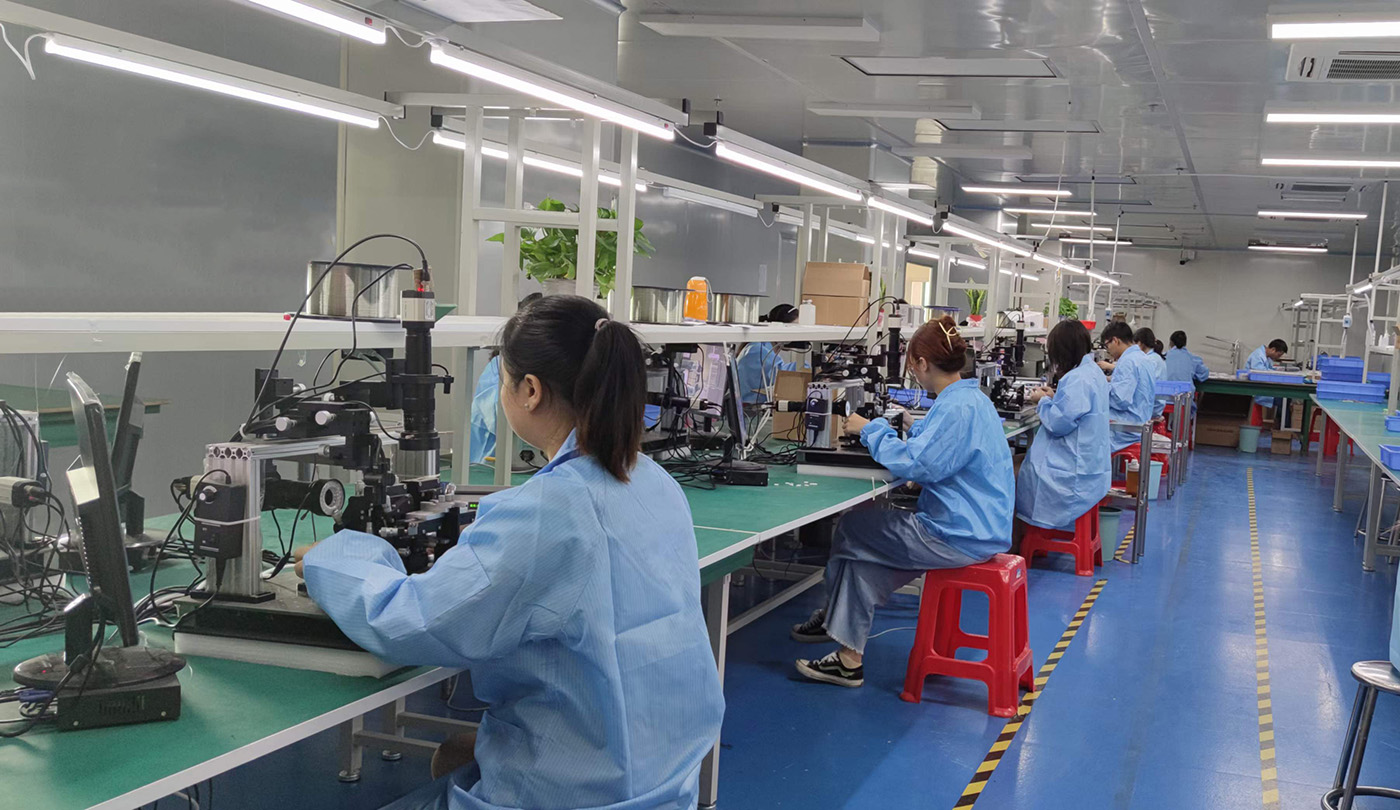
With more than 13 years of experience in manufacturing telecommunication fiber optic products, we strictly follow fiber optic industry standards. We use mature scientific methods to deliver your products on time and ensure that 100% of products are tested and inspected before shipment.
Years of sales and service experience have enabled us to win customers from different regions. Today, we have customers from East Asia, Southeast Asia, Middle East, Eastern Europe, Western Europe, Northern Europe, South America, North America, North Africa, and South Africa.
Win-win cooperation is our constant goal. Many of our OEM and ODM products have won Telecom Operator tenders and satisfy end-user requirements.
Our main terminal telecom operators include: SingTel, Vodafone, America Movil, Telefonica, Bharti Airtel, Orange, Telenor, VimpelCom, TeliaSonera, Saudi Telecom, MTN, Viettel, Bitel, VNPT, Laos Telecom, MYTEL, Telkom, Telekom, Entel, FiberTel, StarFiber, Ooredoo, Beeline, Azercell.
Expert answers to common questions about 100G QSFP28 ER4 transceivers, compatibility, and implementation.
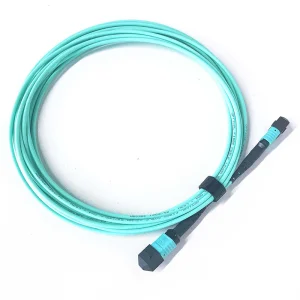
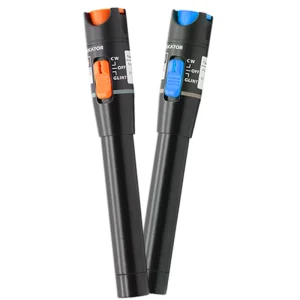
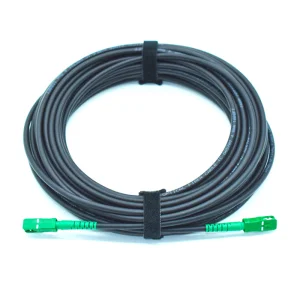
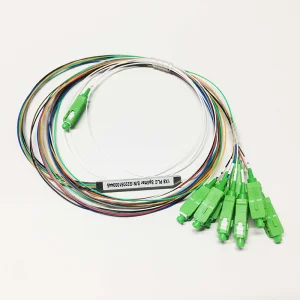
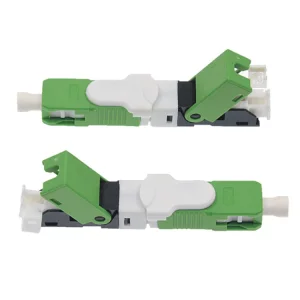
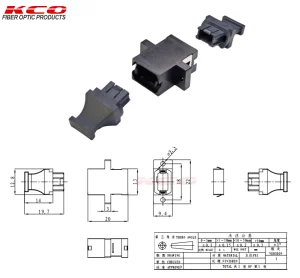
Explore our selection of passive splitters, drop cables, distribution systems, and adapters to complete your high-speed network deployment.
 KOCENT OPTEC