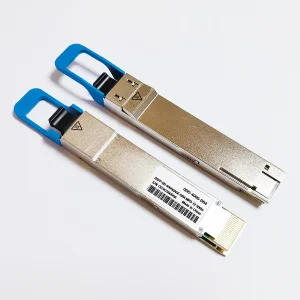
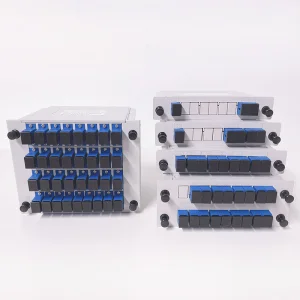
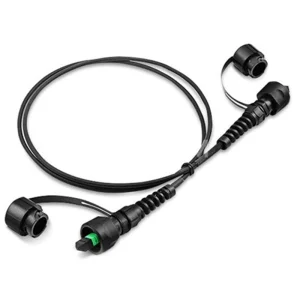
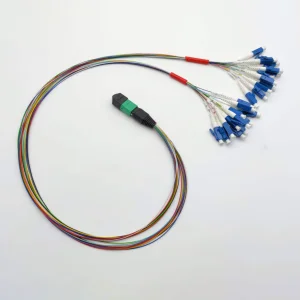
In the era of hyper-scale networking, migration bandwidth paths dictate enterprise infrastructure efficiency. Utilizing 40G QSFP+ to 10G SFP+ transition mechanisms allows data centers and telecom providers to optimize current assets while incrementally upgrading capacities.
The transition from 10G to 40G interfaces—and subsequently down-converting 40G interfaces to four separate 10G links—is a cornerstone protocol in high-density rack configurations. Using Quad Small Form-factor Pluggable Plus (QSFP+) transceiver modules breakout pathways helps bridge legacy aggregation layers with newer high-speed switch cores. Modern operations do not just require high throughput; they necessitate low latency, minimized power draw, and physical media versatility.
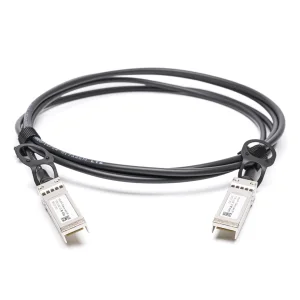
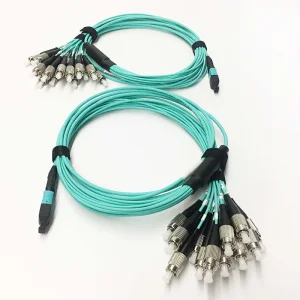
Breakout methodologies generally fall into three distinct physical layer structures: Direct Attach Copper Twinax Cables (DAC), Active Optical Cables (AOC), or optical transceivers coupled with MTP/MPO-to-LC fiber breakout harnesses. Selecting the ideal path depends on link distance, environmental conditions, and budget thresholds.
Today's 40G-to-10G optical breakout systems rely on highly precise optical sub-assemblies (OSAs). By utilizing 4x 10Gbps laser architectures within a single QSFP+ transceiver, networks achieve massive density improvements compared to using separate SFP+ modules. Industry developments center on reducing spectral degradation, maximizing electromagnetic interference (EMI) protection inside copper Twinax cables, and utilizing low-smoke zero-halogen (LSZH) jacketing for fire-safe containment.
Large-scale system integrators, public cloud providers, and institutional networks focus on minimizing overall cost-per-gigabit. However, they refuse to compromise on link reliability. Major procurement metrics prioritize compatibility across multi-vendor equipment blocks, low Bit Error Rates (BER), and high thermal tolerance in high-density configurations.
Globally, telecom operators and industrial data networks are encountering unexpected demand surges from localized edge facilities, IoT aggregations, and high-frequency trading platforms. This places enormous pressure on interconnect networks. Purchasing departments are moving away from proprietary OEM optical transceivers due to high markups. Instead, they seek reliable, MSA-compliant wholesale options that guarantee equivalent performance at a fraction of the cost.
Additionally, sustainable supply chains have transitioned from an environmental milestone to a core business operational metric. Modern procurers look for suppliers who comply with RoHS, CE, and FCC standards, and utilize energy-efficient optical configurations to reduce overall facility operating costs (PUE).
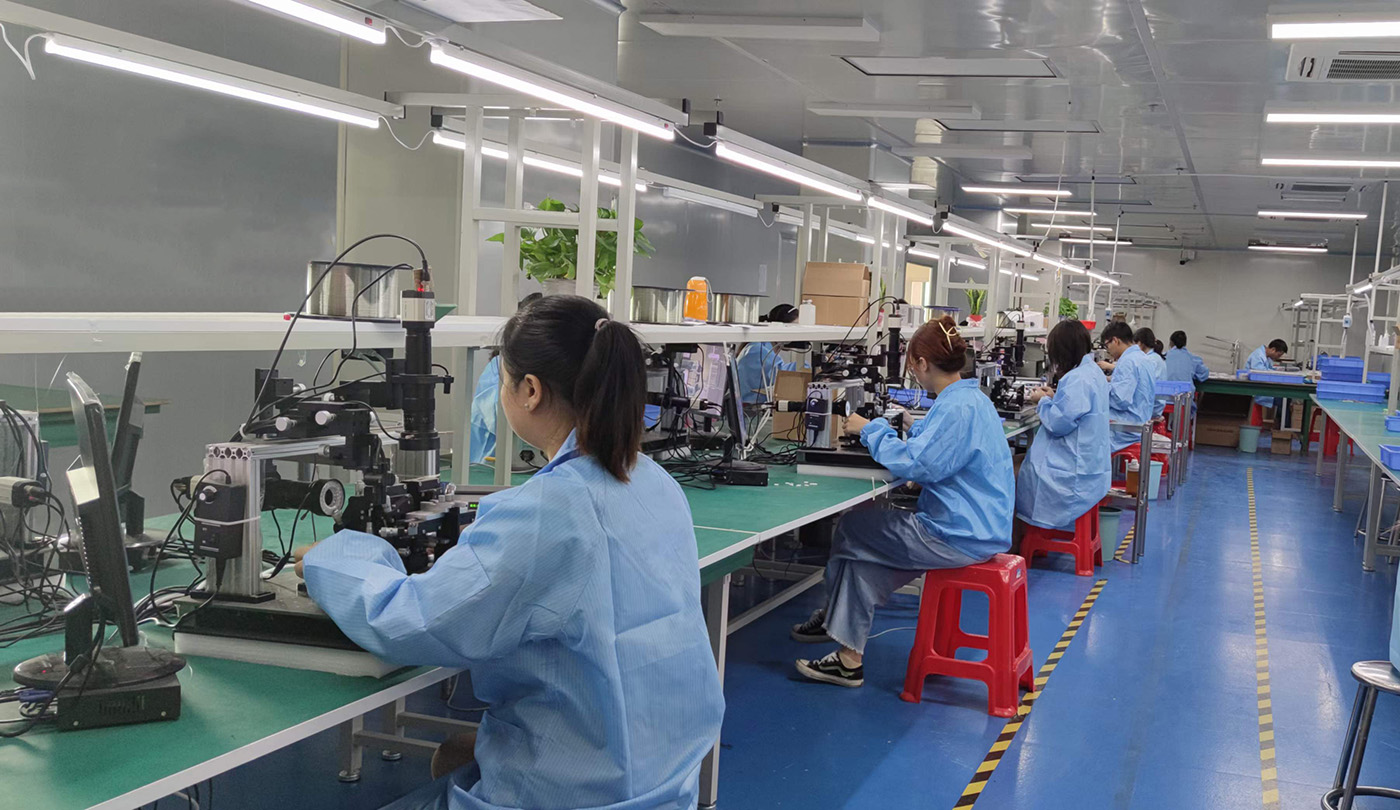
Optical transceivers and fiber distribution systems demand ultra-precise manufacturing tolerances. Chinese advanced fabrication centers rely on automated optical alignment and lean material pipelines to secure robust global logistics.
By blending advanced assembly processes with automated performance screening, Chinese manufacturing centers guarantee consistent output at wholesale scale. Every single batch of 40G QSFP+ transceivers and SFP+ direct-attach twinax cables is tested for signal integrity, hardware compatibility, and structural endurance. Standard test protocols utilize state-of-the-art Bit Error Rate Testers (BERT) and Digital Communication Analyzers (DCA) to verify eye diagrams, optical output power, and receiver sensitivity.
This automated quality assurance guarantees that custom orders—whether passive DACs or complex OM3 breakout patch cords—maintain structural integrity. The result is seamless integration with high-end enterprise routers and core switches, minimizing failure points in mission-critical networks.
Connecting regional enterprise operations to main cloud fabrics demands quick scaling. 40G to 10G breakout configurations allow installers to link core switch trunks to multiple distributed 10G servers without replacing the entire fiber panel footprint.
Base stations running multi-gigabit wireless protocols utilize SFP+ transceivers. Splitting 40G optical feeds into four 10G channels using high-reliability outdoor patch cables optimizes fiber routing on tower heads and macro sites.
Kocent Optec Limited establish in 2012 in Hongkong as a hi-tech communication enterprise, is one of China's leading fiber optic termination product manufacturer and solution provider.
We're dedicated to developing and manufacturing fiber optic communication products ranging from passive to active categories for telecommunication networks, enterprise networks and data centers.

By leveraging our extensive experience and excellent production capacity we gained over the years, we magnify the outcome for our valuable customers, which ultimately expands their core competencies and helps them outperform competitors. We place emphasis on customer collaboration, and we define ourselves as your valuable partner in fiber optic connection solutions. We believe our differentiators are your perceived advantages.
With more than 13 years of experience in manufacturing telecommunication fiber optic products, we follow strictly fiber optic industry standards by using mature scientific methods to deliver your products on time and ensure that 100% products are tested and inspected before shipment.
Years of sales and service experience have enabled us to win customers from different regions. Today, we have customers from East Asia, Southeast Asia, Middle East, Eastern Europe, Western Europe, Northern Europe, South America, North America, North Africa, and South Africa.
Win-win cooperation is our constant goal. Many our OEM and ODM products won the Telecom Operator tender and satisfy end-user request.
Our main terminal telecom operators include: SingTel, Vodafone, America Movil, Telefonica, Bharti Airtel, Orange, Telenor, VimpelCom, TeliaSonera, Saudi Telecom, MTN, Viettel, Bitel, VNPT, Laos Telecom, MYTEL, Telkom, Telekom, Entel, FiberTel, StarFiber, Ooredoo, Beeline, Azercell.

A 40G QSFP+ port features four independent transmit and receive channels, each running at 10.3125 Gbps. By using a breakout configuration—such as a QSFP+ to 4x SFP+ DAC cable, AOC, or an MTP/MPO patch cable connected to four LC duplex cables—the system routes each internal channel to a distinct SFP+ port on downstream switches, servers, or storage units.
Passive DAC breakout cables (like the SFP-H10GB-CU1M compatible series) contain no active circuitry and run directly off the host port power. They are limited to short distances, typically under 7 meters. Active DACs feature signal-conditioning electronics to boost signals, allowing thin-gauge copper cabling to span distances up to 10 meters.
Yes, most managed switches require specific hardware configurations. You must configure the physical QSFP+ port to run in breakout mode (e.g., using command line directives like 'channel-group' or 'split port') to divide the 40G interface into four independent 10G logical links.
Structured MPO/MTP patch cables coupled with high-density LC rack mount patch panels are ideal for spanning long distances across structured pathways. Unlike fixed-length DACs or AOCs, structured fiber allows you to clean, replace, and route fiber trunks independently from the transceivers, simplifying maintenance and upgrades.
 KOCENT OPTEC