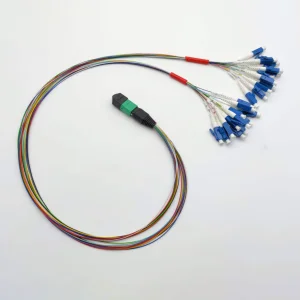
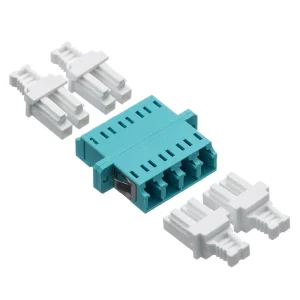
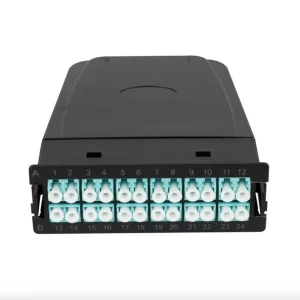
Explore our high-performance optical modules, high-density panels, and fan-out cabling assemblies engineered to telecom-grade standards.
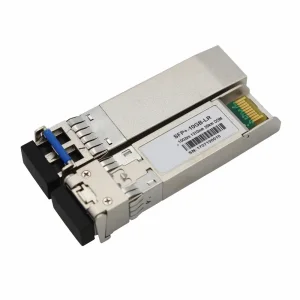
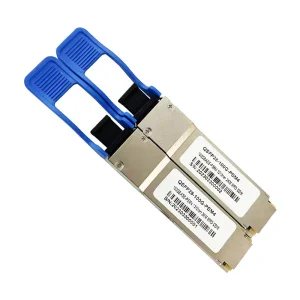
In modern telecommunications, optimization of infrastructure assets is paramount. Bidirectional (BiDi) SFP+ transceivers represent a crucial advancement in this area. Unlike standard SFP+ optical transceivers, which require two separate fibers to handle duplex communication (one for transmitting, one for receiving), BiDi SFP+ modules operate over a single strand of single-mode fiber (SMF).
This single-fiber duplex operation is achieved by integrating Wavelength Division Multiplexing (WDM) couplers directly inside the optical sub-assembly (OSA). This allows the device to split the transmit and receive signals into two distinct, non-interfering wavelengths (typically 1270nm and 1330nm).
BiDi SFP+ modules must always be deployed in complementary pairs. If your core switch is populated with a module transmitting at 1270nm and receiving at 1330nm (often designated as "U" or Upstream), the corresponding access switch at the remote end must feature a module transmitting at 1330nm and receiving at 1270nm (often designated as "D" or Downstream).
The global demand for high-speed network connectivity is expanding rapidly, driven by cloud computing, streaming services, and the rollout of 5G cellular systems. For network operators, municipal governments, and enterprise organizations, the cost of laying new optical fiber cable is a major capital expenditure (CAPEX). In metropolitan networks, the cost of digging trenches and deploying new fiber can range from $10,000 to over $100,000 per mile depending on the geography.
BiDi SFP+ transceivers resolve this bottleneck by doubling the capacity of existing fiber infrastructure instantly. By transitioning from traditional dual-fiber systems to single-fiber BiDi architectures, operators can reclaim 50% of their physical fiber plant. This reclaimed fiber can then be leased out as dark fiber, used for network expansion, or allocated for redundant link pathways, creating immediate operational benefits.
While 10G BiDi SFP+ remains a core technology for today's access and aggregation rings, the optical communication industry is charting a course toward even higher bandwidth. The migration pathway is driven by the rise of 5G eCPRI interfaces and edge compute architecture, which demand faster speeds over single-strand fiber configurations:
By leveraging mature silicon photonics and PAM4 (Pulse Amplitude Modulation) encoding, manufacturers are pushing single-fiber boundaries beyond what was previously possible, ensuring long-term utility for WDM platforms.
Next-generation transceivers integrate lasers and optical passive components onto a single silicon chip, improving reliability and reducing power consumption.
Enables doubling the data transfer speed within the same physical bandwidth using four distinct signal levels, scaling modules from 25G to 50G and 100G.
Provides critical tracking of optical output power, input power, temperature, and laser bias current, allowing proactive maintenance before link failures occur.
BiDi SFP+ modules are deployed in a variety of environments across the globe:
When evaluating suppliers and negotiating an OEM contract for BiDi SFP+ modules, procurement and engineering teams should review the following technical and economic details:
| Parameter / Option | Technical Details & Variations | Impact on Procurement Cost |
|---|---|---|
| Transmission Distance | 10km, 20km, 40km, 80km (options up to 120km via APD) | Shorter links (10-20km) utilize lower-cost FP/DFB lasers. Longer links (40km+) require EML lasers and APD receivers, which carry a cost premium. |
| Wavelength Pairs | Tx1270/Rx1330 (Upstream) & Tx1330/Rx1270 (Downstream) | Standard pairing. Custom wavelengths (e.g., Tx1490/Rx1550) are available but may have longer production lead times. |
| Operating Temperature | Commercial (0 to 70°C) vs. Industrial (-40 to 85°C) | Industrial-grade components require specialized burn-in testing and temperature compensation, typically increasing costs by 30-50%. |
| EEPROM Host Compatibility | Custom coding for Cisco, Juniper, Huawei, Arista, etc. | A reputable OEM manufacturer provides multi-platform EEPROM coding at no extra charge to ensure plug-and-play operation. |

Established in 2012 in Hong Kong as a hi-tech communication enterprise, Kocent Optec Limited has grown to become one of China's premier fiber optic termination product manufacturers and solution providers. We are dedicated to the design, development, and high-volume manufacture of optical communication products. Our portfolio spans passive components to active optical transceivers, serving telecommunication networks, enterprise networks, and cloud data centers worldwide.
With more than 13 years of manufacturing expertise, we adhere strictly to international fiber optic standards. We employ advanced scientific testing methods to ensure on-time delivery and guarantee that 100% of our products are fully tested and inspected before shipment.
Our dedication to quality and collaborative customer service has allowed us to partner with telecom operators and distributors across East Asia, Southeast Asia, the Middle East, Europe, South America, North America, and Africa.


We focus on mutual growth, and many of our custom OEM and ODM configurations have won tenders with major regional telecom operators. Our terminal customers include leading companies such as:
Get in touch with our sales team today to request custom pricing, technical specifications, or compatibility coding options.
Contact Our Technical Sales TeamSelect from our range of multiplexers, transceiver modules, custom patch cords, and fiber termination components.
 KOCENT OPTEC