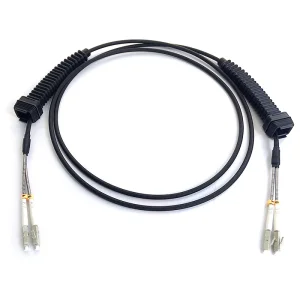
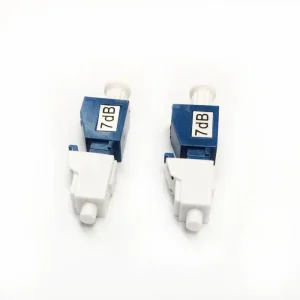
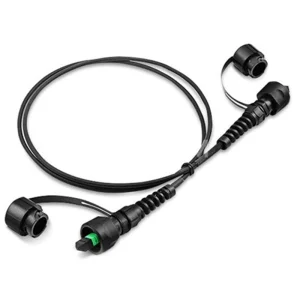
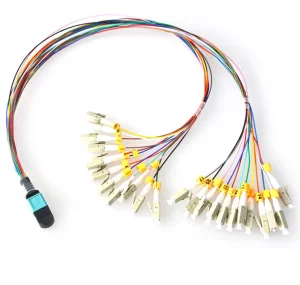
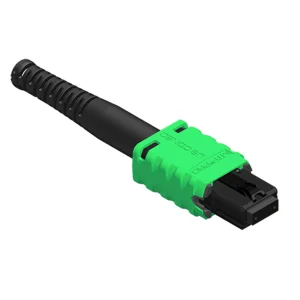
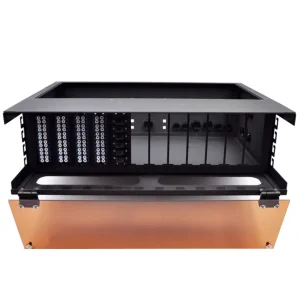
Enterprise hardware solutions deployed globally across carrier networks
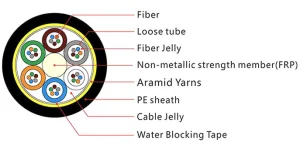
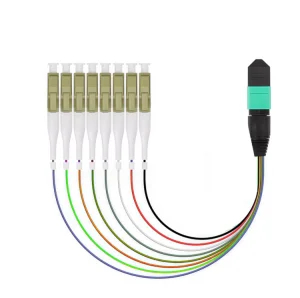
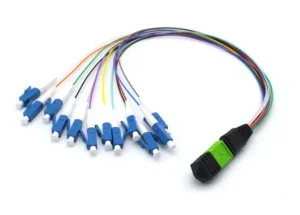
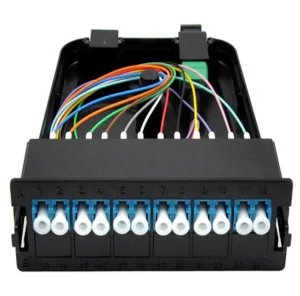
Established in Hong Kong in 2012, Kocent Optec Limited has emerged as one of China's premier high-tech telecommunication enterprises, specializing in the development, manufacturing, and global deployment of passive and active fiber optic network interfaces.
As modern data networks shift from legacy gigabit lines to ultra-low latency, high-density topologies, the component layer dictates system stability. At Kocent Optec, we build with this reality in mind. We operate at the intersection of material science and optoelectronic engineering, supplying global markets with high-precision fiber optic components optimized for extreme workloads.
Our capabilities span the complete active and passive communication range. From multi-fiber MTP/MPO systems to next-generation high-rate optical transceivers, our product portfolio serves as the core layer of global carrier backbones, hyperscale data farms, and high-frequency corporate environments.

By leveraging our extensive engineering experience and mature vertical supply chain integration, we maximize physical network performance for our customers. We do not design transceivers in isolation; we analyze how they operate within high-density panels, fiber trunks, and active networking switches to deliver seamless hardware integration.
Understanding the tectonic shift from legacy 10G architectures to 25G SFP28/DSFP optical interfaces across carrier and enterprise platforms.
The networking industry is transitioning away from traditional 10G connectivity models. While 10G SFP+ modules served as the foundation of enterprise local networks for over a decade, modern software-defined workloads, hyper-converged databases, and 5G wireless basebands require significantly more bandwidth. Upgrading directly to 40G QSFP+ or 100G QSFP28 requires redesigning switch backplanes, which increases deployment costs. This is where 25G SFP28 interfaces provide a cost-effective, high-bandwidth upgrade path.
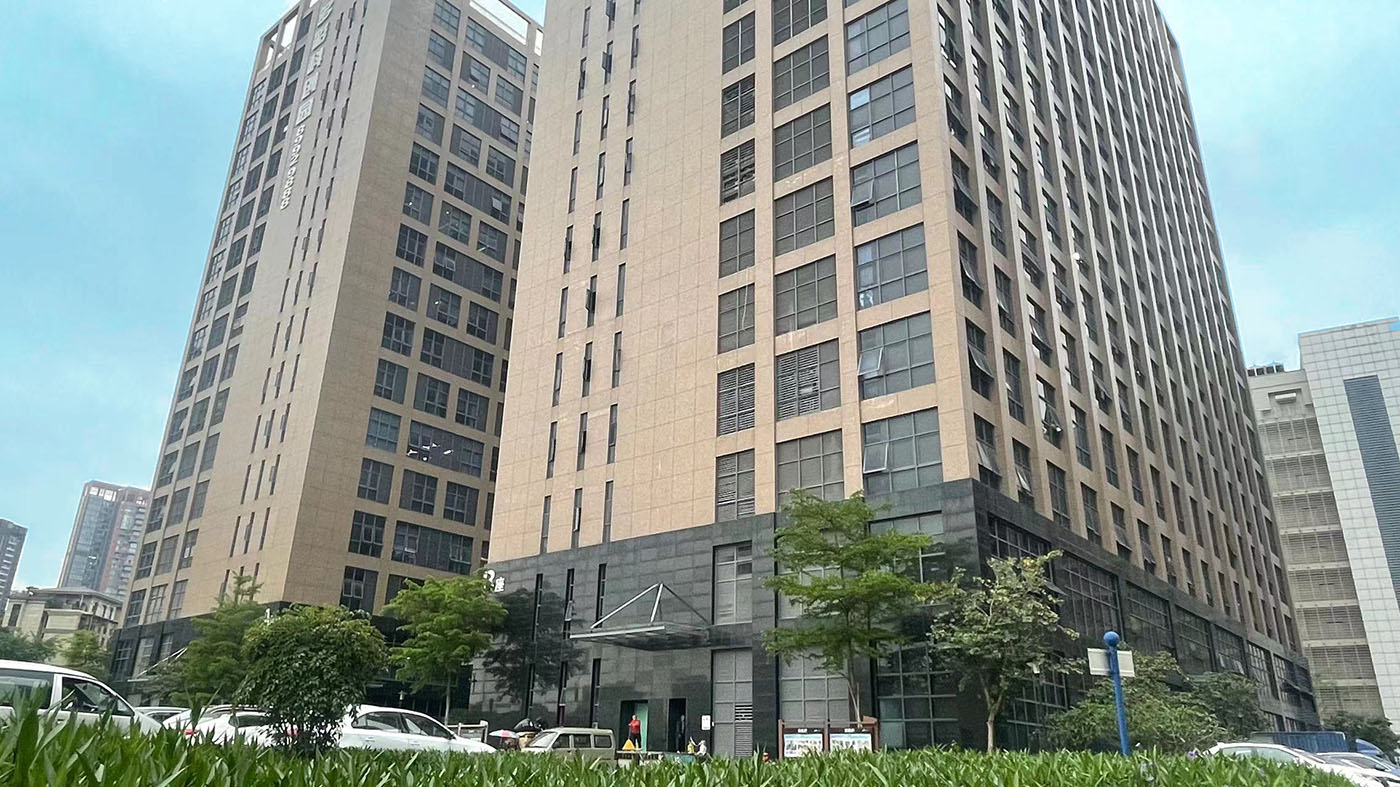
Modern data infrastructures run on single-lane 25G physical channel designs. By routing 25 Gbps of serial data over a single laser source, 25G SFP28 modules achieve 2.5 times the speed of legacy 10G interfaces. This transition path provides distinct advantages:
In addition, the rollout of 5G RAN (Radio Access Network) infrastructures has driven global demand for 25G transceivers. 5G fronthaul architectures utilize the eCPRI (Enhanced Common Public Radio Interface) protocol, requiring 25G speeds between baseband units (BBU/DU) and remote radio heads (RRH/RU). In these harsh outdoor setups, standard commercial transceivers are insufficient, driving the need for industrial-temperature 25G BiDi (Bidirectional) and WDM modules designed to operate reliably between -40°C and 85°C.
How specialized manufacturing infrastructure, advanced automation, and vertical component integration drive cost-performance efficiency.
China is the global hub for optoelectronic component production. The optical manufacturing clusters in Shenzhen, Wuhan, and Suzhou provide a robust end-to-end supply chain that enables OEMs to develop high-reliability transceivers at competitive price points.
Direct proximity to laser diode fabs (VCSEL, DFB, EML), TOSA/ROSA packaging houses, and specialized PCB assemblers reduces logistical lead times and component overhead costs.
Deploying automated die bonding, active optical coupling, and computerized aging systems minimizes human error, resulting in consistent signal integrity and high production yields.
Our engineering team offers custom EEPROM coding, enabling full hardware compatibility across host equipment from vendors like Cisco, Nokia, Juniper, Huawei, and Arista.
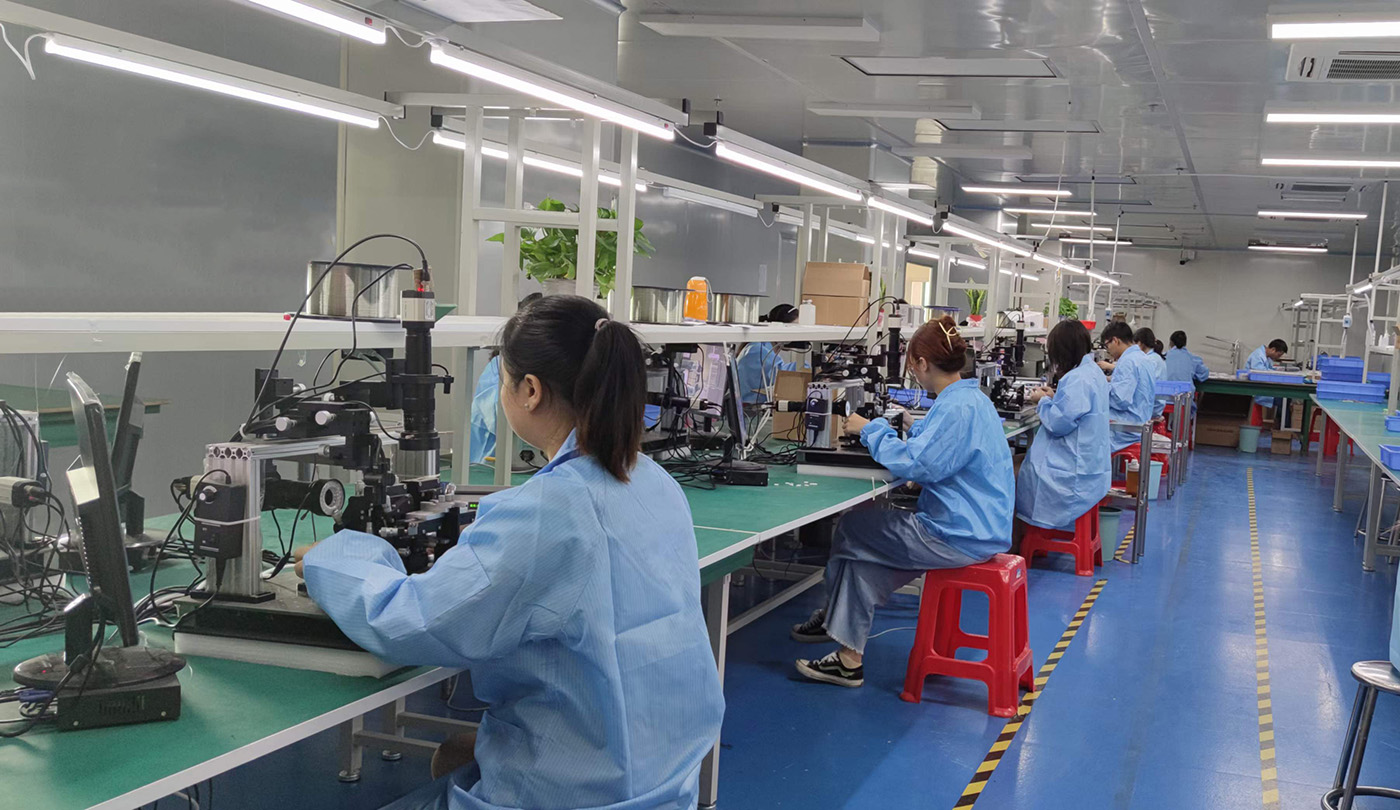
At Kocent Optec, we utilize this established regional ecosystem to streamline production processes. Our assembly lines are housed in Class 10,000 cleanrooms and equipped with automated optical alignment benches.
To ensure field reliability, every batch undergoes temperature cycling and high-stress burn-in processes. By optimizing production workflows, we can scale to meet large-volume orders while maintaining consistent hardware quality.
How 25G optical transceivers operate within modern high-performance networking architectures.
Optical networks are not one-size-fits-all systems. Deployments must be optimized based on transmission distance, environment, and physical fiber limitations. Below are key scenarios where our OEM 25G transceivers are commonly deployed:
Modern leaf-spine data center layouts utilize 25G links at the leaf-to-server layer, routing back to 100G or 400G spine switches. Using SFP28 SR (Short Range) VCSEL-based transceivers over OM3/OM4 multi-mode fiber allows operators to scale bandwidth within server racks while keeping hardware costs and power consumption low.
Outdoor wireless deployments require components that can withstand extreme environments. SFP28 LR (Long Range) and BiDi (Bidirectional) transceivers transmit optical signals over single-mode fiber up to 10km or 20km. BiDi modules transmit and receive on a single fiber core using separate wavelengths (e.g., 1270nm and 1330nm), allowing operators to double their physical fiber capacity instantly.
In financial trading and edge compute networks, latency is a critical factor. Standard copper DACs (Direct Attach Cables) are effective for short intra-cabinet runs but add weight and have distance limitations. Using SFP28 AOCs (Active Optical Cables) or low-latency 25G SR transceivers provides the speed and range needed for edge compute sites while maintaining low signal-processing times.
An overview of the cost structures and technical variables that influence pricing for wholesale 25G transceiver procurement.
Optical transceiver pricing depends on several design and engineering choices, including internal laser components, transmission distance, operational temperature requirements, and vendor compatibility coding. Multi-mode options using VCSEL lasers are typically the most budget-friendly, while long-range single-mode modules using DFB or EML lasers carry a higher price point.
| Transceiver Type | Laser Source Type | Fiber Media | Transmission Distance | Operational Temp | Est. OEM Price Range (USD) |
|---|---|---|---|---|---|
| 25G SFP28 SR | 850nm VCSEL | MMF (OM3/OM4) | Up to 100m / 70m | Commercial (0°C to 70°C) | $9.50 - $14.50 |
| 25G SFP28 LR | 1310nm DFB | SMF (G.652) | Up to 10km | Commercial / Industrial | $22.00 - $35.00 |
| 25G SFP28 BiDi | 1270Tx/1330Rx DFB | SMF (Single Core) | 10km / 20km | Industrial (-40°C to 85°C) | $38.00 - $55.00 |
| 25G SFP28 CWDM | CWDM DFB (1270-1370nm) | SMF (G.652) | Up to 10km / 20km | Industrial (-40°C to 85°C) | $45.00 - $68.00 |
| 25G SFP28 ER | 1310nm EML + APD Receiver | SMF (G.652) | Up to 30km / 40km | Commercial (0°C to 70°C) | $95.00 - $130.00 |
Disclaimer: The prices listed above serve as a general reference for high-volume OEM/ODM projects. Custom requirements, compatibility coding, and component market fluctuations will affect final pricing. For formal project estimates, please contact our engineering sales department.
Our OEM and ODM passive and active fiber components meet the stringent requirements of global tier-1 telecom operators.
Answering common technical questions related to 25G SFP28 hardware, system compatibility, and physical deployment.
A: Yes, in most configurations. SFP28 transceivers share the same mechanical dimensions and pin layouts as SFP+ ports. SFP28 ports are designed to be backward compatible with 10G SFP+ modules. However, running an SFP28 module in an older 10G port requires manually configuring the port speed to 10G within the switch OS, as auto-negotiation is not supported by all systems.
A: DML (Directly Modulated Laser) modules modulate the laser source directly via electrical signals, which is a cost-effective design suitable for shorter links (up to 10km). EML (Electro-absorption Modulated Laser) modules use an external modulator to control the light output, resulting in lower chromatic dispersion and cleaner signals over longer distances (up to 20km-40km).
A: During production, the transceiver's onboard EEPROM is flashed with vendor-specific diagnostic code in compliance with SFF-8472 standards. This ensures the host switch recognizes the transceiver's serial number, part number, and DDM (Digital Diagnostic Monitoring) parameters, preventing product lock-out errors.
A: The IEEE 802.3by standard requires FEC to maintain signal integrity over 25G links. FEC detects and corrects bit errors caused by dispersion and signal degradation. Both the transceiver and the switch port must have matching FEC configurations (typically RS-FEC or FC-FEC) for the link to successfully negotiate and connect.
A: BiDi transceivers combine transmission (Tx) and reception (Rx) onto a single fiber strand using wavelength-division multiplexing (WDM). By using two distinct wavelengths (such as 1270nm and 1330nm), BiDi modules cut the required fiber infrastructure in half, helping operators reduce costs and maximize their existing physical plant footprint.
A: Commercial-grade transceivers are rated to operate from 0°C to 70°C and are designed for climate-controlled indoor data centers. Industrial-grade transceivers are built with hardened internal components and undergo temperature testing to operate reliably between -40°C and 85°C, making them suitable for outdoor 5G base stations and industrial networking environments.
Additional hardware solutions for core transport and interconnect networks
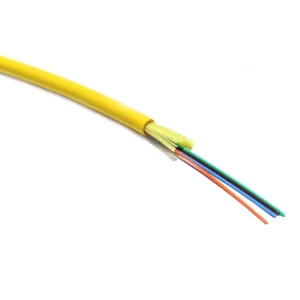
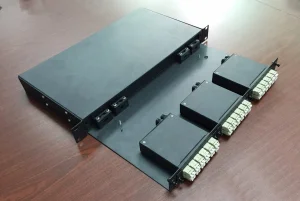
Ensure network reliability with our carrier-tested optical hardware. Get in touch with our engineering team for technical evaluations, custom EEPROM firmware mapping, and project-specific pricing.
Contact Engineering Sales KOCENT OPTEC