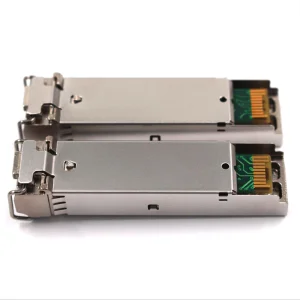
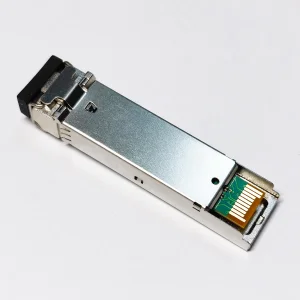
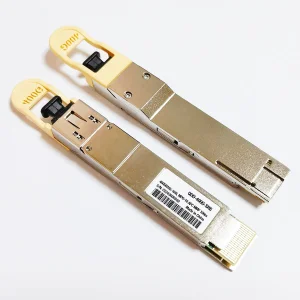
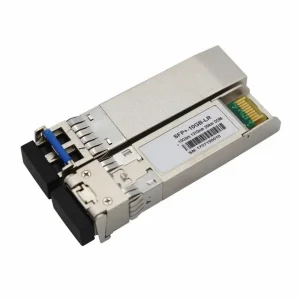
In the rapidly changing landscape of global telecommunications, the 10 Gig SFP+ (Small Form-factor Pluggable Plus) transceiver remains the absolute workhorse of enterprise local area networks (LANs), storage area networks (SANs), and metropolitan backhauls. Despite the aggressive deployment of 100G and 400G architectures at the core levels of hyperscale data centers, 10G networks continue to scale exponentially at the edge. The demand is driven by the rise of 5G cellular infrastructure, edge computing nodes, and the massive deployment of high-throughput industrial IoT devices.
Globally, enterprise procurement strategies have shifted from relying solely on major equipment vendors (such as Cisco, Juniper, or Arista) to sourcing directly from qualified OEM factories. By integrating third-party MSA (Multi-Source Agreement) compliant modules, companies bypass the steep markups imposed by brand OEMs, saving up to 70% in capital expenditure (CAPEX) without sacrificing network reliability or warranty conditions.
Compliant with standard multi-source agreements ensuring interoperability across multi-vendor switch architectures, reducing network lock-in risks.
Bypasses intermediary supply chains, giving operators direct access to volume factory pricing and customized bulk configurations.
Optimized internal physical layer (PHY) chipsets ensure sub-microsecond latency, crucial for algorithmic trading and cloud routing.
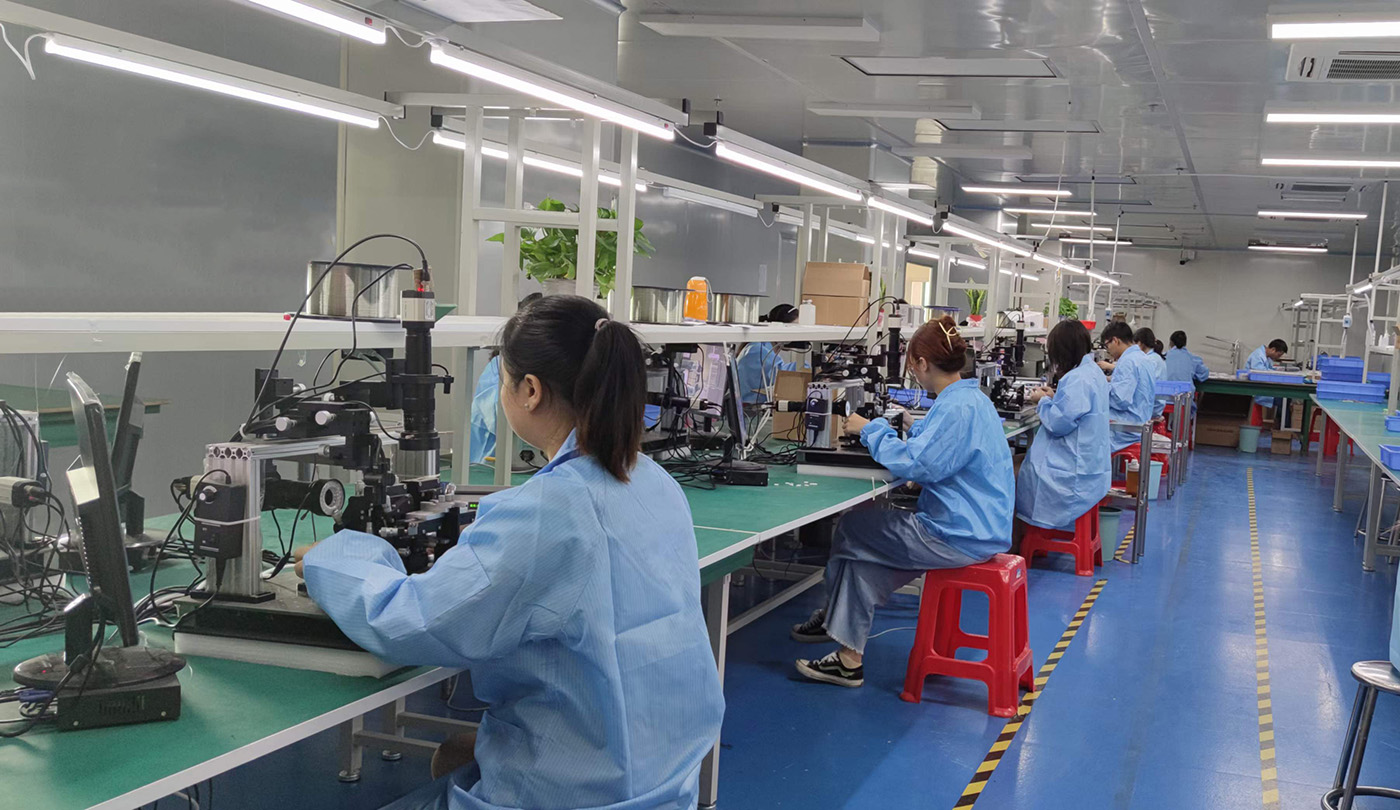
The dominance of China-based manufacturers in the optical communication sector is not just a matter of labor costs; it is a manifestation of vertical supply chain integration and mature engineering ecosystems. Factories specializing in SFP+ manufacturing leverage automated Chip-on-Board (COB) packaging, high-precision active alignment machines, and advanced robotic testing bays to maintain defect rates under 100 DPPM (Defects Per Million Opportunities).
From silicon photonics chips and optical sub-assemblies (TOSA/ROSA) to housing castings and printed circuit board assemblies (PCBAs), all components are sourced within a cluster of highly specialized industrial parks in southern China. This concentration enables unprecedented agility. Design changes, prototyping, and compatibility configurations can be validated and implemented in days rather than months. Moreover, raw material procurement economies of scale ensure that China factories offer unbeatable cost models reflected in their competitive wholesale pricelists.
| Transceiver Class | Wavelength (nm) | Fiber Type | Max Distance | Laser Source | Diagnostic Support |
|---|---|---|---|---|---|
| 10G SFP+ SR | 850 nm | Multi-mode (OM3/OM4) | 300 m / 400 m | VCSEL | DOM / DDM Enabled |
| 10G SFP+ LR | 1310 nm | Single-mode (SMF) | 10 km | DFB Laser | DOM / DDM Enabled |
| 10G SFP+ ER | 1550 nm | Single-mode (SMF) | 40 km | EML Laser | DOM / DDM Enabled |
| 10G SFP+ ZR | 1550 nm | Single-mode (SMF) | 80 km | Cooling EML | DOM / DDM Enabled |
Kocent Optec Limited, established in 2012 in Hong Kong as a hi-tech communication enterprise, is one of China's leading fiber optic termination product manufacturers and solution providers.
We are dedicated to developing and manufacturing fiber optic communication products ranging from passive to active categories for telecommunication networks, enterprise networks, and data centers. By leveraging our extensive experience and excellent production capacity we gained over the years, we magnify the outcome for our valuable customers, which ultimately expands their core competencies and helps them outperform competitors. We place emphasis on customer collaboration, and we define ourselves as your valuable partner in fiber optic connection solutions.

With more than 13 years of experience in manufacturing telecommunication fiber optic products, we strictly follow fiber optic industry standards by using mature scientific methods to deliver your products on time and ensure that 100% of our products are thoroughly tested and inspected before shipment.
Our commitment is to quality first. All transceivers undergo rigorous host-switch compatibility validation, optical eye-diagram analysis, and temperature chamber testing before receiving their final quality assurance seal.

Years of sales and service experience have enabled us to win customers from different regions. Today, we have customers from East Asia, Southeast Asia, Middle East, Eastern Europe, Western Europe, Northern Europe, South America, North America, North Africa, and South Africa.
We believe our differentiators are your perceived advantages. Win-win cooperation is our constant goal. Many of our OEM and ODM products have successfully won Telecom Operator tenders and satisfy strict end-user requests across the globe.
Our OEM and ODM components are deployed in networks managed by world-class telecommunication providers:
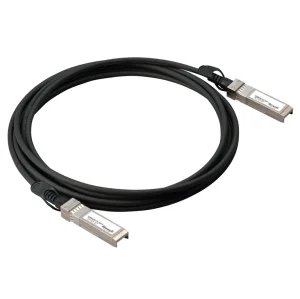
1. High-Density Enterprise Core Aggregation: In modern corporate campuses, 10G SFP+ transceivers serve as the critical uplink connecting access switches to the core network layer. For these topologies, using Cisco Compatible SFP+ Direct Attach Copper Twinax Cables is highly advantageous for short-distance rack configurations due to their near-zero latency, low power usage, and zero heat generation.
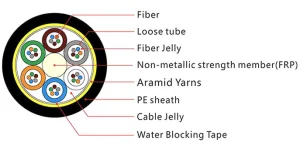
2. Industrial ISP & Metropolitan Backhaul: For long-distance outdoor environments, telecommunication infrastructure requires high-reliability Single-mode SFP transceivers and robust physical media. Single-mode transceivers operating at 1310nm or 1550nm are deployed in conjunction with ADSS (All-Dielectric Self-Supporting) Aerial Outdoor Cables. These installations must survive harsh climates, high wind loads, and electromagnetic interference from parallel high-voltage transmission lines.
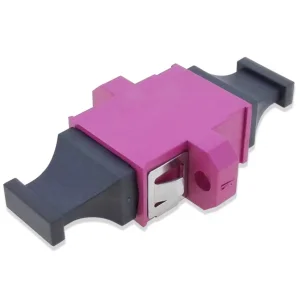
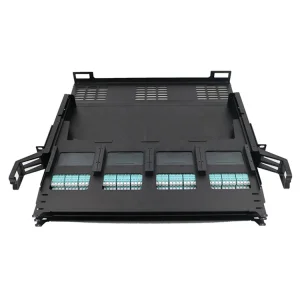
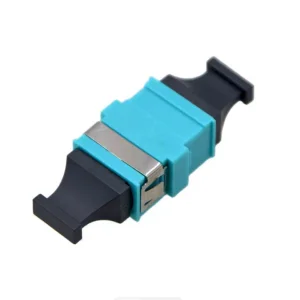
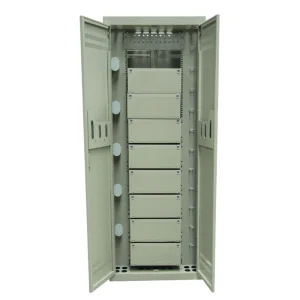
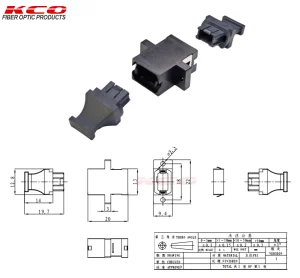
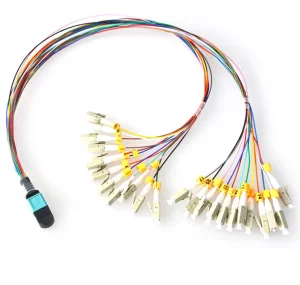
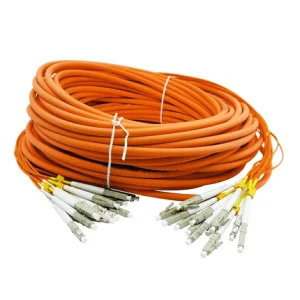
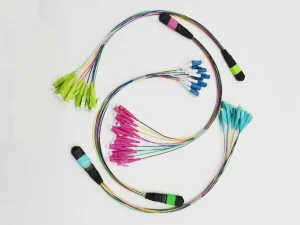
3. Data Center MPO/MTP High-Density Cabling: In dense cloud server setups, the migration toward higher-bandwidth switches relies heavily on structured cabling frameworks. This is where OM4 Aqua MPO fiber optic couplers, MTP-16 fiber adapters, and High-Density MPO Patch Panels are used. They aggregate multiple 10G channels into cohesive 40G, 100G, or 400G pathways using MTP-to-LC fanout cables. This structural approach ensures clean cabling layout, fast air circulation, and minimizes insertion loss (down to elite levels of 0.15dB).
OEM pricelists are determined by the target distance (wavelength and laser type: VCSEL for SR is cheaper, whereas DFB/EML lasers for LR/ER/ZR are more expensive), target switch compatibility software requirements, ordering volume, and component class (standard commercial 0°C to 70°C vs. industrial-grade -40°C to 85°C). High-precision laser alignment and domestic component sourcing inside China factories help reduce base costs significantly.
A standard 10G SFP+ module cannot run at 1G in a legacy SFP slot, as SFP slots do not support the required signaling rate. However, most SFP+ ports on modern switches are backward compatible and can accept standard 1G SFP transceivers, though they will scale down to 1G speeds. It is important to configure the port speeds on the switch OS interface accordingly.
DOM (Digital Optical Monitoring) or DDM (Digital Diagnostics Monitoring) is a critical feature integrated into SFP+ circuitry. It enables real-time monitoring of transceiver parameters, including optical TX power, optical RX power, module temperature, laser bias current, and supply voltage. Network engineers use this telemetry data to predict component failure, isolate link issues, and avoid unplanned network downtime.
Kocent Optec utilizes a specialized compatibility test center. Each transceiver's EEPROM is coded and flashed with the precise vendor-specific configurations (such as Cisco, Juniper, HP, Arista, etc.). The modules are then physical-link tested on actual brand switches in our QA laboratory to verify 100% interoperability and ensure no system alerts or error flags are generated.
Standard MPO/MTP connectors have a typical insertion loss of 0.35dB to 0.75dB. Elite (or Low-Loss) MPO/MTP connectors use higher-precision optical alignment pins and ferrule processing to achieve a maximum insertion loss of 0.15dB. This is critical in high-density data center architectures where multiple connection points (patches) are cascaded, helping keep the total link budget within acceptable parameters.
 KOCENT OPTEC