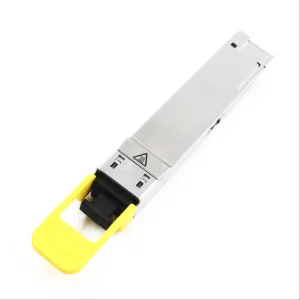
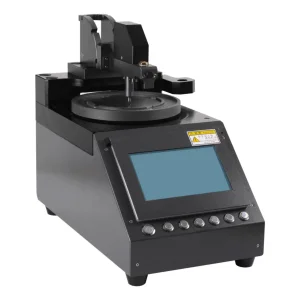
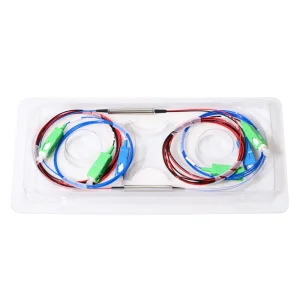
Explore our industrial-grade, certified components designed for hyper-scale bandwidth expansion and high-speed data transmission networks.
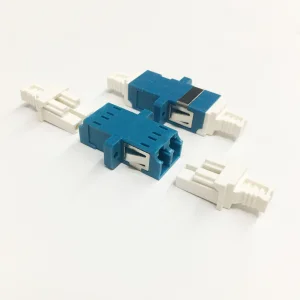
The optical networking landscape continues to scale rapidly. Understanding the architectural mechanics, electrical interfaces, and transceiver variations is vital for structural compatibility and strategic deployment.
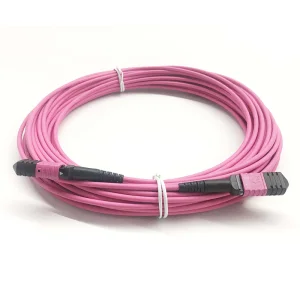
40GBASE-SR4 utilizes parallel fiber ribbons, sending 4 separate 10G signals on individual fiber channels over Multimode Fiber (MMF). Typically operating at 850nm, this path uses MPO/MTP-12 connector interfaces for cost-effective short-reach requirements, supporting distances up to 150m over OM4 media.
40GBASE-LR4 relies on Course Wavelength Division Multiplexing (CWDM) technology to combine four wavelengths (1271, 1291, 1311, and 1331nm) onto a single LC duplex Single-Mode Fiber (SMF) link. This allows high-density backbones to achieve 10km limits without requiring custom multi-fiber pathways.
40G BiDi (Bidirectional) modules utilize dual-wavelength systems over standard OM3/OM4 duplex LC fibers, enabling migration paths directly from 10G to 40G without upgrading existing patch panels, drastically lowering initial infrastructure deployment cost.
To provide clear data visualization, network architects can refer to the operational parameters below:
| Transceiver Type | Wavelength (nm) | Connector Type | Fiber Type | Max Distance Limit | Power Consumption |
|---|---|---|---|---|---|
| 40GBASE-SR4 | 850nm VCSEL | MPO / MTP-12 | MMF (OM3 / OM4) | 100m (OM3) / 150m (OM4) | < 1.5 W |
| 40GBASE-LR4 | 1271, 1291, 1311, 1331 (CWDM) | Duplex LC | SMF (G.652) | 10 km | < 3.5 W |
| 40GBASE-ER4 | 1271, 1291, 1311, 1331 (CWDM) | Duplex LC | SMF (G.652) | 40 km (with APD) | < 4.0 W |
| 40GBASE-BiDi | 850nm / 900nm | Duplex LC | MMF (OM3 / OM4) | 100m (OM3) / 150m (OM4) | < 2.0 W |
Establish in 2012 in Hongkong as a hi-tech communication enterprise, Kocent Optec Limited is one of China's leading fiber optic termination product manufacturer and solution provider.
We are dedicated to developing and manufacturing fiber optic communication products ranging from passive to active categories for telecommunication networks, enterprise networks and data centers. Over the past decades, we have continuously scaled up our capabilities to deliver state-of-the-art optical interfaces and assemblies that meet rigorous international industry standards.
By leveraging our extensive experience and excellent production capacity we gained over the years, we magnify the outcome for our valuable customers, which ultimately expands their core competencies and helps them outperform competitors. We place emphasis on customer collaboration, and we define ourselves as your valuable partner in fiber optic connection solutions. We believe our differentiators are your perceived advantages.

With more than 13 years of experience in manufacturing telecommunication fiber optic products, we follow strictly fiber optic industry standards by using mature scientific methods to deliver your products on time and ensure that 100% products are tested and inspected before shipment.
Our core operations are built upon robust quality control frameworks including ISO9001, ISO14001, and comprehensive environmental compliance guidelines. Every active transceiver module goes through comprehensive automated testing routines including Bit Error Rate testing (BERT), optical eye pattern validation, temperature cycling chambers, and vendor-specific compatibility code insertion.

Years of sales and service experience have enabled us to win customers from different regions. Today, we have customers from East Asia, Southeast Asia, Middle East, Eastern Europe, Western Europe, Northern Europe, South America, North America, North Africa, and South Africa.
Win-win cooperation is our constant goal. Many of our OEM and ODM products won the Telecom Operator tender and satisfy end-user request. Our products are widely deployed in long-haul transport layers, Metro networks, and Tier-1 hyper-scale data centers.
SingTel, Vodafone, America Movil, Telefonica, Bharti Airtel, Orange, Telenor, VimpelCom, TeliaSonera, Saudi Telecom, MTN, Viettel, Bitel, VNPT, Laos Telecom, MYTEL, Telkom, Telekom, Entel, FiberTel, StarFiber, Ooredoo, Beeline, Azercell.
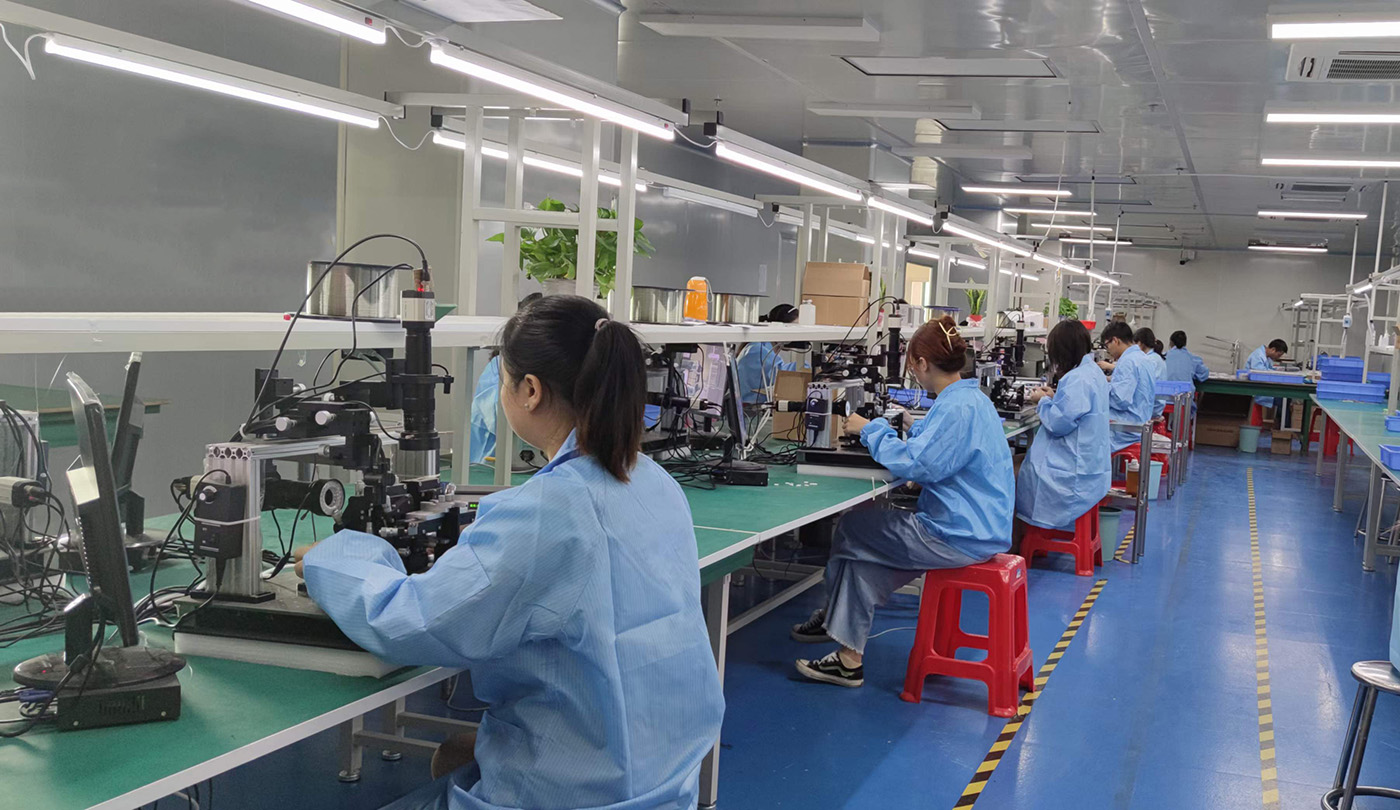
Manufacturing high-speed optical transceivers at scale requires robust automation, deep component ecosystem integration, and uncompromising quality assurance systems.
Years Manufacturing Experience
Pre-Shipment Tested & Inspected
Global Telecom Carriers Served
Compatibility Failures Target
Our automated die attachment and optical sub-assembly alignment lines ensure high yield rate and consistent physical layer specifications. Automation allows us to eliminate optical drift and human assembly error, providing stable transceiver options for critical communication nodes.
By operating inside China's preeminent high-tech manufacturing corridors, Kocent Optec manages direct partnerships with tier-1 laser, receiver, and micro-controller suppliers. This strategic positioning limits supply chain disruptions and translates directly to competitive pricing models for our procurement partners.
Each active transceiver undergoes structural stress tests in our environmental chambers. This includes elevated temperature testing, signal integrity evaluation, and real-time switch stack inter-operability simulation across multiple switch models like Cisco Nexus, Juniper EX/QFX, and Arista networks.
From cloud scale environments to carrier long-haul networks, 40G systems provide the high-performance bridging layer required to aggregate multi-gigabit connections.
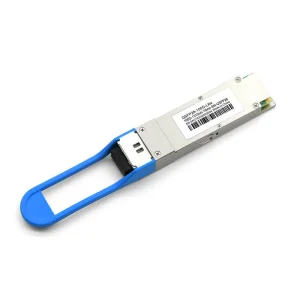
High-density 40G QSFP+ transceivers link leaf-spine network topologies. By utilizing single-mode fibers with CWDM technology, data centers easily manage high data volume inter-site transitions up to 10km or 40km distances without routing congestion.
Telecom operators aggregate regional user traffic via active switch platforms. Our carrier-grade 40G transceivers guarantee low latency, low power consumption profile, and optimal optical link margins, complying with strict telecom operator standards.
Enables medium to large enterprise networks to upgrade from traditional 10G to 40G/100G cores. Using cost-effective MPO-12 systems or BiDi optical links, corporate campuses achieve modern throughput without re-cabling overhead.
For scientific research compute clusters, ultra-low latency optical transceivers are critical. Minimizing physical layer latency and jitter, our QSFP+ range aids massive storage area networks (SAN) and computational pipelines.
As traffic demands double every two years, the optical transceiver sector is undergoing massive paradigm shifts from traditional NRZ optical formats to high-complexity PAM4 and coherent modulation.
Leveraging standard 10Gbps or 25Gbps Non-Return-to-Zero (NRZ) lanes. Excellent stability, low cost, widely adopted in standard corporate routing infrastructure and carrier access links.
Employing 4-Level Pulse Amplitude Modulation (PAM4) to double bandwidth capacity. Demands modern DSP chips and high-performance clock data recovery (CDR) architectures to resolve optical dispersion and noise.
Merging lasers directly onto silicon dies (Silicon Photonics). Highly integrated designs reduce footprint and lower thermal emission. Coherent optics are utilized for long-distance DWDM metro link runs.
Transitioning from pluggable transceivers to co-packaged optics mounted directly on switch circuit boards, bringing optical transceivers and switches together to minimize power losses in hyperscale cloud environments.
Network reliability is non-negotiable. Compatibility failures or optical drops can bring enterprise environments down, costing organizations millions in potential losses.
Each switch brand uses distinct software check routines for optical modules. Kocent Optec features a proprietary database of vendor codes (Cisco, Juniper, HP, Dell, Huawei, Extreme, Netgear, and more). We flash custom firmware on our transceivers to guarantee 100% plug-and-play validation.
Digital Diagnostic Monitoring (DDM) allows operators to monitor critical real-time stats including transceiver temperature, supply voltage, laser bias current, transmitted optical power, and received optical power, facilitating proactive link troubleshooting.
Our production facilities maintain compliance with CE, FCC, RoHS, FDA, and TUV certificates. Kocent Optec modules ensure safe laser emission levels (Class 1 Laser Safety) and utilize materials that are environment-friendly.
Find authoritative answers regarding the procurement, application, installation, and deployment of 40G QSFP+ transceivers and fiber systems.
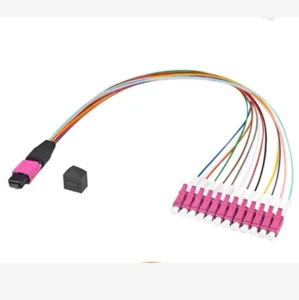
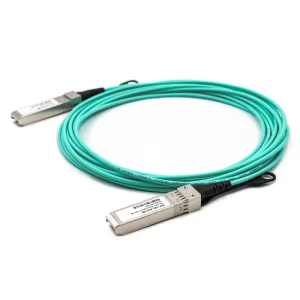
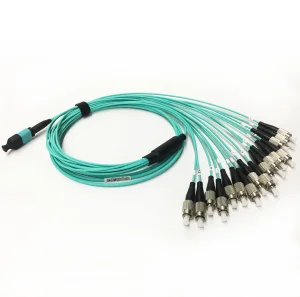
A: Yes. This is achieved using QSFP+ to 4x SFP+ copper DAC breakout cables or active breakout fiber assemblies (like MPO to 4x Duplex LC). System administrators must configure the switch port from 40G mode into 4x10G breakout channel mode using CLI commands.
A: While both modules share the same physical form factor, QSFP+ supports 40G (4x 10G electrical lanes) while QSFP28 supports 100G data rates (4x 25G electrical lanes). Typically, a 100G QSFP28 port can accept a 40G QSFP+ module, but a QSFP+ port cannot run a 100G QSFP28 module.
A: Low Rx power commonly indicates fiber damage, bent patch cords, dirty connector end-faces, or excessive link attenuation. High Rx power usually happens over short spans where laser output is too strong, requiring inline optical attenuators to prevent optical receiver overload.
A: We operate a comprehensive hardware lab running various models of enterprise switches. By checking the exact EEPROM memory maps required by major brands, we program customized EEPROM data files into our transceivers to prevent vendor warning messages and operational lockouts.
A: Commercial-grade transceivers operate within a range of 0°C to 70°C, ideal for controlled data centers. Industrial-grade modules operate in harsh conditions from -40°C to 85°C, designed for outdoor cabinets, roadside monitoring installations, and heavy-duty industrial processing sites.
A: No. According to antitrust rules in major markets (such as the Sherman Antitrust Act in the USA), network equipment manufacturers cannot void product warranties simply because a customer installs third-party optical modules, unless the third-party module physically damages the switch slot.
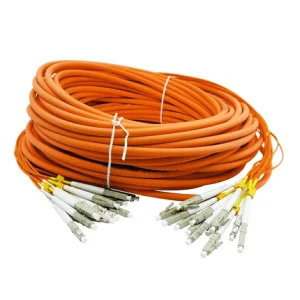
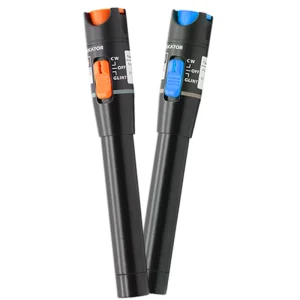
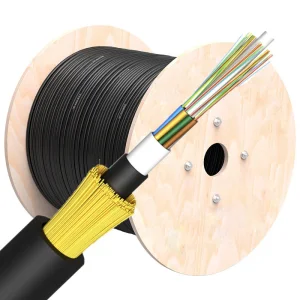
Browse our advanced accessories, termination kits, and active-passive components designed to deliver complete end-to-end optical transmission systems.
 KOCENT OPTEC