Explore our premium product portfolio designed for modern high-performance data centers and telecom networks.
A comprehensive overview of high-speed data transmission standards, modulation technologies, and physical interfaces.
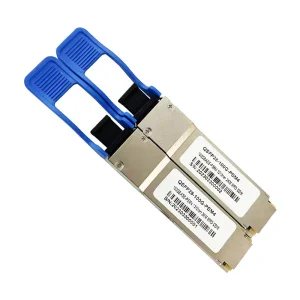
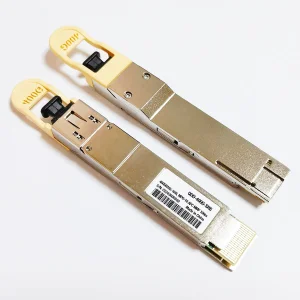
The journey to modern 100G began with large CFP formats, progressing to CFP2, CFP4, and ultimately standardizing on QSFP28 (Quad Small Form-factor Pluggable 28). This form factor uses four lanes of high-speed electrical signals operating at rates up to 28Gbps per lane, reducing power consumption and greatly increasing rack port density compared to predecessors.
While 100G QSFP28 modules traditionally utilize NRZ (Non-Return-to-Zero) modulation over four 25G channels, the evolution towards dense deployments utilizes PAM4 (Pulse Amplitude Modulation 4-Level) to deliver single-wavelength 100G. Single-lambda 100G optics reduce physical complexity by utilizing one optical channel instead of four, lowering manufacturing costs and insertion loss.
High-quality 100G SFP manufacturers adhere strictly to MSA guidelines. MSAs ensure electrical compatibility, physical dimensions, and communication protocols (such as DOM - Digital Optical Monitoring) are standardized across different network switch manufacturers. This guarantees seamless interoperability across diverse equipment environments.
Procuring the correct transceiver relies on understanding optical transmission distances and cabling setups:
China has solidified its position as the global powerhouse for fiber optic transceiver manufacturing, hosting a highly integrated industrial ecosystem. Sourcing 100G SFP products directly from Chinese factories offers several structural advantages:
From TOSA/ROSA packaging, laser chips, and photodetectors to injection-molded optical lenses and structural metal casings, China's optical clusters (particularly in Shenzhen and Wuhan) provide unparalleled vertical integration, minimizing production lead times.
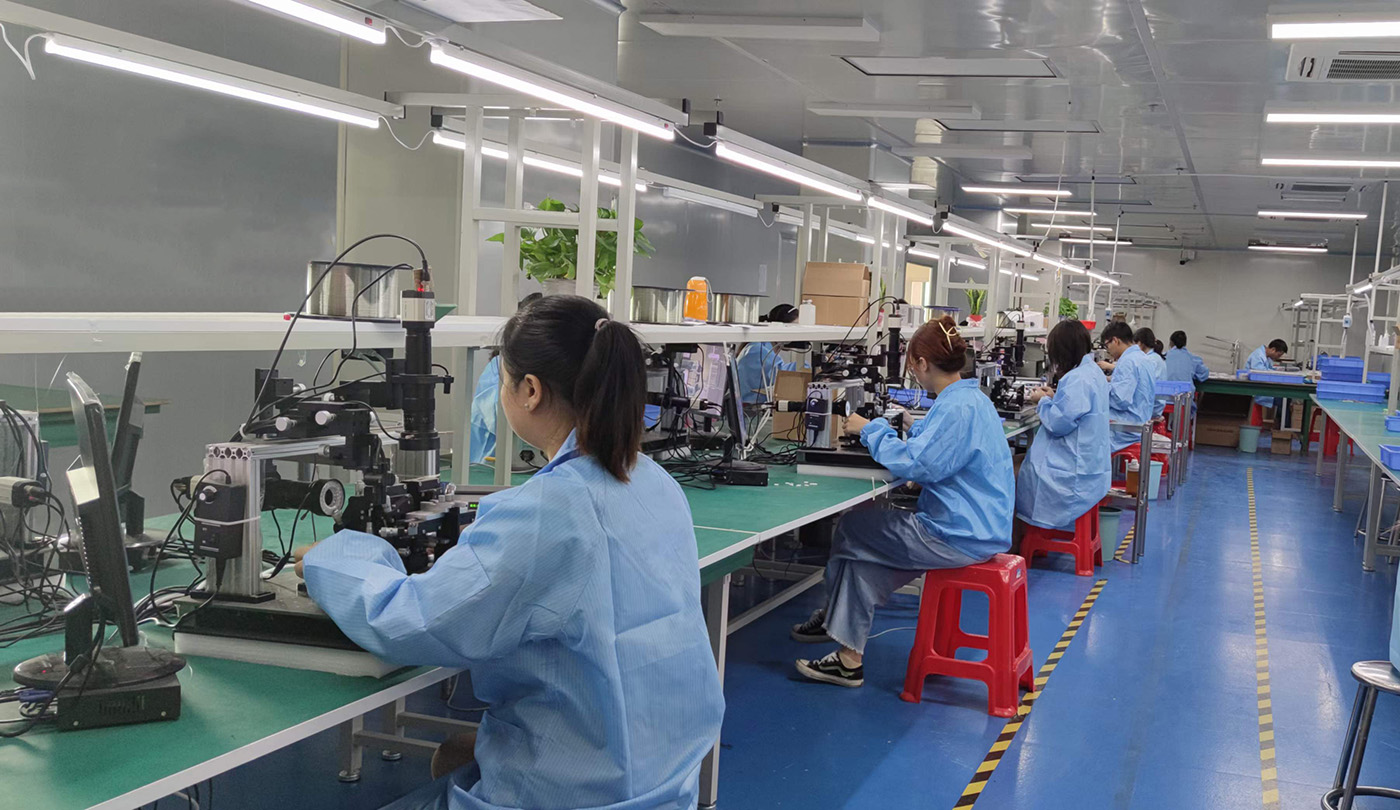
Tier-1 factories feature Class 100,000 cleanrooms and advanced automation systems for laser coupling, wire bonding, and temperature tuning. Extensive use of high-frequency oscilloscopes and optical spectrum analyzers ensures 100% testing of optical eye diagrams and bit error rates (BER).
Economies of scale coupled with mature processing technologies enable Chinese manufacturers to provide competitive unit costs without compromising on high-quality compliance (CE, FCC, RoHS, REACH, UL).

Keeping up with the fast pace of telecommunication infrastructure upgrades and optical innovations.
While 100G remains the backbone of metro access networks and medium-sized enterprise data centers, massive hyper-scale cloud facilities are aggressively transitioning to 400G and 800G. Modern 100G transceivers are optimized to act as breakout components, interfacing directly with 400G switches (e.g., 4x100G configurations).
Silicon Photonics (SiPh) technology integrates optical modulators, detectors, and waveguides onto a single silicon chip. This shifts manufacturing from labor-intensive manual alignment to scalable semiconductor processes, improving thermal dissipation and power efficiency for high-density environments.
Modern transceivers prioritize energy conservation, reducing power consumption targets to under 3.5W per 100G module. Implementing smart chipsets and optimized circuits lowers structural cooling demands, helping data center operators reduce their overall PUE (Power Usage Effectiveness).
Translating raw hardware capabilities into end-to-end network reliability across industries.
100G connections serve as high-density uplinks from access/leaf switches to spine switches. Utilizing cost-effective QSFP28-SR4/CWDM4 modules allows enterprise environments to scale internal application bandwidth, preventing bottlenecks in private cloud infrastructures.
Telecommunication operators deploy QSFP28-LR4/ER4 transceivers within metropolitan rings to carry consolidated optical traffic from FTTH access points (GPON/EPON OLTs) to the central network core. High-performance modules ensure transmission stability across spans of up to 40km without active amplification.
AI training clusters require low-latency, high-throughput connections. InfiniBand and Ethernet-based 100G connections form the physical fabric connecting large arrays of GPU-accelerated computing nodes, enabling rapid gradient sharing and parameter updates.
Your Trusted Optical Connection Solutions Partner Since 2012
Kocent Optec Limited, established in 2012 in Hong Kong as a hi-tech communication enterprise, is one of China's leading fiber optic termination product manufacturers and solution providers.
We are dedicated to developing and manufacturing fiber optic communication products ranging from passive to active categories for telecommunication networks, enterprise networks, and data centers.
By leveraging our extensive experience and production capacity gained over the years, we magnify the outcome for our valuable customers, which ultimately expands their core competencies and helps them outperform competitors. We place emphasis on customer collaboration, and we define ourselves as your valuable partner in fiber optic connection solutions. We believe our differentiators are your perceived advantages.
With more than 13 years of experience in manufacturing telecommunication fiber optic products, we strictly follow fiber optic industry standards, using mature scientific methods to deliver your products on time and ensure that 100% of products are tested and inspected before shipment.

Years of sales and service experience have enabled us to win customers from different regions. Today, we have customers from East Asia, Southeast Asia, Middle East, Eastern Europe, Western Europe, Northern Europe, South America, North America, North Africa, and South Africa.
Win-win cooperation is our constant goal. Many of our OEM and ODM products have won Telecom Operator tenders and satisfy demanding end-user requirements.
Our main terminal telecom operators include: SingTel, Vodafone, America Movil, Telefonica, Bharti Airtel, Orange, Telenor, VimpelCom, TeliaSonera, Saudi Telecom, MTN, Viettel, Bitel, VNPT, Laos Telecom, MYTEL, Telkom, Telekom, Entel, FiberTel, StarFiber, Ooredoo, Beeline, Azercell.
Key checkpoints for international sourcing managers, network architects, and supply chain directors.
Ensuring transceivers function properly within Cisco, Juniper, Arista, or Dell switches requires correct EEPROM coding. Look for manufacturers that provide dynamic field programming capabilities using cloud-connected coding boxes, allowing on-site reconfiguration of transceiver microcode.
Verify that the factory operates under ISO 9001:2015 quality management systems. Individual transceivers must carry CE, FCC, and RoHS marks, proving they comply with electromagnetic compatibility standards and hazardous substance regulations.
Avoid single-source vulnerabilities. Work with factories located near global shipping hubs like Hong Kong or Shenzhen, which can provide reliable air freight connections to secure delivery times and maintain buffer stock levels.
Explore the remainder of our high-quality fiber optic and transceiver catalog.
Get answers to common technical, manufacturing, and procurement questions regarding 100G transceivers.
 KOCENT OPTEC