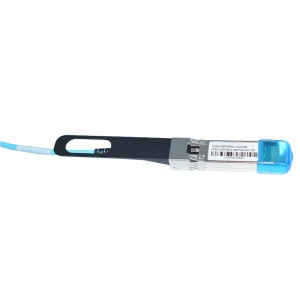
Discover our comprehensive range of passive and active optical transmission products engineered for extreme bandwidth demand.
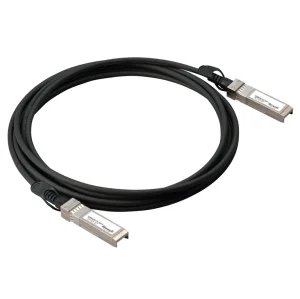
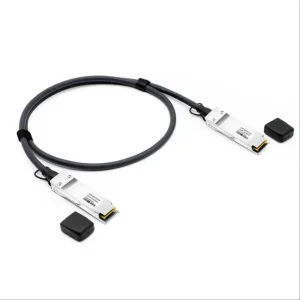
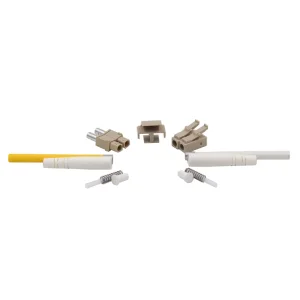
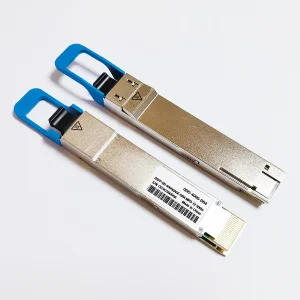
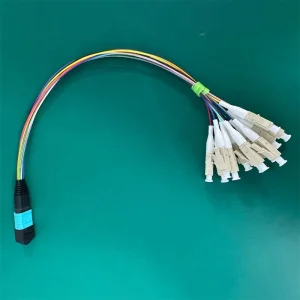
Established in 2012 in Hong Kong as a premier high-tech communication enterprise, Kocent Optec Limited has emerged as one of China's leading fiber optic termination product manufacturers and design partners. Over the past decade, we have dedicated ourselves to developing, engineering, and manufacturing an extensive portfolio of fiber optic communication products spanning the spectrum of passive and active fiber optic technologies.
Our solutions cater directly to the demanding architectures of modern telecommunication networks, enterprise structures, and hyper-scale data centers. By combining local engineering expertise with robust supply chains, Kocent Optec ensures maximum efficiency, seamless installation, and reliable operation across metropolitan links.
We work hand-in-hand with global system integrators and telcos to custom-engineer optical distributions, passive multiplexers/demultiplexers, and transceivers to support high-speed 100G CWDM environments.

A technical examination of wave multiplexing, cost efficiency, and performance parameters for metropolitan networks.
100G CWDM4 architecture utilizes four separate channels across the 1271nm, 1291nm, 1311nm, and 1331nm wavelengths. By separating each optical path by 20nm, it allows the use of uncooled DFB lasers, significantly decreasing the thermal management overhead and production cost compared to dense wavelength division multiplexing (DWDM) modules.
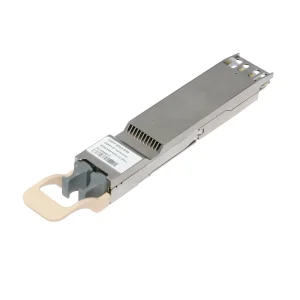
Designed around the hot-pluggable QSFP28 form factor, our 100G CWDM solutions offer direct compatibility with mainstream enterprise switches, routers, and transport systems. Excellent insertion loss parameters (<1.5dB for mux/demux pairs) preserve optical power budget across distances up to 2km and 10km (with FEC).
Leveraging 100G CWDM components mitigates the need for expensive dispersion compensation modules (DCM) and fiber amplifiers (EDFA) over short and medium distances. It bridges the performance gap between short-reach multi-mode fibers (SR4) and ultra-long-reach coherent transceivers, delivering optimal ROI.
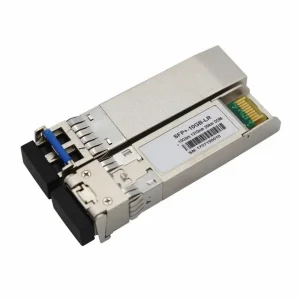
In high-density cloud networks, physical layer efficiency translates directly to operational cost savings. Traditional data center upgrades relied heavily on multi-mode fiber (MMF) which is limited by modal dispersion over distance. 100G CWDM4 transceivers operate over single-mode fiber (SMF), utilizing standard LC duplex connectors. By using four 25Gbps optical lanes modulated onto distinct wavelengths, 100G CWDM4 bypasses the need for parallel cabling (such as MPO-8 or MPO-12 configurations), saving precious cable routing space inside modern server cabinets.
For manufacturers in China, engineering these modules requires strict control over optical sub-assemblies (OSA). At Kocent Optec, we utilize highly integrated silicon photonics designs alongside traditional discrete laser configurations to ensure our transceivers operate within a tight transmitter dispersion eye penalty (TDEP) and receiver sensitivity envelope. This rigorous approach ensures cross-brand compatibility with global networking hardware.

With more than 13 years of specialized manufacturing experience in the telecommunications and fiber optic arena, Kocent Optec adheres to the strictest global industry quality standards. We rely on mature scientific methodologies and advanced automation to deliver customer orders on time, ensuring that 100% of our products are fully tested, verified, and inspected before dispatch.
Our Quality Management Systems (QMS) encompass exhaustive testing parameters, including insertion loss, return loss, fiber end-face geometry via high-definition interferometers, and thermal chamber cycling to simulate extreme operating conditions. This structural reliability is why our passive multiplexers, breakout cables, and fiber enclosures maintain peak performance throughout their decades-long deployment lifecycle.
How Tier-1 telecommunication networks and enterprise datacenters optimize bandwidth distribution using CWDM topologies.
As 5G base stations proliferate, fiber resources between the Centralized Radio Access Network (C-RAN) and Remote Radio Units (RRU) become heavily congested. By implementing 100G CWDM optical links, operators multiply their physical fiber capability eightfold without digging new trenches, conserving fiber and speeding up site deployment.
Modern cloud architectures require seamless synchronization between localized hyperscale nodes. 100G CWDM4 optical transceivers provide the critical link over single-mode fibers up to 2km, maintaining low latency, reducing packet loss, and keeping hardware cooling costs at a minimum.
For corporate and university campuses experiencing data growth due to high-definition video streaming, IoT edge computing, and cloud migration, CWDM infrastructure enables cost-effective bandwidth multiplexing over legacy single-mode infrastructure.
From an international industrial standpoint, 100G CWDM platforms represent a crucial sweet spot in performance optimization. As the global digital economy transitions towards 400G and 800G, the 100G channel remains the workhorse of regional transport and metro-access rings. The reliability of uncooled CWDM laser arrays operating under changing ambient temperatures ensures that telecom equipment in harsh outdoor enclosures remains online without active HVAC systems.
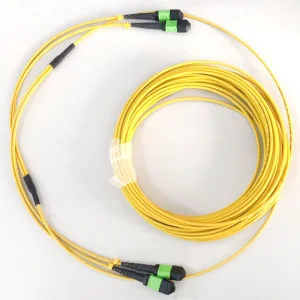
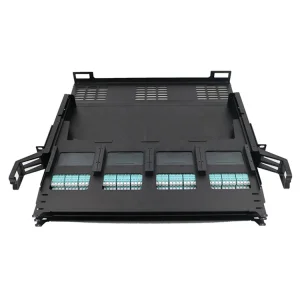
In addition, the high density of MPO connections and passive patch panels allows data centers to aggregate up to 144 fiber outputs (144fo MPO) inside 1U of rack space. This matches the modular structure of CWDM, allowing networks to scale up from 10G and 40G aggregates to clean 100G channels without reworking their entire cable management systems.
Years of dedicated sales, technical service, and custom OEM/ODM development have allowed Kocent Optec to build long-term relationships with leading network installers and telecom operators across multiple continents. Today, our footprint spans East Asia, Southeast Asia, the Middle East, Eastern and Western Europe, South and North America, and parts of Africa.
We pride ourselves on a win-win cooperation strategy. Many of our custom-developed OEM and ODM passive components and optical fiber assemblies have successfully won international Telecom Operator tenders and continue to meet strict end-user service level agreements (SLAs).
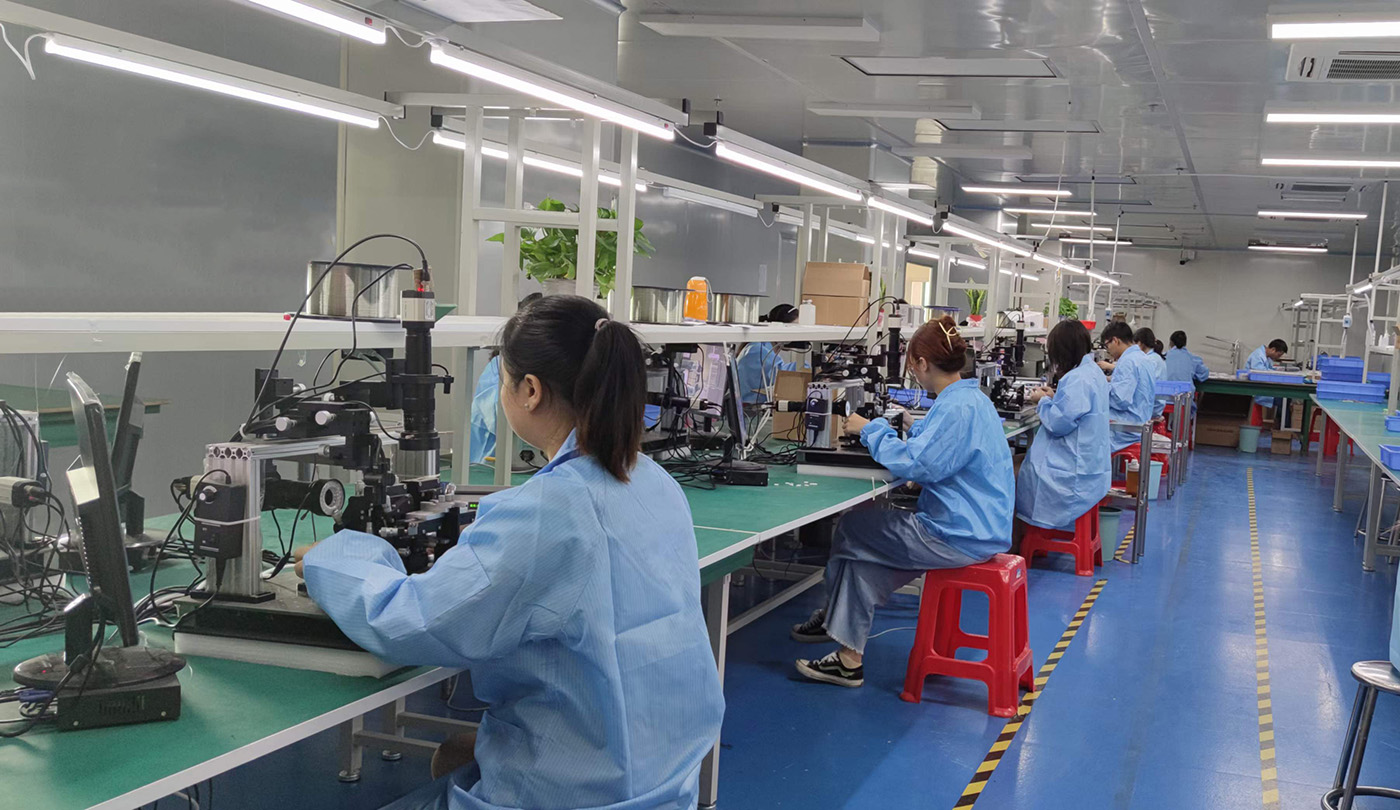
Navigating complex global regulatory environments with reliable certifications and localized technical teams.
Our manufacturing facility and products comply with RoHS directives, CE marking, FCC regulations, and key Telcordia GR-326-CORE reliability metrics. This guarantees safe, interference-free integration into tier-one operator facilities.
By leveraging shipping hubs in Hong Kong and mainland China, we coordinate global logistics. We offer customized packaging, streamlined customs clearance documents, and secure tracking to prevent project delays.
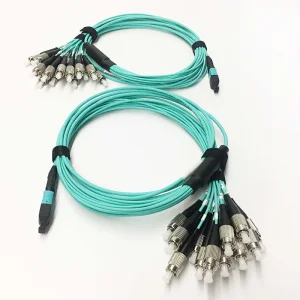
We provide localized engineering support to design custom fiber panels, specific breakout tail lengths, and custom EEPROM coding for transceivers, ensuring compatibility with legacy switches.
Bridging the gap between 100G CWDM infrastructures and next-generation 400G/800G PAM4 technologies.
As AI workloads, deep learning architectures, and high-frequency cloud transactions increase, the demand on fiber backbones is shifting from binary non-return-to-zero (NRZ) modulation formats towards higher-order modulation formats, specifically Pulse Amplitude Modulation 4-level (PAM4). While 100G CWDM4 has historically relied on 4 channels of 25Gbps NRZ signals, the newer generation of transceivers utilizes 100G single-wavelength technologies (such as 100G-DR1 or FR1) to aggregate data even more efficiently.
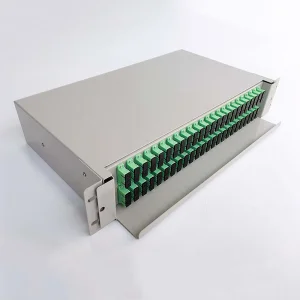
At Kocent Optec, our research and development pathway is focused on ensuring backward compatibility and easy migration paths. This includes high-density fiber distribution frames (ODF) and MPO universal connectivity platforms that can support either 100G NRZ channels or be easily reassigned to 400G PAM4 (such as 400G DR4) and 800G OSFP architectures.
Furthermore, our development teams are working closely with semiconductor firms to research co-packaged optics (CPO) and silicon photonics integrations. This will reduce per-gigabit power draw, helping green data centers meet strict sustainability goals.
Essential answers to technical and commercial questions about sourcing 100G CWDM solutions from China.
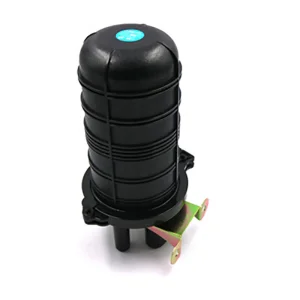
Explore our line of passive components, patch panels, splice closures, and high-density connectors built to Telcordia specifications.
 KOCENT OPTEC