 KOCENT OPTEC

1G LR SFP Whitepaper: Technical Architecture & Global Sourcing Economics
1. Understanding the 1G SFP LR Standard: Legacy Stability in a High-Speed Era
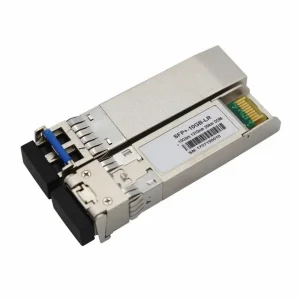
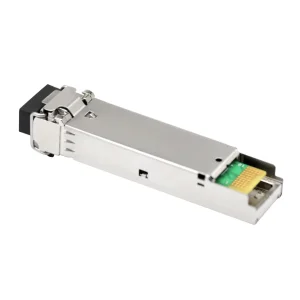
In contemporary enterprise networks, hyperscale data centers, and metropolitan telecom structures, the demand for gigabit-level optoelectronic conversion remains highly relevant. The 1G LR SFP (Small Form-factor Pluggable Long-Range) module operating at a nominal transmission rate of 1.25 Gb/s over a center wavelength of 1310nm is a fundamental anchor of optical physical layers.
While 100G, 400G, and 800G modules capture headlines, the 1G SFP LR standard continues to see massive deployment volumes. This legacy stability is driven by its ability to span up to 10 kilometers over Single-Mode Fiber (SMF) G.652 with a minimal optical budget, and its low thermal footprint. For utility networks, industrial automation, fiber-to-the-home (FTTH) active Ethernet nodes, and long-range security surveillance backhauls, 1G LR SFP represents the most cost-efficient choice. It delivers a perfect balance of distance, stability, and pricing.
2. Global Sourcing Intent: What Procurement Officers Actually Look For
Purchasing agents seeking a "cheap 1g lr sfp supplier" must carefully balance cost against technical reliability. When dealing with high-volume deployments, choosing low-cost components without strict quality compliance can result in expensive link downtime. True value lies in finding cost-effective manufacturers who do not compromise on key performance parameters:
Multi-Vendor Interoperability
Transceivers must support customized EEPROM coding to achieve seamless compatibility with host equipment from Cisco, Juniper, Huawei, Arista, and HP, preventing port lockout errors.
Real-Time DDM Diagnostics
Integrated Digital Diagnostics Monitoring (DDM/DOM) complying with SFF-8472 is critical. It allows network managers to remotely monitor optical power levels, laser bias currents, and operating temperatures.
Strict Component Lifespans
High-quality components utilize lasers with an MTBF (Mean Time Between Failures) exceeding 100,000 hours, preventing premature failure from optical path degradation or thermal drift.
3. Production Technologies: How Modern Chinese Factories Optimize Costs
In China's advanced optical transceiver manufacturing zones (such as Shenzhen and Wuhan), the term "cheap" is not associated with lower quality. Instead, it is the result of vertical integration, automated assembly, and optimized manufacturing engineering.
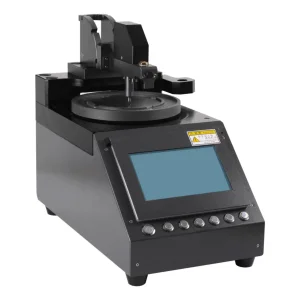
Modern factories utilize advanced, high-yield Automated Optical Alignment machines alongside multi-station parallel testing platforms. By automating the optical sub-assembly (OSA) process—specifically the coupling of the 1310nm DFB (Distributed Feedback) laser with the PIN photodiode—factories can reduce manual labor costs by up to 70%. Furthermore, bulk purchasing of optoelectronic chips allows top-tier factories like Kocent Optec to secure favorable raw material pricing, passing these savings directly to our global customers.
4. Enterprise & Carrier Success: Kocent Optec at a Glance
Established in 2012 in Hong Kong, Kocent Optec Limited has grown into a leading developer and manufacturer of passive and active fiber optic communication systems. Our products serve telecom networks, high-density enterprise data centers, and optical transport nodes worldwide.
Our competitive advantage comes from combining 13+ years of experience with 100% test-and-inspection protocols. Every single-mode transceiver, optical patch cable, and splitter undergoes comprehensive testing before shipment. We don't just supply products; we partner with our clients to design, deploy, and scale their optical infrastructure.

Proven Global Reliability
Our customer-centric approach has enabled Kocent Optec to build long-term partnerships with telecom operators and infrastructure installers in East Asia, Europe, the Middle East, and the Americas.
Our OEM and ODM optical modules and passive systems are qualified under various national and regional standards. They are widely used in tier-1 carrier deployments, helping service providers meet strict KPIs for latency, signal-to-noise ratio, and operational lifetime.

Trusted by Lead Operators Globally
Our products meet the technical requirements for major telecommunication frameworks, including:
5. Stringent Factory Testing Protocols
Every active SFP module we manufacture must pass rigorous hardware validation processes. This includes physical layer compliance testing on an optical eye diagram oscilloscope, Bit Error Rate (BER) analysis, and temperature cycling in environmental chambers.
By simulating real-world working conditions—including extreme temperatures and varying levels of link attenuation—we ensure our transceivers perform reliably under high-stress deployment scenarios. This commitment to quality dramatically reduces return rates and field failures, which in turn lowers long-term maintenance costs for our clients.

6. Technical Parameters: 1G LR SFP Quick Reference
To assist networking engineers and procurement professionals, the key technical specifications for our 1G LR SFP transceivers are outlined below:
| Parameter / Specification | Value / Standard Detail | Engineering Benefit |
|---|---|---|
| Data Rate Support | 1.25 Gb/s (1000Base-LX / LH) | Optimal for Gigabit Ethernet, Fiber Channel, and FTTH nodes |
| Wavelength | 1310 nm (Center Wavelength) | Minimal dispersion and attenuation profile over standard SMF |
| Max Transmission Distance | 10 km (over Single-Mode Fiber G.652) | Provides extensive reach for campus networks and metro links |
| Optical Tx Power (Min/Max) | -9 dBm / -3 dBm | Protects RX sensors from saturation while ensuring strong signal links |
| Rx Sensitivity (Max) | < -20 dBm (PIN Receiver) | Ensures reliable link performance even with fiber path aging |
| Laser Component Type | DFB Laser (Distributed Feedback) | Provides narrower spectral line widths compared to FP lasers |
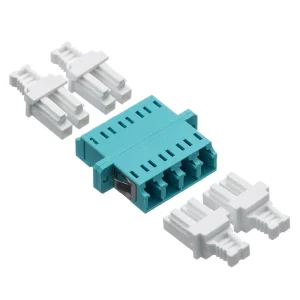
| Connector Interface | Duplex LC connector receptacle | Standard compact form factor for high-density switches |
| DDM / DOM Compatibility | SFF-8472 MSA Compliant | Allows real-time optical power and temperature monitoring |
7. Technology Roadmap: The Shift to Smart-Integrated SFP Modules
Looking ahead, 1G LR SFP modules are evolving to integrate smart telemetry and diagnostic features directly into the transceiver. As software-defined networking (SDN) expands, active optical transceivers are becoming intelligent edge detection points.
Modern R&D initiatives focus on designing modules with integrated OTDR (Optical Time Domain Reflectometer) capabilities. This allows the SFP to detect physical fiber breaks along the 10km link without requiring external testing equipment. By transitioning to automated, self-reporting transceivers, network operators can significantly reduce debugging times and improve service reliability.
Frequently Asked Questions (FAQ)
Everything you need to know about sourcing, testing, and deploying cost-effective 1G SFP LR transceivers.