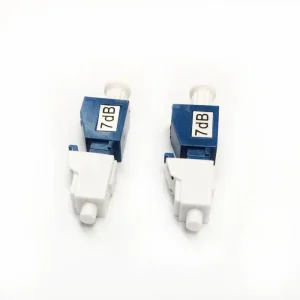
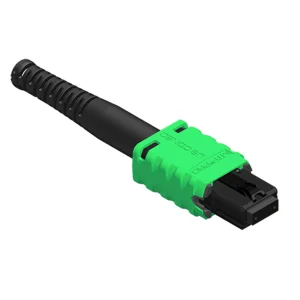
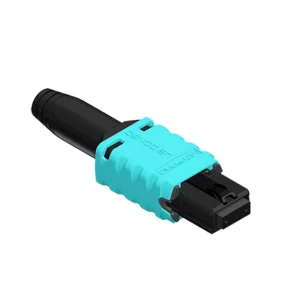
Explore high-performance optical attenuators, custom connectors, and high-density MPO patch cords designed for structural data networks.
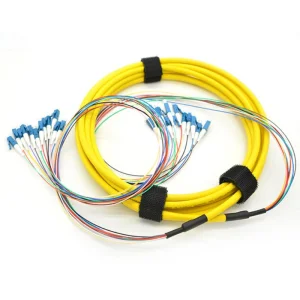
As modern data centers transition away from legacy 10G topologies, the 25G SFP28 optical transceiver has emerged as the definitive standard for mainstream high-speed network interfaces. In contrast to 40G interfaces that rely on costly four-lane configurations, SFP28 optimizes hardware resources by running a single 25Gb/s lane. This structural approach minimizes raw power consumption, limits thermal dissipation, and delivers four times the density of 10G interfaces in rack space setups.
Whether deployed in hyperscale data cloud environments, 5G Open RAN (O-RAN) fronthaul systems, or enterprise core switches, selecting an established ODM 25G SFP28 supplier ensures the technical precision needed for system-wide compatibility. Kocent Optec Limited designs, validates, and supplies optical transceivers, leveraging years of structural engineering expertise to meet stringent telecommunication benchmarks.

Carrier-grade passive and active optical network solutions engineered in Hong Kong and manufactured to absolute precision.
Established in 2012 in Hong Kong as a high-tech communications enterprise, Kocent Optec Limited has grown to become one of China’s leading fiber optic termination product manufacturers and solution providers. We specialize in developing and manufacturing high-density fiber optic communication systems that span from passive components (attenuators, connectors, MTP/MPO patch cables) to active systems (QSFP28, SFP28 transceivers) tailored for telecommunication networks, enterprise infrastructures, and dense hyperscale data hubs.
By leveraging our extensive engineering experience and streamlined production capacity built over more than 13 years, we help our clients maximize performance. We position ourselves as an collaborative partner in fiber optic connection solutions, where client integration is key. We believe our key differentiators are your real-world market advantages.
With rigorous quality verification workflows, 100% of our products undergo comprehensive testing and inspection before delivery. Our engineering and manufacturing processes strictly comply with international telecommunication standards, guaranteeing reliable field performance.

Adapting to PAM4 modulation, silicon photonics integration, and the evolution toward 100G/200G edge networks.
Traditional 25G SFP28 optical modules employ Non-Return-to-Zero (NRZ) modulation formats, operating at 25.78 Gbps. As network bandwidth needs scale upward, the technological roadmap transitions from single-lane 25G NRZ to advanced PAM4 (Pulse Amplitude Modulation 4-Level) configurations. This allows the adaptation of SFP-DD configurations to achieve 50G or even 100G per lane using the same SFP module form factor, saving physical space and infrastructure costs.
Emerging Silicon Photonics (SiPh) technologies integrate optical components directly onto silicon chips, replacing conventional discrete TOSA/ROSA configurations. For 25G SFP28 and 100G QSFP28 modules, this integration provides superior thermal stability, lowers manufacturing BOM expenses over large volumes, and improves overall module durability under extreme environmental operating conditions.
Power conservation is a critical KPI for hyperscale data infrastructures. Modern 25G SFP28 transceivers are optimized to consume less than 1.0W to 1.5W per port (for LR/ER configurations). By implementing custom IC architectures and high-efficiency laser drivers, our transceivers significantly lower heat loads, reducing cooling costs within server racks.
How high-performance 25G SFP28 hardware interfaces address demanding telecom infrastructures.
Next-generation 5G networks demand low latency and high bandwidth capacity. 25G SFP28 transceivers (specifically BiDi and CWDM/DWDM variants) serve as the primary link in 5G fronthaul architectures, connecting Baseband Units (BBUs/DU) to Remote Radio Units (RRUs/RU) via Common Public Radio Interface (eCPRI) protocols over long distances.
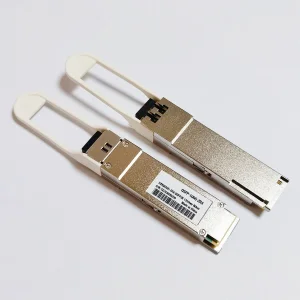
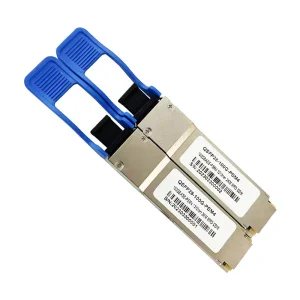
In high-density Leaf-Spine layouts, 25G SFP28 interfaces provide the downlinks from the spine switches to individual server NIC cards. By using 100G QSFP28 to 4x25G SFP28 breakout configurations, data centers can achieve optimal port densities without upgrading existing patch panels or fiber trunking infrastructures.
Enterprise datacenters deploying mission-critical applications utilize 25G SFP28 transceivers to support high-throughput, latency-sensitive storage protocols like NVMe over Fabrics (NVMe-oF) and 32G/16G Fiber Channel. This architecture prevents data transfer bottlenecks between storage arrays and compute elements.

Our manufacturing center utilizes modern automated manufacturing workflows to guarantee uniform, high-yield optical transceiver outputs. We leverage active optical alignment systems, high-speed automated packaging lines, and real-time environmental test chambers to simulate extreme field deployment scenarios.
This smart factory approach allows Kocent Optec to insulate its supply chain against volatile market disruptions. By holding raw material reserves for essential optoelectronic components (such as photodiode arrays, VCSEL/DFB lasers, and DSP chipsets), we maintain consistent delivery schedules and competitive pricing tables, even during high-demand industry periods.
We perform automated testing on 100% of our products, evaluating transmitter optical eye diagrams, receiver sensitivity, jitter profiles, and protocol integrity. This ensures that every shipped batch of SFP28 and QSFP28 modules works seamlessly right out of the box.
Understanding the core technical and hardware variables that determine the commercial pricing structure of SFP28 transceivers.
| Transceiver Category | Wavelength (nm) | Fiber Type | Target Reach (Max) | Typical Laser Source | Pricing Tier Factor |
|---|---|---|---|---|---|
| 25G SFP28 SR | 850nm | Multi-Mode (OM3/OM4) | 70m / 100m | VCSEL | Baseline Economy |
| 25G SFP28 LR | 1310nm | Single-Mode (SMF) | 10km | DFB Laser | Standard Mid-tier |
| 25G SFP28 ER | 1310nm / 1550nm | Single-Mode (SMF) | 30km / 40km | EML + APD Receiver | High Performance Premium |
| 25G SFP28 BiDi | 1270Tx / 1330Rx (Simplex) | Single-Mode (SMF) | 10km - 40km | DFB / EML BiDi Link | Specialized Optical Routing |
| 25G SFP28 CWDM / DWDM | ITU Grid Channels | Single-Mode (SMF) | 10km - 40km | DWDM DFB/EML Cooled | Carrier Backbone Core |
Pricelist Customization Note: Pricing depends heavily on customization requests, including proprietary EEPROM coding, compatibility with specific brands (e.g., Cisco, Juniper, Arista), custom labeling, and the order volume. For an exact ODM quotation or wholesale volume discount pricing, please contact our sales team.
Engineered to exceed MSA guidelines and certified for deployment across leading global carrier networks.
Our 25G SFP28 optical modules strictly conform to the SFF-8431, SFF-8432, SFF-8472, and IEEE 802.3by hardware specifications. This guarantees physical, electrical, and firmware compatibility with any compliant network interface card (NIC) or switch port.
Kocent Optec products undergo rigorous validation testing to meet global safety and environmental requirements, including CE, FCC, RoHS, REACH, and UL compliance. This ensures safe and lawful deployment in markets throughout North America, Europe, and Asia-Pacific.
We provide localized engineering compatibility scripts. Our modules are programmed to match the host hardware environment, avoiding common errors such as "unsupported transceiver" warnings on Cisco, Juniper, Arista, and HPE systems.
Over the past decade, Kocent Optec products have been successfully deployed in networks for global carriers and operators, including:
Essential answers to technical and commercial questions about 25G SFP28 optical systems.
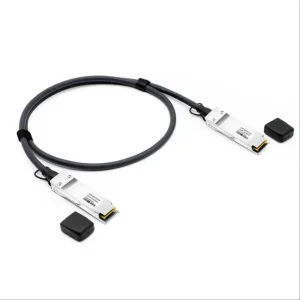
High-speed transceivers, fiber splitters, optical machinery, and direct attach copper cabling solutions.
 KOCENT OPTEC