Established in 2012 in Hong Kong as a hi-tech communication enterprise, Kocent Optec Limited has emerged as one of China's premier fiber optic termination product manufacturers and system solution providers. We are systematically dedicated to the high-level research, development, and mass-scale production of fiber optic communication products. Our dynamic portfolio spans from critical passive infrastructure elements to active optoelectronic transceivers designed specifically for telecommunication networks, hyperscale enterprise data centers, and industrial backhaul architectures.
By leveraging our extensive engineering expertise and highly optimized production capacity built over more than 13 years, we maximize high-performance outcomes for our global clientele. We place significant emphasis on direct customer collaboration, configuring ourselves as a reliable strategic partner in high-capacity fiber optic connection solutions. We believe our technical differentiators translate directly into our clients' structural marketplace advantages.

A comprehensive analysis of design metrics, optical modulation formats, and interface requirements for next-generation network layouts.
While 400G and 800G form factors rely heavily on PAM4 (Pulse Amplitude Modulation 4-Level) to double the data rate per channel, the 100GE QSFP28 architecture utilizes four parallel lanes of 25Gbps NRZ (Non-Return-to-Zero) encoding. This key technical choice maintains a lower complexity profile, eliminates the high heat signature associated with DSP chipsets, and provides optimized latency characteristics critical for algorithmic trading, edge cloud computing, and real-time processing nodes.
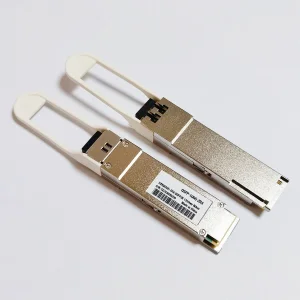
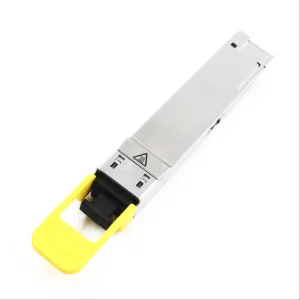
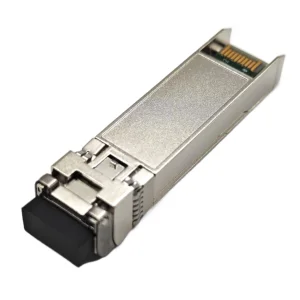
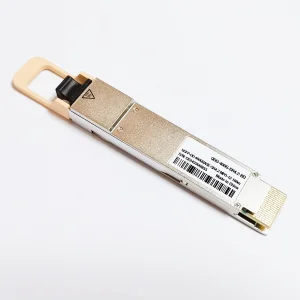
The QSFP28 (Quad Small Form-factor Pluggable 28) transceiver module integrates 4 independent transmit and receive channels. Each lane operates at a data rate of 25.78125 Gbps, conforming to the IEEE 802.3bm 100GBASE-SR4, LR4, and industry-standard MSA guidelines. Our ODM manufacturing line specializes in tailoring these optoelectronic modules to meet specific physical layer demands, utilizing both Singlemode Fiber (SMF) and Multimode Fiber (MMF) pathways.
Our custom hardware designs minimize power consumption to less than 3.5W (often targetting 2.5W for SR4/LR4). This reduction decreases the thermal dissipation load of host switches and network routers, significantly improving global system efficiency.
Utilizing high-performance EML (Electro-absorption Modulated Lasers) and DFB (Distributed Feedback) lasers, our ZR4 transceivers achieve up to 80km transmission reach over standard singlemode fiber without the need for active inline optical amplifiers.
Our ODM firmware modification service writes vendor-specific EEPROM codes to ensure seamless compatibility with major switch hardware, preventing proprietary vendor lock-in challenges.
Reference technical parameters for network architects mapping out multi-kilometer fiber paths.
| Module Standard | Wavelength (nm) | Fiber Type | Connector Type | Max Reach | Tx/Rx Optical Components |
|---|---|---|---|---|---|
| 100GBASE-SR4 | 850nm | MMF (OM3 / OM4) | MPO-12 (PC) | 70m (OM3) / 100m (OM4) | VCSEL / PIN |
| 100GBASE-CWDM4 | 1271, 1291, 1311, 1331 | SMF (G.652) | LC Duplex | 2km (with FEC) | DFB / PIN |
| 100GBASE-LR4 | 1295.56, 1300.05, 1304.58, 1309.14 | SMF (G.652) | LC Duplex | 10km | EML / PIN |
| 100GBASE-ER4 | 1295.56, 1300.05, 1304.58, 1309.14 | SMF (G.652) | LC Duplex | 30km (without FEC) / 40km (with FEC) | EML / APD |
| 100GBASE-ZR4 | 1295.56, 1300.05, 1304.58, 1309.14 | SMF (G.652) | LC Duplex | 80km (with Host FEC) | EML / APD + SOA |
How global infrastructure teams utilize 100GE QSFP28 modules in regional and metropolitan environments.
For decentralized edge computing nodes where local processing is crucial, 100GE QSFP28 CWDM4 and LR4 modules provide high-bandwidth links back to central computing hubs. The low latency of the 4x25G NRZ layout ensures that processing times are not bottlenecked at the physical transport layer.
Telecommunication operators use the 100G ZR4 and ER4 transceivers for midhaul and backhaul transmissions over ranges up to 80km. This setup eliminates the need for expensive intermediate repeater stations, reducing both initial capital expenses (CAPEX) and long-term operating costs (OPEX) in sparsely populated regions.
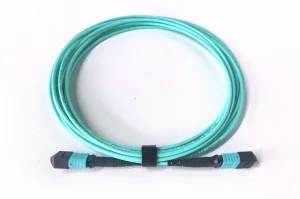
Large corporate complexes and campus networks are upgrading their core distribution switches from 10G/40G aggregates to 100G pathways. Utilizing QSFP28 SR4 modules over pre-existing OM4 MPO cabling provides an easy, cost-effective path to upgrade bandwidth without requiring complex infrastructure overhauls.
Analyzing how Kocent Optec leverages local ecosystems in Shenzhen and Hong Kong to deliver global supply stability.
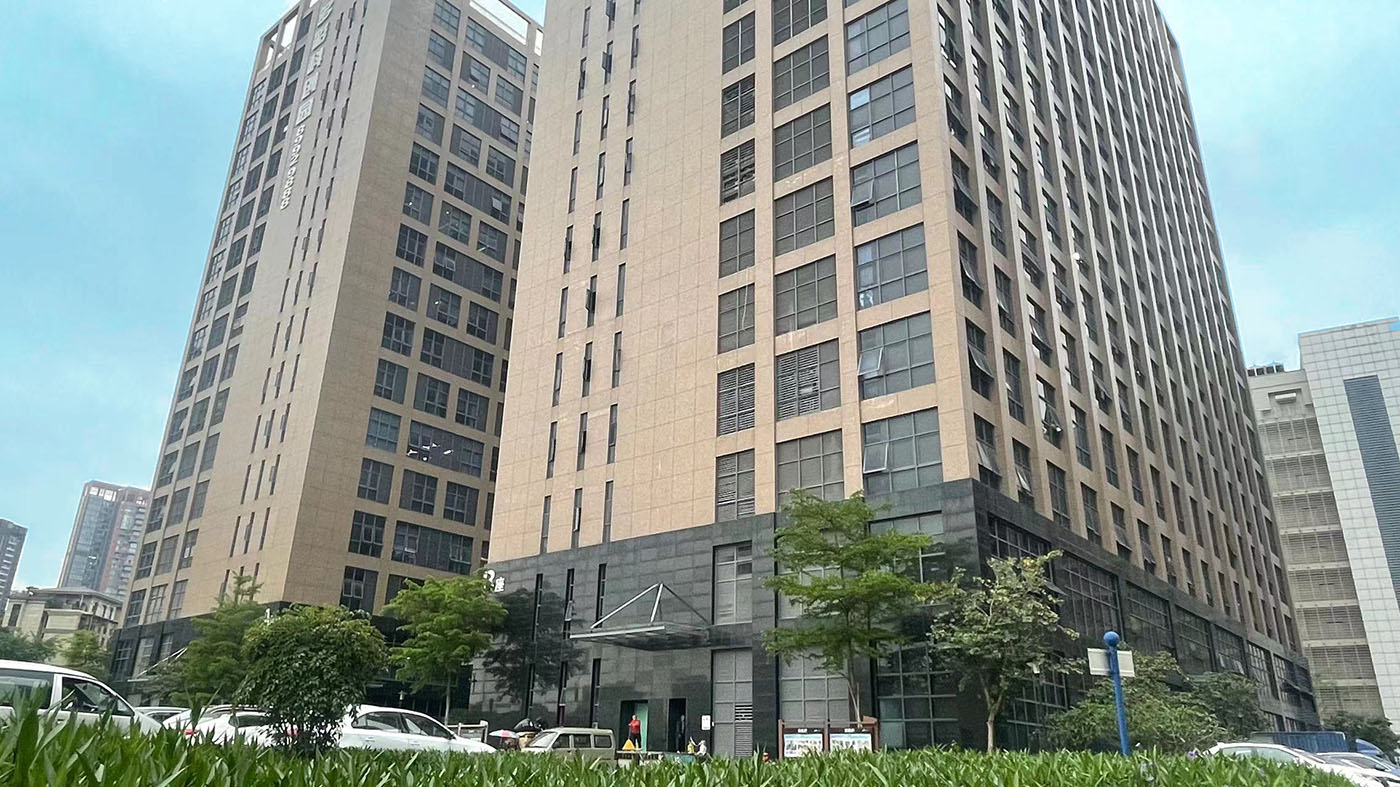
Our manufacturing and assembly facilities operate at the center of the world's most robust electronics and optical communications ecosystem. This physical proximity allows Kocent Optec Limited to guarantee supply continuity even during turbulent market cycles:
Direct integration with domestic semiconductor foundries and specialized optical assembly suppliers (TOSA/ROSA) reduces lead times for raw materials. Our proximity to component markets minimizes bottlenecks in our production pipeline.
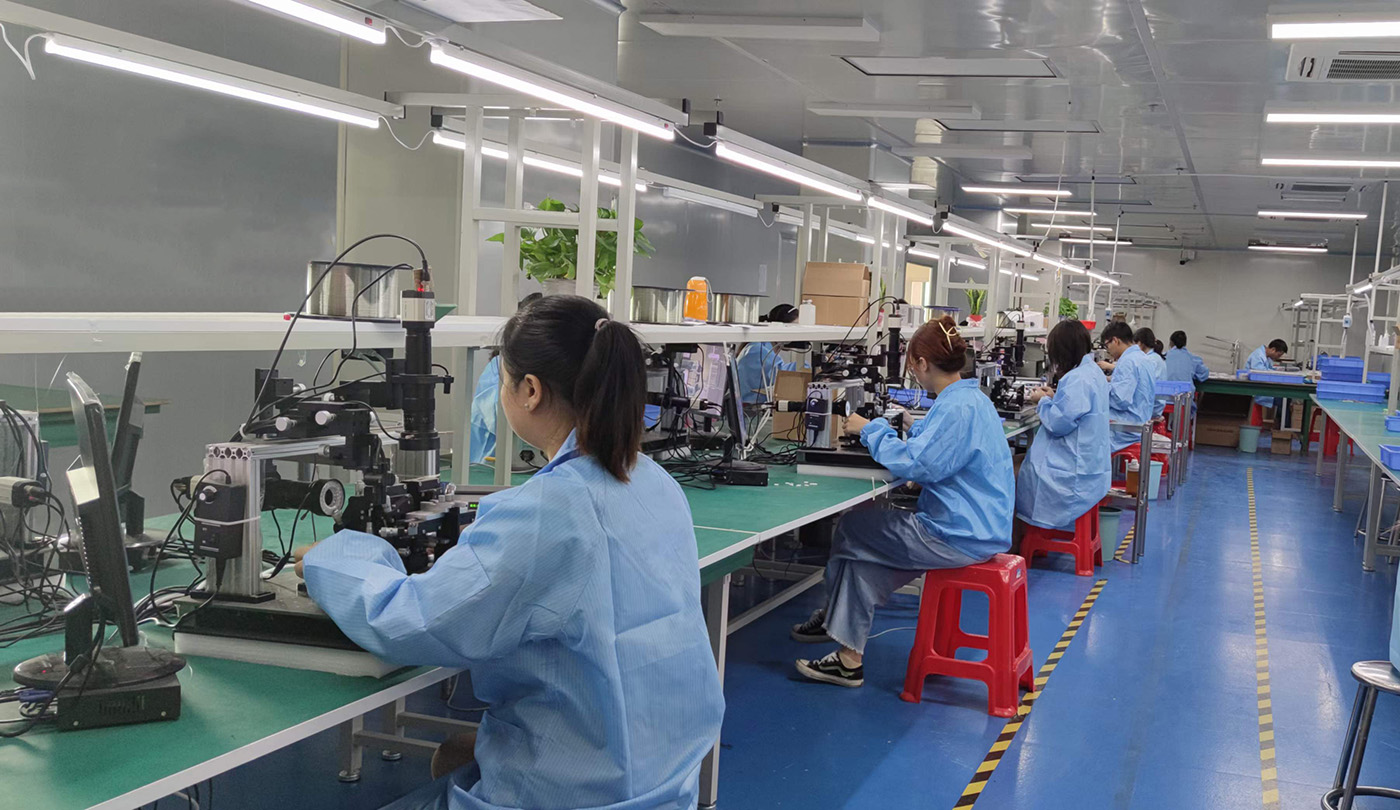
Our facilities employ automated precision-alignment equipment and high-speed optical testing suites. This setup ensures consistent quality, minimizes manual errors, and optimizes production costs for large-scale ODM orders.
By coordinating global distribution through our Hong Kong corporate headquarters, we leverage a duty-free, highly connected logistics hub. This enables rapid air freight and secure sea transport routes to our international clients.
With more than 13 years of experience in manufacturing telecommunication fiber optic products, we strictly follow international standards. We utilize mature scientific methods to deliver your products on schedule, ensuring that 100% of our products are tested and inspected before shipment.
Every active transceiver is subjected to real-world switch compatibility testing, temperature cycling chamber validation, and optical spectrum eye diagram analysis. This strict quality control ensures out-of-the-box reliability for critical network applications.
Understanding how 100G QSFP28 networks integrate into future high-bandwidth architectures.
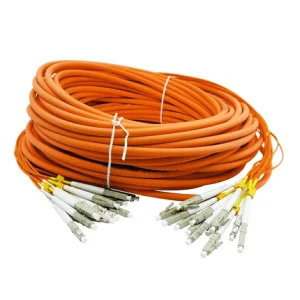
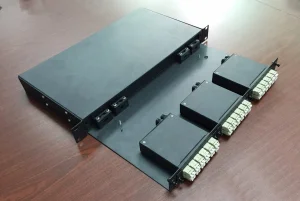
Modern system architects avoid complete lift-and-shift upgrades. By deploying high-density MPO breakout cabling systems and multi-rate patch panels, operators can mix 100G QSFP28 channels with newer 400G and 800G optical pipelines. This approach maximizes the ROI of existing glass infrastructure while maintaining path-level upgrades.
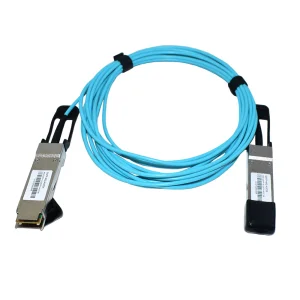
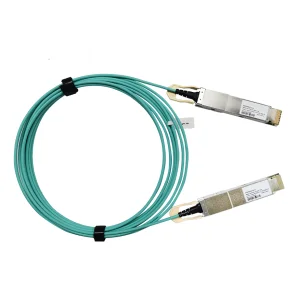
As standard data traffic grows, the transition to 400G and 800G links is accelerating. Kocent Optec continues to expand its manufacturing lines to support 400GBASE-SR4.2 QSFP-DD, QSFP56 AOCs, and 800GBASE OSFP transceivers. However, the 100GE QSFP28 form factor remains a primary component of network design, especially in localized systems, enterprise computing networks, and regional ISP access layers, due to its low heat generation, simple hardware integration, and cost-effective price point.
Our development focus includes advanced Silicon Photonics (SiPh), which integrates complex optical circuits onto silicon chips. This technology reduces module component counts, increases reliability, and lowers manufacturing costs for high-volume requirements.
Verified deployment across major international telecommunication networks and carrier platforms.
Years of sales and service experience have enabled us to build partnerships with customers in different regions. Today, we work with clients in East Asia, Southeast Asia, the Middle East, Eastern Europe, Western Europe, Northern Europe, South America, North America, North Africa, and South Africa.
Our win-win business model is designed to support our clients' growth. Many of our OEM and ODM products have won telecom operator tenders and successfully meet final user requirements.
Our major terminal telecom operators and carrier clients include:
Expert insights on 100GE QSFP28 compatibility, ODM options, and operational parameters.
Every QSFP28 module we supply undergoes coding customization. Our engineering team modifies the module's internal EEPROM with configuration files matching the host switch's required signatures. The transceivers are then tested on original host switches in our testing lab to verify that diagnostics (DOM) are fully readable and that the modules link up without raising system compatibility alarms.
Lead times depend on the size of the order and the level of customization required. Typically, standard QSFP28 transceivers (SR4, LR4, CWDM4) can be manufactured, programmed, tested, and shipped within 7 to 10 working days. For highly customized projects or large-scale operator tenders involving specialized packaging or labeling, lead times vary from 2 to 4 weeks.
The main differences are reach and cost. The 100GBASE-LR4 is designed for up to 10km transmission distances using LAN-WDM wavelengths and does not require FEC on the host system. The 100GBASE-CWDM4 is designed for transmission distances up to 2km over standard singlemode fiber. It operates on wider CWDM grid spacing and requires Host FEC to ensure error-free transmission. CWDM4 modules are generally more cost-effective for short-range links within data centers.
Our 100G ZR4 uses an integrated Semiconductor Optical Amplifier (SOA) on the receiver side to boost incoming optical signals before they reach the APD (Avalanche Photodiode) detector. This configuration provides the optical power budget required to overcome high path attenuation across 80km spans of singlemode fiber.
Yes, all Kocent Optec QSFP28 modules support real-time digital diagnostics (DOM/DDM) according to the SFF-8636 MSA standard. This allows network engineers to monitor parameters such as optical output power, receiver input power, module temperature, laser bias current, and internal supply voltages directly from their network operating system (NOS).
 KOCENT OPTEC