Explore our industrial-grade components designed to maximize network throughput and scale connection reliability.
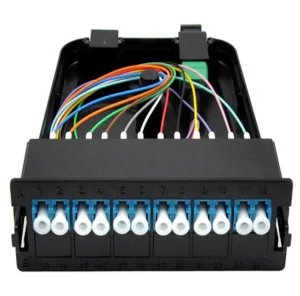
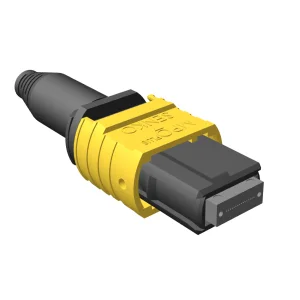
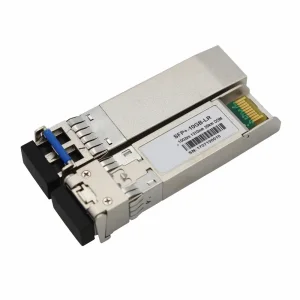
Established in 2012 in Hong Kong as a high-tech communication enterprise, Kocent Optec Limited has emerged as one of China's premier fiber optic termination product manufacturers and system solution providers.
We are passionately dedicated to developing, custom engineering, and manufacturing fiber optic and copper communication interfaces. Our products span the entire spectrum of passive and active network layers, optimized specifically for global telecommunication infrastructure, hyper-scale data centers, and mission-critical enterprise private networks.
By merging decades of engineering pedigree with automated factory pipelines, we secure measurable commercial advantages for our partners worldwide. At Kocent Optec, we view ourselves not merely as hardware manufacturers, but as strategic engineers of connection reliability.

As the demand for higher bandwidth, reduced latency, and lower operational overhead intensifies across enterprise infrastructures, the physical layer technology selected for short-range interconnects becomes a focal point of optimization. Direct Attach Copper (DAC) twinax cabling solutions, specifically within the 10Gbps SFP+ form factor, have proven to be the most cost-effective and energy-efficient medium for short-range high-density routing.
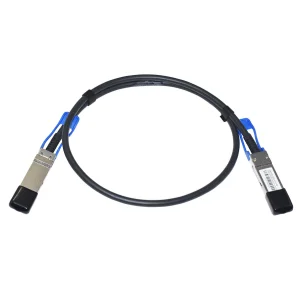
A 10G SFP+ DAC assembly features a high-speed twinaxial copper cable connected directly to an SFP+ transceiver housing at both ends. Unlike traditional optical modules that require conversion from electrical signals to optical signals (and vice versa), the SFP+ DAC carries the native electrical signal directly along copper conductors. This structural advantage eliminates the latency overhead introduced by laser driver and receiver circuitry.
To preserve signal integrity across distances ranging from 0.5 to 10 meters, our production facilities utilize highly optimized twinaxial cross-sections. Standard configurations include:
| Interconnect Type | Transmission Distance | Latency Profiles | Power Consumption (per Port) | Average Deployment Cost |
|---|---|---|---|---|
| Passive 10G SFP+ DAC | 0.5m - 7m (Max 10m) | < 0.1 nanosecond (Ultra-low) | < 0.1W (Negligible) | Extremely Low (Cost-optimized) |
| Active Optical Cable (AOC) | 1m - 100m | ~ 2.0 nanoseconds | 0.5W to 1.5W | Moderate |
| 10G SR Optical Transceiver + Fiber | Up to 300m (on OM3/OM4) | ~ 2.5 nanoseconds | 1.0W to 2.0W | High (Requires extra patch cables) |
Modern telecommunication networks and cloud enterprise facilities implement 10G SFP+ DAC assemblies across several mission-critical environments:

By leveraging our extensive manufacturing expertise and high production capacity optimized over more than a decade, Kocent Optec amplifies the bottom-line outcomes for our partners, expanding their core competencies and enabling them to outperform industry competitors. We focus deeply on technical synergy and custom engineering, defining ourselves not just as vendors, but as your trusted development partner.
Operating out of China's core manufacturing ecosystem allows us to consolidate component sourcing, copper wire extrusion, high-density soldering, and automated EEPROM flashing into a single unified workspace. This vertical integration keeps lead times minimal and enables high-mix, low-volume customization that Western competitors struggle to match.
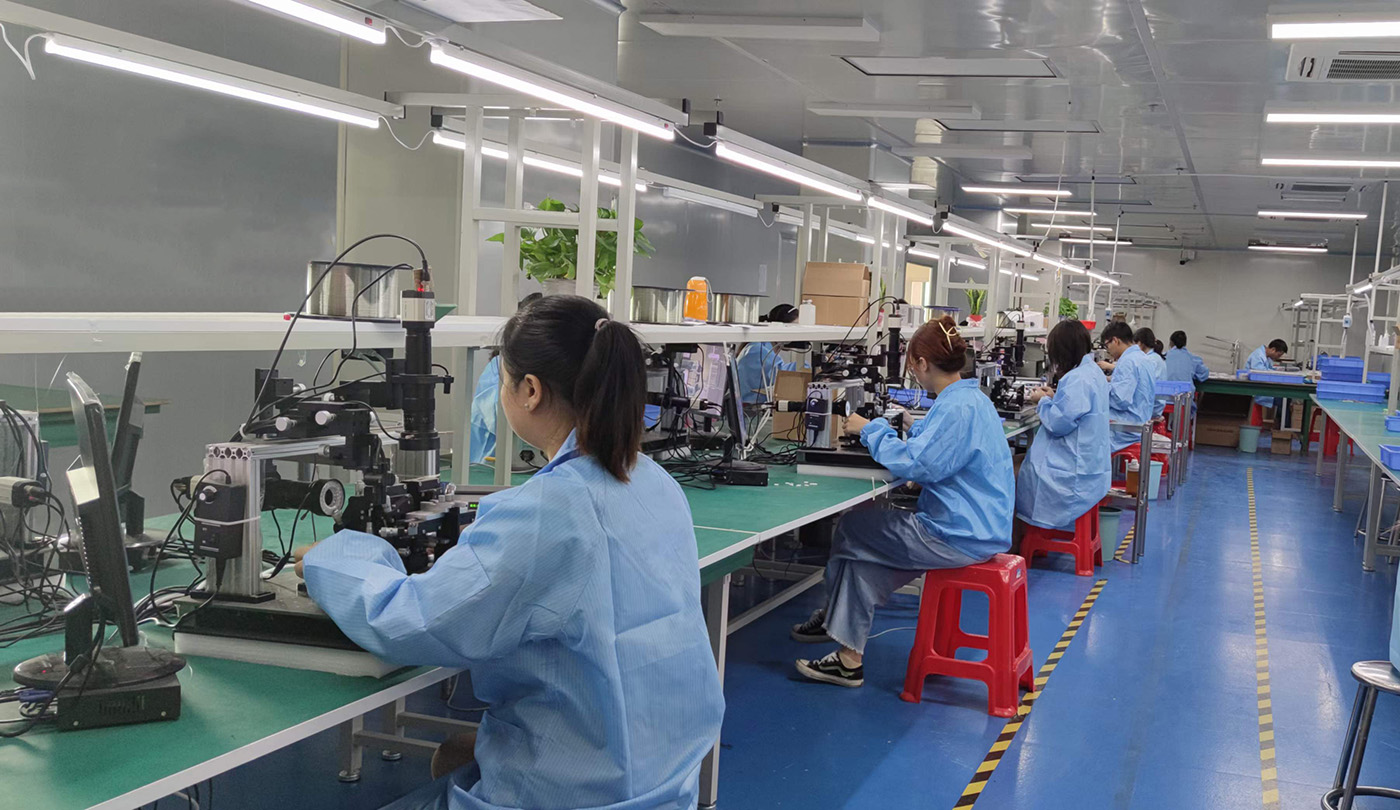
With more than 13 years of expertise in fabricating high-end telecommunication and copper connectivity solutions, we adhere strictly to international fiber optic and network hardware industry standards. Our factories deploy mature, scientific QC methodologies, conducting 100% testing and inspection procedures before any item leaves our shipping docks.
Our quality verification sequence includes:
Years of dedicated sales and active service deployment have earned us a globally distributed, loyal clientele. Today, our products are running continuously across network installations in East Asia, Southeast Asia, the Middle East, Eastern Europe, Western Europe, Northern Europe, South America, North America, North Africa, and South Africa.
Mutually beneficial, long-term cooperation is the core driving force behind our operations. Many of our custom OEM and ODM products have won competitive tenders for major Telecom Operators and exceed the most demanding standards of enterprise end-users.
Our key terminal telecom operator partners include:
A look at the structural evolution of copper and optical physical layer interfaces.
The transition from 10G NRZ signaling to 25G NRZ signaling. SFP28 DACs leverage upgraded SFF-8402/8449 guidelines, enabling 2.5x throughput gains over single-channel copper interconnects without modifying basic slot sizes.
By grouping four parallel channels running at 25Gbps NRZ, QSFP28 DAC assemblies successfully deliver 100G high-performance links. These assemblies remain the standard option for ToR spine-leaf architectures.
As architectures move past NRZ limits, PAM4 (4-Level Pulse Amplitude Modulation) doubles transmission capacity. Our active DAC and AOC products are certified to support these complex PAM4 structures, meeting next-generation high-density demands.
Get answers to critical technical questions regarding the compatibility, deployment, and customization of 10G SFP+ DAC cables.
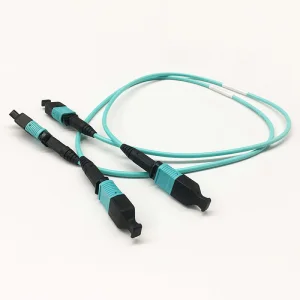
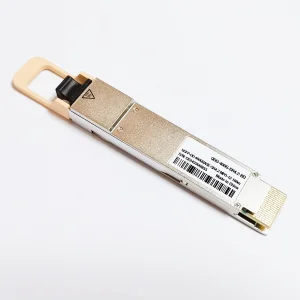
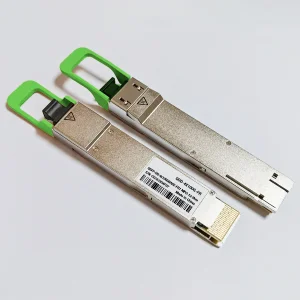
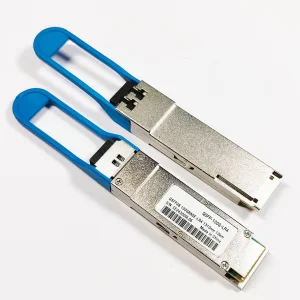
Complete your deployment with our range of high-performance passive fiber optics, transceivers, and termination tools.
 KOCENT OPTEC