High-speed passive and active optical modules engineered for telecommunication networks, enterprise clusters, and modern cloud data centers.
As hyperscale cloud platforms, distributed storage grids, and artificial intelligence clusters expand, network engineering teams face an ongoing challenge: balancing the cost of scale against strict parameters of signal integrity and power efficiency. Within the modern leaf-spine architecture, the Top-of-Rack (ToR) switch-to-server interconnect boundary represents a crucial point of leverage. For transmission distances below 5 meters, 100G QSFP28 Direct Attach Copper (DAC) cables remain the industry standard for high-bandwidth links, offering unmatched advantages in latency, energy efficiency, and cost.
This whitepaper analyzes the physical properties, regulatory structures, and manufacturing processes of 100G DAC solutions. It is designed to provide global procurement teams and network architects with the technical insight needed to make informed sourcing decisions.
Passive 100G DAC cables route electrical signals directly over twinaxial copper wires without active amplification. By eliminating transceivers and optical conversion circuits, passive DACs reduce latency to near-zero levels. This physical pathing makes them ideal for high-frequency trading (HFT) platforms and real-time distributed database nodes.
With zero power consumption per port (0 Watts), passive copper interconnects lower data center cooling overhead. Over thousands of links in a multi-row cluster, switching from Active Optical Cables (AOC) to passive DACs can save kilowatts of power daily, helping operators achieve lower Power Usage Effectiveness (PUE) metrics.
Signal attenuation is directly tied to wire gauge (AWG). Thicker conductors (such as 26AWG and 24AWG) extend reliable reach up to 5 meters but are heavier and stiffer. Thinner cables (like 30AWG) offer a smaller bending radius, simplifying thermal management and routing density within rack enclosures.
| Wire Gauge (AWG) | Typical Reach (m) | Cable Diameter (OD) | Bending Radius (Min) | Thermal & Routing Applications |
|---|---|---|---|---|
| 30 AWG | 0.5m – 1.5m | 4.6 mm | 23 mm | Ideal for high-density patch fields, server cabinet intra-rack links, and maximizing airflow. |
| 28 AWG | 1.0m – 3.0m | 5.8 mm | 29 mm | Standard multi-purpose gauge balanced for reliable signal pathways and moderate flexibility. |
| 26 AWG | 2.0m – 5.0m | 7.2 mm | 36 mm | Engineered for long-reach inter-cabinet connections; requires structured cable support systems. |
| 24 AWG | 4.0m – 5.0m+ | 8.2 mm | 41 mm | Maximum copper reach. Used in structured cross-connect points with large vertical pathways. |
The global telecommunications supply chain relies on specialized manufacturing ecosystems capable of producing high-frequency electrical cables with sub-millimeter precision. Sourcing 100G DAC and high-density MTP/MPO interconnects directly from leading factories in China offers significant cost advantages. This is driven by fully integrated supply chains, automated manufacturing facilities, and proximity to high-frequency raw material suppliers.
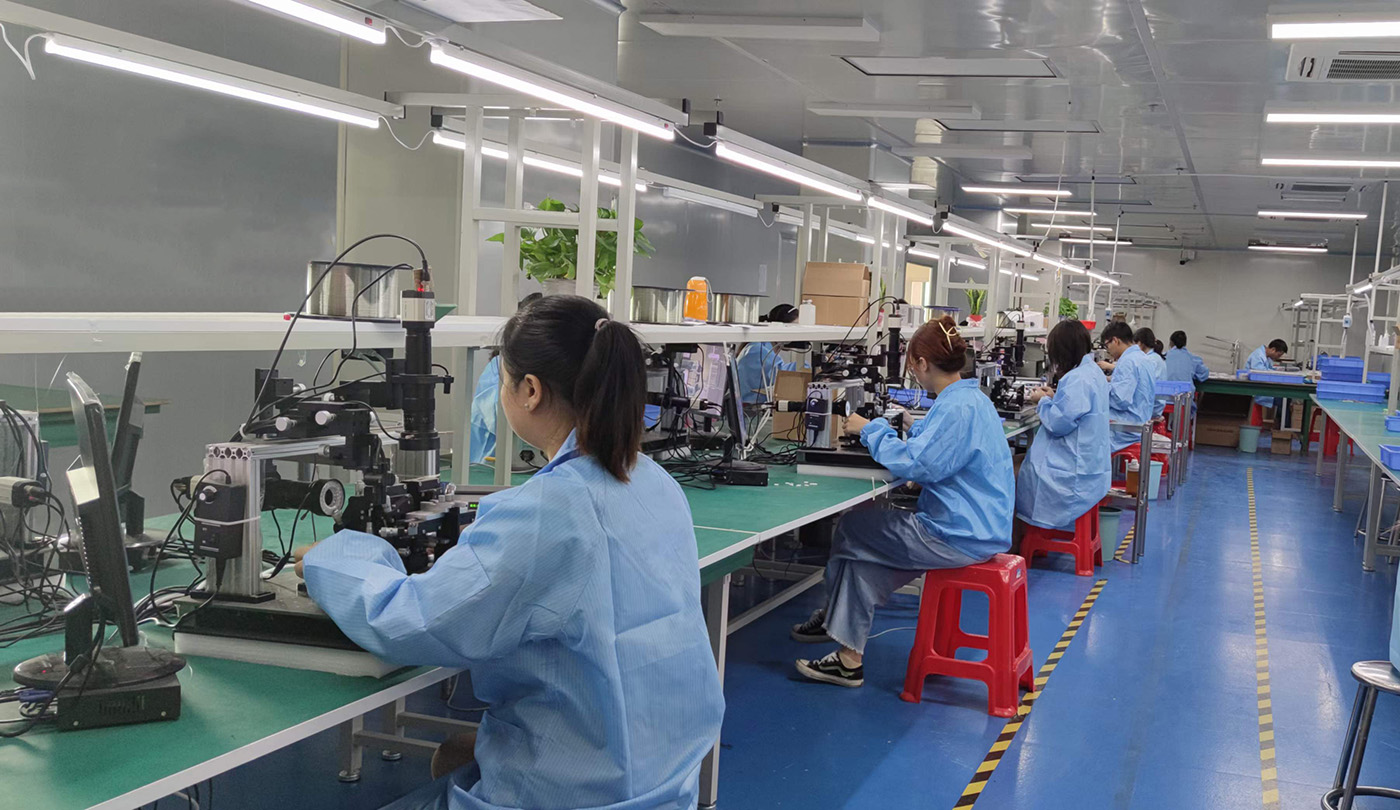
Our production plants leverage state-of-the-art termination technology, high-precision laser stripping systems, and automated soldering equipment. This ensures consistent electrical path impedance and minimizes return loss at high frequencies. By eliminating intermediary distributor margins, global hyperscalers and telecom providers can source premium products while maintaining strict signal integrity standards.
For network installations, direct integration with factory-level EEPROM coding teams is critical. Sourced units are pre-coded and tested on target switches (such as Cisco, Arista, and Mellanox) before shipment, avoiding deployment delays caused by firmware incompatibility.

Ensuring operational compliance and local regulatory alignment for critical infrastructure projects across Europe, the Americas, and APAC.
Products comply with CE, FCC, RoHS, and REACH guidelines, ensuring toxicological safety and electromagnetic compatibility. For high-occupancy server rooms, LSZH (Low Smoke Zero Halogen) and OFNR riser-rated outer jackets are available to meet local building and fire safety codes.
Equipped with EEPROM registers containing targeted vendor profiles. These modules satisfy MSA SFF-8665 and SFF-8636 requirements, allowing seamless hot-plugging and real-time DOM (Digital Optical Monitoring) tracking on modern network operating systems.
To mitigate maritime and logistical delays, we offer regional warehousing and buffer stocking programs. Our logistics partnerships help maintain inventory reserves, ensuring rapid local transit when expansion demands surge.

Established in 2012 in Hong Kong as a high-tech communication enterprise, Kocent Optec Limited has grown to become one of China's leading fiber optic termination product manufacturers and solution providers.
We are dedicated to developing and manufacturing fiber optic communication products ranging from passive to active categories for telecommunication networks, enterprise networks, and data centers.
By leveraging our extensive experience and production capacity, we help our clients improve operational outcomes, expand their core competencies, and outperform competitors. We focus on close customer collaboration, defining ourselves as a reliable partner in fiber optic connection solutions. We believe our technical differentiators are your operational advantages.
With more than 13 years of experience in manufacturing telecommunication fiber optic products, we strictly follow industry standards. We use mature scientific methods to deliver your products on time and ensure that 100% of products are tested and inspected before shipment.
Our sales and service experience has helped us build partnerships with customers worldwide. Today, we support clients in East Asia, Southeast Asia, the Middle East, Eastern Europe, Western Europe, Northern Europe, South America, North America, North Africa, and South Africa.
Global Carrier Validation
Our OEM and ODM products have won Telecom Operator tenders and satisfy strict end-user requirements worldwide.
Our components, transceivers, splitters, and high-frequency cabling profiles are used in networks managed by leading international telecom operators:
High-speed copper interconnects are utilized in various segments of modern networking, delivering reliability where optical conversion overhead is unnecessary.
Connecting server network interface cards (NICs) to top-of-rack switches. The short physical distance allows 100G passive DACs to link up to 5 meters without latency overhead or optical conversion costs.
NVMe storage arrays require high bandwidth and low latency. Utilizing 100G twinax copper cables preserves signal speed and avoids processing latency, ensuring fast file transfers in NAS and SAN environments.
In structured network topologies, passive 100G DACs handle adjacent rack communication. This helps operators control interconnect budgets when designing hyper-converged computing clusters.
Answers to common technical, logistical, and design questions regarding 100G DAC cabling systems.
Select fiber management housings, patch panels, transceivers, and distribution closures designed for long-term network infrastructure reliability.
 KOCENT OPTEC
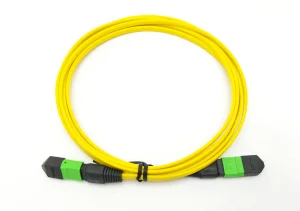
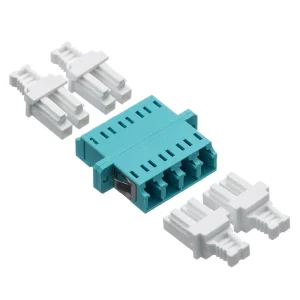
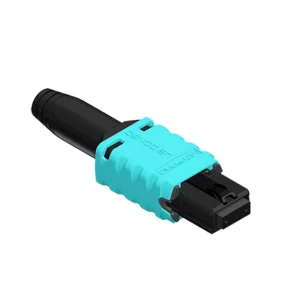
![ODM [SENKO] Optical Fiber MPO-PLUS Mutimode Aqua Color Connector Housing](https://site.cdnfile.io/bb9ef4f37853297884c815b5d6cf2132300_300.webp)
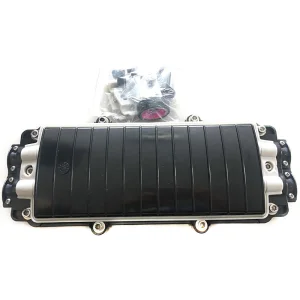
![Cheap [SENKO] Optical Fiber MPO-PLUS Premium Mini Connector Single-mode Housing](https://site.cdnfile.io/59c8deaa9fdec6072c4782dc4754000c300_300.webp)