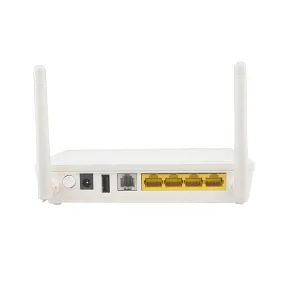
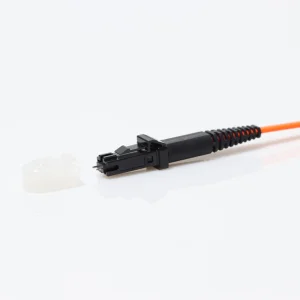
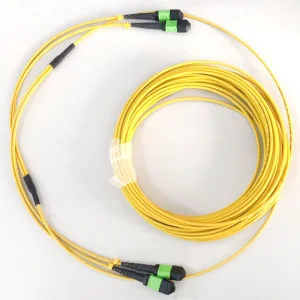
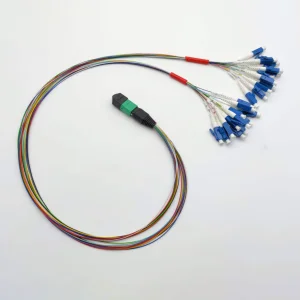
Browse our featured components engineered for modern hyper-scale datacenters, FTTH architectures, and high-density networking facilities.
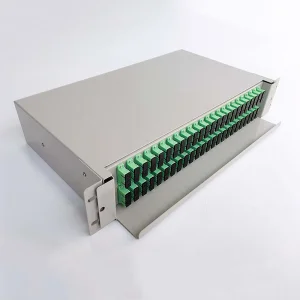
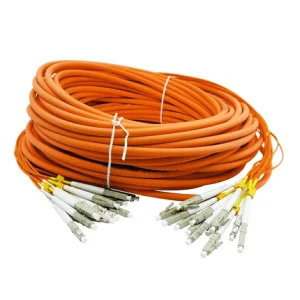
Established in 2012 in Hong Kong as a premium high-tech communication enterprise, Kocent Optec Limited has grown to become one of China's most trusted manufacturers and solution providers for fiber optic termination and active optical transmission technologies.
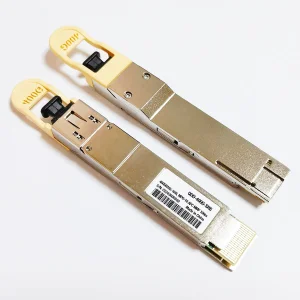
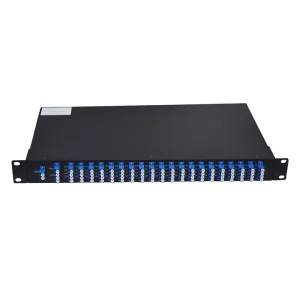
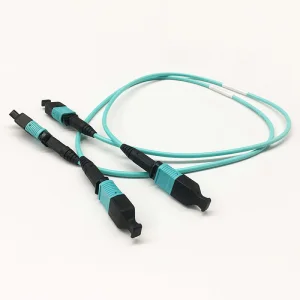
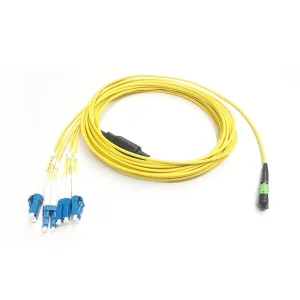
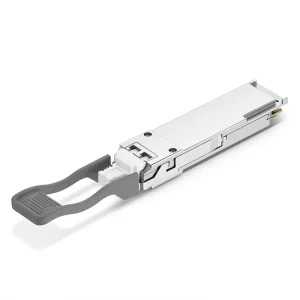
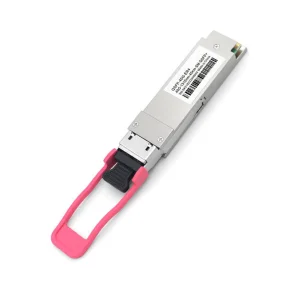
We are fully dedicated to the engineering, precision manufacturing, and global distribution of fiber optic communication products. Our portfolio spans from active optical transceivers—including 10G SFP+, 25G SFP28, 40G QSFP+, 100G QSFP28, and 400G QSFP-DD modules—to high-density passive fiber patch cords, MTP/MPO systems, and DWDM multiplexers designed for enterprise networks, telecommunication operators, and hyperscale data centers.
By leveraging our deep-rooted domain expertise and advanced production facilities, we deliver high-performing connectivity solutions that enhance our clients' competitive advantages. We focus on true engineering collaboration, helping telecom operators and infrastructure managers deploy systems that perform reliably under the most rigorous conditions.

How the global transition towards 10Gbps optical interfaces is shaping datacenter efficiency and edge access deployments.
Modern 10G SFP+ modules focus heavily on lowering energy footprints. Leading Chinese factories utilize cutting-edge DSPs and optimized laser drivers to reduce power consumption to less than 1.0W per module, translating into massive operational savings and simplified thermal management in high-density switch configurations.
The expansion of 5G networks and edge-computing applications requires optical transceivers to operate in unconditioned environments. The trend has shifted rapidly towards Industrial Temperature rated SFP+ transceivers capable of running flawlessly from -40°C to 85°C without performance degradation.
To prevent vendor lock-in, global enterprise architectures demand transceivers that comply rigidly with Multi-Source Agreement (MSA) standards. This allows Kocent Optec modules to be coded on-the-fly to support multiple brands (Cisco, Juniper, Arista, Huawei) concurrently.

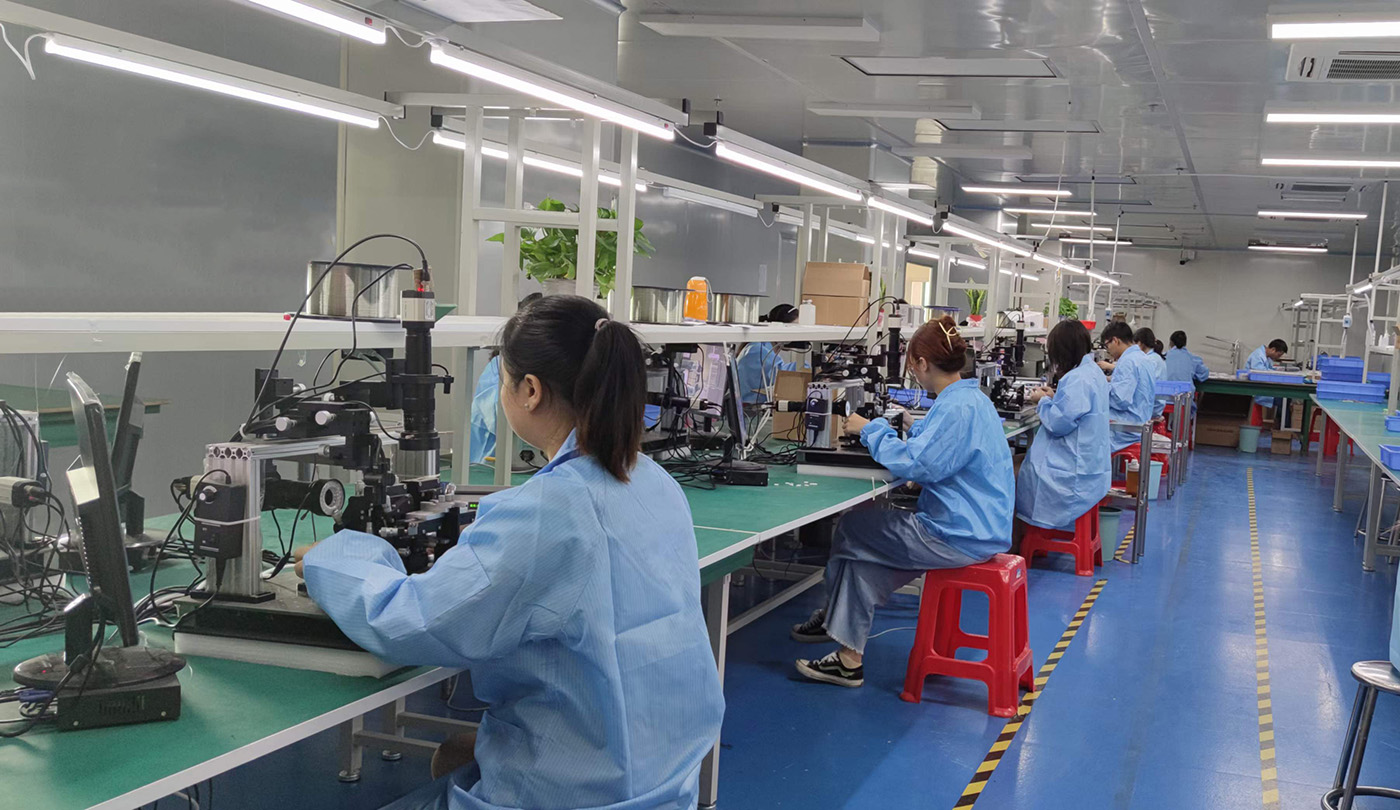
The global fiber optics market demands absolute precision. At Kocent Optec, we tackle this challenge by employing modern automated manufacturing processes, standardized clean rooms, and rigorous quality control methodologies.
We follow strictly fiber optic industry standards by using mature scientific methods to deliver your products on time and ensure that 100% of products are tested and inspected before shipment.
Our automated alignment systems, high-precision laser welding benches, and computerized eye-diagram testers ensure each 10G SFP+ module matches the expected signal-to-noise ratio, receiver sensitivity, and bit-error-rate thresholds. This robust manufacturing ecosystem ensures that our supply chain remains resilient, allowing us to maintain stable lead times even during global supply chain disruptions.
What procurement managers and systems architects must evaluate when choosing a long-term transceiver manufacturer.
Procurement teams require transceivers that integrate seamlessly into legacy networks. Kocent Optec customizes transceiver EEPROMs to perfectly emulate Cisco, HP, Juniper, Brocade, or generic OEM switches, avoiding protocol mismatch errors.
Digital Diagnostics Monitoring (DDM) is non-negotiable. It allows network admins to monitor optical output power, receiver input power, temperature, laser bias current, and transceiver voltage in real-time to prevent sudden link failures.
High-tier deployments demand strict regulatory compliance. Our active products are CE, FCC, RoHS, and TUV certified, providing complete traceability from raw material wafers to finalized, packaged products.
Whether it is SR (Short Reach 300m) over OM3 multimode fiber or ZR (80km) over single-mode fiber, our production lines support diverse transmitter/receiver designs (VCSEL, DFB, EML lasers and PIN/APD detectors) to fit any physical layout.
Our active transceiver modules and passive fiber systems are engineered to handle heavy payloads in a variety of challenging, real-world deployment scenarios:
With years of hard-won sales and service experience, our footprint covers East Asia, Southeast Asia, the Middle East, Eastern & Western Europe, North & South America, and Africa.
Win-win cooperation remains our guiding principle. Our customized OEM and ODM solutions are designed to pass complex Telecom Operator bidding processes and address the operational needs of global network engineers.
Our major terminal telecom operator compatibility & delivery footprint includes:
Get answers to critical hardware issues, compatibility settings, and deployment concerns.
The primary differentiator lies in the transmission rate. Standard SFP modules typically support speeds of 155 Mbps, 622 Mbps, or 1.25 Gbps. 10G SFP+ (SFP Plus) modules are engineered to handle data rates up to 10.3 Gbps or 11.1 Gbps. Although SFP+ shares the identical mechanical form factor as SFP, it leverages advanced electrical/optical characteristics to achieve higher bandwidth.
Every switch vendor utilizes proprietary firmware codes embedded within the transceiver's EEPROM. Kocent Optec maintains an updated compatibility laboratory equipped with diverse switches from leading OEMs. We write specialized configuration codes onto the EEPROM chips to ensure our modules bypass proprietary host checks, avoiding port lockout errors.
DOM (Digital Optical Monitoring) and DDM (Digital Diagnostics Monitoring) refer to the same capability. They allow network administrators to monitor real-time diagnostic parameters, such as optical transceiver temperature, laser bias current, optical transmission power, receiver optical power, and internal supply voltage. This helps locate link failures proactively and minimizes downtime.
You can generally plug a 1G SFP module into a 10G SFP+ port on most switches, but the speed will be capped at 1G. However, you cannot plug a 10G SFP+ module into a standard 1G SFP port, as 1G ports do not have the internal ASIC hardware capabilities to decode 10 Gbps signals.
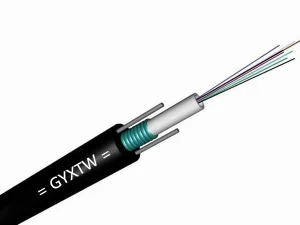
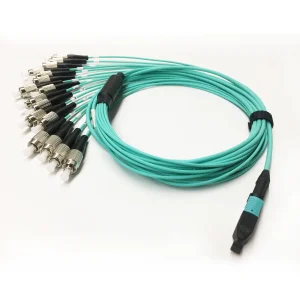
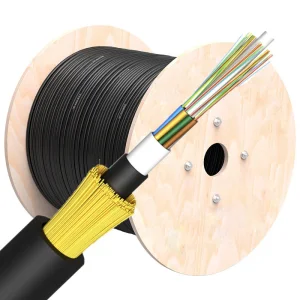
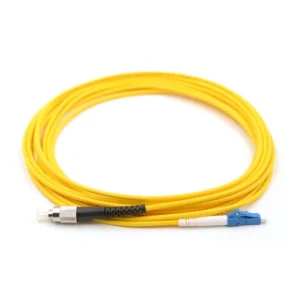
Complementary fiber infrastructure products designed to work in synergy with our active transceiver components.
 KOCENT OPTEC