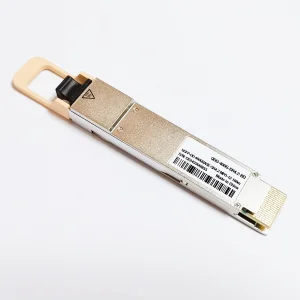
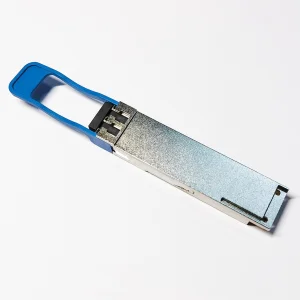
As enterprise networks transition from legacy 1Gbps systems to multi-gigabit workloads, infrastructure managers are confronted with a primary design fork: upgrade to single-mode/multi-mode optical fibers, or leverage existing balanced twisted-pair copper cabling. The 10GBASE-T SFP+ Copper Transceiver Module represents the optimal bridge. By enabling 10Gbps transmission speeds over Category 6a/7 structured copper topologies at distances up to 30m, 80m, or even 100m depending on the PHY silicon configuration, it allows operators to sweat their current structural assets, avoiding capital-intensive fiber deployments.
Information Gain Insight: While optical transceivers provide superior reach and lower intrinsic module power latency, the total cost of ownership (TCO) analysis shifts drastically in short-reach horizontal runs. The labor costs associated with recabling a legacy Cat6a structured network with OM4 fiber often outweigh the marginal transceiver unit savings. The 10G copper module acts as a logical mediator, allowing hot-swappable drop-ins directly into existing SFP+ switch cages.
Understanding the intricacies of PHY (Physical Layer) chips inside these modules is crucial. A low-cost copper module relies on the balance between power dissipation and signal processing capabilities. High-performance modules employ DSP-based (Digital Signal Processing) equalization to cancel out Echo and Near-End Crosstalk (NEXT) inherent in high-frequency copper transmission. These elements are detailed in our technical overview below.
When selecting cheap 10G copper modules, procurement teams must evaluate architectural constraints. Direct-attach copper (DAC) cables are cost-effective but limited to 7m. For distances spanning up to 30 meters or 80 meters within rows or across neighboring racks, the RJ45 10G copper module stands as the premier technology. Below is a rigorous comparative breakdown showing how modern copper modules interface across standard media types:
| Module Variant Type | Transmission Distance | Cable Grade Requirement | Average Power Consumption | Typical Application Scenario |
|---|---|---|---|---|
| Standard 10GBASE-T SFP+ (30m) | Up to 30 Meters | Cat6A / Cat7 / Cat8 | ~2.3W - 2.5W | Intra-rack Switch-to-Server connection |
| Extended Reach 10GBASE-T (80m) | Up to 80 Meters | Cat6A / Cat7 UTP/STP | ~2.8W - 3.0W | End-of-Row (EoR) distribution networks |
| Ultra-Distance 10GBASE-T (100m) | Up to 100 Meters | Qualified Cat7a / Cat8 | ~3.2W | Cross-floor high-speed structural backbones |
| 10G SFP+ Active Copper DAC | Up to 7 Meters | Integrated Twinax Cable | < 0.5W | Adjacent servers within the same rack |
Heat dissipation is the single most critical parameter when deploying 10G Copper modules in density. Unlike optical modules that run cool due to low current drive requirements, copper PHY units draw higher power to maintain signal integrity over twisted pairs. A well-designed cheap 10G copper module utilizes specialized low-power consumption transceivers (down to 1.6W-2.0W range), dramatically lowering overall rack temperatures and mitigating switch thermal shutdown risks.
Established in 2012 in Hong Kong as a high-tech communications enterprise, Kocent Optec Limited has emerged as one of China's leading fiber optic termination product manufacturers and solution providers. We are dedicated to developing and manufacturing premier fiber optic communication and high-speed copper interconnect systems ranging from passive to active categories, specifically engineered for modern telecommunication networks, enterprise infrastructures, and hyper-scale data centers.
By leveraging our extensive engineering experience and deep manufacturing capacities accumulated over the decade, we maximize output efficiency and cost performance for our global clientele. We define ourselves not merely as a component supplier, but as a strategic partner in high-performance networking connectivity solutions.


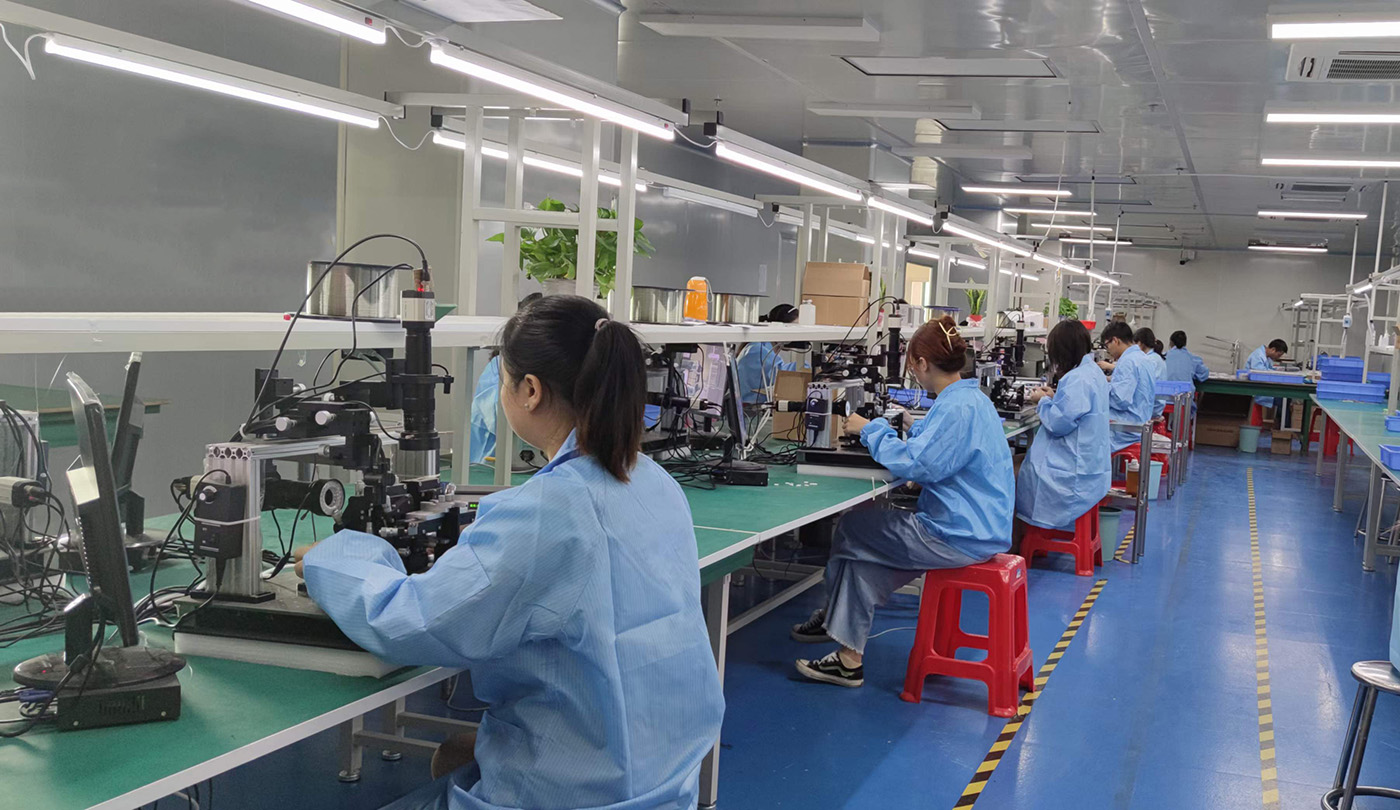
We place high emphasis on rigorous structural engineering and close customer collaboration. With more than 13 years of experience in manufacturing telecommunication products, we follow strict industrial standards. Using mature scientific validation methods, we ensure that 100% of our products undergo thorough inspection and compatibility testing before shipment.
This commitment to zero-defect manufacturing means our active SFP+ transceivers, copper modules, and passive patch cords exhibit high compatibility rates across hundreds of major networking brands, helping our customers outperform competitors in uptime and deployment speed.
When procurement managers search for "cheap 10G copper module quotes", the objective is minimizing cost without sacrificing structural integrity, mean time between failures (MTBF), or electrical compatibility. Choosing a direct Chinese OEM manufacturer like Kocent Optec yields direct systemic cost benefits. Let's break down where the cost efficiencies originate:
SEO Value-Add Insight: Direct sourcing from a manufacturer with 13+ years of experience bypasses distribution tiers. The "cheap" cost does not refer to cheapened components; it represents the optimization of manufacturing efficiency, integrated logistics out of Hong Kong, and localized engineering support.
Procuring physical layer hardware on a global scale demands strict compliance with international standards and national safety norms. Network components must pass EMI/EMC regulations, safety inspections, and hazardous chemical restrictions to be successfully integrated into enterprise layouts.
Kocent Optec adheres to strict global certification pathways: FCC Part 15 Class B (US), CE Mark (Europe), RoHS, REACH compliance, and UL 94 V-0 flame-retardant requirements for connectors. These credentials guarantee that when our modules deploy, they meet local regulatory audits and operate safely.
Our long-term commitment to win-win cooperation has won Kocent Optec major OEM and ODM tenders for global telecom operators and enterprise networks. Our components and transceivers satisfy end-user requirements for major tier-1 telecom operators globally, including:
10GBASE-T SFP+ Copper modules provide flexibility across distinct application environments where fiber is impractical or cost-prohibitive:
Modern servers are shipping standard with onboard 10G RJ45 LAN interfaces. Rather than purchasing expensive SFP+ NIC cards and optical transceivers for every server, you can plug a 10GBASE-T Copper transceiver directly into the Top-of-Rack SFP+ switch. This setup enables direct RJ45-to-RJ45 runs over pre-installed Category 6a cables, reducing overall server node provisioning costs.
For horizontal distribution connections linking wiring closets within 80 meters of the core switch, pulling fiber requires dedicated splicing equipment and specialized technicians. A 10G Copper module runs efficiently over existing structured UTP/STP cable plants, permitting instantaneous bandwidth upgrades without modifying structural building architecture.
With the rise of Wi-Fi 6/6E/7 Access Points, backhaul demands are regularly exceeding 1Gbps and 2.5Gbps, pushing up to 10Gbps. Modern switches must scale adaptively. The flexibility of 10GBASE-T Copper modules is their ability to auto-negotiate. Quality units support 100M/1G/2.5G/5G/10G rate-matching, providing compatibility with legacy legacy gear while protecting future high-speed upgrades.
Optical transceivers convert electrical signals to photons, which travel through low-loss silica glass fiber. Conversely, copper modules drive electrical signals over high-resistance twisted-pair copper cables. Driving high frequency signals over copper requires complex digital signal processing (DSP) to cancel echo and crosstalk, resulting in higher thermal power consumption (~2.0W-2.5W for copper vs <1W for optical).
Standard commercial modules achieve 30 meters over Cat6a cabling. Extended-distance modules with specialized PHY chips can reach up to 80 meters or 100 meters over high-performance Cat7a/8 shielded cables. Always check the chip generation and switch thermal budget limitations before specifying links over 30 meters.
Yes, but with distance limitations. Legacy Cat6 cabling is specified for 10Gbps transmission up to 37-55 meters under favorable EMI conditions. For mission-critical environments, Cat6a or Cat7 shielded cabling is highly recommended to prevent packet loss due to alien crosstalk.
We maintain a compatibility lab containing target switches and routers from Cisco, Juniper, Ubiquiti, Arista, HPE, and others. Each SFP+ transceiver is programmed with appropriate vendor-specific EEPROM code, then rigorously tested on physical hosts to confirm Link-up, DOM (Digital Optical Monitoring) readings, and zero error rates.
For standardized configurations, we keep physical inventories ready for immediate assembly in Hong Kong and Shenzhen. Custom vendor encoding and bulk production runs are usually processed, verified, and shipped within 3 to 7 working days. We utilize express air freight to ensure rapid global delivery.
Direct integration removes intermediate distribution markups, custom broker fees, and retail repackaging costs. By sourcing directly from Kocent Optec, enterprises gain access to direct factory pricing, customizable coding, and specialized support resources, lowering project CapEx by up to 40%.
 KOCENT OPTEC