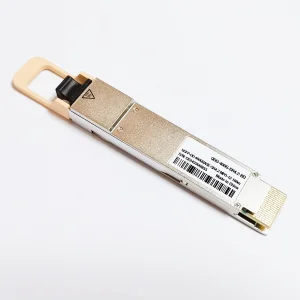
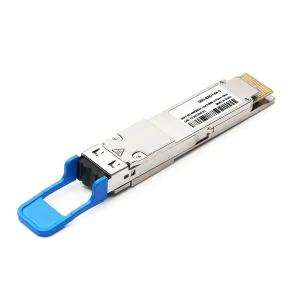
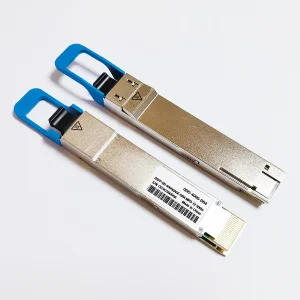
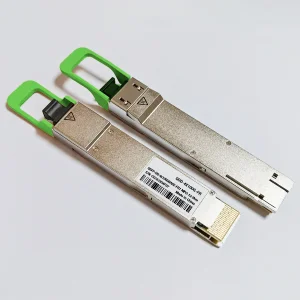
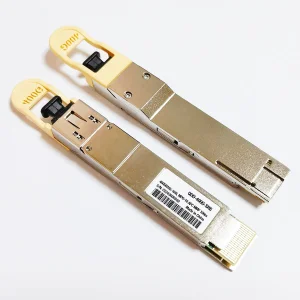
High-performance PAM4-modulated optical transceivers compliant with MSA standards for enterprise, carrier, and hyperscale networks.
Portugal is positioning itself as a major European digital gateway. Due to its strategic geographic location, it serves as the landing site for critical submarine fiber optic networks, including the EllaLink cable system linking Europe directly to South America. Tech corridors in Lisbon, Porto, and the massive hyperscale projects in Sines (such as the SINES Project) are driving a rapid surge in domestic cloud storage and computing demands.
To support this scale, modern Portuguese network architectures are migrating away from legacy 100G systems to high-efficiency 400G QSFP-DD (Double Density) interfaces. This transition reduces physical rack footprints, lowers per-gigabit power consumption, and provides the necessary bandwidth for high-performance computing (HPC) and artificial intelligence workloads.
As a leading hardware provider, Kocent Optec Limited delivers highly reliable, fully tested optical solutions that directly meet the performance standards required by Portuguese service providers, utilities, and research networks (like FCCN).
With high-speed landing stations along the Atlantic coast, Portugal demands transceivers capable of seamless handoffs from submarine termination points directly to localized DWDM metro rings and spine-leaf data center switch networks.
Consult Infrastructure SolutionsDelivering high-capacity transport relies on key technical choices. The section below details how 400G QSFP-DD interfaces balance thermal constraints, power budgets, and fiber topology configurations.
400G optical links utilize 4-Level Pulse Amplitude Modulation (PAM4) rather than traditional Non-Return-to-Zero (NRZ). PAM4 doubles the transmission capacity by sending 2 bits per symbol interval. Because of the reduced signal-to-noise ratio inherent in multilevel signaling, integrated Forward Error Correction (FEC) is applied at the host port to ensure error-free transmission down to a Bit Error Rate (BER) threshold of 1E-15.
QSFP-DD remains the industry's preferred standard due to its backward compatibility with legacy QSFP+, QSFP28, and QSFP56 slots. This allows network engineers in Portugal to execute phased upgrades on existing hardware. OSFP platforms offer higher thermal dissipation capability, but QSFP-DD designs utilize optimized cooling fins and advanced DSP (Digital Signal Processing) chips to keep active power consumption under 12W per module.
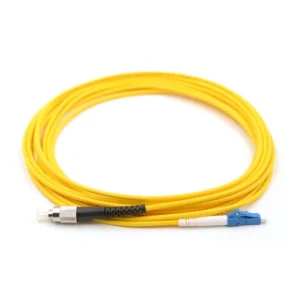
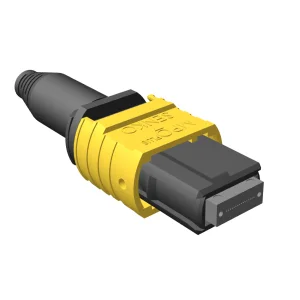
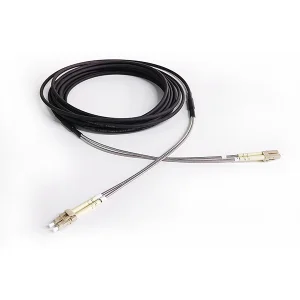
Choosing the correct standard depends on the distance and type of fiber plant. Short-reach (SR4.2/SR8) systems leverage multi-mode fiber (MMF) with MPO connections for cost-sensitive link spans under 100 meters. Medium and long-haul links (DR4, FR4, LR4) deploy single-mode fiber (SMF) via LC duplex or MPO-12 interfaces, operating across O-band and C-band wavelengths to reach up to 10 kilometers without mid-span amplification.

In the high-speed networking sector, reliability and supply chain continuity are critical. Optical transceivers represent a significant portion of capital expenditure (CapEx) when building or expanding data center infrastructure. Portuguese operators require trusted manufacturing partners who can guarantee stable lead times, interoperability across multiple vendor platforms, and rigorous quality testing.
Kocent Optec Limited mitigates supply chain risks by maintaining vertically integrated assembly lines. Every transceiver undergoes physical layer testing, state-of-the-art spectral analysis, and bit-error-rate testing in native host systems. This process ensures drop-in compatibility with enterprise equipment from Cisco, Juniper, Arista, and other leading manufacturers.
A trusted, high-tech communication enterprise and a leading manufacturer of fiber optic termination products and active optical solutions.
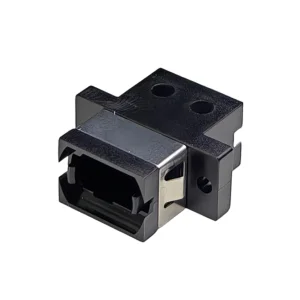
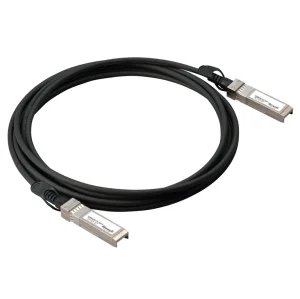
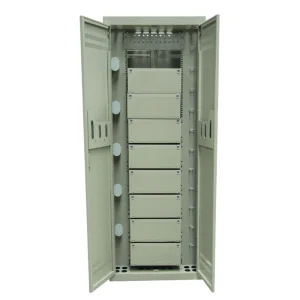
Established in 2012 in Hong Kong, Kocent Optec Limited has grown into an international provider of active optical transceivers and passive fiber distribution systems. We support telecom networks, enterprise campuses, and cloud-scale data centers globally. Our comprehensive portfolio includes advanced 400G QSFP-DD modules, fiber patch cords, optical adapters, distribution frames, and custom passive cabling assemblies.
Our business philosophy is built on technical collaboration and high-quality production. We align our manufacturing processes with strict international quality standards, ensuring that 100% of our products undergo thorough inspection and testing before shipment. This approach ensures high reliability and long-term performance under demanding operating conditions.
Our solutions have been deployed by telecom operators and enterprise networks worldwide. By working closely with our clients, we help them build scalable optical networks, optimize total cost of ownership, and achieve a high return on investment.

Deploying networking hardware in the European Union requires compliance with safety, environmental, and performance standards. Kocent Optec Limited ensures all shipped 400G transceivers and fiber systems carry the necessary certifications for smooth integration into European networks:
Additionally, we provide localized remote technical support. This helps Portuguese network engineers with link budget calculations, multi-vendor firmware coding, and real-time troubleshooting.
Our products are engineered to meet the technical standards of global telecommunication operators. We support infrastructure deployments for major carriers, helping satisfy the demands of end-user data traffic.
As bandwidth demand continues to rise, network architectures must adapt. The timeline below outlines the transition roadmap for high-speed optical transceivers.
400G QSFP-DD becomes the standard interface for enterprise core networks and metro links in Portugal. Hyperscale sites begin deploying early-generation 800G transceivers based on 100G PAM4 electrical lanes.
Next-generation ASICs enable 200G per-lane electrical interfaces. This transition allows for 800G configurations (4x200G) and early 1.6T implementations, improving thermal efficiency and reducing component complexity.
Traditional pluggable transceivers reach physical thermal limits. Silicon Photonics and Co-Packaged Optics (CPO) emerge as key technologies, integrating the optical engine directly onto the switch ASIC substrate to minimize power consumption.
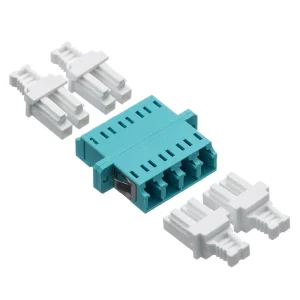
Active 400G transceivers require clean, low-loss physical layer links. Our high-density fiber connectivity systems are designed to minimize insertion loss and maintain stable transmission parameters.
A comprehensive range of high-performance passive and active components to complete your network deployments.
Building high-speed network infrastructure requires an integrated approach. Our 400G transceivers are optimized for typical leaf-spine topologies. In these configurations, top-of-rack switches aggregate high-density server connections via 100G links and interface with the network spine using 400G optical uplinks. This design provides balanced traffic patterns and reduces packet latency.
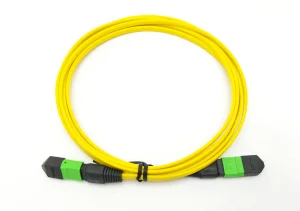
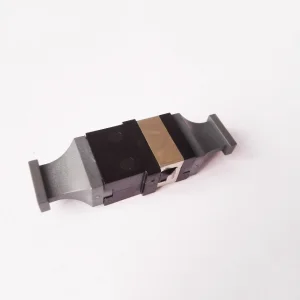
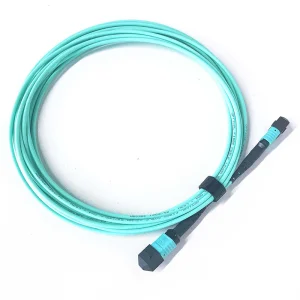
Maintaining link performance requires clean and reliable physical connections. Using low-loss MPO/MTP connectors and G657A1 single-mode bend-insensitive fiber trunk cables minimizes insertion loss and helps maintain the required optical margin.
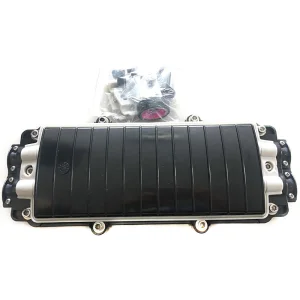
For external network connections or inter-building installations, our horizontal splice closures and tactical outdoor fiber cables provide mechanical protection against environmental factors. This protection helps ensure stable transmission links under varying weather conditions.
Answers to common technical, commercial, and logistical questions regarding the deployment of 400G systems in Portugal.
Partner with Kocent Optec Limited for reliable optical transceivers, verified compatibility, and comprehensive technical support. Contact our sales engineers to request custom configurations, detailed specifications, or price quotes.
Send Inquiry Now KOCENT OPTEC