Explore our catalog of high-performance passive and active hardware components engineered for mission-critical enterprise and telecom environments.
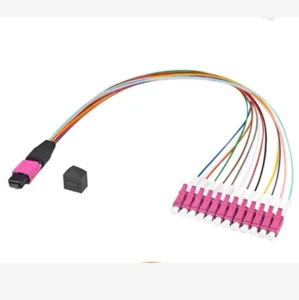
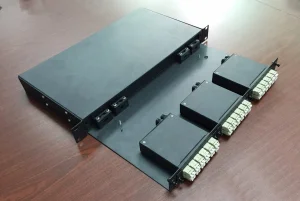
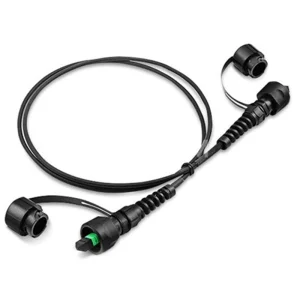
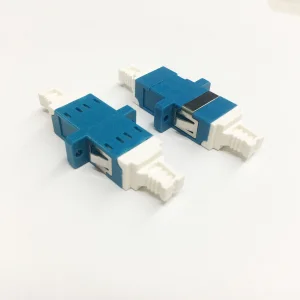
Established in 2012 in Hong Kong as a high-tech communication enterprise, Kocent Optec Limited is one of China's leading fiber optic termination product manufacturers and solution providers. We are dedicated to developing and manufacturing premier fiber optic communication hardware, bridging the space between passive components and active optical transceivers for telecommunication networks, enterprise infrastructures, and next-generation hyperscale data centers.
By leveraging our extensive engineering experience and state-of-the-art production capacity gained over the years, we magnify the technological and commercial outcomes for our global clientele. This core focus expands our clients' structural competencies and empowers them to outperform local competitors. We place a supreme emphasis on direct customer collaboration, defining ourselves not merely as a component supplier, but as your trusted long-term partner in fiber optic connectivity solutions. We believe our technical differentiators directly translate to your competitive advantage.

Analyzing the global paradigm shift to 100G connectivity and the infrastructure demands of the AI, Machine Learning, and 5G eras.
Years Industry Experience
Products Factory Tested
Global Operators Enabled
Ultra-Low Insertion Loss (IL)
The global enterprise and telecom market is experiencing an unprecedented demand for optical bandwidth, driven by Hyperscale Cloud computing, Artificial Intelligence (AI) training clusters, Edge computing nodes, and dense 5G network rollouts. As systems transition away from legacy 10G and 25G channels, the optical interface standardizing around 100G QSFP28 and its emerging counterparts (such as 100G SFP-DD and SFP112) has become the dominant technology block for data center interconnects (DCI) and access-aggregation layers.
Traditionally, 100G Ethernet was deployed utilizing larger form factors like CFP, CFP2, or CFP4. However, the market has heavily consolidated around the QSFP28 (Quad Small Form-factor Pluggable 28) and newer single-lane/dual-lane SFP architectures due to their ultra-compact footprint, reduced thermal profile, and optimized power-to-bit performance. An industry-leading 100G manufacturer must deliver transceivers that maintain signal integrity across varying lengths—from short-range multi-mode fiber (SR4) to long-haul single-mode links (LR4/ER4/ZR4) and copper-based passive twinax cables (DAC).
Facilitating non-blocking spine-and-leaf switches in modern data centers, ensuring ultra-dense ports support high throughput workloads.
Providing high-frequency interfaces for BBU/DU/AAU systems to feed base stations with massive data bandwidth requirements.
Lowering power dissipation down to < 3.5W per transceiver module to manage server rack heat dissipation efficiently.

With more than 13 years of specialized manufacturing experience in the telecommunication and fiber optic ecosystem, Kocent Optec Limited strictly adheres to the most rigorous international standards. Our manufacturing workflow utilizes advanced scientific methodologies to streamline procurement, assembly, calibration, and delivery.
Our commitment to reliability is demonstrated through our 100% inspection and testing protocol. Every active optical transceiver module and passive Direct Attach Copper (DAC) twinax cable undergoes comprehensive testing before shipment. This protocol includes Bit Error Rate (BER) characterization, digital eye-diagram analysis, optical spectrum profiling, thermal cycling chamber testing (-40°C to +85°C for industrial grade transceivers), and extensive host-device compatibility validation to guarantee plug-and-play stability with legacy and modern switches alike.
In the optical engineering domain, physical packaging and electrical-to-optical interfaces dictate deployment success. Many procurement officers search for "100G SFP28," which combines two distinct technical naming standards: SFP28 (typically a single-lane 25Gbps module) and 100G QSFP28 (which aggregates 4 lanes of 25Gbps). However, next-generation architectures are introducing true single-lane 100G interfaces in an SFP form factor, known as SFP112 or dual-lane SFP-DD.
| Form Factor | Electrical Lanes | Per-Lane Speed | Modulation Type | Typical Target Applications |
|---|---|---|---|---|
| QSFP28 (Quad SFP28) | 4 Lanes | 25 Gbps | NRZ | Standard 100G Ethernet, Core Switched networks, DCI links up to 40km/80km. |
| SFP-DD (SFP Double Density) | 2 Lanes | 50 Gbps | PAM4 | High-density switch ports, migrating legacy SFP ports to 100G bandwidth. |
| SFP112 | 1 Lane | 112 Gbps | PAM4 | Next-generation single-channel 100G, saving spatial density and power footprint. |
By manufacturing QSFP28 transceivers and custom 100G breakout solutions (such as QSFP28 to 4x SFP28 DAC cables or OM4 MPO-to-LC fan-out assemblies), Kocent Optec enables seamless physical migration paths. Our product designs incorporate high-grade laser diodes (including VCSEL for short ranges, DFB for intermediate links, and EML for long-distance DWDM and coherent transmission) paired with top-tier optical sub-assemblies (TOSA/ROSA) to keep optical insertion loss below industry thresholds.
For modern network operators, transceiver compatibility is a major operational challenge. Deploying a mix of hardware from multiple switch manufacturers (such as Cisco, Arista, Huawei, Juniper, or H3C) demands optical transceivers with adaptive firmware. Kocent Optec solves this through our EEPROM coding and validation lab, where compatible firmware is flashed and tested in real-world switch matrices.
This operational excellence allows our OEM/ODM products to win highly competitive public tenders and private telecommunication bids. Our clients receive high-performance components that exhibit identical functional characteristics to original equipment manufacturer optics, but at a fraction of the cost, ensuring a rapid Return on Investment (ROI) and minimizing total cost of ownership (TCO).
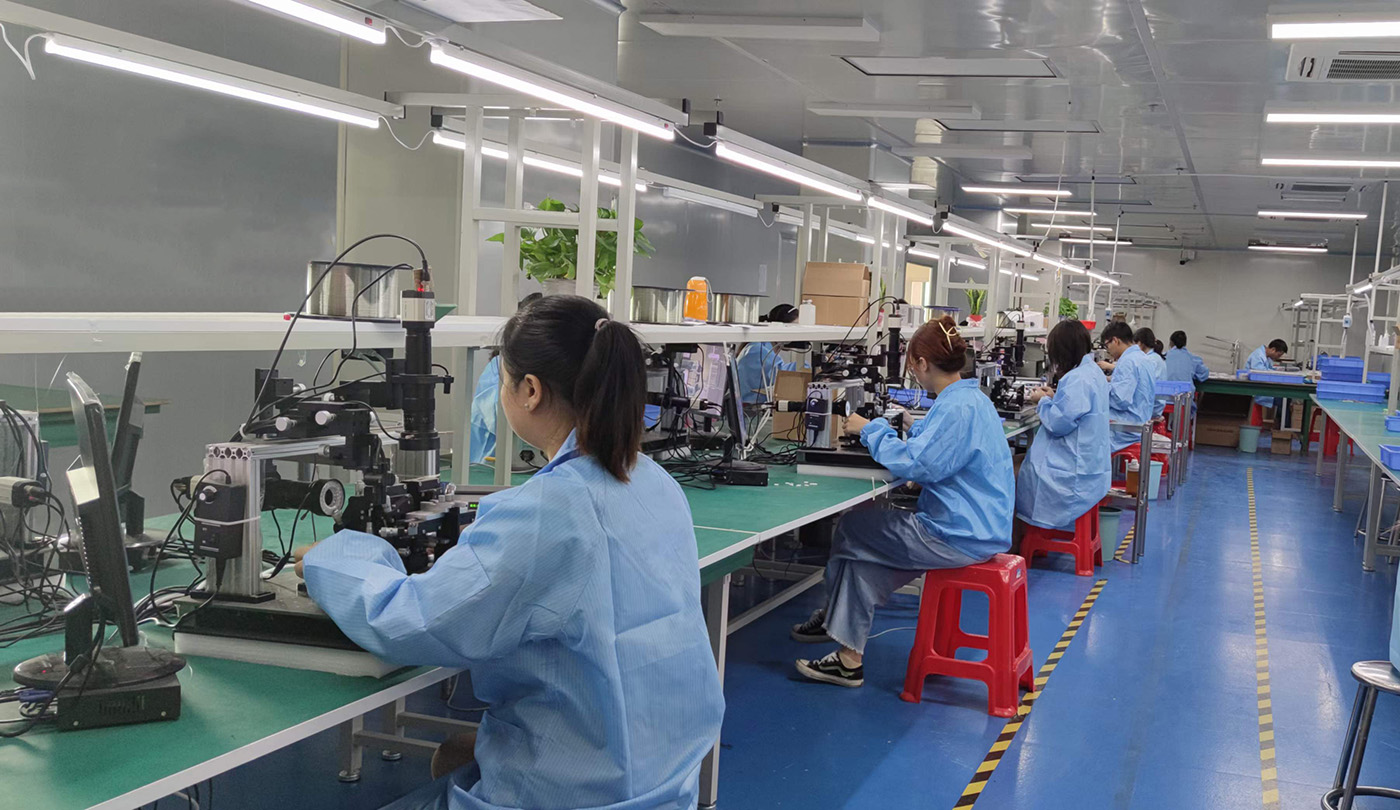
Years of outstanding sales engineering and proactive customer service have enabled Kocent Optec Limited to win loyal clients across diverse geopolitical regions. Today, our optical interconnects, couplers, patch panels, and attenuators are deployed across East Asia, Southeast Asia, the Middle East, Eastern and Western Europe, Northern Europe, South America, North America, North Africa, and South Africa.
Our OEM and ODM solutions have repeatedly won Tier-1 and Tier-2 Telecom Operator tenders, successfully satisfying complex end-user requirements under strict regulatory frameworks. Our optical terminal hardware and transceivers have been integrated into networks built and maintained by major global telecom operators:
Industry-specific questions answered by our leading optical engineers to guide your network layout, procurement, and deployment decisions.
The core difference lies in the electrical and optical lane configuration. A standard 100G QSFP28 transceiver utilizes four distinct electrical channels, each operating at 25 Gbps (4x 25G NRZ), combined to deliver 100 Gbps total throughput. In contrast, the newer SFP112 form factor uses a single physical channel running at 112 Gbps via PAM4 modulation (1x 100G). SFP112 allows for much higher density on faceplates designed for SFP-sized ports, though QSFP28 remains the most widely compatible and commercially mature standard in the global industry.
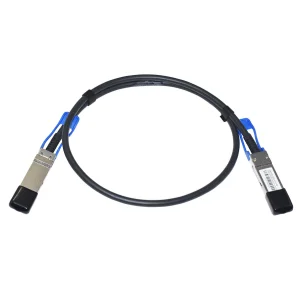
Passive Direct Attach Copper (DAC) twinax cables, such as our Cisco compatible QSFP-100G-CU1M, are ideal for short-reach connections (typically 1 to 5 meters) within the same rack or adjacent cabinets. They consume zero power and have near-zero latency, making them highly cost-effective. Active Optical Cables (AOCs), on the other hand, are recommended for longer spans (up to 100 meters) across different racks. AOCs utilize multi-mode fiber, which is lighter, more flexible, and does not suffer from electromagnetic interference (EMI) or signal attenuation over distance like copper.
Our validation laboratory is equipped with original switch chassis and network directors from various vendors (such as Cisco, Arista, Juniper, Dell, and HP). Our engineers analyze the specific vendor encryption handshake and flash the transceivers' EEPROMs with custom-tailored configuration data. This ensures that the switches read the transceiver as a native, fully supported module, allowing telemetry (DOM/DDM) data such as laser temperature, bias current, and optical power to function perfectly without displaying generic error codes.
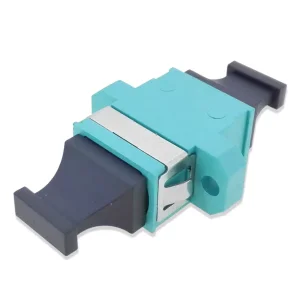
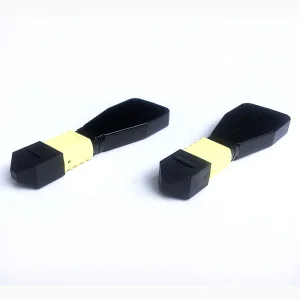
Insertion Loss (IL) measures the signal attenuation caused by adding connector interfaces along a fiber path. In high-density MPO/MTP links (such as 12-core and 24-core trunks), high IL can quickly degrade the optical power budget, leading to high bit error rates. Kocent Optec limits Insertion Loss through precision ferrule alignment and APC/UPC polishing. Our OM3/OM4 MPO adapters and loopbacks achieve an ultra-low Insertion Loss of < 0.2dB (compared to the standard industry limit of 0.35dB to 0.75dB), preserving optical performance.
A premium optical transceiver is designed for a service life exceeding 10 years when operated under controlled environmental conditions. Premature degradation is typically caused by two factors: thermal stress from improper rack ventilation, and dust contamination on the optical interface. Operating transceivers near their maximum thermal threshold speeds up laser diode aging. Keeping switch intakes clean and inspecting fiber end-faces with a fiber scope before mating is critical to protecting the optics.
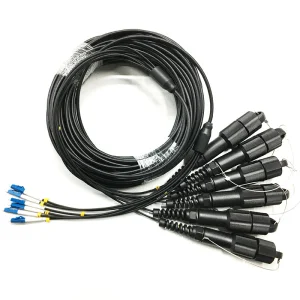
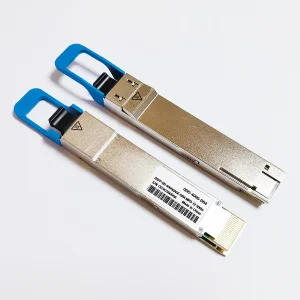
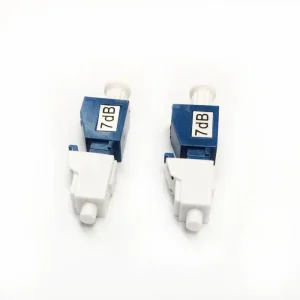
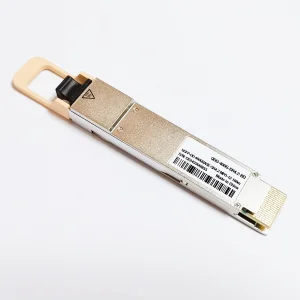
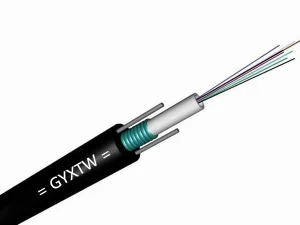
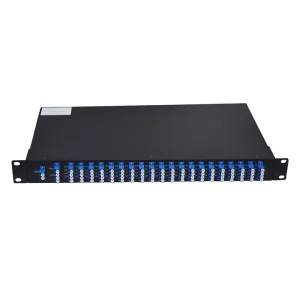
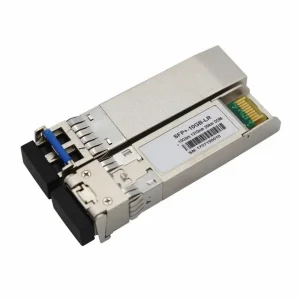
Explore our passive attenuators, outdoor cabling, dense multiplexers, and 400G next-generation active optical transceivers.
 KOCENT OPTEC